

Youth Speed and Agility Training: 5 Drills Every Young Athlete Needs to Master
When it comes to long-term athletic development, nothing is more important than laying a solid foundation early. Too many parents and coaches skip straight to advanced cone patterns, ladder routines, and over-coached mechanics before the athlete is even physically ready. The truth is this: youth speed and agility training should focus first on building fundamental movement skills, coordination, rhythm, and elastic strength. If a young athlete can’t stabilize, hop, skip, or control their body through space, they won’t truly benefit from the advanced drills everyone rushes into.
At Overtime Athletes, we’ve seen youth athletes transform when they commit to simple, foundational work. Plyometrics, basic jumping patterns, and controlled agility movements are the building blocks for explosive speed later in life. Without building this foundation, speed training becomes unstable and inefficient. But with it, young athletes become faster, more reactive, and more resilient than their peers.
In this article, we’re breaking down five essential drills that every young athlete needs to master. These drills are staples in elite youth speed and agility training because they build elasticity, body control, landing mechanics, coordination, acceleration qualities, and multi-directional awareness. They are simple, repeatable, and incredibly effective for developing the athletic foundation youth athletes desperately need.
Before diving into the drills, let’s break down why foundational plyometrics and simple movement progressions matter so much. Also, please check out our previous article on the 3 Keys for Youth Athlete Development that dives more into how to design a good youth athlete program!
Why Foundational Plyometrics Are Critical in Youth Speed and Agility Training
Youth athletes are not miniature adults—they’re developing systems. Bones, tendons, muscles, nervous systems, and movement patterns are all still forming. The goal of youth speed and agility training is not just to make them faster today, but to build the physical qualities that will help them develop for the next decade of sport.
Foundational plyometrics teach young athletes how to create and absorb force safely. When they learn to hop, jump, land, and redirect force correctly, their athletic potential skyrockets. This kind of training enhances neuromuscular efficiency, which is a fancy way of saying the brain and muscles learn how to work together more effectively. Better communication between the brain and body equals faster speed, quicker agility, and greater power output.
Another major benefit of beginner plyometrics in youth speed and agility training is proprioception—your body’s awareness of itself in space. Developing this sense early helps athletes move with confidence, prevent injuries, and develop better mechanics naturally, without over-coaching.
Most importantly, youth plyometrics and basic agility patterns help athletes build rhythm and coordination, two qualities often overlooked in modern sports training. If a kid can’t coordinate both sides of their body, they will struggle in sprinting, cutting, bounding, and jumping later. The drills in this article directly strengthen these missing pieces.
How Youth Athletes Should Develop Over Time
Long-term athletic development depends on gradual, structured progress. Youth athletes shouldn’t be pushed into high-level strength training or complex speed work before they’re ready. Instead, they should master simple movements, then progressively increase the challenge.
A healthy development timeline involves the following phases:
- Learning patterns – Teaching the athlete how to jump, land, skip, hop, and change direction with clean form.
- Building elasticity – Introducing low-level plyometric movements to develop bounce and ground stiffness.
- Developing coordination and rhythm – Using drills like skips, crossovers, and lateral shuffles to build smooth patterns.
- Adding speed mechanics – Once the foundation is built, athletes learn to sprint efficiently with proper posture and force application.
- Introducing reaction and game-speed agility – Only after the basics are locked in should athletes train reactive agility, mirror drills, and advanced cutting.
- Strength integration – As they get older, strength training enhances power, improving their speed even further.
Trying to skip early phases is like trying to build a second floor without pouring the foundation. That’s why youth speed and agility training must prioritize movements like the drills below.
Now let’s get into the five essential drills every young athlete should master.
1. Pogos (Multi Directional)

Pogo jumps are one of the most underrated movements in all youth speed and agility training and a staple in our plyo programming from youth all the way up to pro. They teach elasticity, timing, ankle stiffness, and rhythm—qualities youth athletes often lack. With pogos, the emphasis is on quick, stiff contacts with the ground while staying tall from head to toe. Multi-directional pogos take it to the next level by teaching the athlete to control their center of mass forward, backward, and side-to-side.
The athlete bounces lightly on the balls of the feet, maintaining fast ground contacts and minimal knee bend. Small jumps in different directions help develop overall elastic strength and movement confidence. This drill is essential for building the reactive qualities needed for sprinting and change-of-direction skills later in life.

2. Skater Hops
Skater hops are a foundational lateral plyometric drill that helps youth athletes develop single-leg stability and side-to-side power. In youth agility training, lateral movement is just as important as sprinting forward, especially for sports like basketball, soccer, football, baseball, and hockey.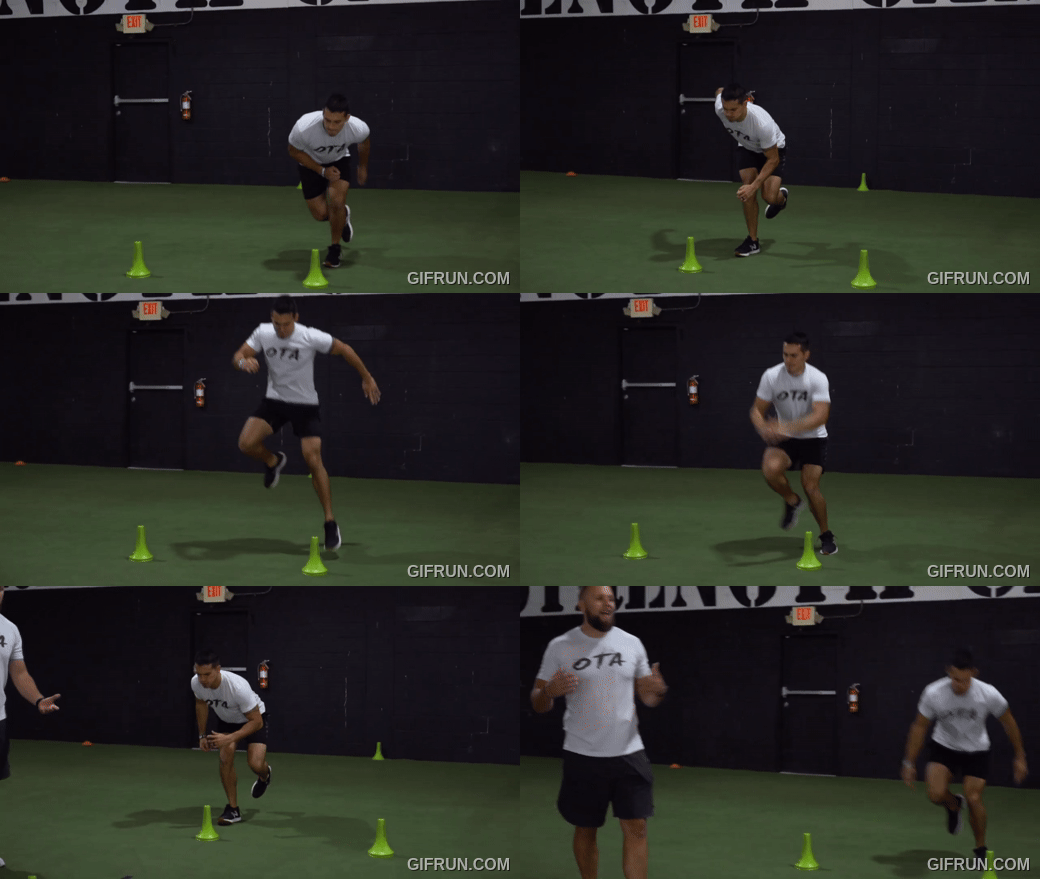
The athlete hops laterally from one leg to the other, sticking the landing each time with control. The focus is on maintaining balance, absorbing force quietly, and keeping the hips level. This drill develops the ability to load and explode laterally—an essential quality for cutting, shuffling, and reacting on the field or court.
3. Power Skips for Height/Distance

Power skips are one of the most effective ways to teach youth athletes how to produce vertical and horizontal force. In youth speed training, both vertical and horizontal power is a major driver of sprint speed because athletes need to push forcefully into the ground to accelerate.
The athlete skips forward with an exaggerated, powerful drive of the knee and opposite arm as the opposite leg full extends back into the ground to drive them vertically or hyperextends back to drive them horizontally. Each skip should be explosive, rhythmic, and smooth. Power skips build coordination, reinforce sprint mechanics, and improve timing between the arms and legs. They also help athletes understand how powerful hip flexion contributes to sprint speed.

4. Single Leg Hops
 Single leg hops teach balance, stability, and control—three qualities that youth athletes often lack. You can’t master high-intensity plyometrics until you’re stable and can efficiently produce power on one leg. That’s why single leg hops are so important in youth speed and agility training.
The athlete hops repeatedly on one leg, focusing on maintaining alignment in the ankle, knee, and hip. The goal is controlled landings, quick ground contacts, and consistent rhythm. Mastering this drill prepares athletes for more advanced plyometrics, cutting mechanics, and sprint acceleration in the future. A strong, stable single leg is one of the biggest indicators of injury-resistant speed development.
5. Multi Hurdle Jumps (Mini and Big)

Multi hurdle jumps are a progression from basic hops and jumps. Using both mini hurdles and larger hurdles allows youth athletes to develop reactivity, fast stretch-shortening cycle qualities, and coordination under slightly more demanding conditions. In youth speed and agility training, hurdle progressions are one of the best ways to build springy, elastic lower bodies.
 The athlete jumps through a series of hurdles—mini hurdles for speed and quick contacts, larger hurdles for power and force production. The key is maintaining posture, spotting the next hurdle, and absorbing force cleanly. This drill helps athletes develop the bounce and timing needed for sprinting, bounding, and game-speed agility.
Final Thoughts on Youth Speed and Agility Training
Mastering foundational movements is the secret weapon behind the world’s fastest and most agile athletes. When coaches and parents prioritize proper development instead of rushing to fancy drills, kids build the coordination, elasticity, and confidence they need to dominate their sport long term. The biggest misconception is that elite pro athletes are doing super special advanced plyo drills when really the elites are still doing these same exact drills in their programming. They just do it at a much higher level.
These five drills—Pogo Jumps, Skater Hops, Power Skips, Single Leg Hops, and Multi Hurdle Jumps—are staples in elite youth speed and agility training because they teach young athletes how to move explosively, efficiently, and safely. They set the stage for future speed, strength, and agility progressions and build the athletic base that every young athlete must have.
If you want your athlete to develop real speed, real agility, and real power—not just look good doing ladder drills—then focus on mastering these foundational plyometrics and movement skills. Youth athletes who build their base early grow into faster, stronger, and more reliable competitors. And that foundation starts with the fundamentals.
