
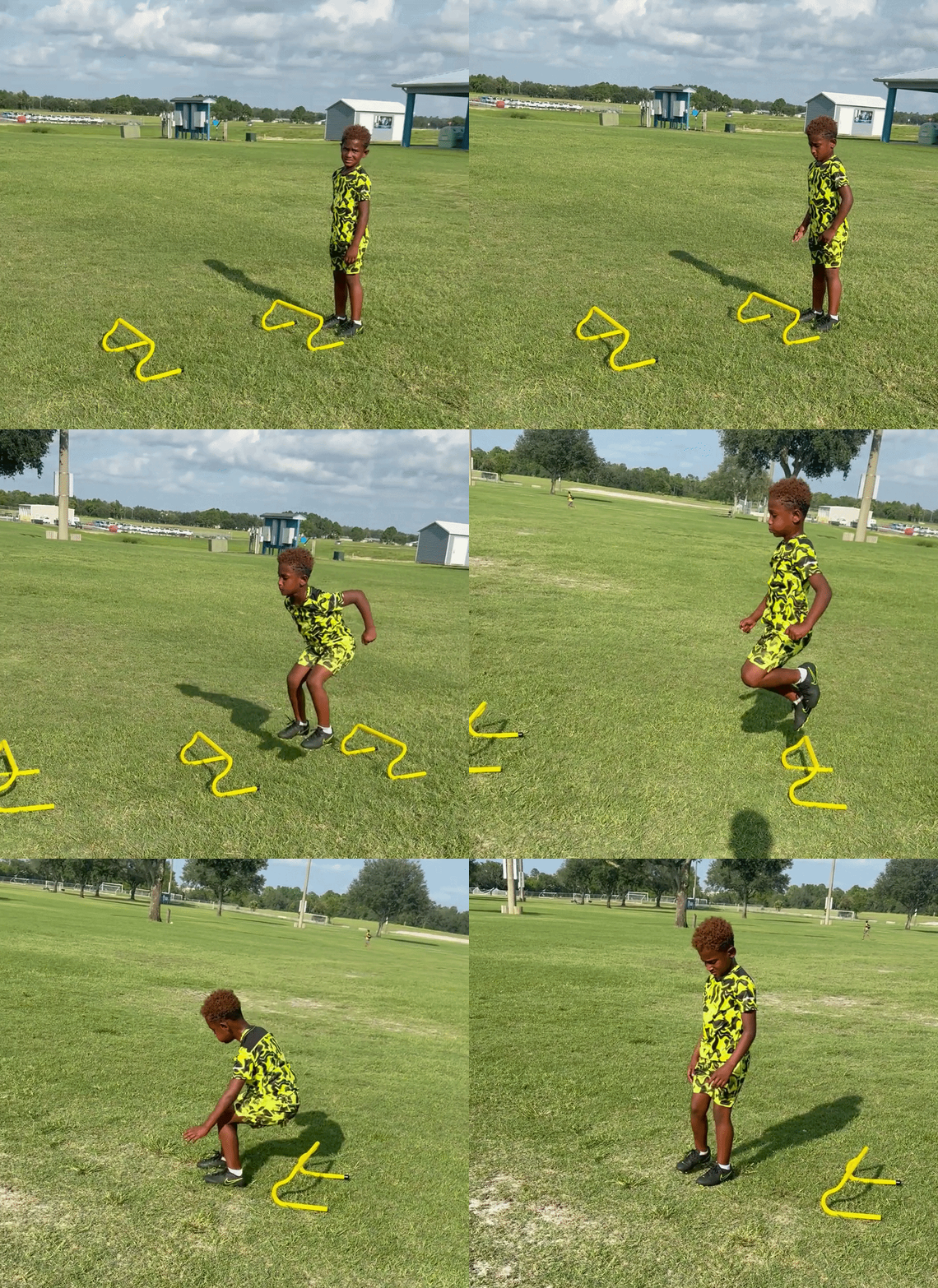
The 2 Best Acceleration Drills to Get Youth Athletes Faster
Most youth athletes want to get faster, but simply running more sprints is not always the answer.
One of the biggest problems I see with youth athletes is poor acceleration. They struggle to explode out of a stance, create separation, beat an opponent to the ball, or reach top speed quickly because they don’t have the physical qualities needed to produce force into the ground.
For starters, young athletes need to get stronger.
Strength gives an athlete the ability to produce more force. But strength alone does not automatically make an athlete faster. They also have to learn how to apply that force in the right direction.
That is where effective acceleration training comes in.
Acceleration is about aggressively applying force into the ground to increase horizontal velocity. The athlete has to create enough force to overcome inertia, while directing that force backward into the ground so the body moves forward.
This is why I don’t want youth athletes spending all of their time doing random speed drills.
They need to be able to produce force first, then taught how to apply it.
If I could only choose two drills to improve a youth athlete’s acceleration, these would be at the top of the list.
Read our article on strength training for youth here!
What Is Acceleration?
Acceleration is the ability to increase velocity.
In sprinting, it is the phase immediately after the start where the athlete is rapidly building speed before transitioning toward maximum velocity.
The first few steps are critical.
A fast athlete doesn’t simply move their legs quickly. They are producing large amounts of force against the ground and directing that force backward and into the ground in a way that propels the body forward.
This is why the first step can be so difficult for youth athletes.
They may have decent coordination, be able to move their legs quickly, and may even look fast once they get moving.
But if they cannot produce enough force, or cannot direct that force horizontally, they will struggle to accelerate.
Good acceleration training teaches them to solve both problems.
You want the athlete to become stronger while also developing the ability to express that strength through the specific angles and positions required for sprinting.
Why Most Youth Athletes Struggle With First-Step Speed
Youth athletes commonly struggle with acceleration for three major reasons.
First, they aren’t strong enough to produce high levels of force.
Second, they haven’t learned how to apply force horizontally.
Third, they often lack the coordination and positioning required to repeatedly attack the ground with aggressive sprint mechanics.
Think about what happens during the first few steps of a sprint.
The athlete starts from a relatively low position. The body is angled forward. The shin is positioned to push backward into the ground. The athlete needs aggressive knee drive, powerful hip extension, and enough stiffness through the ankle and foot to transfer force.
That’s a lot to coordinate.
You cannot simply tell a young athlete to “run faster” and expect all of that to happen.
You need to develop the physical qualities and then give them drills that teach them how to use those qualities.
Check out this article on how youth should be training speed!
1. Broad Jumps and Broad Jump Variations
If you want to teach a youth athlete how to produce horizontal force, start with broad jumps.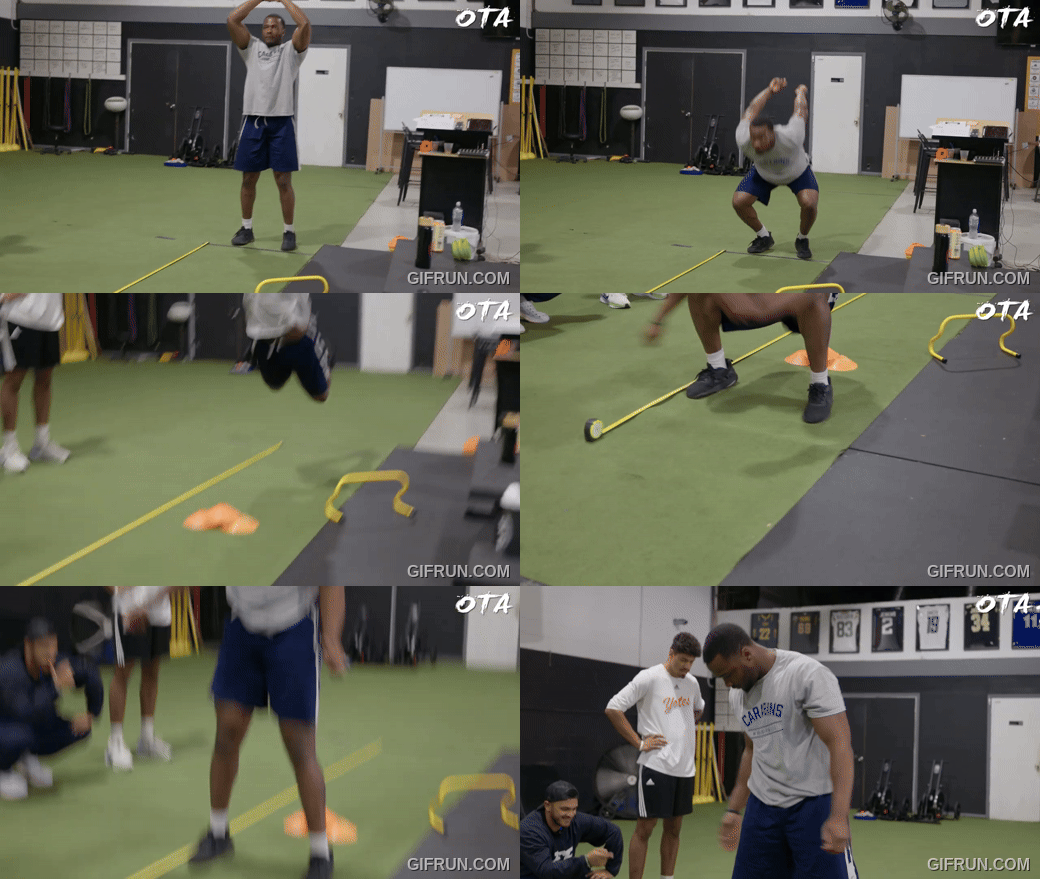
The broad jump is one of the simplest ways to teach an athlete to project their body forward.
The athlete has to load the hips, aggressively extend the hips, knees, and ankles, and direct force backward into the ground to create forward displacement.
That makes the broad jump an excellent foundation for acceleration training.
The goal isn’t simply to jump as far as possible.
The goal is to teach the athlete to produce maximum force horizontally.
That is the same general direction we need during acceleration.
There are several variations I like using with youth athletes:
Double Broad Jumps
The athlete performs two consecutive broad jumps. This teaches them to absorb force, reorganize their body, and immediately produce force again.
Triple Broad Jumps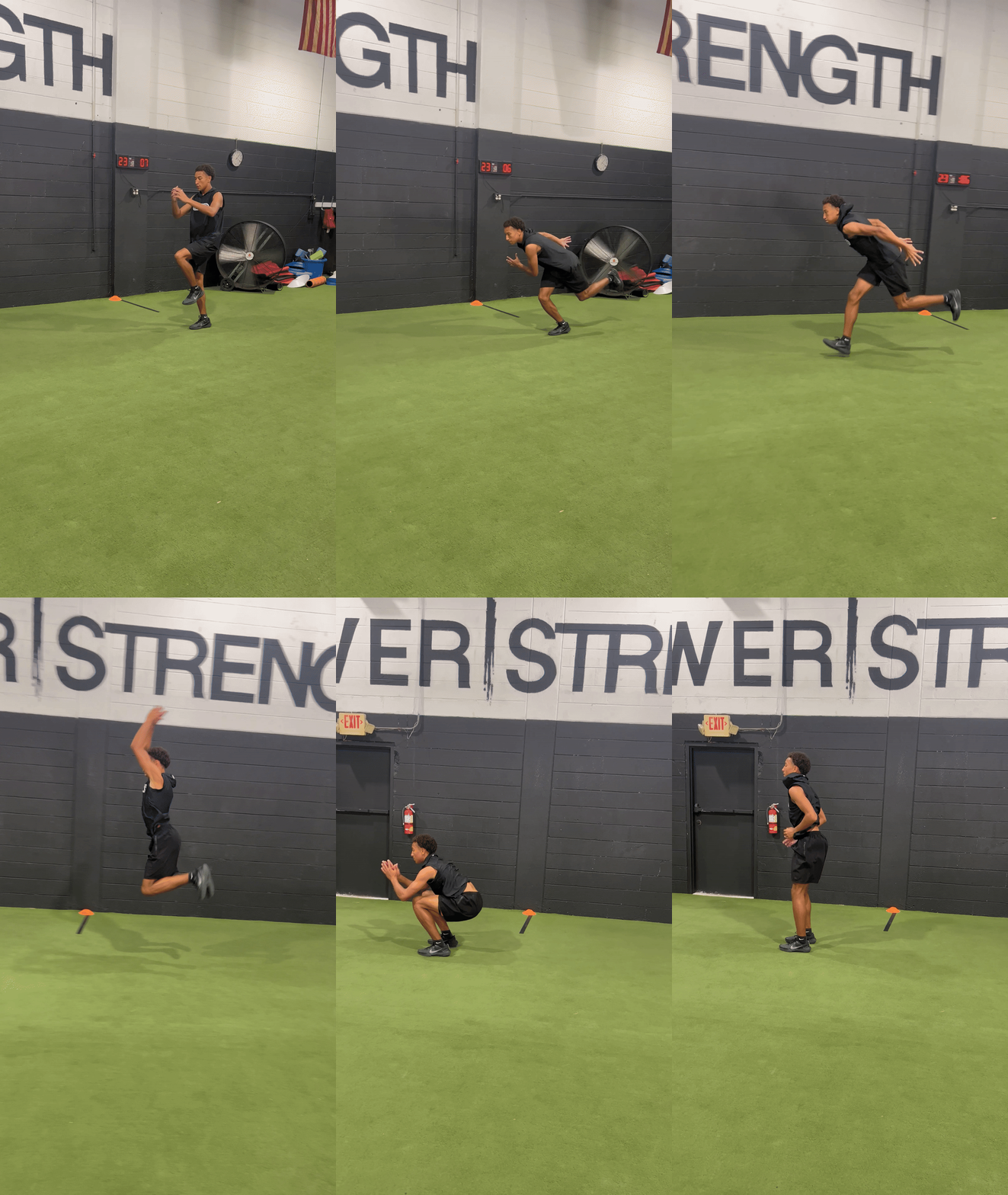

Triple broad jumps increase the demand for repeated horizontal force production. They are especially useful for teaching an athlete to maintain aggressive projection across multiple efforts.
Band-Resisted Broad Jumps
Adding band resistance increases the force demand and teaches the athlete to push aggressively against resistance while still projecting forward.
Single-Leg Broad Jumps
Single-leg variations introduce a greater unilateral demand and challenge the athlete’s ability to produce and control force one leg at a time.
For younger athletes, I would start with basic broad jumps and build from there.
Quality matters more than fatigue.
You want every rep to be explosive.
This is acceleration training, not conditioning.
The athlete should learn what it feels like to attack the ground and project their body forward.
2. Heavy Sled Pushes
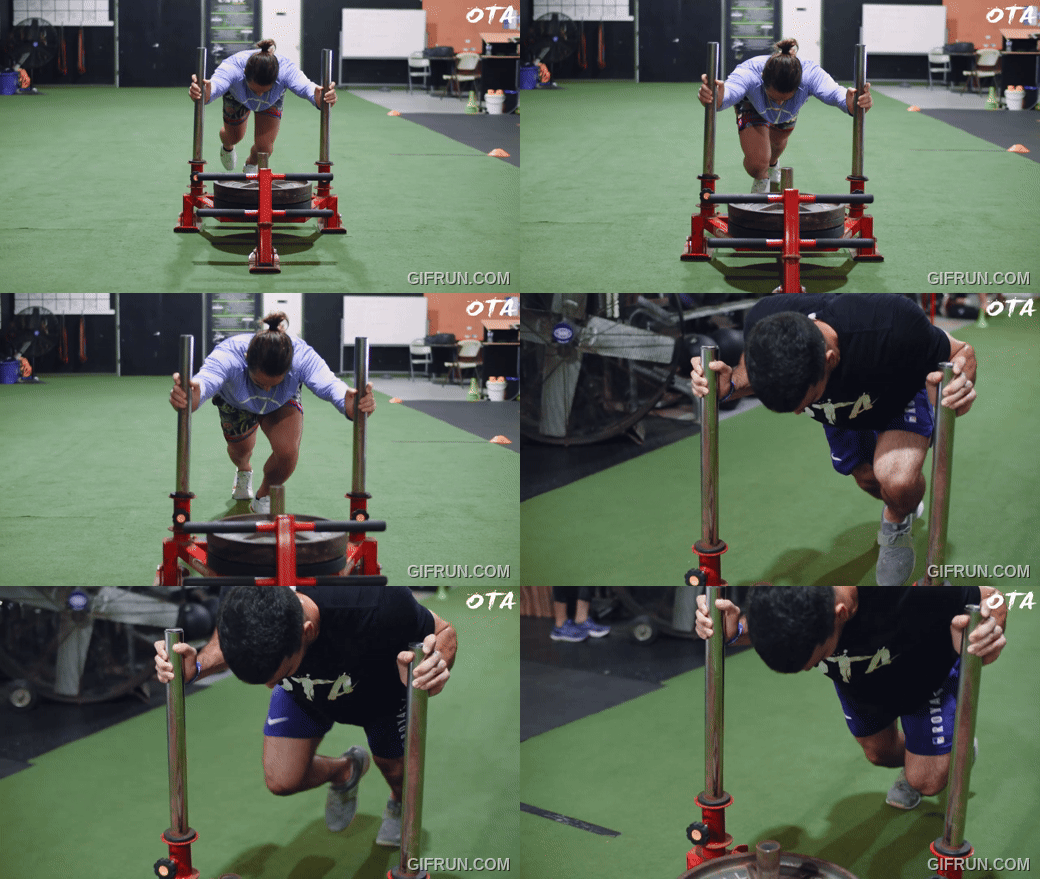
If I had to pick only one drill for improving youth acceleration, the heavy sled push would be extremely difficult to beat.
Why?
Because the sled naturally puts the athlete into an acceleration position.
The athlete has to lean forward, create a strong body angle, and aggressively push backward into the ground to move the sled forward.
There is no need to overcomplicate it.
The resistance gives the athlete something tangible to push against.
With a properly loaded sled, the athlete has to attack the ground aggressively with every step.
That means powerful leg drive, aggressive knee drive, and strong extension through the hip, knee, and ankle.
The heavy load also helps reinforce the low acceleration angle.
The athlete can’t simply stand upright and run through the drill.
They have to stay connected to the ground and continue producing force to move the sled.
This makes heavy sled pushes one of the most practical forms of acceleration training for youth athletes.
The key is choosing an appropriate load.
You want enough resistance that the athlete has to produce significant force, but not so much that they completely lose their ability to move with intent and quality.
Hill Sprints: The Best Alternative
If you don’t have access to a sled, hill sprints are an excellent alternative.
A hill naturally increases the demand for horizontal force production while helping reinforce a forward body position.
The athlete has to drive into the ground to move themselves up the hill.
This creates a similar stimulus to resisted sprinting and heavy sled work.
For youth athletes, short hill sprints can be a great way to introduce acceleration training without needing a lot of equipment.
How to Put It Together
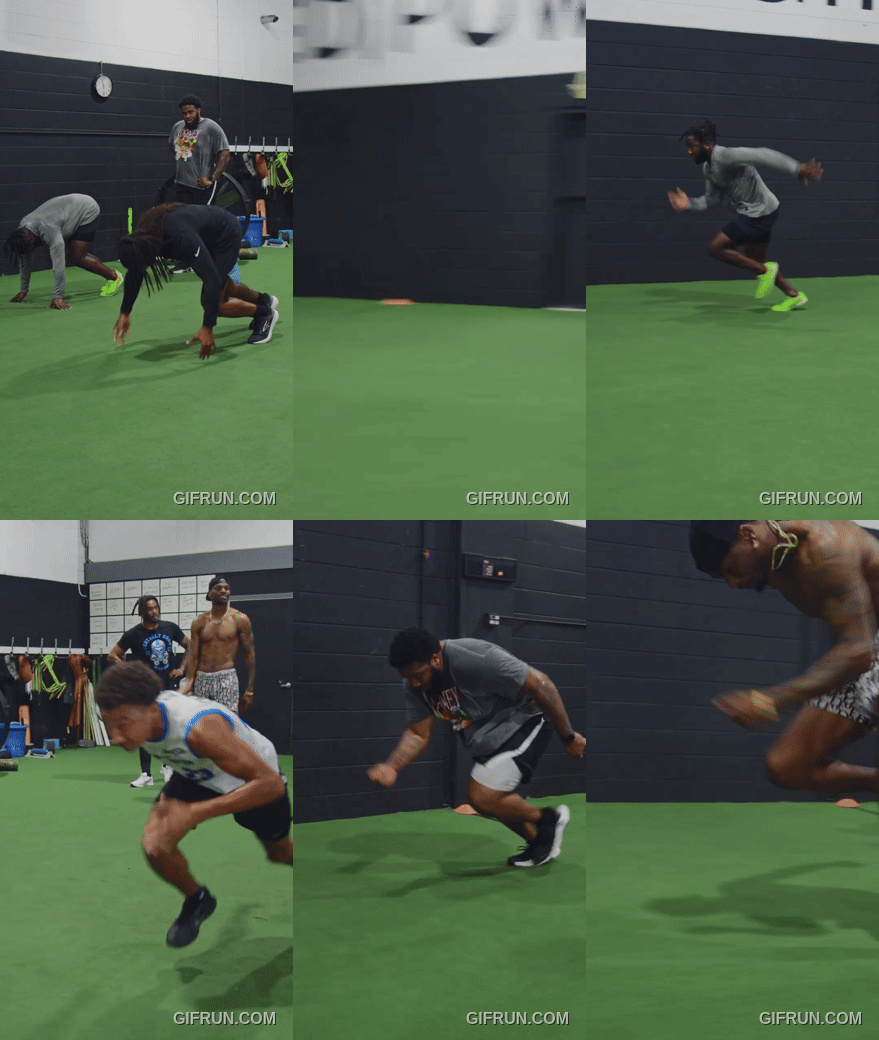
You don’t need 15 different acceleration drills.
You need the right ones.
A simple youth acceleration training session could look like:
Broad Jump: 3 x 3
Single-Leg Broad Jump: 2 x 3 each leg
Heavy Sled Push: 4–6 x 10–20 yards
Keep the reps explosive and give the athlete enough rest to maintain quality.
As the athlete develops, you can progress the broad jump variations and gradually introduce more advanced sprinting and resisted sprint work.
The objective is always the same:
Produce more force. Apply it in the right direction.
Final Thoughts
Youth athletes don’t need complicated speed training.
They need to develop the physical qualities that actually drive acceleration.
First, build stronger legs so they can produce more force.
Then teach them how to direct that force.
Broad jumps teach horizontal force production. Their different variations allow you to progressively challenge the athlete’s ability to project themselves forward.
Heavy sled pushes take that concept and put it directly into an acceleration position. The resistance forces the athlete to aggressively attack the ground, maintain a low sprint angle, drive the knees, and produce powerful extension.
That combination gives you a simple but extremely effective foundation for youth acceleration training.
The goal isn’t to make them tired. It’s to make them more powerful, more explosive, and better at applying force when it matters.
If you want your young athlete to get faster, stronger, and more explosive, they need a structured progression—not random workouts and endless conditioning.
Our Youth Performance Program is built to develop the strength, power, movement quality, and speed that young athletes need to perform at a higher level.
