
Is Youth Strength Training Safe for Young Athletes? (3 Keys to Building Stronger, Faster Kids)
There’s a lot of confusion when it comes to youth strength training.
Some parents hear “weights” and immediately think:
- “Won’t that stunt their growth?”
- “Aren’t they too young for lifting?”
- “Shouldn’t they just focus on their sport instead?”
And a lot of coaches still get stuck in outdated thinking—believing kids should “just play” and avoid strength work until high school.
Here’s the truth:
When done correctly, youth strength training is not only safe—it’s one of the most powerful tools for developing faster, stronger, more resilient athletes.
The problem isn’t strength training itself.
The problem is bad strength training, poor coaching, and misunderstanding what development actually looks like. If an athlete is old enough to be playing year-round sports and do never ending travel teams, then they are old enough to be doing some kind of strength training. In fact, they NEED it.
Let’s clear the air. Go read our previous article on how young athletes should be speed training!
Myth: “Strength Training Stunts Growth”
This is probably the biggest fear in youth sports—and it’s simply not supported by modern sports science.
Properly supervised strength training does not stunt growth in young athletes. Growth plates are not “damaged” by resistance training when it’s taught correctly with appropriate loads, progressions, and technique.
In fact, research consistently shows youth resistance training can:
- Reduce injury risk
- Improve coordination and movement control
- Increase strength and power
- Enhance athletic performance across all sports
The real risk isn’t lifting weights.
The real risk is weak, uncoordinated athletes who are unprepared for the demands of their sport.
So instead of asking “Should kids lift weights?”
The better question is:
“Are we preparing kids properly for sport?”
If you’d like to read some of the extensive research, here’s a link to sports medicine article from 2020:
Free-Weight Resistance Training in Youth Athletes: A Narrative Review
The Truth About Youth Athletic Development
Most young athletes don’t have a strength problem because they’re “too young.”
They have a strength problem because:
- They lack structured training
- They don’t move well
- They don’t produce force efficiently
- They only “play,” but never actually develop
And that’s where real youth strength training comes in.
Not bodybuilder-style lifting.
Not ego lifting.
But intentional performance-based development that builds the foundation for long-term athletic success.
Here are the 3 keys every parent and coach needs to understand:
1. Movement Quality Comes First
Control before chaos.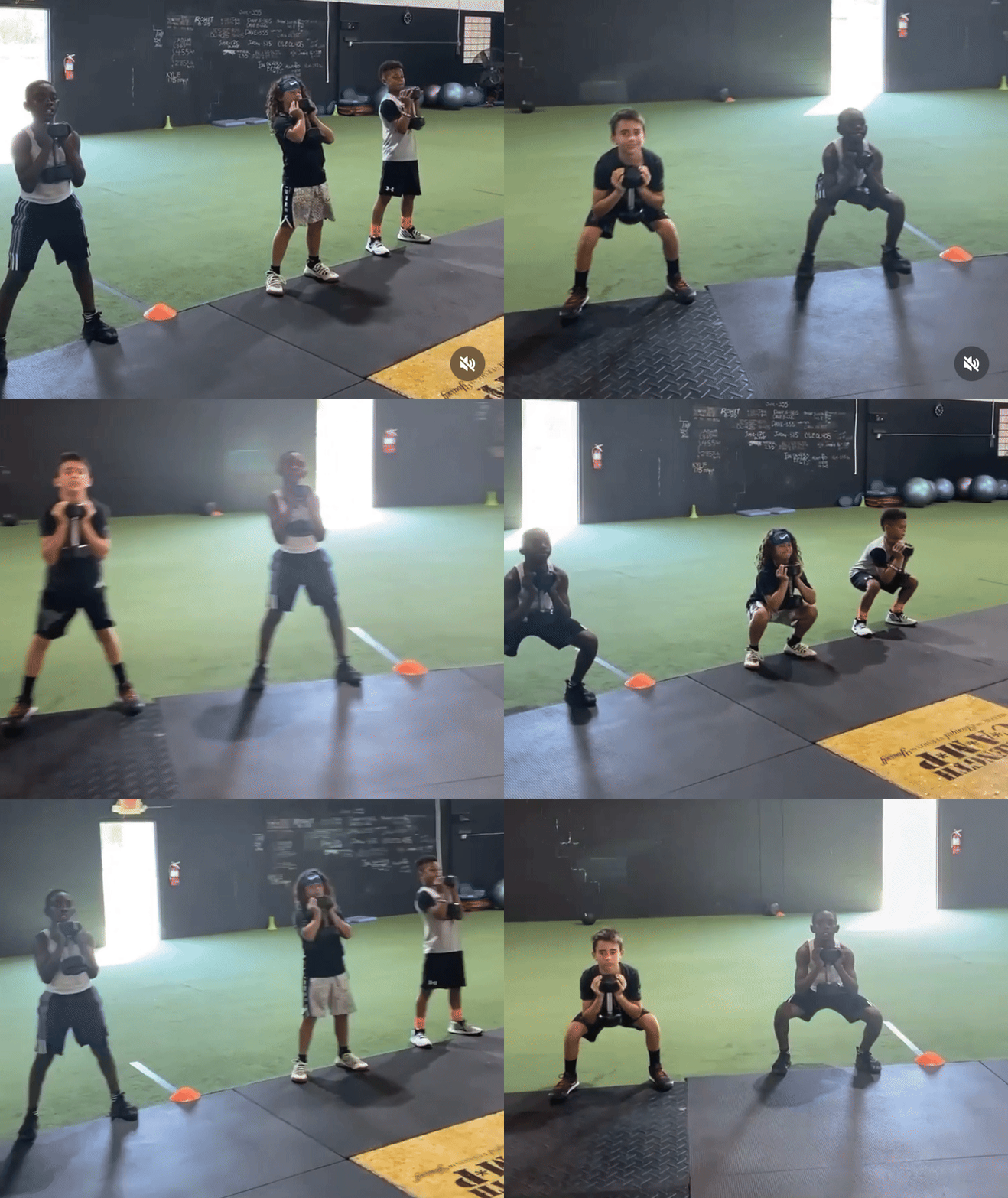

Before we ever talk about heavy weights or explosive training, we have to talk about movement quality.
Young athletes need to learn how to control their bodies in space:
- Can they squat with control?
- Can they land without collapsing?
- Can they decelerate and re-accelerate?
- Can they stabilize in single-leg positions?
- Can they move in multiple planes of motion?
If the answer is no, adding intensity only exposes dysfunction faster.
If they can’t control it, they don’t own it.
Youth athletes must earn intensity through movement mastery.
That means:
- Bodyweight and resistance strength work
- Fundamental coordination drills
- Landing mechanics
- Single-leg stability
- Core control under movement
This is not “basic.”
This is the foundation of elite athleticism.
Because chaos in sport requires control in training.
2. Train Force Production
Strength is the engine of speed and explosiveness.
Here’s a hard truth most people miss: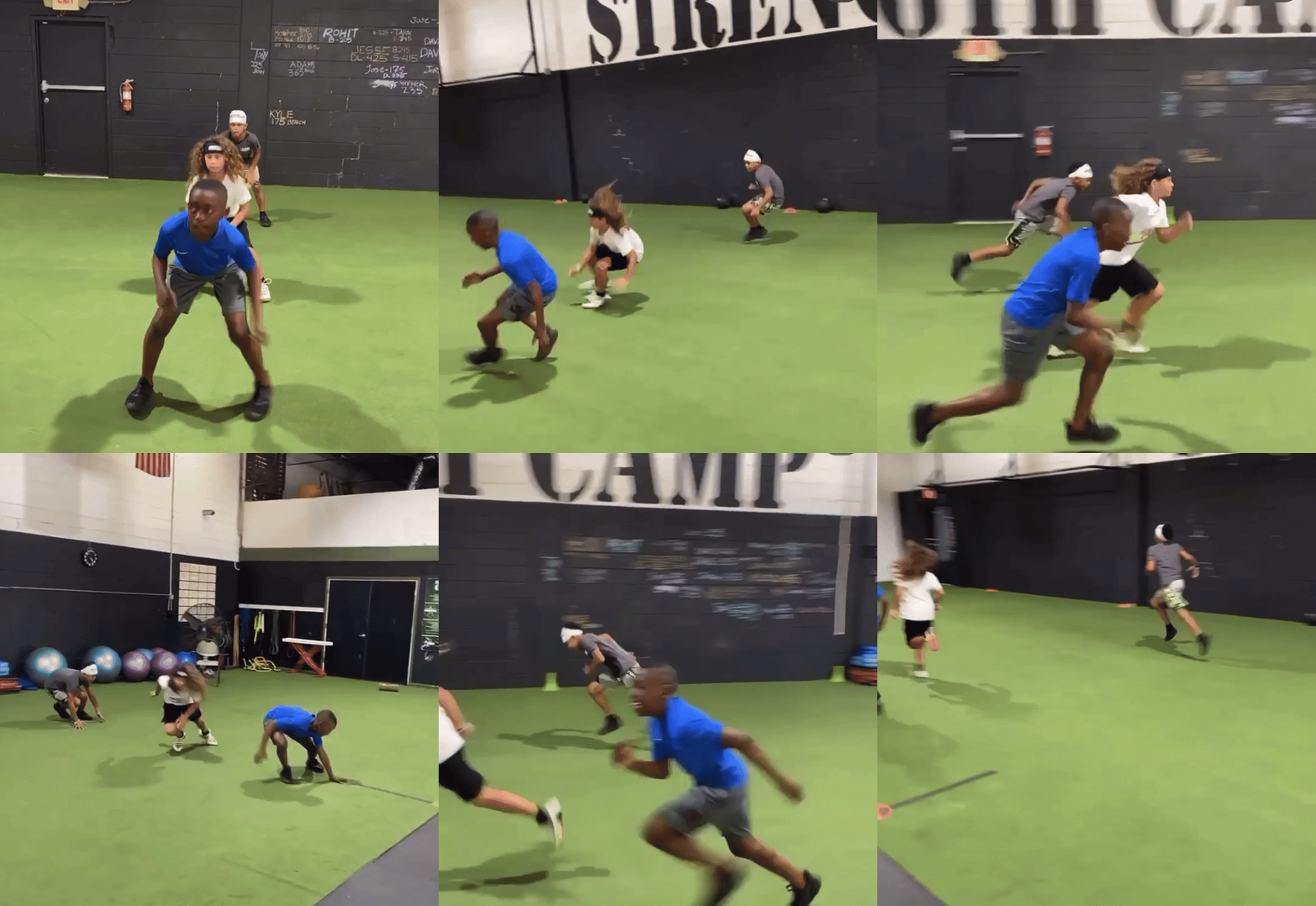
Most young athletes aren’t slow because they lack speed training.
They’re slow because they are weak.
Every sprint, jump, cut, and collision comes down to one thing:
Force production
If an athlete can’t produce force into the ground, they can’t move explosively—period.
That’s why youth strength training is essential.
But it has to be done correctly:
- Progressive resistance training (not random workouts)
- Basic compound lifts with good technique
- Controlled loading and progression
- Emphasis on full range strength
And it must be paired with:
- Fundamental plyometrics
- Jump and landing mechanics
- Consistent speed, acceleration, and deceleration training
Strength + plyometrics = the foundation of explosiveness.
Not one or the other.
When done correctly, young athletes develop:
- Faster sprint times
- Higher vertical jumps
- Better change of direction
- Increased durability under contact
Because now they’re not just “trying to be fast.”
They actually have the physical capacity to express speed.
3. Play Their Sport & Learn to Compete
The transfer happens on the field—not in the weight room.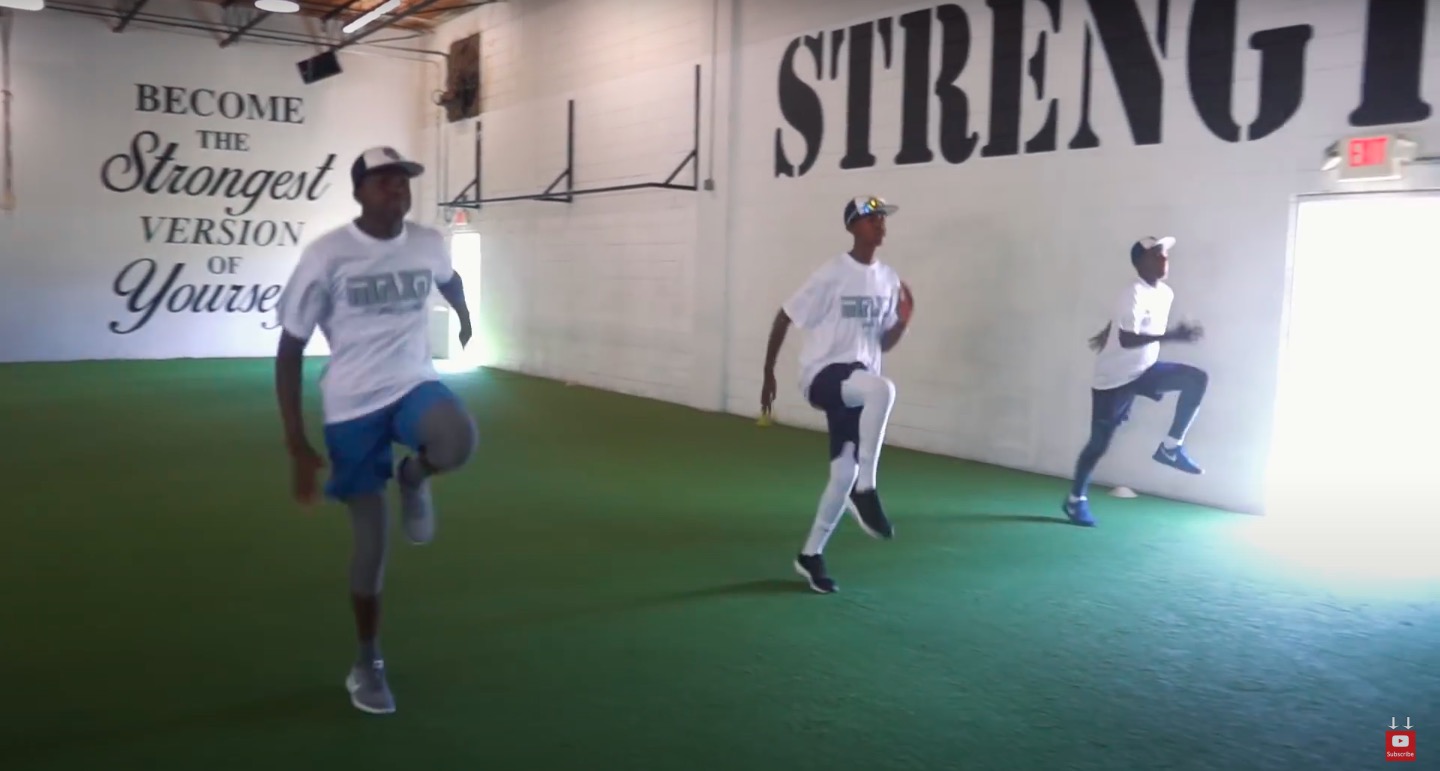
This is where a lot of development programs get it wrong.
They think sport-specific training means mimicking the sport in the gym.
It doesn’t.
Sport specificity happens by actually playing the sport.
That’s where:
- Timing develops
- Decision making develops
- Spatial awareness develops
- Competitive instincts develop
- Skill under pressure is built
No cone drill replaces live reps.
No machine movement replaces game speed decisions.
And beyond that, there’s something even more important:
They have to enjoy it!
If a young athlete stops having fun, everything else breaks down.
They quit early, burn out, lose motivation, and disconnect from training more as they get older.
The best athletes in the world didn’t just train hard.
They learned to love competing.
So yes—train them, develop them, and challenge them.
But also remember you don’t want them to lose the joy of sport.
Because joy is what keeps them in the game long enough to become great.
Final Thoughts
Youth strength training isn’t about turning kids into bodybuilders.
It’s about building:
- Better movers
- Stronger athletes
- More resilient bodies
- More confident competitors
The goal isn’t early specialization or early intensity.
The goal is long-term athletic development done the right way.
When you combine:
- Movement quality
- Force production
- Real sport participation + enjoyment
You don’t just build better athletes.
You build athletes who can thrive as they get mature, get older, and reach the next level.
Want to Develop Your Athlete the Right Way?
If you’re a parent or coach who wants a structured system that builds strength, speed, and athletic confidence the right way…
The Overtime Athletes Youth Performance Program is built for exactly that.
We develop young athletes through:
- Proven strength progressions
- Speed & plyometric training
- Movement skill development
Click the image below and get started today!
