
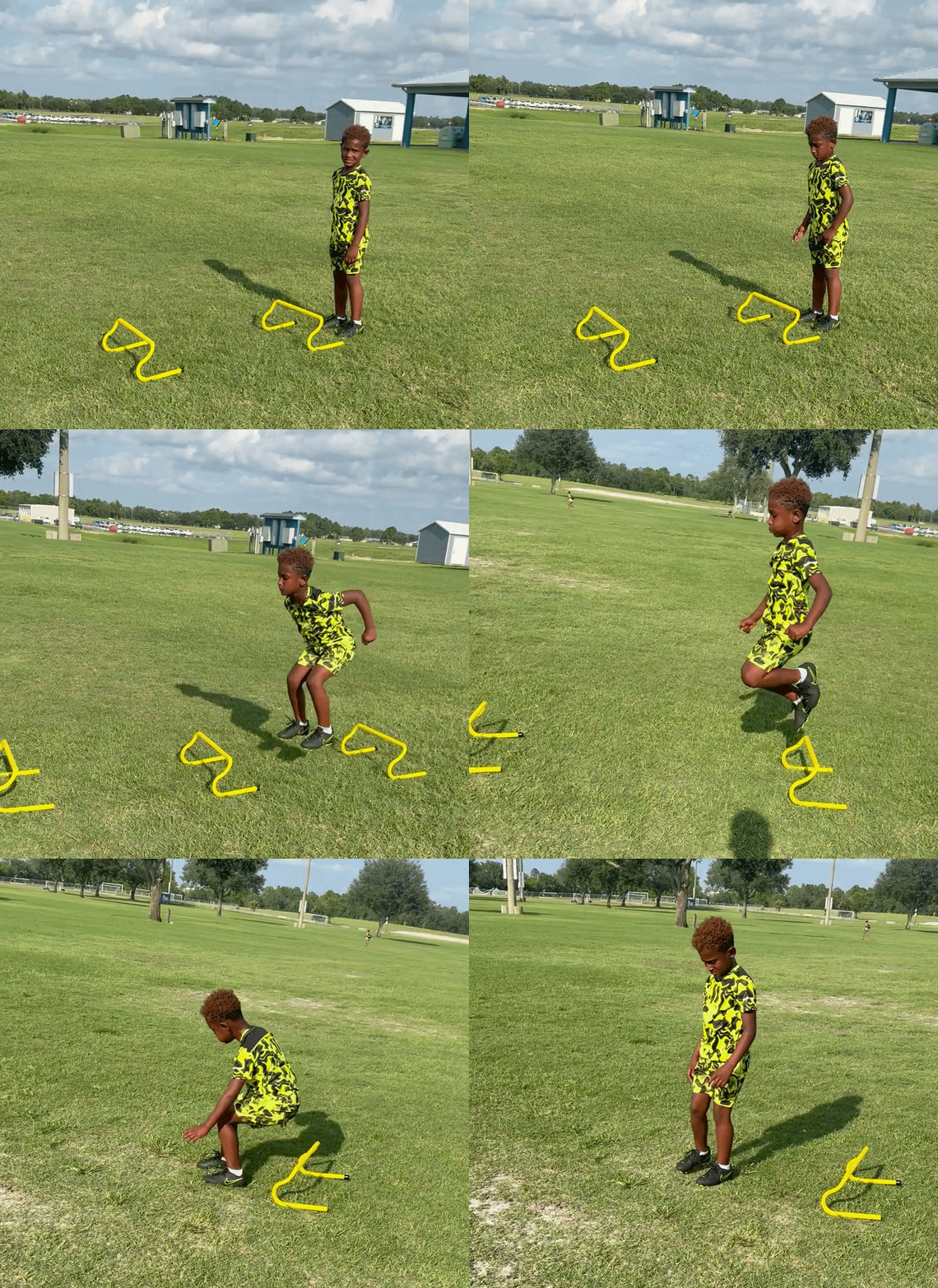
Plyometric Routine for Youth Athletes: Build Speed, Power & Athleticism
If you want your young athlete to get faster, more explosive, and more athletic, you can’t only focus on running faster. You have to teach their body how to produce and apply force quickly.
That’s where plyometrics come in.
A well-designed plyometric routine can be one of the most effective tools for developing athleticism in youth athletes. When programmed correctly, plyometrics help young athletes improve their ability to produce force, absorb force, react quickly, and use the muscles and tendons of the lower body like a powerful spring.
And no, youth athletes don’t need to be doing crazy depth jumps or advanced Olympic-level plyometrics to benefit.
In fact, some of the simplest exercises can be incredibly effective. Make sure to check out our last article on strength training for youth athletes!
Why Plyometrics Matter for Youth Athletes
Sports are explosive.
Whether your athlete plays soccer, basketball, baseball, football, volleyball, tennis, or another sport, they’re constantly accelerating, decelerating, jumping, cutting, and reacting.
The ability to perform these movements comes down to one major athletic quality:
Force production.
Plyometrics teach athletes to produce force rapidly. Instead of simply contracting a muscle and moving slowly, plyometric exercises challenge the athlete to quickly transition from absorbing force to producing force.
This is known as the stretch-shortening cycle.
Think about sprinting.
Every time an athlete strikes the ground, their body has to absorb force before rapidly producing force back into the ground. The better they become at this process, the more efficiently they can run, jump, accelerate, and change direction.
That’s athleticism.
Plyometrics Help Build Stronger, Stiffer Tendons
One of the biggest reasons plyometrics are valuable for youth development is their effect on the **muscle-tendon system**.
Tendons aren’t simply pieces of tissue connecting muscle to bone. They also play an important role in storing and returning elastic energy.
A useful way to think about them is like springs.
When an athlete lands, hops, or jumps, the tendons can store elastic energy. When the athlete rapidly pushes back into the ground, some of that energy can be released.
Developing appropriate tendon stiffness helps athletes become more efficient at transferring force through the lower body.
This is particularly important for young athletes because you’re not just trying to make them faster today.
You’re building the physical qualities that can support athletic development for years.
Of course, “stiffer” doesn’t mean rigid. The goal is to develop a tendon and lower-body system that can appropriately absorb and return force while maintaining control.
That’s why foundational plyometrics such as pogos and hops can be so valuable.
Youth Plyometric Routine
The following plyometric routine progresses from simple bilateral jumping patterns toward more demanding unilateral movements and power-based skipping and bounding.
The goal isn’t to see how many reps your athlete can survive.
The goal is quality.
Every repetition should be explosive, controlled, and technically sound.
1. Stationary Pogo Jumps
Start with stationary pogo jumps.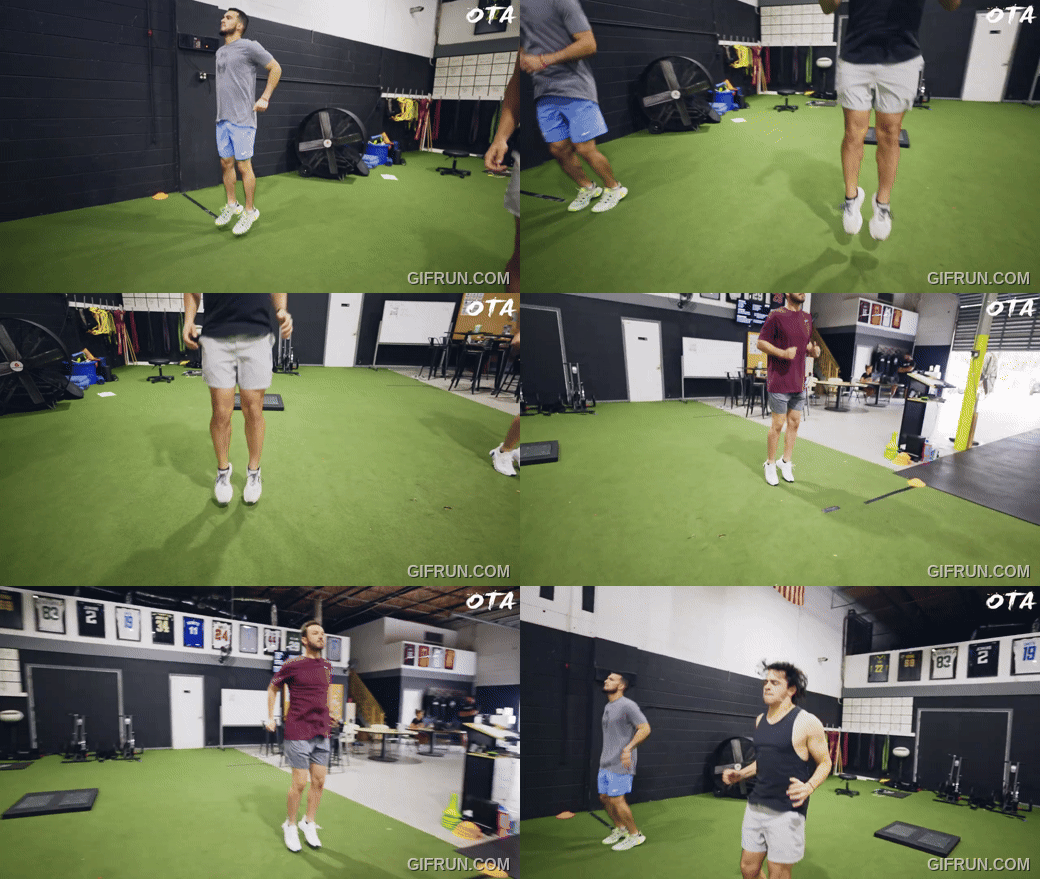
Keep the jumps quick and rhythmic while focusing on stiffness through the foot and ankle. Spend as little time on the ground as possible while maintaining good posture.
This teaches the athlete to quickly absorb and redirect force.
2. Linear Pogo Jumps
Now take that same pogo action and move forward.
Linear pogos introduce horizontal movement while continuing to emphasize quick ground contacts and reactive strength.
3. Lateral Pogo Jumps
Next, move side-to-side.
Lateral pogos teach the athlete to produce and absorb force in the frontal plane—an important quality for cutting, shuffling, and changing direction.
4. Single-Leg Linear Pogo Jumps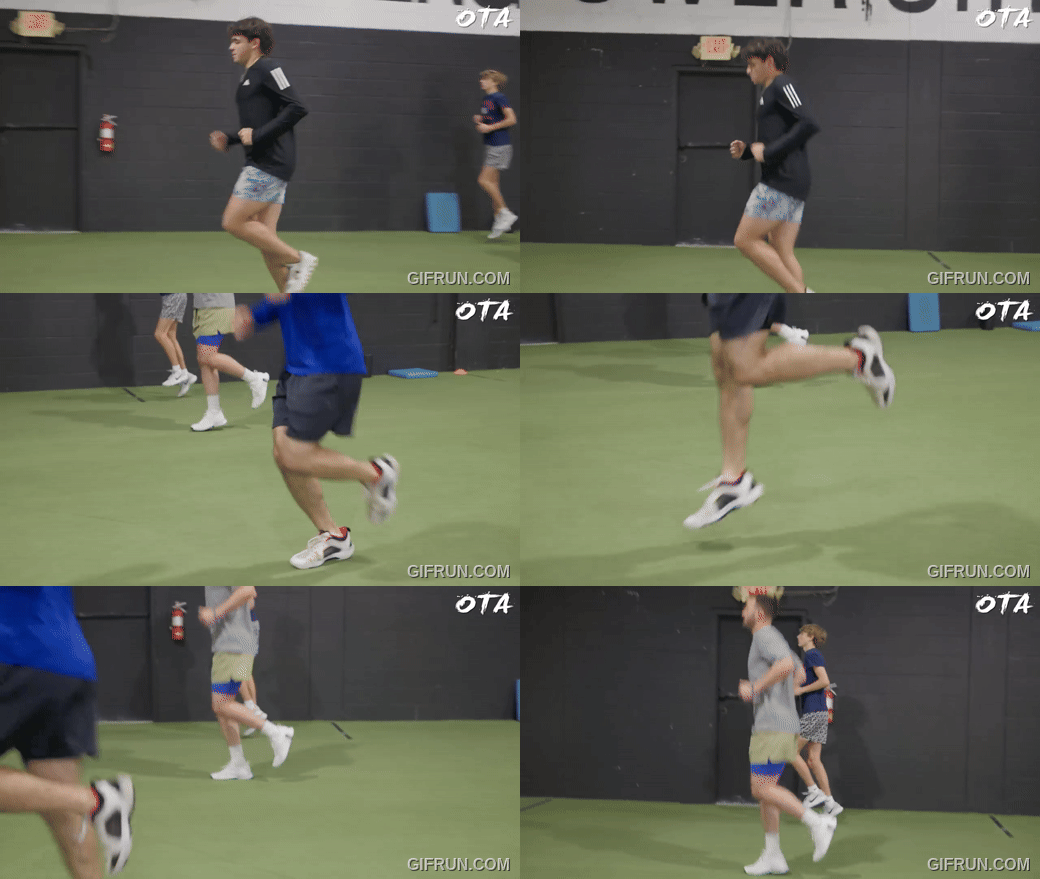

Now increase the challenge by performing pogos on one leg while moving forward.
This demands greater unilateral force production, balance, coordination, and control.
5. Single-Leg Linear Hops
Progress into more powerful single-leg hops.
Focus on projecting the body forward while maintaining control of the landing and immediately transitioning into the next repetition.
6. Single-Leg Lateral Hops
Take the single-leg hop laterally.
This challenges the athlete’s ability to produce and absorb force from one leg while moving sideways—critical for multidirectional athletes.
7. Power Skips for Height

Now we begin emphasizing greater power production.
Drive aggressively into the ground and project yourself upward with each skip.
The objective is to produce more force and create more vertical displacement.
8. Power Skips for Distance
Take that same aggressive skipping action and direct it forward.
This teaches the athlete to apply force horizontally, which has obvious carryover to acceleration and sprinting.
9. Power Bounds for Height
Power bounds are a more advanced expression of unilateral explosiveness. 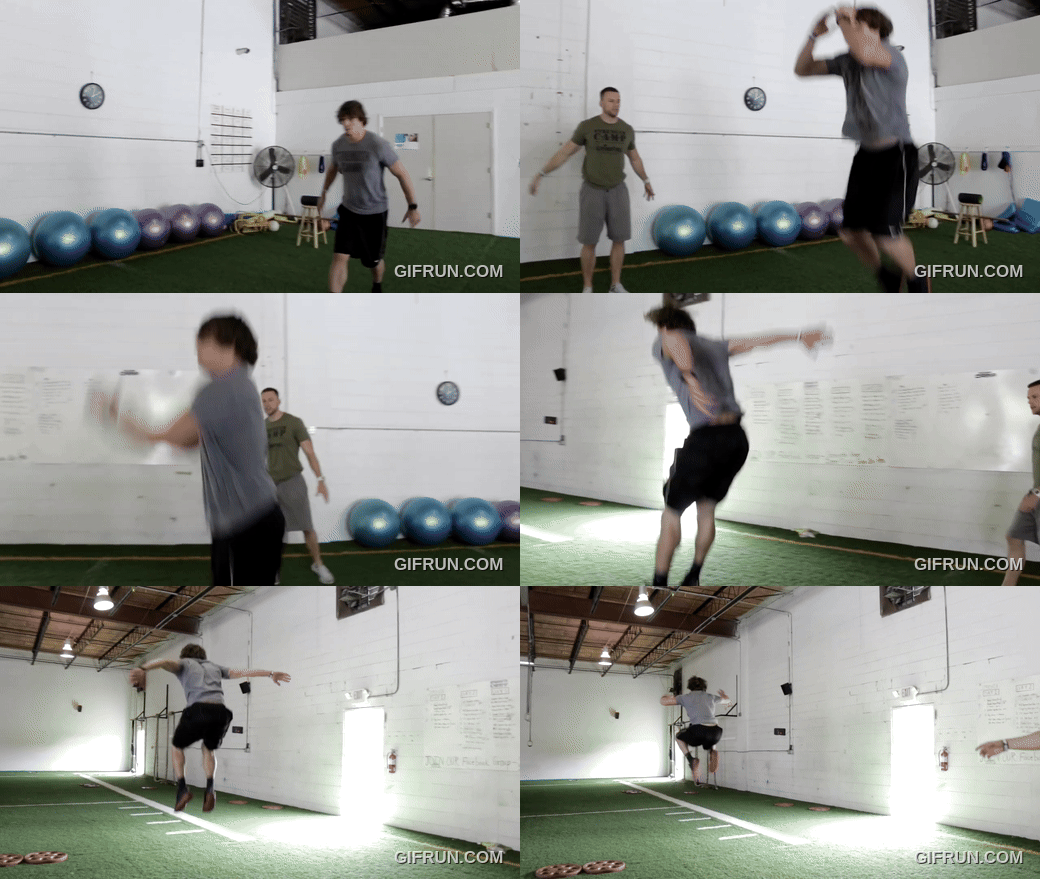
Focus on producing a powerful takeoff while driving the body upward. Don’t sacrifice mechanics simply to get higher.
10. Power Bounds for Distance
Finally, direct that power horizontally.
The goal is to cover as much distance as possible with each bound while maintaining rhythm, coordination, and control.
This is a great way to teach young athletes how to apply force horizontally and develop powerful elastic movement.
Quality Over Quantity
Here’s where many youth training programs get it wrong.
More isn’t better.
Plyometrics are high-intensity movements. Your athlete doesn’t need hundreds of contacts to improve. They need high-quality contacts performed with appropriate technique and sufficient recovery.
As athletes become fatigued, jump height, coordination, landing mechanics, and force production can deteriorate.
That’s not what we’re looking for.
We’re trying to teach the nervous system to produce high-quality explosive movement.
Keep the volume appropriate for the athlete’s age, training experience, and sport demands. Progress gradually from bilateral to unilateral exercises and from lower-intensity movements to more demanding power exercises.
And remember: youth athletes should be coached.
Don’t simply hand them a list of exercises and tell them to go jump.
Final Thoughts
If you want your young athlete to become faster, stronger, and more explosive, don’t overlook the basics.
A properly programmed plyometric routine can help develop the ability to produce force quickly, improve reactive strength, enhance coordination, and develop the muscle-tendon qualities needed for efficient athletic movement.
Plyometrics aren’t about doing flashy exercises.
They’re about teaching athletes how to hit the ground, absorb force, and attack the next movement with speed and power.
That’s a foundation every athlete can build on.
If you’re serious about developing your young athlete—not just for their next season, but for their long-term athletic potential—check out our Youth Performance Program at Overtime Athletes.
