Has Youth Sports Gone Too Far? Why More Games Aren’t Creating Better Athletes
If you’re like most sports parents, you want to give your child every opportunity to succeed. You sign them up for the best youth sports leagues, invest in travel teams, pay for showcase tournaments, and spend countless weekends on the road hoping all those extra games will help them become a better athlete.
The problem?
Playing more doesn’t automatically make a better athlete.
In fact, for many young athletes, the opposite is happening.
Today’s youth sports culture has convinced parents that year-round competition is the key to development. More games, tournaments, camps equals more exposure.
But while kids are getting more reps in their sport, they’re often neglecting the one thing that actually raises their athletic ceiling:
Athletic development.
We aren’t against kids playing sports. We love competition and we want athletes competing, learning, and enjoying the game.
What we are against is the belief that more games equal more development.
Because it doesn’t. Read this article on the things hurting youth athletes development!
The Youth Sports Arms Race
Youth sports have changed dramatically over the last decade.
One sport has become two. Two has become three. Seasons that once lasted a few months now run almost year-round. Travel tournaments have become the norm instead of the exception, and many young athletes are playing more competitive games each year than professional athletes in their sport.
Parents spend thousands of dollars on travel fees, hotels, equipment, private lessons, and tournament entry fees because they genuinely believe it’s giving their child an advantage.
But here’s the question few people ask:
If your athlete is still slow, weak, uncoordinated, or constantly injured, what advantage are all those extra games actually providing?
Playing Your Sport Isn’t the Same as Developing Athleticism
One of the biggest misconceptions in youth sports is believing that simply playing the game develops athleticism.
It doesn’t.
Games improve decision-making, sport IQ, and competitive experience.
They do very little to maximize an athlete’s physical potential.
Speed doesn’t magically improve because you played five baseball games over the weekend.
Vertical jump doesn’t increase because you played six volleyball matches.
Acceleration doesn’t improve because you played another soccer tournament.
Those physical qualities have to be trained intentionally.
Speed.
Strength.
Power.
Coordination.
Change of direction.
Jumping mechanics.
Landing mechanics.
Mobility.
Body control.
These are the athletic qualities that separate average athletes from elite ones.
And unfortunately, they’re becoming an afterthought.
More Games…Less Development
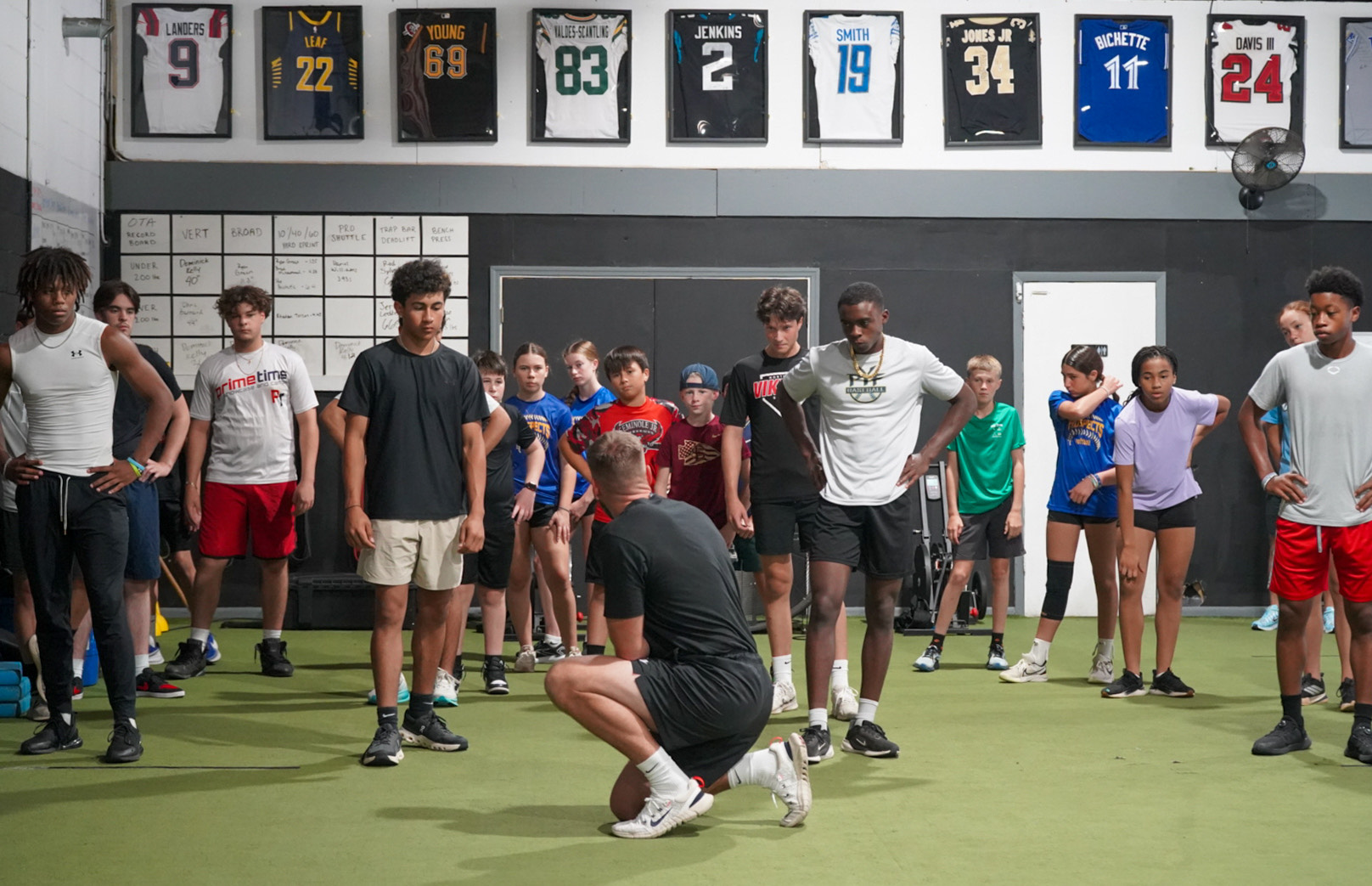
Think about what many young athletes’ schedules actually look like.
Practice several nights a week.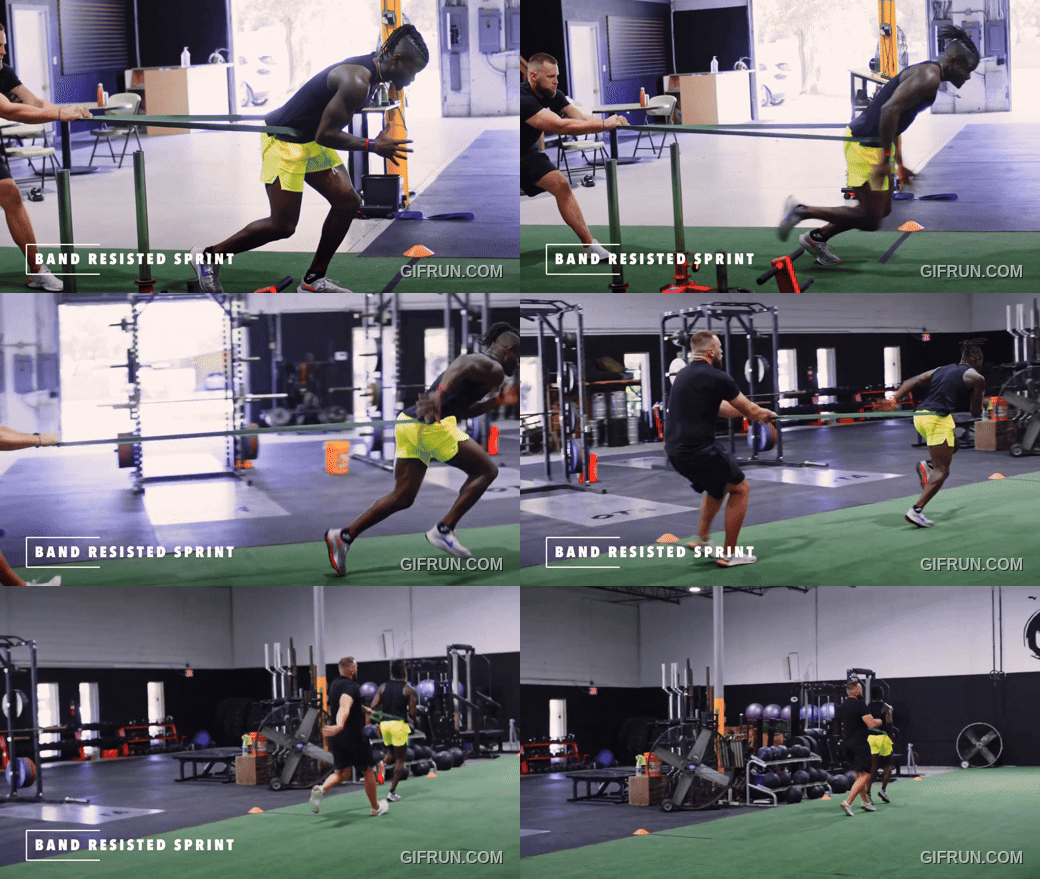
Weekend tournaments.
Private skill lessons.
Travel every weekend.
Another camp and showcase.
Another season starts before the last one even ends.
When is there time to actually train?
The answer for many athletes is…
There isn’t.
Their bodies are constantly recovering from competition instead of adapting through quality performance training. Instead of getting stronger, they stay the same. Instead of becoming faster, they simply become more experienced at competing with the same physical limitations.
Why So Many High School Athletes Are Behind
One trend we’ve noticed over years of coaching is this: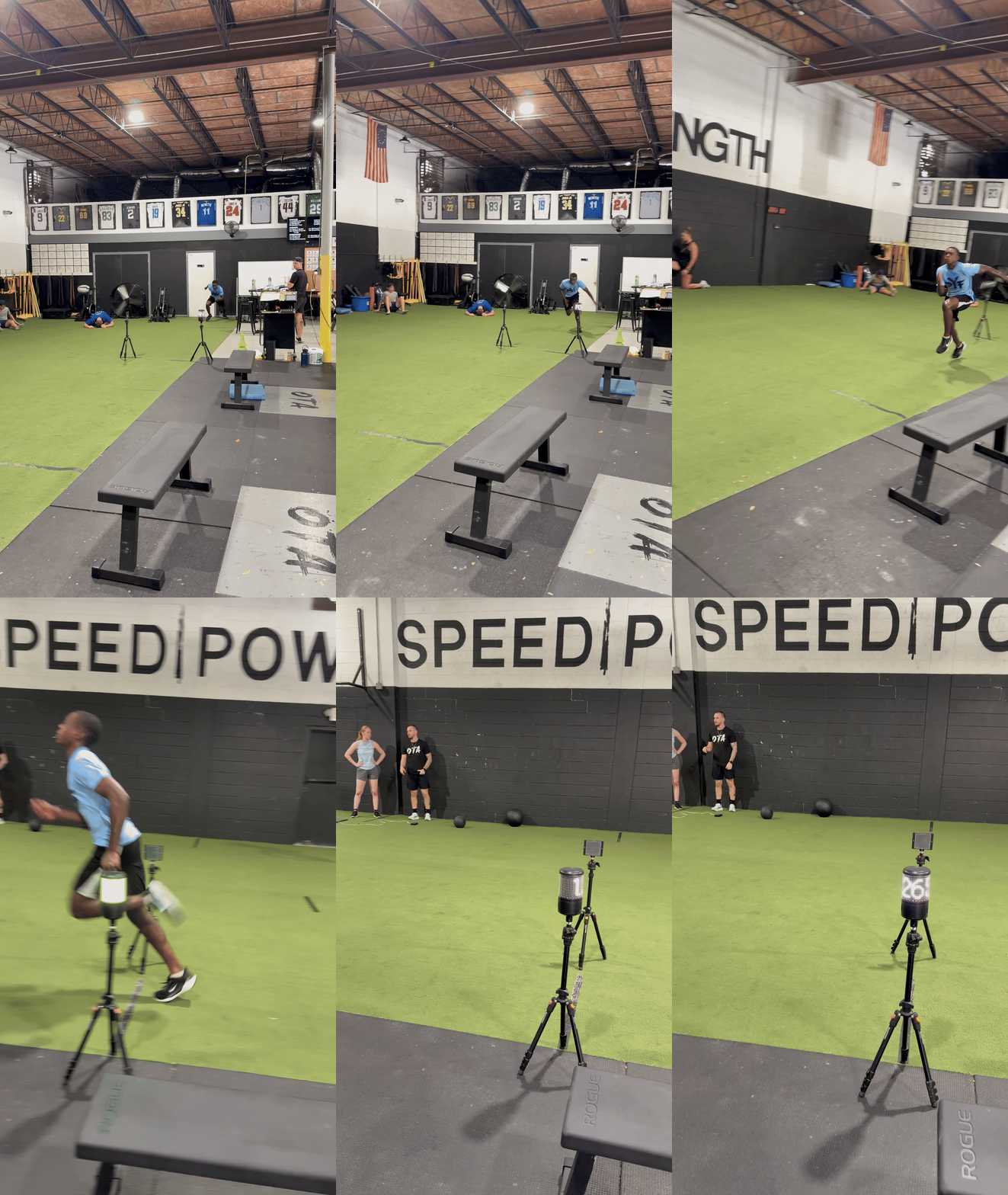
Many athletes arrive in high school having played their sport for ten years…
Yet they’ve never actually trained to become an athlete.
They’ve accumulated thousands of reps.
But they still struggle to sprint efficiently.
They lack lower-body strength.
They can’t absorb force well when landing.
Their first step is slow.
Their change of direction mechanics are inefficient.
They’ve spent years practicing their sport but almost no time building the physical engine that powers it. Then they wonder why they can’t keep up with the stronger, faster athletes.
The answer isn’t usually more games. It’s better preparation.
The Cost of Year-Round Competition
The physical consequences are becoming impossible to ignore.
We’re seeing younger athletes dealing with overuse injuries that used to be far more common at older ages.
Patellar tendon pain. Little League elbow. Shoulder overuse injuries. Shin splints. Stress reactions. Hip pain. Chronic ankle issues.
Many of these injuries aren’t caused by one bad play.
They’re the result of months—or years—of repetitive stress without enough recovery, strength development, or movement training.
The body adapts to stress only when it has time to recover.
Without that balance, performance eventually declines.
Parents Have Their Priorities Backwards
This is the uncomfortable truth.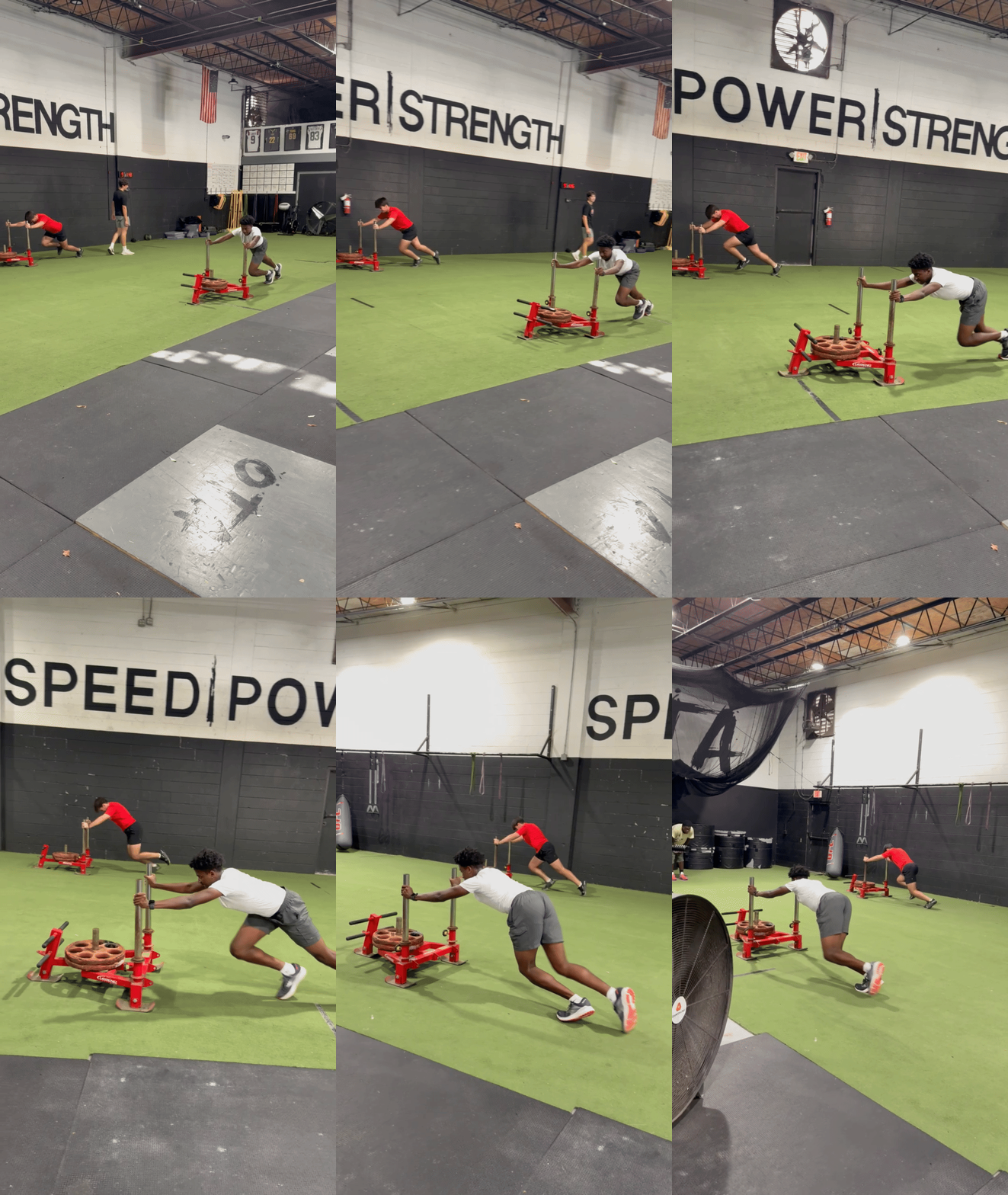
Many families are willing to spend thousands every year on travel tournaments…
But hesitate to invest in the one thing that improves every aspect of their athlete’s game.
Athletic development.
Imagine spending thousands of dollars so your athlete can compete with the exact same speed, strength, and explosiveness they had six months ago.
Now imagine if even a portion of that investment went toward improving those physical qualities instead.
A faster athlete performs better in almost every sport, stronger athlete is harder to push around, more explosive athlete jumps higher, accelerates quicker, and changes direction more efficiently, and a more resilient athlete is less likely to miss time because of preventable overuse injuries.
Those qualities don’t disappear when one season ends.
They carry over into every season that follows.
That’s why athletic development is one of the highest-return investments a parent can make.
The Long-Term Approach Always Wins
The best athletes rarely become elite because they simply played the most games.
They become elite because they continuously improve the physical qualities that allow their skills to shine.
Athletic development isn’t about replacing sports.
It’s about making every sport more productive.
Play your sport.
But make time to build the athlete behind the uniform. Because speed can be developed. Strength can be built. Power can improve. Movement quality can be trained.
Those improvements create opportunities that simply playing another tournament often cannot.
Final Thoughts
Youth sports should help kids become healthier, more confident, and better athletes.
Instead, too many athletes are arriving at high school exhausted, physically underdeveloped, and already dealing with injuries because their calendar has been filled with games instead of development.
If your goal is helping your child reach their highest potential, don’t just ask how many tournaments they’re playing this year.
Ask how much they’re improving physically.
Because long after one tournament is forgotten, the speed, strength, power, resilience, and athleticism they develop will continue to pay dividends throughout their athletic career.
Our Youth Performance Program is designed to develop the qualities that games alone can’t.
If you’re tired of watching your athlete simply play more and you’re ready to help them actually become a better athlete, click the image below to get started on our Youth Program!
Because better athletes aren’t built by playing more. They’re built by training smarter.