
Volleyball Training: Build Elite Lateral Quickness & Court Agility Like Overtime Athletes
When most athletes think about volleyball training, they immediately think about vertical jump training.
And yes — your vertical matters.
Being able to elevate higher for blocks, attacks, and rebounds is a game changer. But one of the biggest mistakes volleyball athletes make is focusing ONLY on jumping while neglecting one of the most important qualities on the court:
Lateral movement.
Volleyball is a reactive sport. It’s not just about how high you can jump — it’s about how fast you can move, react, plant, cut, and recover in every direction.
The athletes who dominate on defense, close blocks faster, transition quicker, and stay balanced during chaotic plays are usually the athletes with elite lateral agility and quickness.
If your feet are slow laterally, it doesn’t matter how high your vertical jump is. You’ll constantly be late to plays.
That’s why serious volleyball training needs to include lateral speed development. Make sure you go read our previous article on the best plyometrics for volleyball!
Why Lateral Agility Matters in Volleyball
Think about how volleyball is actually played.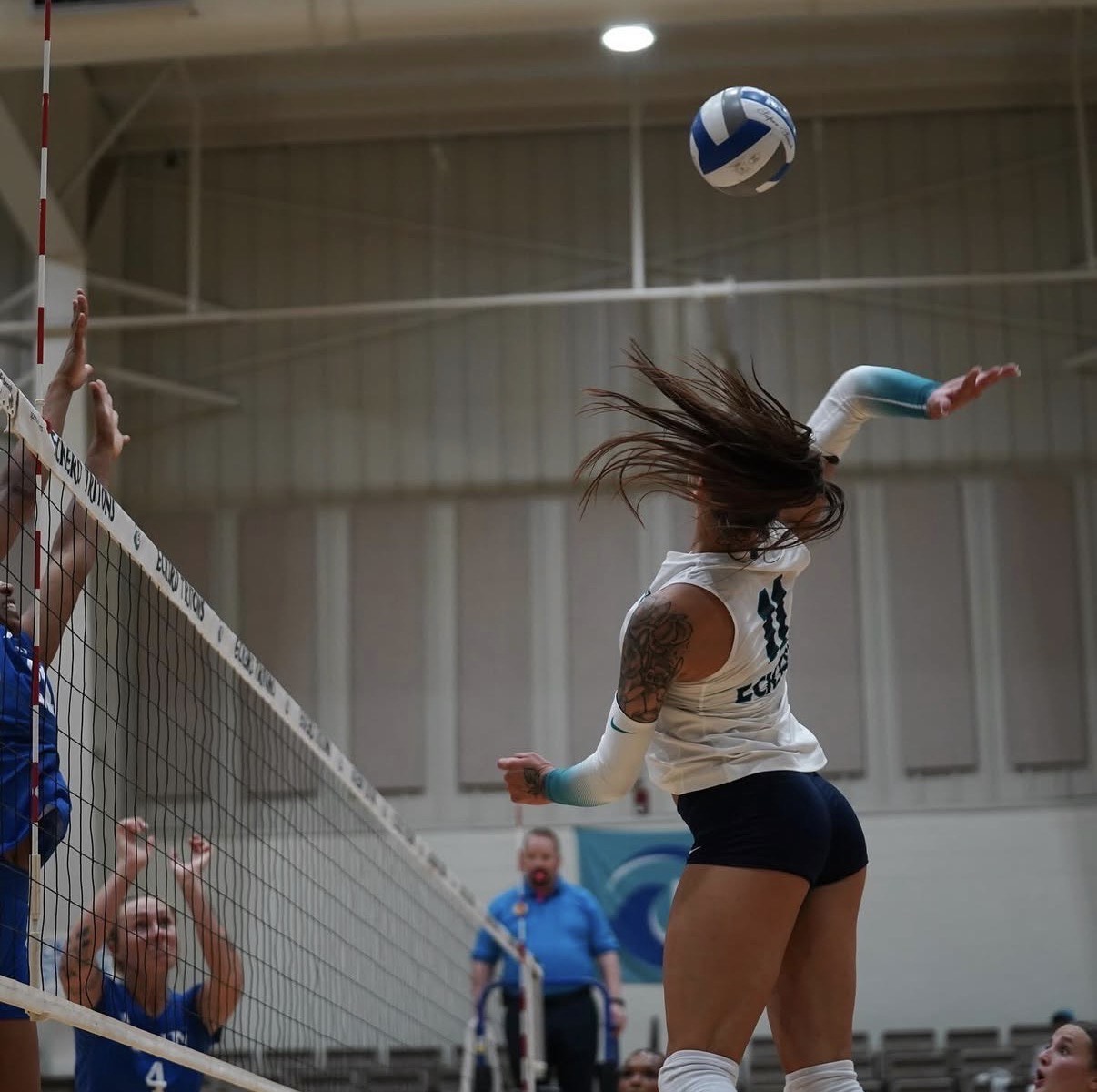
Athletes are constantly:
- Shuffling laterally to defend
- Closing space for blocks
- Reacting to tips and deflections
- Transitioning from defense to offense
- Planting and changing direction quickly
- Recovering after jumps
- Maintaining balance during chaotic movement
Volleyball is rarely linear.
Most movements happen side-to-side, diagonally, or reactively.
The faster an athlete can absorb force laterally and redirect their body efficiently, the better they’ll perform on the court.
This is where lateral agility training becomes critical.
Improving lateral quickness helps volleyball athletes:
- Improve defensive range
- Reach balls faster
- Recover quicker after movement
- Improve balance and body control
- Develop stronger deceleration mechanics
- Reduce wasted movement
- Improve reaction ability under pressure
And most importantly…
It allows athletes to play FAST while staying under control.
That’s the key.
Vertical Jump AND Lateral Speed Go Together
A lot of volleyball athletes separate jump training and agility training.
But elite movement qualities are connected.
An athlete who can absorb force efficiently laterally usually develops better elastic qualities overall. Better foot and ankle stiffness, coordination, deceleration, and reactive ability.
Those qualities often transfer into improved explosiveness and jumping ability too.
The best volleyball athletes aren’t just explosive vertically.
They’re explosive in every direction.
That’s what complete athleticism looks like.
So if you want to become a more dominant volleyball athlete, you need to train lateral movement with the same intensity and consistency you train your vertical jump.
Here are 3 ways volleyball athletes can start improving lateral agility and quickness today.
1. Build the Foundation with Lateral Lower Limb Prep & Low-Level Plyometrics
Before athletes start doing advanced agility drills, they need to prepare the lower limbs properly.
Everything starts at the foot and ankle.
If the foot and ankle can’t absorb and redirect force efficiently, the entire movement system breaks down.
This is why low-level plyometric work is one of the best starting points for volleyball athletes.
Exercises like:
- Lateral Pogos
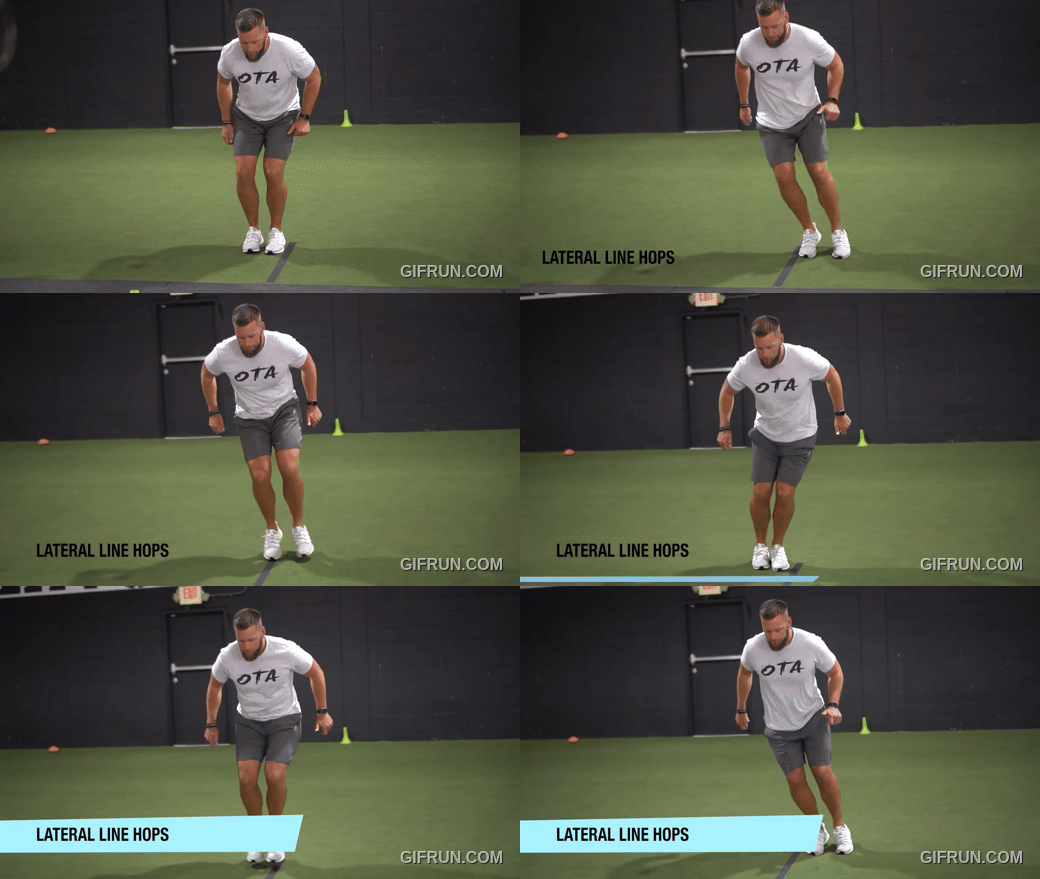

- Single Leg Lateral Pogos
- Lateral Line Hop Series
help build:
- Foot and ankle stiffness
- Elastic reactivity
- Coordination
- Ground contact efficiency
- Lower limb resilience
These drills teach athletes how to be reactive off the ground while improving their ability to handle repeated lateral contacts.
And in volleyball, repeated contacts matter.
Athletes are constantly making small reactive adjustments throughout a match. The better their lower limbs can handle those repetitive forces, the more explosive and efficient they become over time.
Don’t underestimate the basics.
Elite movement starts with elite lower limb function.
2. Develop Force Production with Skater Jumps & Lateral Bounds
Once athletes build a solid foundation, the next step is developing more forceful lateral movement patterns.
This is where skater jumps and lateral bounds become incredibly effective.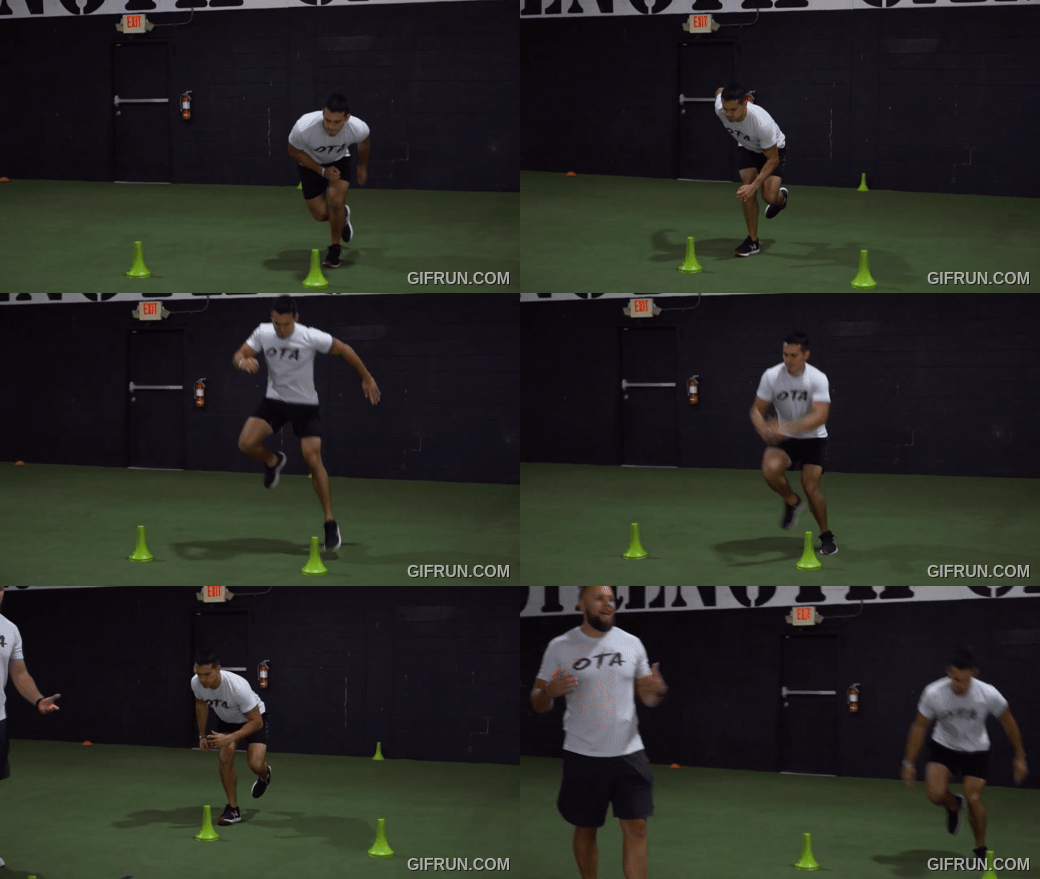
These exercises teach athletes how to:
- Produce force laterally
- Absorb force efficiently
- Stabilize the hips and knees
- Improve single-leg control
- Develop deceleration mechanics
In volleyball, deceleration is everything.
Being fast is useless if you can’t stop and control your body.
The athletes who move best laterally are usually the athletes who can decelerate the best.
Skater jumps and lateral bounds help strengthen stability up the kinetic chain — from the foot and ankle into the knees, hips, and trunk.
As athletes improve, you can progress these drills by adding load.
Examples include:
- Med ball skater jumps
- Weighted lateral bounds
- Band-resisted skater jumps
Adding load increases force demands and improves the athlete’s ability to absorb and control momentum during aggressive changes of direction.
That translates directly onto the volleyball court.
Better cuts, balance, and movement efficiency.
3. Integrate Reactive Lateral Speed Drills
Once the athlete develops the physical tools, the next step is applying them reactively.
Because true agility is not pre-planned.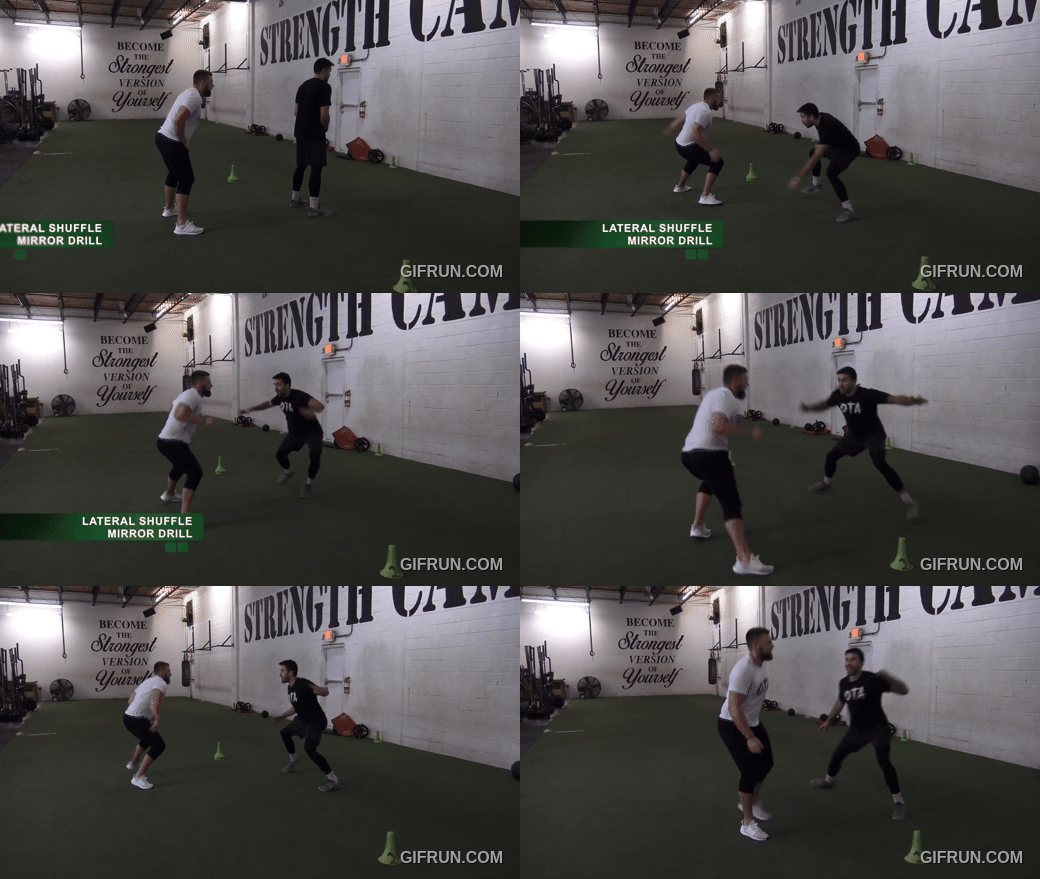
Real agility involves reacting to external stimuli and making fast movement decisions under pressure.
That’s exactly what volleyball requires.
The game is unpredictable.
Athletes must read, react, and reposition instantly.
This is why reactive lateral speed drills are essential.
Exercises like:
- Short Shuttle Drills
- Lateral Shuttle Variations
- Reactive Skater Jumps
- Mirror Drills
- Partner Reaction Drills
teach athletes how to:
- Plant quickly
- Change direction efficiently
- Read movement cues
- Improve reaction time
- Develop game-speed coordination
This is where movement becomes sport-specific.
Reactive training helps bridge the gap between athletic development and actual volleyball performance.
And this is where athletes often make massive improvements in real game movement.
Not because they simply got “faster.”
But because they learned how to move efficiently under reactive conditions. That’s true agility.
Final Thoughts
If you’re serious about becoming a better volleyball athlete, you cannot ignore lateral movement training.
Yes, vertical jump training matters.
But volleyball is about much more than jumping high.
It’s about reacting quickly.
Moving efficiently.
Controlling your body.
Absorbing force.
Changing direction.
Recovering instantly.
The athletes who dominate on the court are explosive in every direction — not just vertically.
Start building your lateral quickness by focusing on:
1. Lower limb prep and low-level plyometrics
2. Skater jumps and lateral bounds
3. Reactive lateral speed drills
Build the foundation.
Develop stability.
Train reaction.
That’s how you develop real game-speed agility.
If you want a complete system designed to improve your speed, agility, reaction ability, and athletic movement, check out our Game Speed Agility Program and start training like an elite athlete today.
