Best Strength Exercises to Improve Athlete Change of Direction
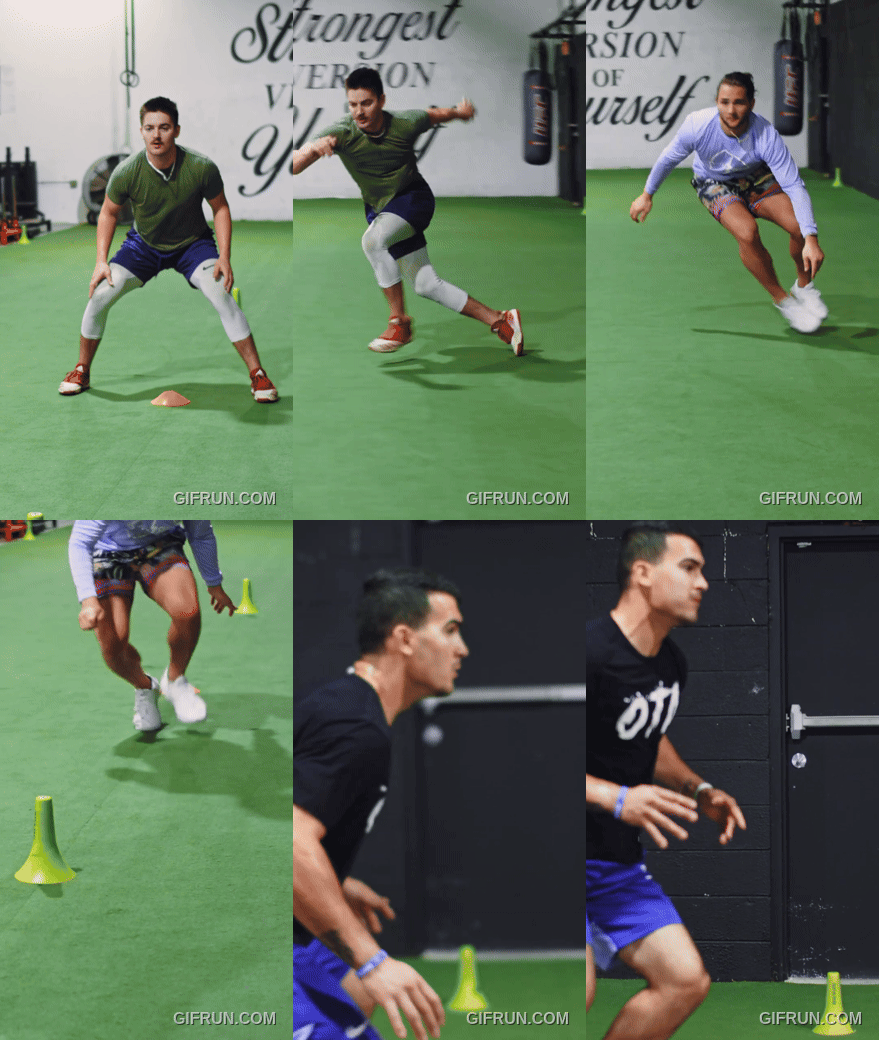
If you want to become a faster, more explosive athlete, you can’t just focus on sprint speed. One of the biggest separators between average athletes and elite athletes is change of direction. The ability to stop fast, plant hard, and explode into a new direction is what creates separation on the field and court.
Football. Basketball. Baseball. Soccer. Softball. Lacrosse. It doesn’t matter the sport. If you can’t cut efficiently, you’re leaving performance on the table.
But here’s where most athletes get it wrong…
They only train speed. They’re doing hours of agility ladders. Endless amounts of random cone drills on the field.
What they don’t train is the strength required to actually absorb force and redirect it.
That’s where real athlete development happens. Check out our previous article sharing the best agility drills for football!

Deceleration Strength: The Missing Link
Most injuries don’t happen when athletes are moving slow.
They happen when an athlete is trying to slam on the brakes, plant at high speed, and re-accelerate.
That’s deceleration.
When you cut, your body has to absorb massive forces through the ankles, knees, hips, and trunk. If you don’t have the strength to control those forces, bad things happen:
- Knees cave in
- Ankles roll
- Hips collapse
- Hamstrings get overloaded
- Groin strains happen
- ACL risk increases
- Speed drops off instantly
This is why athletes who only train flashy drills but skip strength work often hit a ceiling—or get hurt.
If you want elite change of direction, you need elite braking strength.
Why Eccentric Strength Matters
When we talk about cutting ability, one of the most important qualities is eccentric strength.
That means your ability to control force while muscles are lengthening.
Think of it like the brakes on a sports car.
If you’re fast but can’t decelerate, it’s like having a Ferrari with no brakes.
When planting to cut, your quads, glutes, hamstrings, adductors, and calves all need to absorb force and stabilize the body before you explode again.
That’s why smart athletes train lunges, split stance work, lateral patterns, and controlled loading.
Core Strength: The Secret Weapon for Cutting Faster
Now here’s the part almost nobody talks about…
Leg strength alone is not enough.
You can have strong legs, but if your trunk folds, rotates uncontrollably, or leaks energy during the plant step, you’re losing power.
Your core is what transfers force from the ground through the body.
If you can’t stabilize the torso:
- You drift on cuts
- You lose balance
- You waste steps
- You can’t redirect force cleanly
- Your plant foot gets stuck too long
Strong athletes don’t just have strong legs.
They have a trunk that stays locked in while the lower body does work.
That’s how elite movers stay low, sharp, and explosive.
3 Best Strength Exercises for Athlete Change of Direction
These are 3 high-value movements we use to build real-world cutting strength. For the full breakdown and additional exercises, make sure to watch the YouTube video attached at the top.
1. Goblet Lateral Lunges
This is a game changer for frontal plane strength.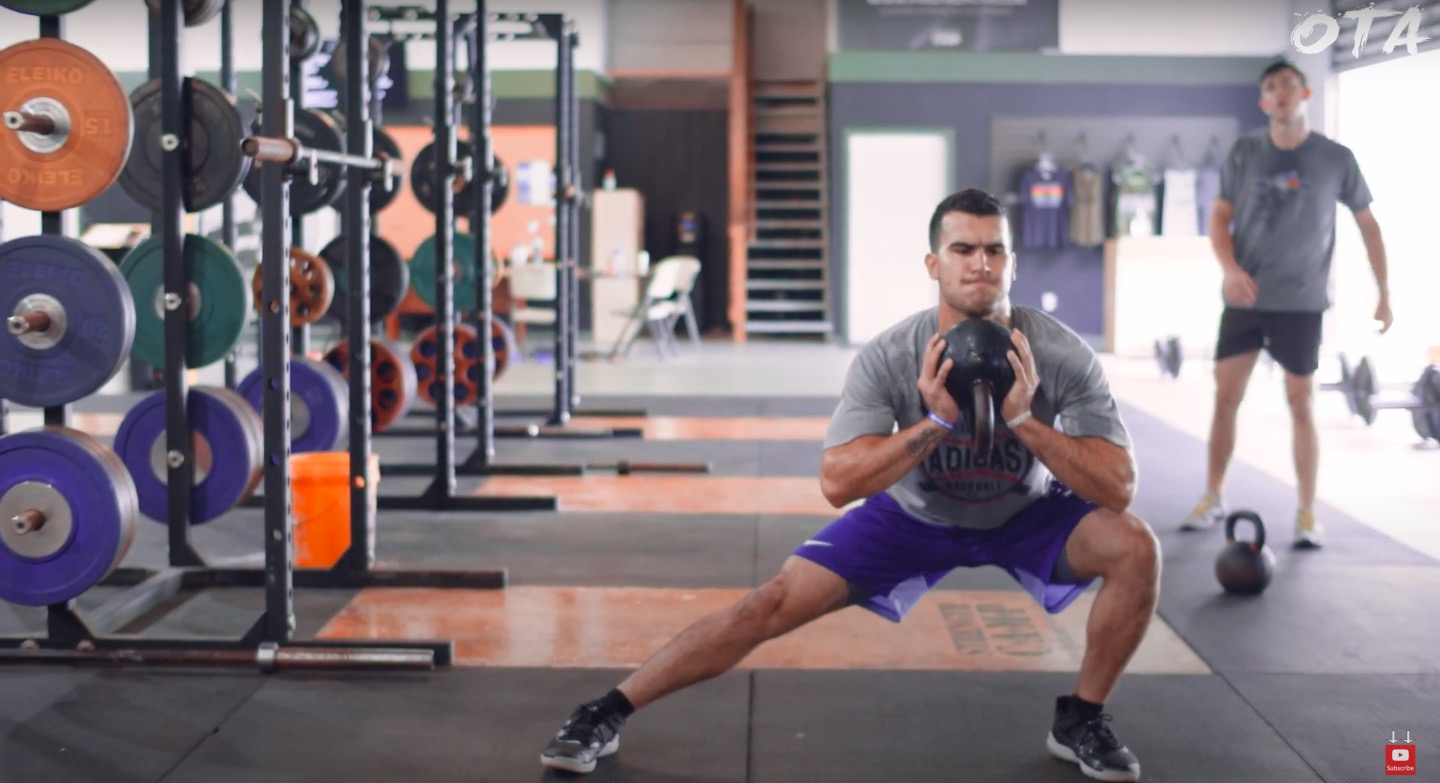
Most sports involve side-to-side movement, yet many athletes only train straight ahead.
Goblet lateral lunges help build:
- Adductor strength
- Glute strength
- Hip mobility
- Lateral braking power
- Better knee control during cuts
Holding the weight in front also challenges posture and core control.
Coaching Tip: Sit back into the hip, keep chest tall, and control the lowering phase.
2. Clubbell Lunges
This variation adds an upper-body and trunk stability challenge while training unilateral leg strength.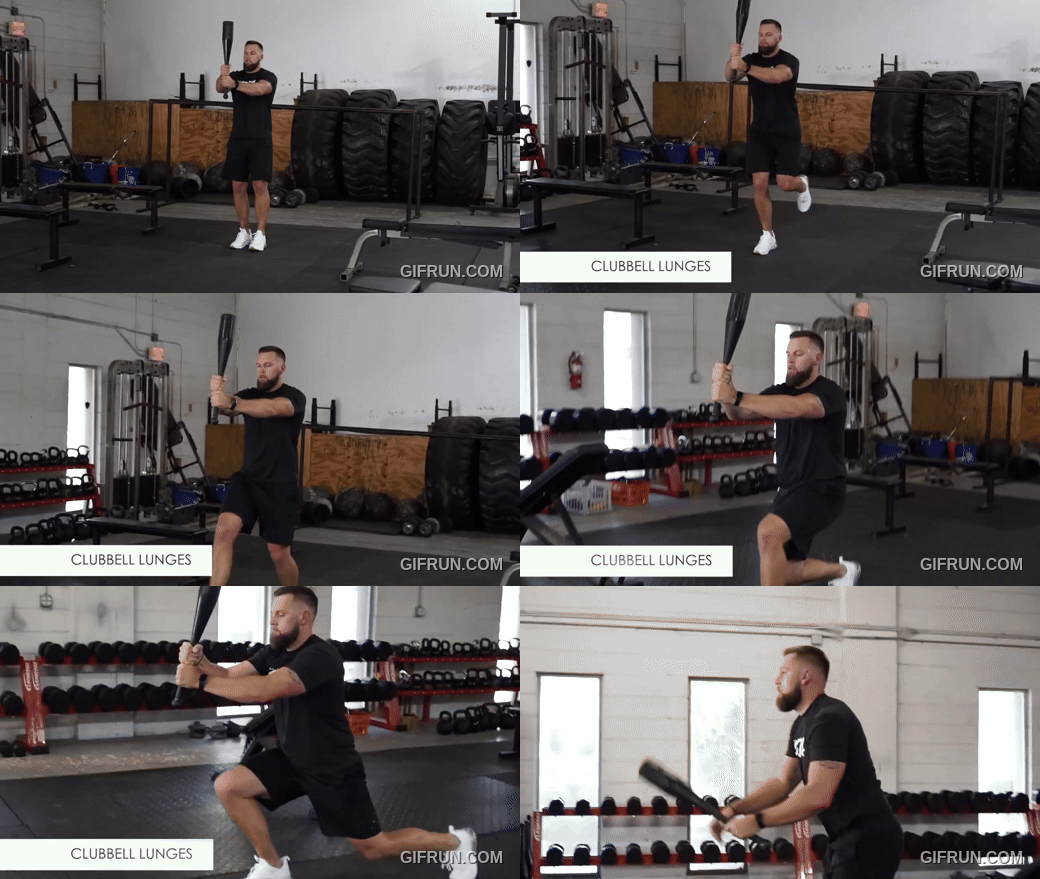
When the load is offset and moving, your core has to work overtime to resist rotation, flexion, and stay stable.
That directly transfers to sport where the arms are moving while the legs are planting and changing direction.
Benefits include:
- Single-leg strength
- Dynamic trunk stability
- Hip control
- Deceleration mechanics
- Improved force transfer
This is athletic strength—not just gym strength.
3. Suitcase Lunges
This is one of the most underrated exercises for athletes.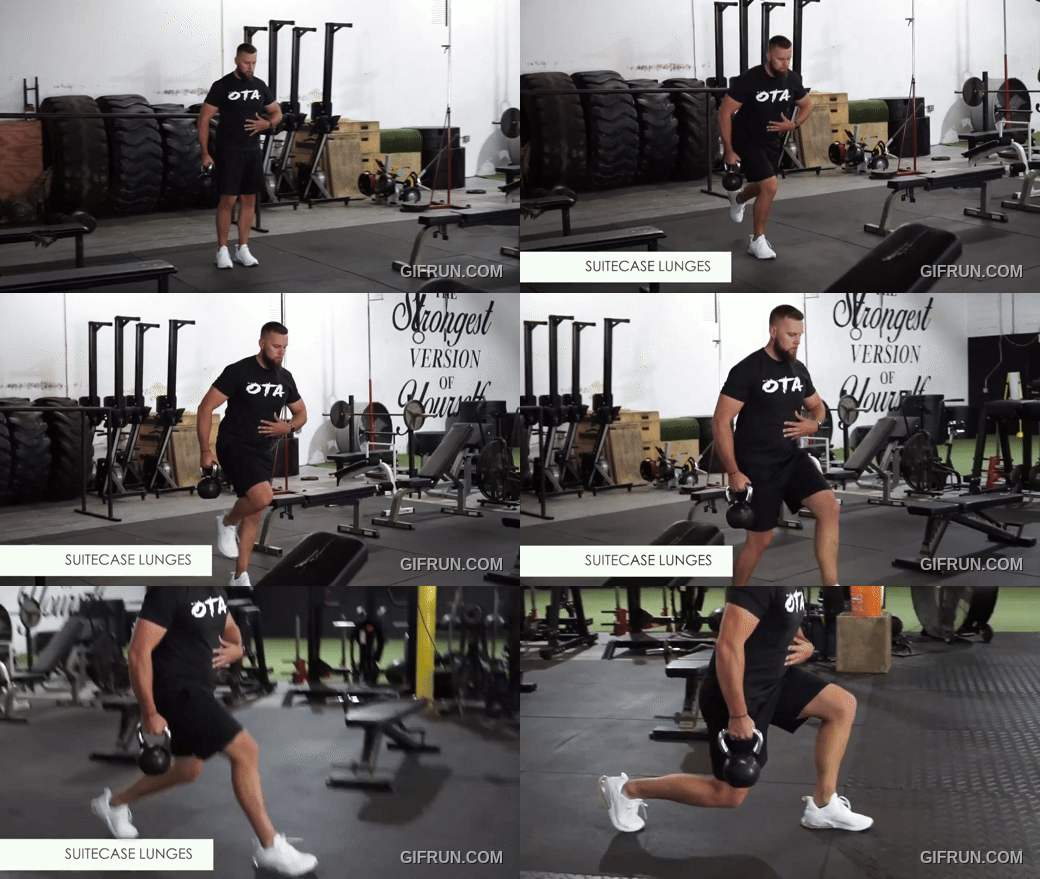
Holding a load on one side forces the body to resist leaning and rotating. That means your obliques, hips, and glutes are all firing.
Exactly what happens when you cut in live play.
Benefits:
- Anti-lateral flexion core strength
- Hip stability
- Single-leg balance
- Knee control
- Better cutting posture
If you collapse during cuts, this movement can be a huge fix.
Why Random Exercises Won’t Get You Elite Results
Here’s the truth…
Doing a few lunges once a week won’t magically make you faster.
Results come from a structured system that combines:
- Speed mechanics
- Deceleration training
- Plyometrics
- Strength progression
- Change of direction drills
- Mobility
That’s how elite athletes train.
Too many athletes bounce around doing random Instagram workouts and wonder why nothing changes.
The best athletes follow a proven progression.
Final Thoughts
If you want better athlete change of direction, stop only chasing speed drills and cone work.
Start building the strength to brake, stabilize, and re-accelerate.
That means:
- Stronger eccentric legs
- Better single-leg control
- More powerful hips
- Stronger core stability
- Cleaner cutting mechanics
These 3 exercises are a great start—but they need to be part of a complete performance system.
If you’re serious about becoming quicker, sharper, and more dominant in game situations, check out our Game Speed Agility Program.
Inside, we show athletes exactly how to train speed, cutting, deceleration, and explosive movement the right way.
Stop guessing. Click the image below to get started today!