
3 Best Strength Exercises to Get Faster and More Explosive
Speed is not just about running mechanics.
If you want to get faster, you need the ability to produce a lot of force into the ground, and you need to produce that force quickly. The best sprinters and athletes are not simply moving their arms and legs in the “right” positions. They are putting enormous amounts of force into the ground and directing that force in the right direction.
This is where strength training becomes a major part of speed development.
Too many athletes spend months trying to fix their “mechanics” when the real problem is much simpler: they are not strong enough to produce the force required to move their body at high speeds.
You can clean up shin angles, posture, arm action, and foot position all day. But if an athlete cannot produce enough force into the ground, changing positions alone will not suddenly make them faster.
If you want to get faster, you need to build the physical qualities that allow you to apply more force, especially during acceleration.
Here are three key strength exercises we use to help athletes build that foundation.
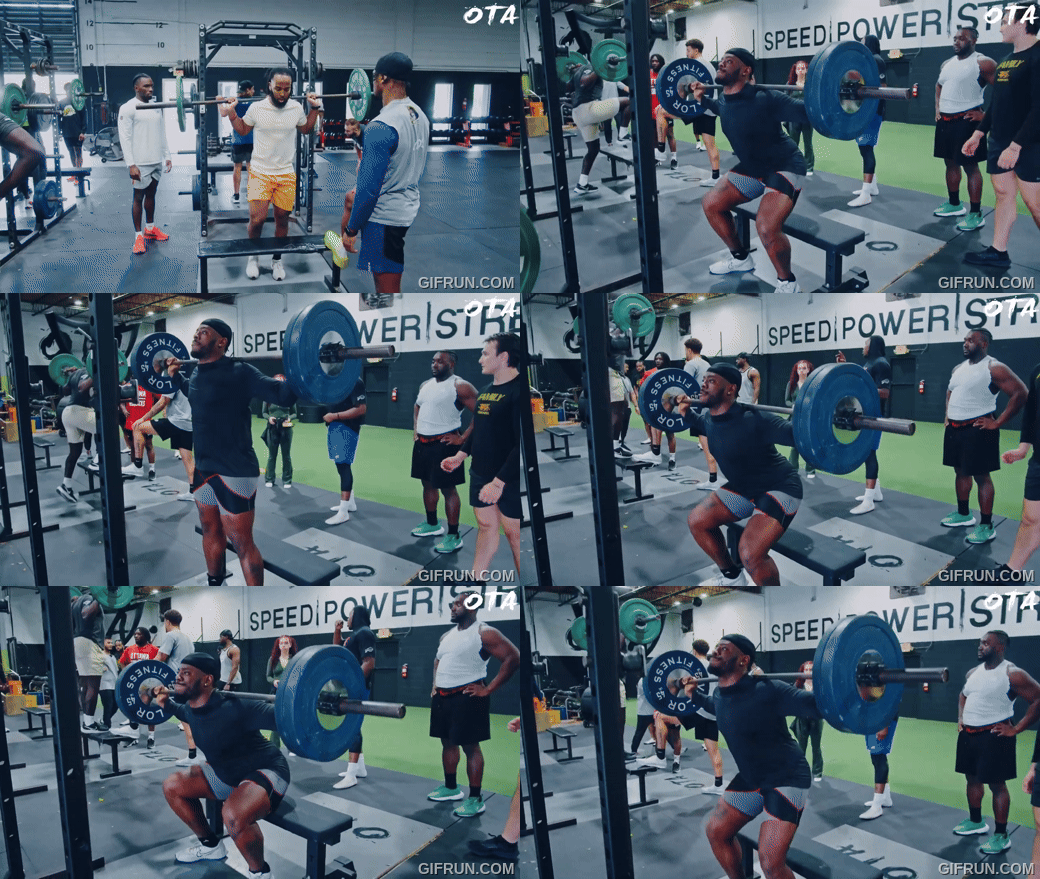
1. Max Effort Squats
If you want to get faster, you need to develop lower-body absolute strength.
Max effort squats, using any appropriate squat variation, are universally one of the best ways to do it.
Back squats, safety bar squats, front squats, box squats, and other variations can all be used depending on the athlete, their training age, and what they need.
The goal is not to turn an athlete into a powerlifter.
The goal is to increase their ability to produce force.
Think about what happens during acceleration. Every step requires you to push against the ground hard enough to overcome your body mass and propel yourself forward. The more force you can effectively apply, the greater your potential to accelerate.
Strength creates the foundation for that force production.
This is especially important for athletes who have decent running mechanics but consistently struggle to create separation, win the first few steps, or accelerate against an opponent.
They may not need another complicated sprint drill.
They may just need to get stronger.
Read our article on the best acceleration drills for elite athletes.
Max effort squatting also gives you a way to progressively overload the muscles responsible for producing force through the hips, knees, and ankles.
But strength by itself does not make you fast.
You have to eventually teach the athlete to express that strength quickly and in the appropriate direction.
That is where your speed training, jumps, sprints, and other explosive work come into play.

2. Front Rack Barbell Reverse Lunges
The second exercise is the front rack barbell reverse lunge.
Squats are great for building absolute strength, but athletes don’t compete standing on two feet with both legs perfectly symmetrical.
Sport is largely unilateral.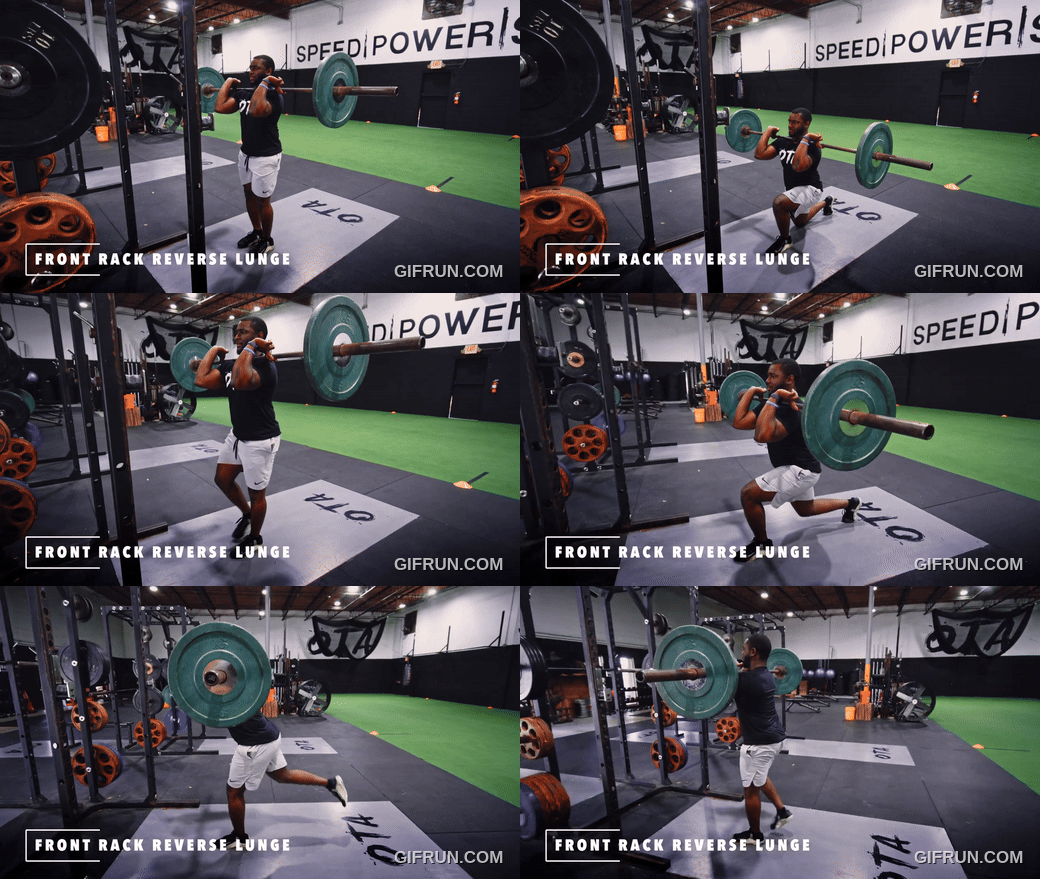
You sprint one leg at a time. You cut off one leg. You jump from one or two legs. You accelerate, decelerate, and change direction while shifting force from one side of the body to the other.
That’s why unilateral strength matters.
The front rack barbell reverse lunge allows you to develop single-leg strength through a large range of motion while also challenging the athlete to control their body.
The key is not simply completing reps.
Control the eccentric and maintain a stiff and upright torso.
As you step backward into the lunge, don’t crash into the bottom position. Control your descent, maintain your position, and load the working leg.
Then drive back up aggressively.
At the top, finish by pulling the hip all the way through rather than stopping short.
That final hip extension matters.
We want athletes to own the entire movement, from controlling the eccentric, to producing force out of the bottom, to finishing the hip extension at the top.
This gives the athlete strength through a full range of motion instead of simply training partial positions where they are comfortable.
It also makes the exercise highly useful for athletes who need to build strength without relying exclusively on bilateral movements.
Check out our full article on the best single leg exercises for building explosive unilateral strength!
And remember, getting stronger on a reverse lunge doesn’t automatically mean you’re going to get faster.
The goal is to build the physical capacity that you can later express through sprinting and explosive movement.
3. Heavy Sled Marches
The third exercise is one of our favorites for developing the ability to produce horizontal force: heavy sled marches.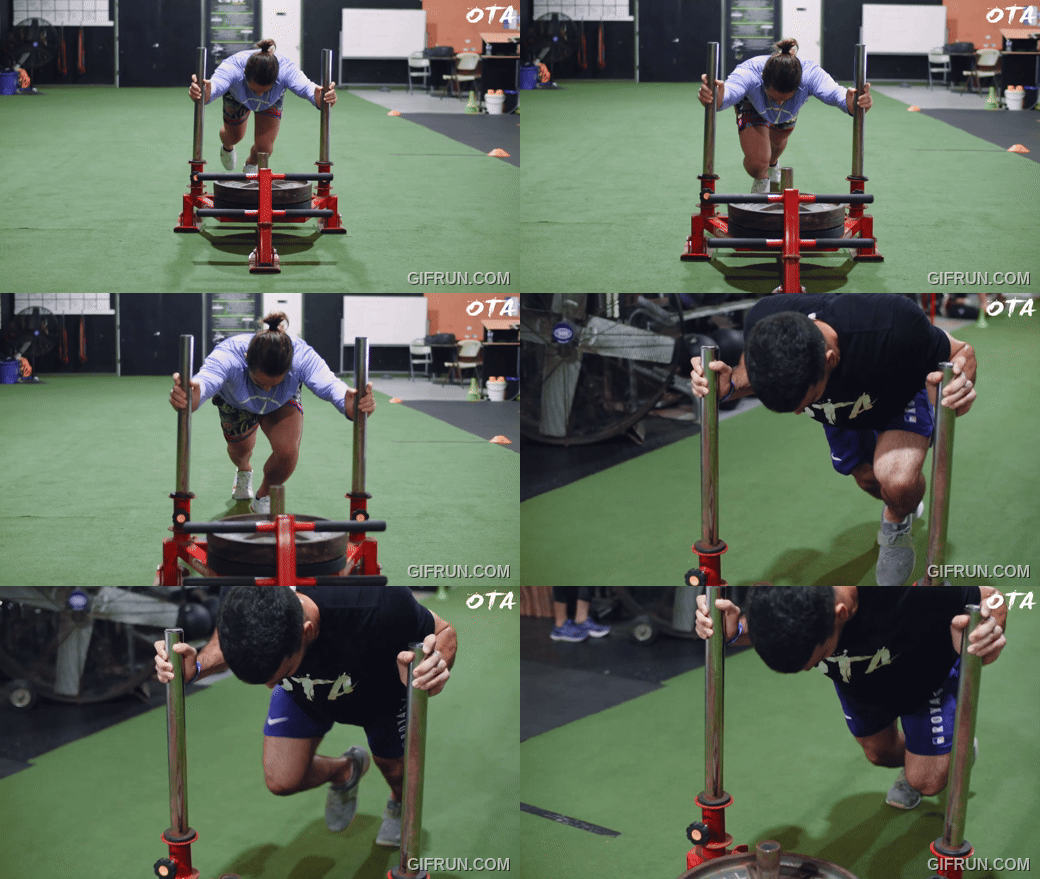
Unlike many traditional strength exercises, the sled allows you to specifically emphasize pushing against resistance in a direction that has a strong relationship with acceleration.
The focus here is concentric force production.
You’re continuously pushing into the ground and driving the sled forward.
For athletes trying to get faster, this is valuable because acceleration requires you to produce force horizontally while overcoming your body mass and moving your center of mass forward.
Heavy sled marches aren’t about looking pretty.
They’re about producing force.
Drive into the ground, maintain a strong position, and continue applying force through every step.
You don’t need to turn every sled exercise into a high-speed sprint drill. With heavy loads, the goal is to deliberately produce force and accumulate quality work.
This makes heavy sled marches a useful complement to squats and unilateral strength work.
Squat helps build your overall force-producing capacity.
Reverse lunge develops unilateral strength and control.
The heavy sled march teaches you to apply force horizontally.
Together, they cover several important pieces of the strength foundation needed to get faster.
Please make sure you read our guide on training max velocity!
Stop Blaming Everything on Mechanics
One of the biggest mistakes athletes make when trying to get faster is assuming that every speed problem is a mechanics problem.
Sometimes it is.
But not always.
If an athlete has poor posture, poor front-side mechanics, overstriding, or inefficient positions, those things should absolutely be addressed.
But ask a more fundamental question first:
Can this athlete actually produce enough force to take advantage of better mechanics?
An athlete who is weak may struggle to project their body forward regardless of how many technical drills they perform.
This is why speed development should not be reduced to running drills.
You need strength and the ability to produce a high amount of force.
And ultimately, you need to teach the athlete to apply those physical qualities at high speeds.
Final Thoughts
If you want to get faster, stop looking for one magic speed drill.
Build the athlete.
Get stronger.
Develop the ability to produce force.
Build unilateral strength.
Develop horizontal force.
Then take that strength and teach the athlete to express it through explosive movements, acceleration, and sprinting.
The three exercises above give you a simple starting point:
1. Max effort squats → Build lower-body absolute strength and force.
2. Front rack barbell reverse lunges → Build unilateral strength through a full range of motion.
3. Heavy sled marches → Develop concentric force production and horizontal force.
Speed is a physical quality. And while technique matters, technique cannot completely compensate for a lack of force production.
If you want to get faster, you need a training system that develops the entire athlete. Don’t waste another training cycle jumping from random drill to random drill.
The Athletic Speed System is built to develop the strength, force production, acceleration, mechanics, and speed qualities athletes need to perform at a higher level.
