5 Best Drills to Improve Your 60 Yard Dash for Baseball
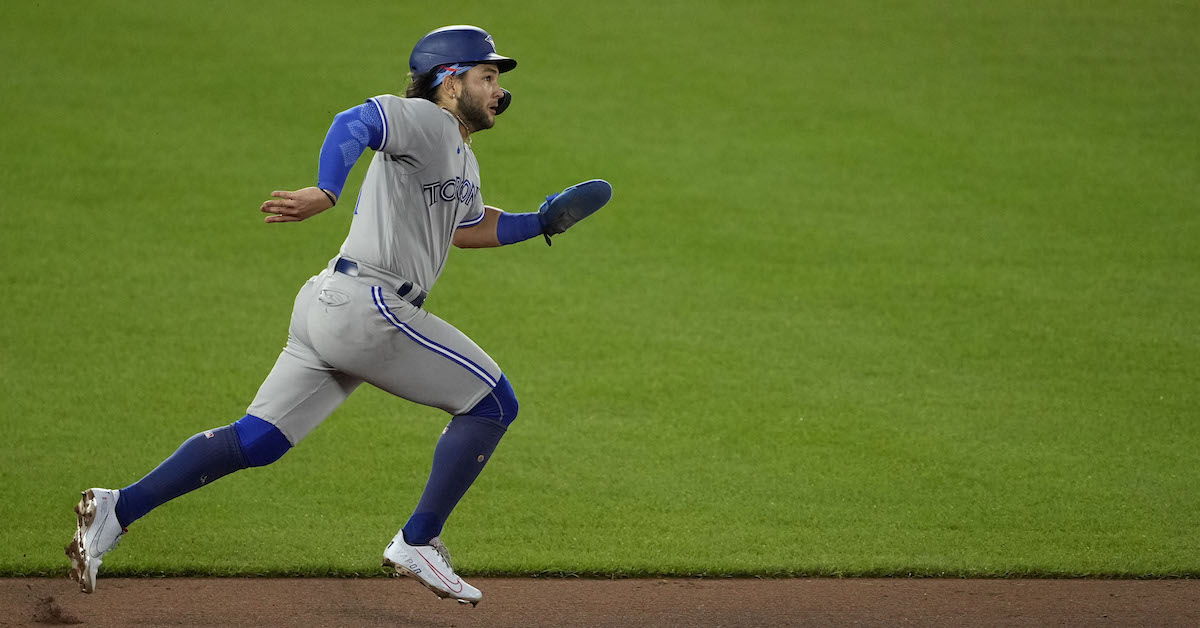
For baseball athletes, speed is not optional. Whether you are stealing a base, chasing down a ball in the outfield, beating out an infield grounder, or trying to separate yourself at a showcase, your ability to accelerate and reach top speed can directly impact your performance.
That is why the 60 yard dash remains one of the most important tests in baseball.
But here is the problem: running the 60-yard dash over and over again is not the best way to improve your 60-yard dash.
You need specific baseball training that develops the qualities behind sprint performance: explosive force, lateral power, acceleration, elastic strength, single-leg power, and the ability to transition from your start into top speed.
Research backs this up. A 2026 randomized trial involving youth baseball players found that a four-week sprint training program improved both 30-yard and 60-yard sprint performance. Interestingly, adding a 10% body-mass weighted vest did not produce significantly better results than unloaded sprint training. You can read the study here.
The takeaway is simple: you need quality sprint training, not gimmicks.
Why the 60 Yard Dash Matters for Baseball
The 60-yard dash gives coaches and scouts a simple way to evaluate an athlete’s linear speed and acceleration.
A good 60-yard dash time demonstrates more than just how fast you can run. It tells coaches something about your ability to produce force quickly, accelerate efficiently, maintain mechanics as velocity increases, and express explosive athleticism.
For baseball players, this matters because the sport is filled with short bursts of high-speed movement.
A middle infielder needs to explode out of a lateral position. An outfielder needs to react, accelerate, and cover ground. A baserunner needs to turn a good first step into enough speed to take the next base.
At the highest levels, small differences in speed can separate athletes.
There is also no single “good” 60-yard dash time for every baseball athlete. Position, age, level, body type, training age, and testing conditions all matter. A high school athlete running in the mid-7s is different from a college prospect running in the 6.6–6.8 range.
The important question is not simply, “What is a good 60 time?”
It is:
“How much faster can I become?”
Read our full guide on improving the 60 yard dash.
Your 60 Starts With the First Few Steps
One of the biggest mistakes athletes make is treating the 60-yard dash like one continuous sprint.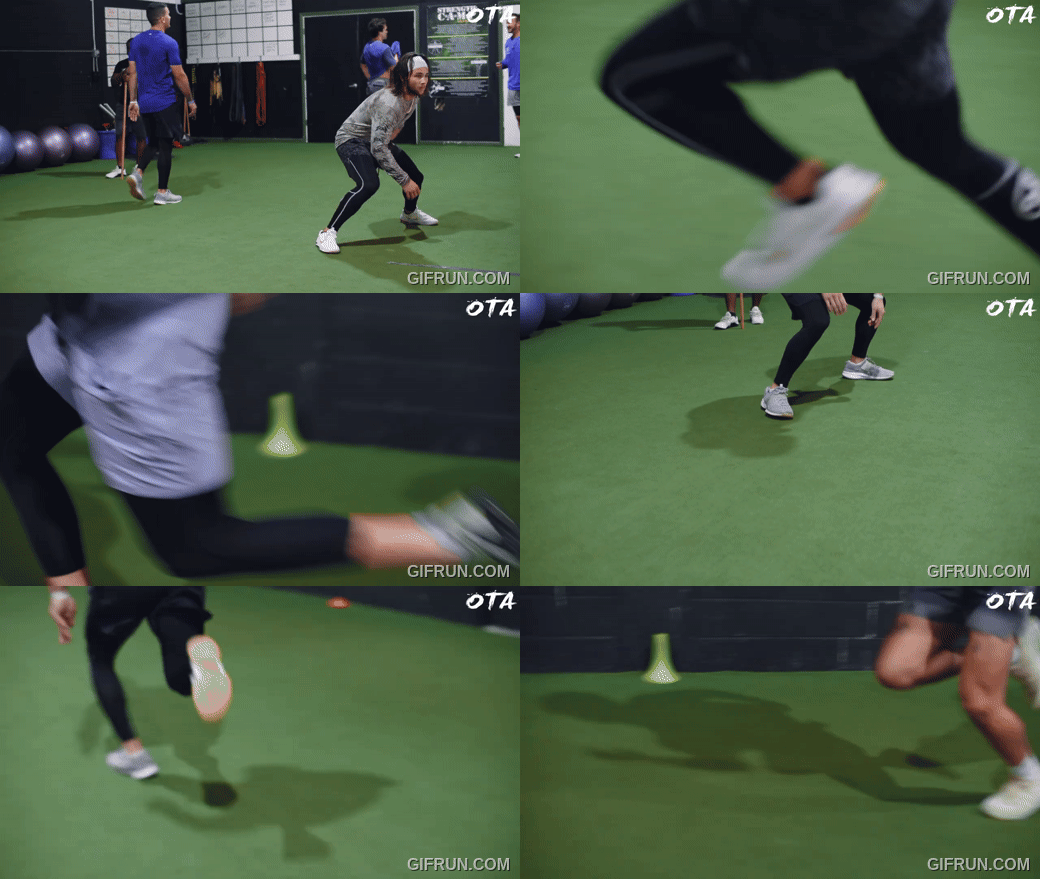
It is not.
The first portion requires acceleration. You need to overcome inertia and rapidly increase your velocity. As you move farther down the track, your mechanics gradually transition toward upright sprinting and higher maximum velocity.
That means your baseball training needs to address different qualities of speed.
You need to train the start, train acceleration, train top speed, and you need to develop the strength and power that allow you to produce those qualities.
A 2024 systematic review (read here) on resisted sprint training found that resisted sprinting can improve acceleration, particularly the early acceleration phase.
This is why our speed training does not rely on running endless 60s.
We build the physical qualities that make an athlete faster.
Here are five drills that can help.
1. Half Kneeling Lateral Broad Jump
This exercise develops explosive lateral power while forcing the athlete to produce force from a low position.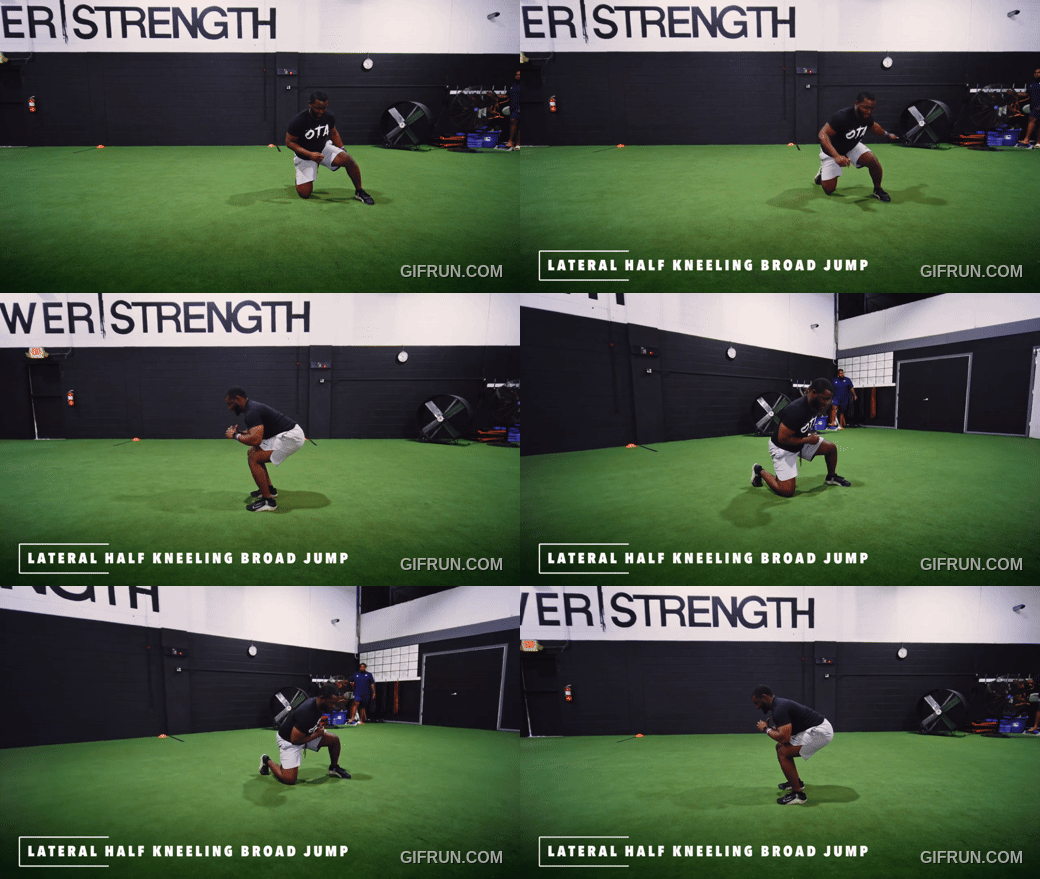
This is extremely valuable for the 60 because the athlete has to start off with being able to produce explosive lateral force into acceleration. And in baseball, most movements start laterally.
Think about an infielder reacting to a ground ball.
He may have to move laterally before transitioning into a sprint.
The drill teaches the athlete to produce force through the ground, project the body laterally, and stabilize the landing.
From a speed perspective, this helps develop the ability to create horizontal and lateral force instead of simply producing vertical force.
How it helps the 60:
Although the 60-yard dash is linear, the athlete’s ability to produce force efficiently starts with the foundation of athletic movement. Strong lateral power can improve the athlete’s ability to reposition the hips, load the lower body, and transition into acceleration.
2. Lateral Half Kneeling Starts
This is one of the best ways to teach baseball athletes how to explode and accelerate from a lateral position.
The athlete starts from a half-kneeling position and must create force quickly to get moving.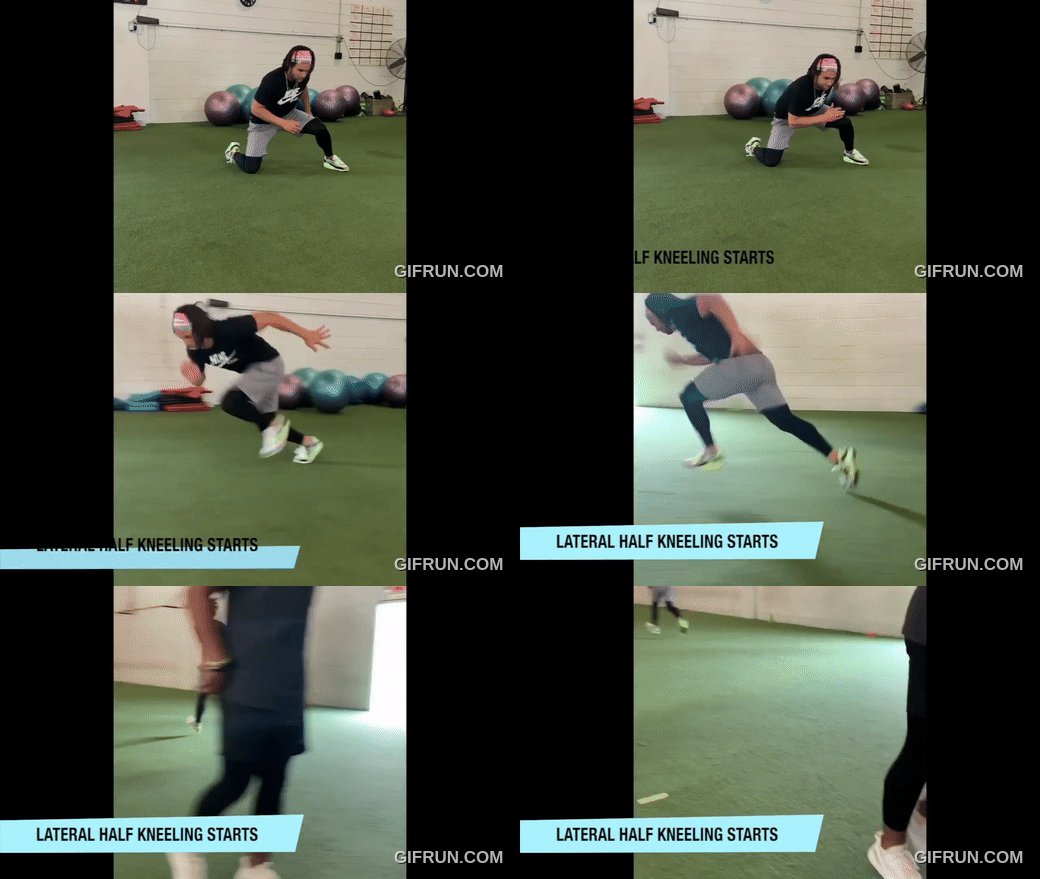
This challenges the hips, glutes, trunk, and lower body to work together.
More importantly, it teaches an athlete to project the body to accelerate in the right trajectory.
That distinction matters.
Fast acceleration requires you to apply force into the ground in the right direction. If you stand up too quickly or take short, weak steps, you waste valuable acceleration potential.
The goal is to create aggressive projection and get the athlete moving quickly.
Read more here on drills to improve acceleration instantly!
3. Lateral Power Shuffle to Sprint
The 60 yard dash and just baseball in general is a lot of lateral to linear transitions.
This drill connects the two.
The athlete performs a powerful lateral movement before transitioning directly into a forward sprint.
This is important because baseball athletes often have to create speed from imperfect positions.
An outfielder may have to shuffle before chasing a ball.
An infielder may move laterally before attacking first base.
A baserunner may have to reposition the body before accelerating.
This drill teaches the athlete to produce force laterally and then redirect that force into linear acceleration.
That transition is where a lot of athletes lose speed.
The goal is not to perform the shuffle as quickly as possible.
The goal is to produce powerful lateral movement and then explode into the sprint.
That makes this a highly valuable piece of baseball speed training.
4. Alternating Bounds — Height and Distance
If you want to become faster and improve top speed, you need to learn how to apply force into the ground.
Alternating bounds are an excellent tool for developing this quality.
Bounding teaches the athlete to produce powerful, rhythmic contacts while traveling horizontally. It challenges the athlete to coordinate the hips, knees, ankles, trunk, and arms while projecting the body forward.
But there are two ways we can manipulate the drill:
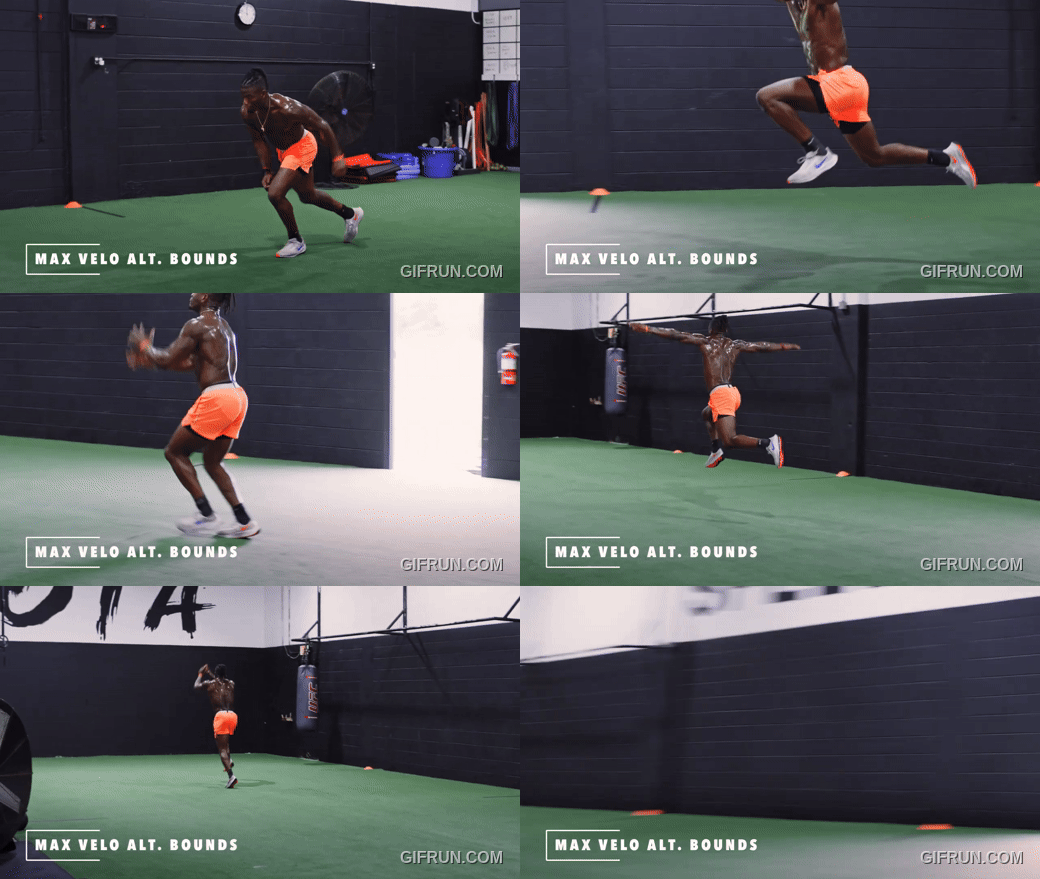
Height-focused bounds emphasize vertical force production.
Distance-focused bounds emphasize horizontal projection.
Both have value.
For the 60-yard dash, horizontal projection is especially important because acceleration requires the athlete to push backward into the ground and propel the body forward.
However, you don’t want to turn every bounding session into a contest to see who can jump the farthest.
Quality matters.
The athlete needs to maintain rhythm, stiffness, posture, and powerful ground contacts.
5. Single Leg Bounding
The last drill for improving top speed is single leg bounding.
Sprinting is unilateral. You accelerate and transition each stride from one leg to the other.
You are constantly alternating between single-leg ground contacts.
That makes single-leg power incredibly important.
Single leg bounding is an advanced drill that challenges the athlete to produce force on one leg while maintaining balance, stiffness, coordination, and forward projection.
This is where strength meets speed.
A baseball athlete can be strong in the weight room but still lack the ability to rapidly express that strength through a single-leg ground contact.
Bounding helps bridge that gap.
Read more on the best exercises for developing single leg strength here!
Don’t Just Train the Drills — Train the 60
These five drills can be excellent tools, but they should not become another random workout.
The goal is not to collect drills.
A complete baseball speed program should include strength development, explosive power, acceleration work, sprint mechanics, maximum-velocity exposure, and appropriate recovery.
You also need actual sprinting.
An athlete who wants to improve his 60-yard dash needs to practice the 60-yard dash.
But you don’t need to test it every day.
Instead, break the sprint down.
Train short accelerations, the first 10–20 yards, and longer sprints to develop the transition toward top speed.
Then periodically test the complete 60.
This gives you a much better picture of where the athlete is improving.
Final Thoughts
A faster 60-yard dash doesn’t come from simply running more 60-yard dashes.
It comes from becoming a better athlete.
You need the ability to produce force, explosive horizontal power, strong and reactive single-leg mechanics, acceleration, top speed, and you need to put all of those qualities together.
The five drills above can all play a role in developing the physical qualities needed to run faster.
But the real results come from putting those exercises into a structured baseball training system that progresses the athlete instead of throwing random speed drills at them.
If you’re serious about running a faster 60, stealing more bases, covering more ground, and becoming a more explosive baseball athlete, you need a plan.
The Baseball Performance System is designed to develop the speed, strength, power, and athleticism baseball players need to perform at a higher level.
Stop guessing.
Start training with a system designed for baseball.