
How Elite Athletes Warm Up for Linear Speed: A Coach’s Guide
If there’s one thing we see consistently at Overtime Athletes, it’s this:
most athletes are leaving speed on the table because their warm-up doesn’t actually prepare them to sprint fast.
They’re sweating. They’re tired. They feel warm.
But they’re not neurologically, mechanically, or elastically prepared to produce and apply force at high speed. Some people think speed comes naturally. Some athletes are physically gifted, true, but speed is something that can be trained and developed. That starts with the warmup and how the athlete consistently prepares.
An elite warm-up isn’t about checking boxes or copying a generic dynamic routine. It’s about preparing the exact systems needed to accelerate, reach top speed, and repeat quality sprint efforts.
This Isn’t Fluff!
This is the same logic and progression we use with athletes who need results. The more we can get athletes performing some of these basic drills consistently at a higher and higher level guarantees we’re going to see improvements in speed.

It’s not about fancy drills or overcomplicated “speed” workouts that look good for IG. Also, not what your high school coach has you doing for “speed” work, where they basically have you run sprints until you pass out (News flash: you’re not getting faster from this).
This is about the drills they can consistently practice every session to get the most out of their speed training. When we get through these warmup drills at a high level, we get the athletes performing their actual sprint work at a much higher level.
In this coach’s guide, we’re going to break down how elite athletes warm up for linear speed, what matters most and what exactly you need to be looking for, and then give you specific, proven drill examples you can use immediately.
You can also check out our previous article on sprint training that develops more sport specific speed.
Lets get into it.
Why the Warm-Up for Linear Speed Matters More Than You Think
Linear speed is not just “running fast.”
It’s the ability to produce high levels of force quickly and apply it in the correct direction, step after step.
A proper warm up for linear speed must do five things:
- Improve hip mobility so athletes can access range
- Prepare the lower limbs for stiffness and elastic force
- Reinforce hip action and sprint mechanics
- Isolate unilateral force production
- Prime the body to produce force vertically (top speed) and horizontally (acceleration)
Miss any one of these, and you’ll see it in:
- Poor acceleration
- Overstriding
- Low shin angles
- Slow ground contact times
- Early fatigue
Elite athletes don’t warm up randomly — they warm up with intentionality.
Here is a great article from PubMed that dives deeper into warmup methods for sprinters to increase sprint performance.
The Key Focuses of an Elite Warm-Up for Linear Speed
Before we get into drills, it’s important to understand what we’re actually trying to prepare.
1. Hip Mobility: The Foundation of Speed
The hips drive sprinting. Period.
If an athlete lacks hip mobility — especially in hip flexion, extension, and internal rotation — they’ll compensate somewhere else. Usually with:
- Lumbar extension
- Hamstring overuse
- Reduced stride efficiency
When athletes struggle to sprint fast, it’s often not because they’re “weak,” but because they can’t get into the positions needed to express force.
A good warm up for linear speed must first unlock usable range of motion in the hips. Improving stride length could be a simple matter of just improving hip mobility and range.
2. Lower Limb Preparation: Stiffness Before Speed
Speed requires stiff, reactive lower limbs.
Not rigid. Not relaxed.
Elastic.
Your feet, ankles, and lower legs must be ready to:
- Absorb force quickly
- Reverse it even faster
- Maintain short ground contact times
This is why elite warm-ups always include pogo-style drills, or drills that completely isolate and strengthen the feet and ankles to improve elasticity and ground contact. They teach the body to behave like a spring — not a sponge.
3. Hip Action & Mechanics: Teaching the Sprint Pattern
You don’t “fix” sprint mechanics during max-speed runs.
You groove them in the warm-up.
Elite athletes use drills to reinforce:
- Proper hip flexion on the front side
- Aggressive hip extension on the back side
- Vertical force application under the center of mass
- Rhythm and timing
This is where drills like wall sprints, A-skips, B-skips, and straight-leg shuffles shine — when done correctly.
4. Unilateral Force Production: Sprinting Is Single-Leg
Every sprint step is a single-leg action.
If an athlete can’t:
- Produce force off one leg
- Stabilize through the hip
- Maintain posture during unilateral loading
…their speed will always be capped.
An elite warm up for linear speed must include unilateral explosive drills to bridge the gap between mechanics and real sprint force.
5. Vertical + Horizontal Force: The Missing Link
Acceleration is about horizontal force.
Max velocity is about vertical force.
Elite athletes can do both — and transition smoothly between them.
The warm-up is where we:
- Blend vertical projection
- With horizontal displacement
- Without frying the nervous system
That’s where bounding variations come in. See our previous article on key metrics for elite vertical power.
The Elite Warm-Up for Linear Speed: Drill Breakdown
Below is a complete warm-up progression, broken into phases, using the exact drill categories you outlined.
This is not random, and a good warmup should NEVER be random. Each piece builds on the previous one.
1. Hip Mobility Drills
Groiners
Why they matter:
Groiners open up the hips dynamically while reinforcing proper posture and control.
Coaching focus:
- Long step forward
- Elbows inside the knee
- Upper torso neutral
- Smooth transition
Why this helps speed:
Groiners improve separation of the hips, allowing athletes to achieve better front-side mechanics when sprinting. Really focus on fully extending the back leg and squeezing the glute to open up the hip flexor.
Hip Internal Rotation Stretch
Why it matters: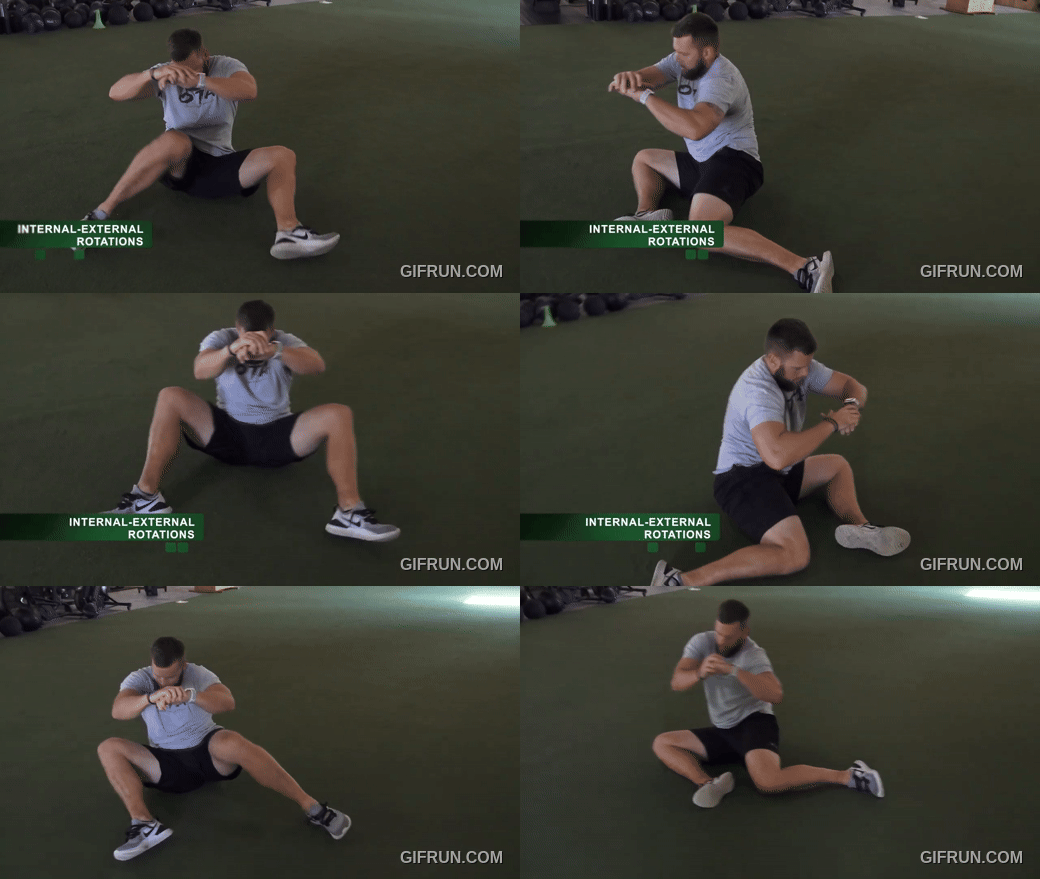
Internal rotation is critical for:
- Proper hip recovery
- Efficient force transfer
- Avoiding compensation patterns
Coaching focus:
- Controlled movement
- No spinal twisting
- Feel the stretch deep in the hip, not the knee
Speed carryover:
Athletes who lack hip internal rotation often struggle with pelvic control and stride efficiency. Good hip internal rotation is vital to producing force downward into the ground.
2. Lower Limb Preparation
Pogo Variations

Examples:
- Ankle pogos
- Single leg pogos
- Alternating pogos
Why pogos are essential in a warm up for linear speed:
- Improve ankle stiffness
- Enhance elastic return
- Prepare tendons for sprint-level forces
Coaching cues:
- Tall posture
- Minimal knee bend
- Quick off the ground
- Quiet contacts
Think “bounce, don’t sink.”
3. Hip Action and Sprint Mechanics
This is where athletes begin to feel like sprinters, not joggers. 
A-Skips
Purpose:
- Reinforce hip flexion
- Teach vertical force application
- Improve rhythm and coordination
Key coaching points:
- Knee up, toe up
- Strike down under the hip
- Opposite arm drive
- Stay tall
A-skips are a staple in every elite warm up for linear speed because they clean up mechanics before intensity increases.
B-Skips
Purpose:
- Teach active front-side mechanics
- Emphasize hip extension and pull-back
- Improve stride efficiency


Coaching points:
- Knee up first
- Extend the leg by releasing the hamstring
- Aggressively pull down and back through the ball of the foot
- Avoid overstriding by reaching forward
When done correctly, B-skips bridge the gap between drills and real sprinting.
Straight-Leg Shuffles
Purpose:
- Reinforce rapid hip extension
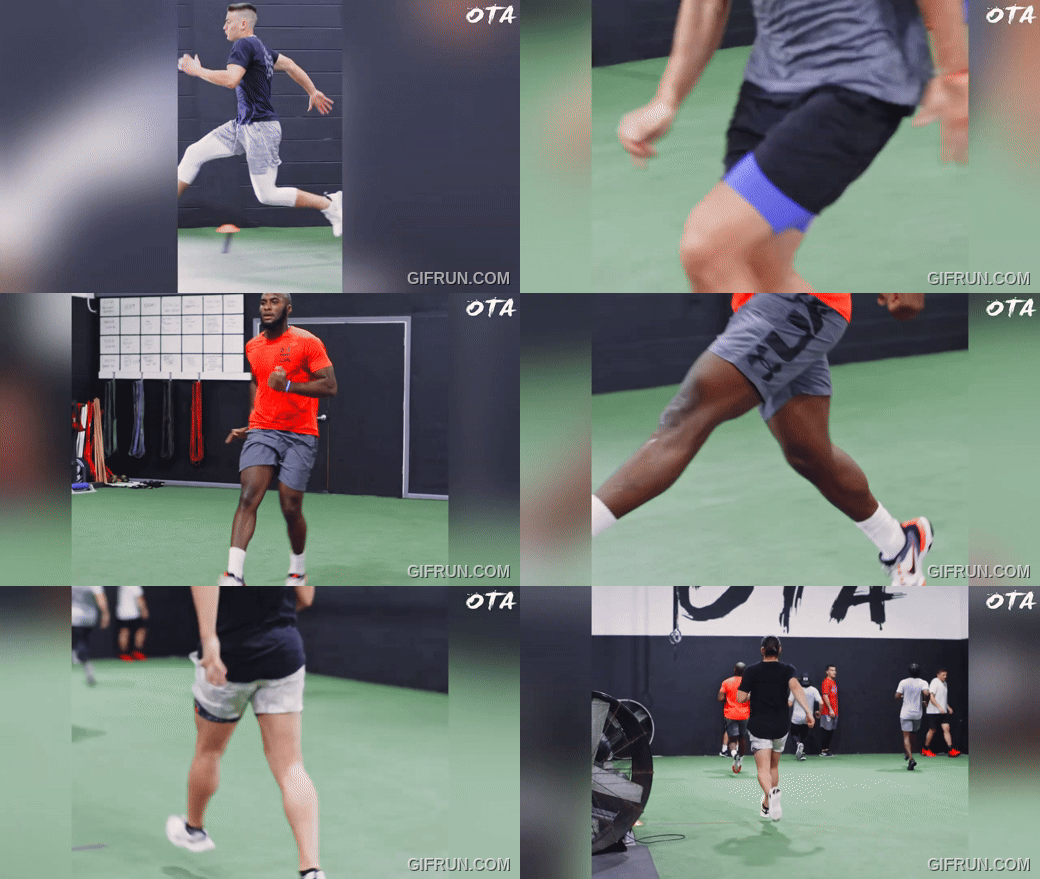

- Improve hamstring-tendon interaction
- Teach force application under the body
Coaching focus:
- Minimal knee bend
- Fast contacts
- Tall posture
- Have athletes “claw” the ground and pull through the hip
Straight-Leg Bounds
These take shuffles one step further by adding more horizontal projection and force.
Why they matter:
They prepare athletes for top-end sprint mechanics without needing to sprint at full speed yet. More powerful hyper extension through the hip and hamstrings.
4. Unilateral Force Production
This is where the warm-up transitions from movement prep to force expression.
Power Skips

Why they’re elite:
Power skips teach athletes to:
- Drive force through one leg
- Maintain posture
- Coordinate arms and hips explosively
Coaching cues:
- Big push
- Knee drive
- Stick the landing briefly
Single-Leg Hops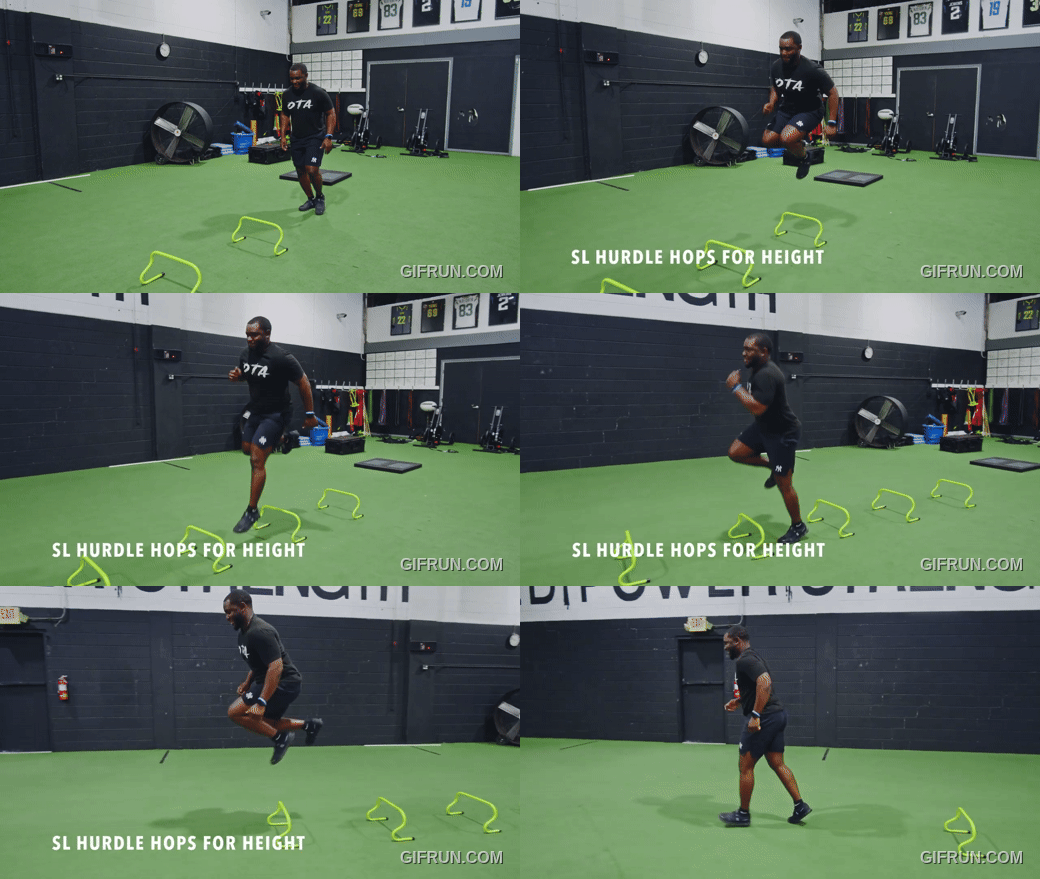

Purpose:
- Improve single-leg stiffness
- Enhance ankle-knee-hip coordination
- Build confidence in unilateral loading
Progressions:
- In-place hops
- Forward hops
- Continuous hops
Single-Leg Bounds

Why they matter:
More advanced. Bounding on one leg closely mimics sprint force demands and exposes weaknesses fast. Requires a high amount of force and the ability to recover on each contact rapidly. Athletes who struggle here often struggle with speed later.
5. Producing Force Vertically and Horizontally
This is the final piece of the warmup for linear speed.
Alternating Bounds

Purpose:
- Blend vertical lift with horizontal displacement
- Improve rhythm and force direction
- Prep the body for acceleration and transition phases
Coaching cues:

- Big, powerful strides
- Drive the knee
- Push back, not up only
- Stay tall
Power Bounds
Purpose:
- Maximize force output without sprinting yet
- Prime the nervous system
- Teach aggressive force application
These are your final “wake-up” drills before actual sprint work.
Putting It All Together
A proper warm up for linear speed is not about doing more — it’s about doing what matters.
Elite athletes warm up to:
- Unlock the hips
- Prime the lower limbs
- Reinforce sprint mechanics
- Activate unilateral force
- Prepare to apply force in the right direction
When this is done correctly:
- Sprint mechanics improve
- Speed sessions become higher quality
- Injury risk drops
- Athletes feel faster before the first sprint
Final Thoughts: Warm Up With Intent
At Overtime Athletes, we don’t separate warm-ups from training — we see them as the first and most important part of the session.
If your warm-up doesn’t prepare you to sprint fast, it’s not a speed warm-up.
Use this structure. Coach it with intent. Progress it over time.
That’s how elite athletes warm up for linear speed — and that’s how speed is actually built.