Why Golfers Should Train Like Athletes to Improve Power and Performance
Golfers spend countless hours working on their swing, adjusting their mechanics, and trying to shave strokes off their game. But one area that often gets overlooked is physical performance. If you want to generate more clubhead speed, hit the ball farther, and maintain consistency throughout your round, you need to develop your body like an athlete.
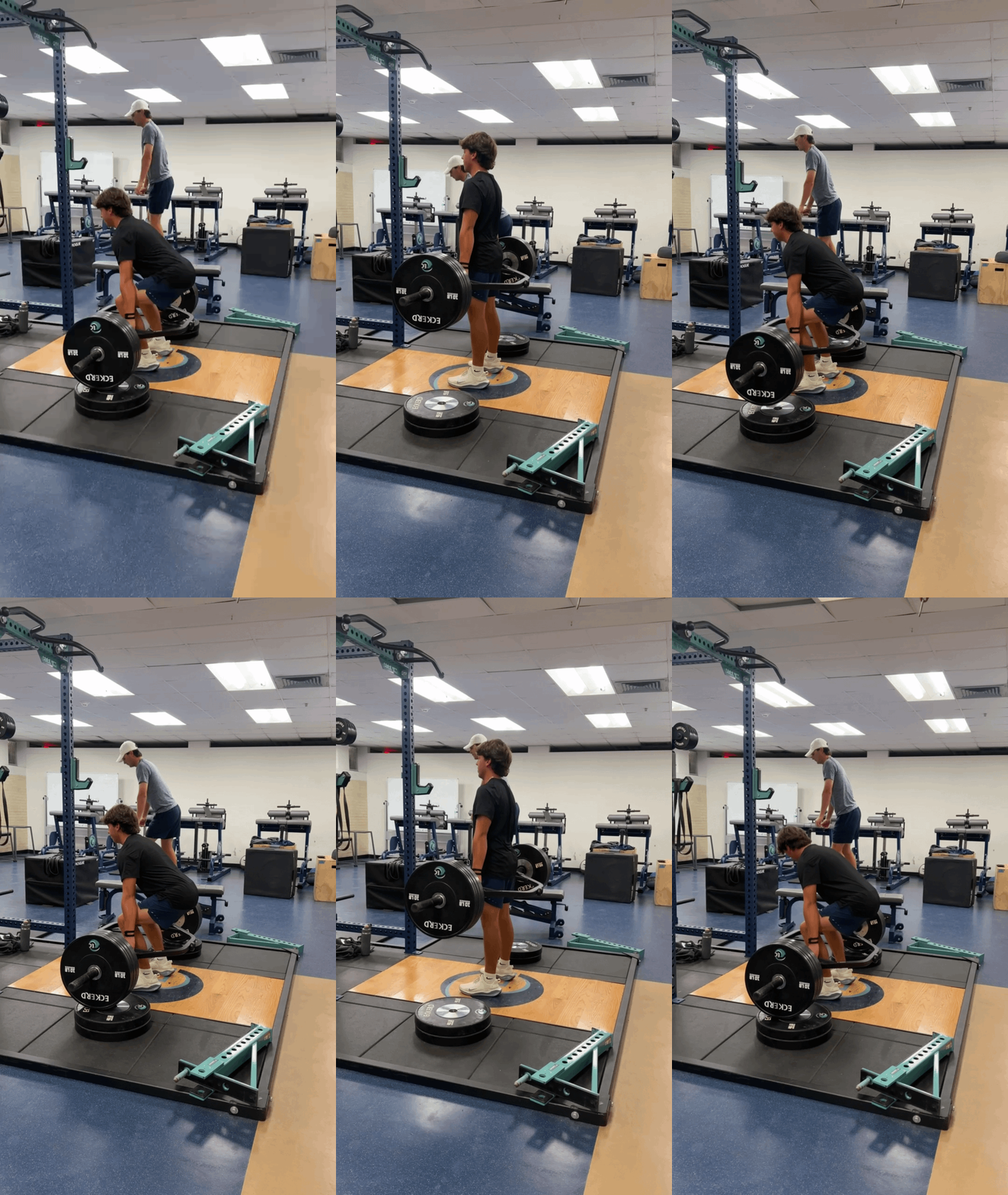
Strength, speed, and power are not just for football players, basketball players, or sprinters. They matter for golfers, too.
When you build strength and improve your rate of force development (RFD), you improve your ability to produce force quickly. When you train explosively, you develop the ability to apply force into the ground and transfer that force through your body. These qualities contribute to the physical demands of a powerful golf swing.
Ground reaction force is the force your body applies to the ground and the force the ground returns to your body. Learning to use that force effectively, combined with greater strength and rotational power, can help you produce a more powerful swing.
The goal is to develop physical qualities that carry over to sport. Golf is no different. You don’t need to train like a professional football player, but you should train like an athlete if you want to maximize your physical potential on the course.
Here are three major reasons golfers should prioritize strength and power training.

1. Improve Golf Swing Speed and Driving Distance
One of the biggest benefits of golf fitness training is the potential to improve clubhead speed. More clubhead speed can help you hit the ball farther, giving you shorter approach shots and potentially better scoring opportunities.
But swinging harder isn’t the same as producing more power.
Your ability to accelerate the club depends on several factors, including technique, sequencing, mobility, strength, and how quickly you can produce force. If you lack the physical capacity to generate force quickly, you may struggle to reach your full speed potential, even with solid swing mechanics.
This is where strength training and rate of force development come into play.
Strength gives you the capacity to produce force. Power training teaches you to express that force quickly.
Building stronger legs, hips, and trunk muscles gives you a stronger foundation for athletic movement. Exercises such as squats, split squats, and Romanian deadlifts can help develop lower-body strength, while jumps and medicine ball throws train you to produce force explosively.
The goal isn’t to become as strong as possible at the expense of your swing. It’s to build enough strength and power to improve your ability to accelerate, rotate, and transfer energy efficiently.
Pairing a well-designed strength program with golf-specific power training can help you develop the physical qualities that support faster swings.
Make sure to go back and read our article on strength training for golf!
2. Develop More Rotational Power for a More Explosive Swing
Golf is a rotational sport. Your ability to produce and transfer force through your lower body, hips, trunk, and upper body plays an important role in how you swing the club.
However, rotational power is more than just twisting your torso as quickly as possible.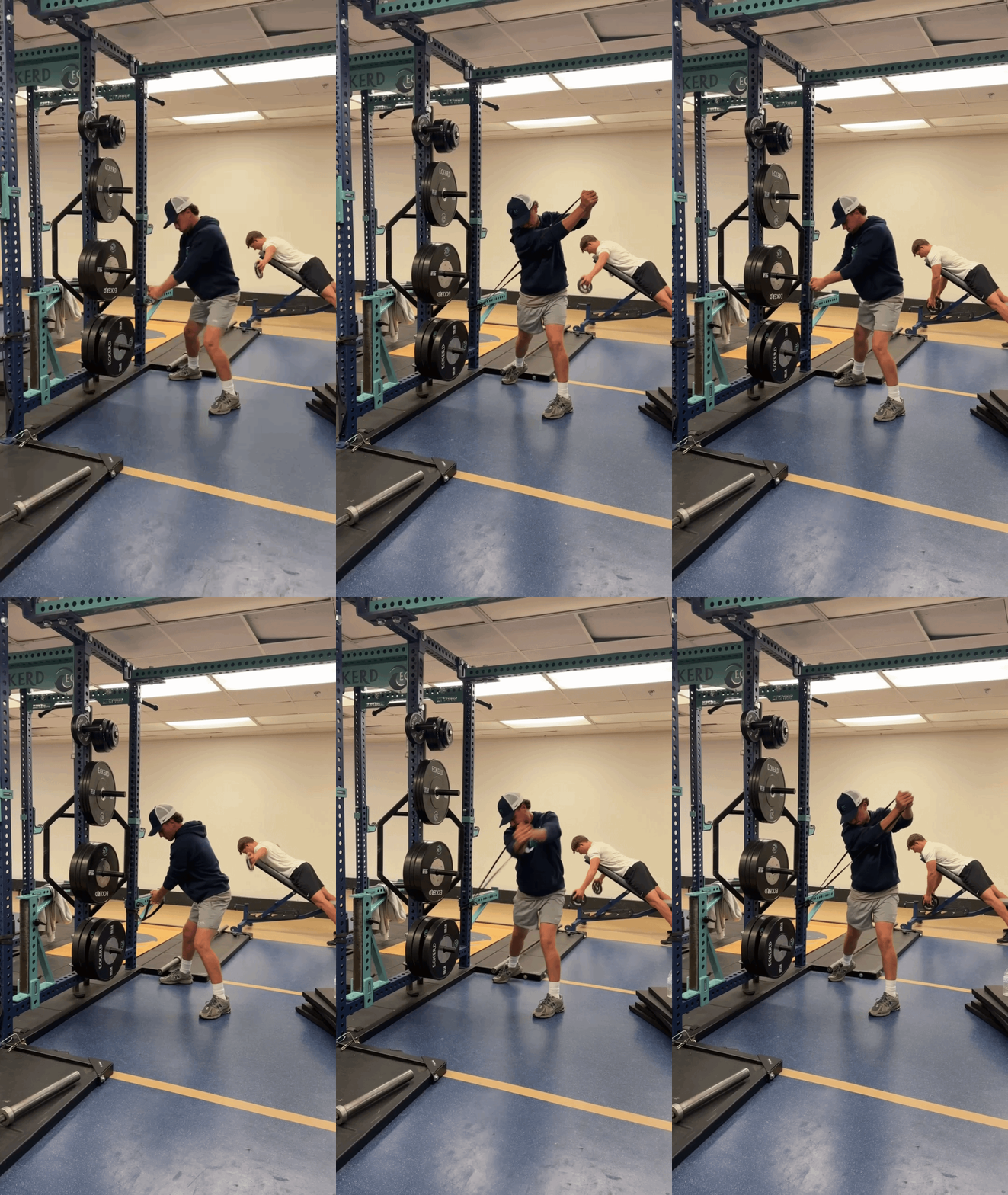
A powerful golf swing requires coordination between different body segments, appropriate timing, and the ability to produce force rapidly. Your lower body helps establish and manage forces against the ground, while your hips and trunk contribute to the rotation and transfer of energy through the swing.
If you’re weak, lack explosive strength, or struggle to coordinate force production, you may have difficulty maximizing your physical output.
This is why golfers can benefit from rotational power exercises such as medicine ball rotational throws, scoop tosses, and controlled explosive movements that challenge the hips and trunk to produce force quickly.
These exercises train the body to express power through rotational movement rather than only developing strength in traditional weight-room exercises.
Lower-body strength also matters. Stronger legs and hips can help you manage ground forces and provide a more capable foundation for rotation. Meanwhile, trunk strength helps you control your torso and transfer force between the lower and upper body.
The objective is to develop the physical qualities that complement your swing mechanics, not to replace technical golf instruction.
A golfer who combines effective swing mechanics with greater strength and rotational power may have more potential to generate clubhead speed than a golfer who relies on technique alone.
You can learn more about exercises for rotational power here!
3. Build Durability and Maintain Performance Throughout Your Round
Golf might not look as physically demanding as many field and court sports, but it places repetitive demands on your body. You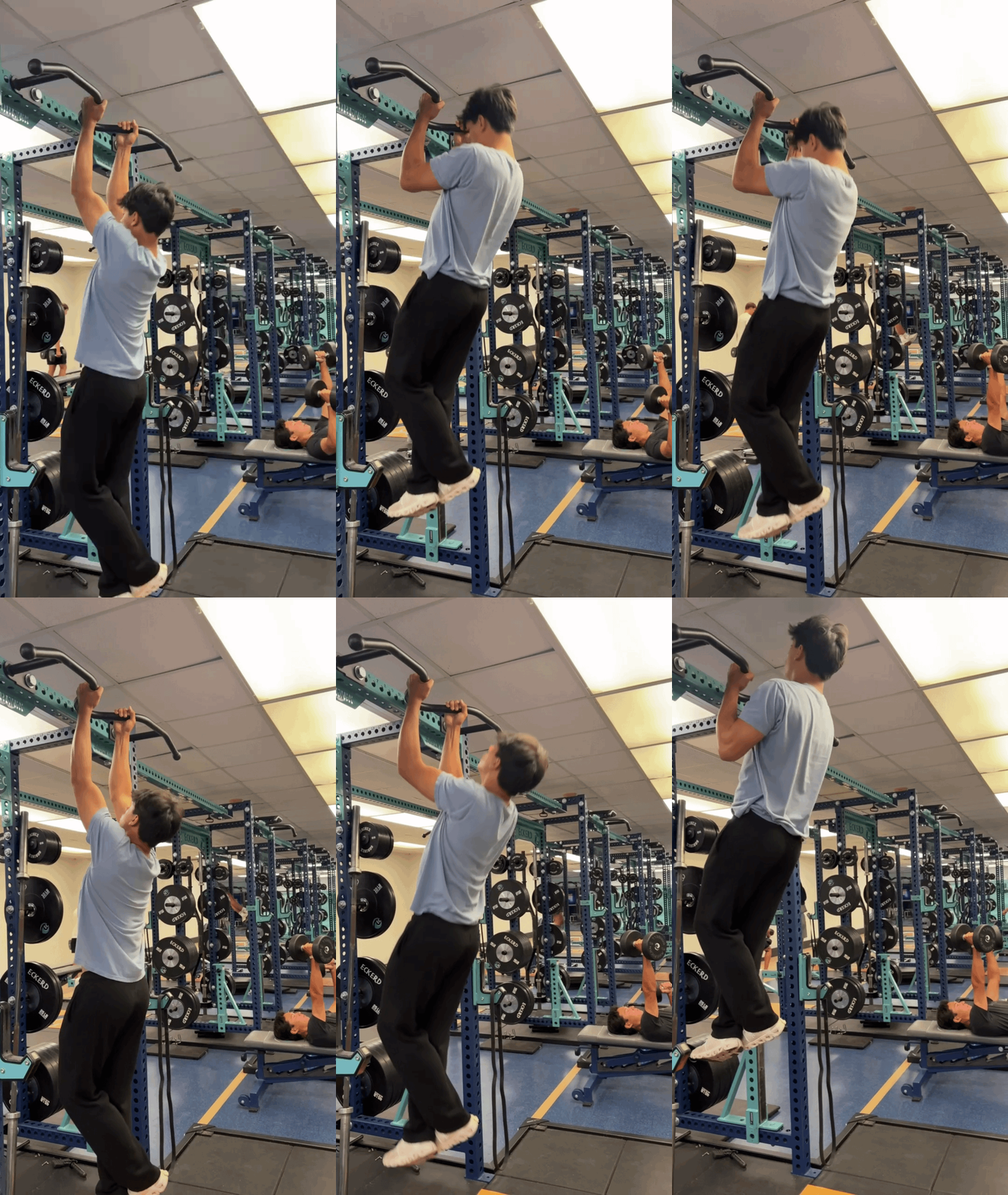 may perform dozens of full swings during a round, along with repeated practice swings, walking, bending, and prolonged periods of standing.
Over time, those demands can expose weaknesses in your strength, mobility, and physical capacity.
This is especially important for golfers who play regularly, practice frequently, or spend long hours at the driving range. If your body lacks the strength and capacity to tolerate repeated swings, fatigue may affect your movement quality and consistency.
Strength training helps build the physical foundation needed to handle those demands.
Exercises that develop the glutes, hamstrings, quadriceps, trunk, and upper body can improve general strength and physical capacity. Single-leg exercises can challenge balance and unilateral strength, while appropriately selected trunk exercises can develop the ability to resist unwanted movement and control the torso.
For example, split squats, Romanian deadlifts, Pallof presses, and loaded carries can all have a place in a golfer’s strength program.
Mobility and recovery matter, too. Golfers need sufficient range of motion to execute their swing comfortably, and training should account for individual limitations, injury history, and practice volume.
The goal isn’t to make your body indestructible. It’s to build a stronger, more capable athlete who can tolerate the demands of golf and maintain performance.
A well-designed golf strength training program should balance strength development, explosive power, mobility, and recovery instead of simply adding more exercises and fatigue.
Read our previous article that goes more into thoracic mobility for rotational power!
How Should Golfers Train Like Athletes?
Golfers don’t need to copy a football or bodybuilding program. They need a program built around the physical demands of their sport.
A well-rounded golf performance program should include:
– Strength development: Squats, hinges, lunges, and upper-body exercises to build force-producing capacity.
– Explosive power: Jumps, medicine ball throws, and other appropriately selected explosive exercises.
– Rotational training: Movements that develop the ability to produce and control force through the hips and trunk.
– Mobility and movement quality: Individualized work to support the positions and ranges of motion required for an effective swing.
Training should be progressive and specific to the golfer’s needs. A beginner may need to establish basic strength and movement competency before emphasizing high-intensity explosive work. An experienced golfer may be ready for more advanced power development.
The program should also complement golf practice rather than interfere with it. Training volume, exercise selection, and recovery need to account for the golfer’s schedule and competitive demands.
Final Thoughts: Stop Leaving Power on the Table
If you want to improve your golf performance, don’t focus exclusively on your swing. Your physical abilities influence how much force you can produce, how quickly you can produce it, and how effectively you can use that force during athletic movement.
Developing strength, rate of force development, ground-force application, and rotational power can help support greater swing speed, more explosive performance, and improved physical durability.
You still need good swing mechanics. But building a stronger, faster, and more powerful body gives you more physical qualities to work with.
Golfers should train with the same intent as other athletes: build strength, develop power, and improve the physical tools that carry over to performance.
Ready to Improve Your Golf Performance?
Our Golf Power System is designed to help golfers develop the strength, speed, and power needed to maximize their athletic potential. Instead of guessing which exercises to perform, follow a structured approach to building the physical qualities that support your game.