Bulgarian Split Squat Progressions for Athletes: Strength, Power, and Explosive Variations
If you want to build lower-body strength that actually carries over to speed, jumping, and game-day performance, the Bulgarian split squat should be a staple in your training.
This isn’t just a single-leg lift you throw in at the end of a workout. When programmed and progressed correctly, Bulgarian split squat variations can build the kind of unilateral strength, control, and force production that athletes rely on during sprinting, cutting, and jumping. At Overtime Athletes, we use them consistently because they develop the physical qualities that matter most for performance.
In this article, we’ll break down why Bulgarian split squats are so effective for athletes, how they build serious lower-body and single-leg strength, and how to progress them to improve stability, speed, and explosive with different variations.
Make sure to read our article on how to maximize athletic performance in 2026!
Why Bulgarian Split Squats Are So Valuable for Athletes
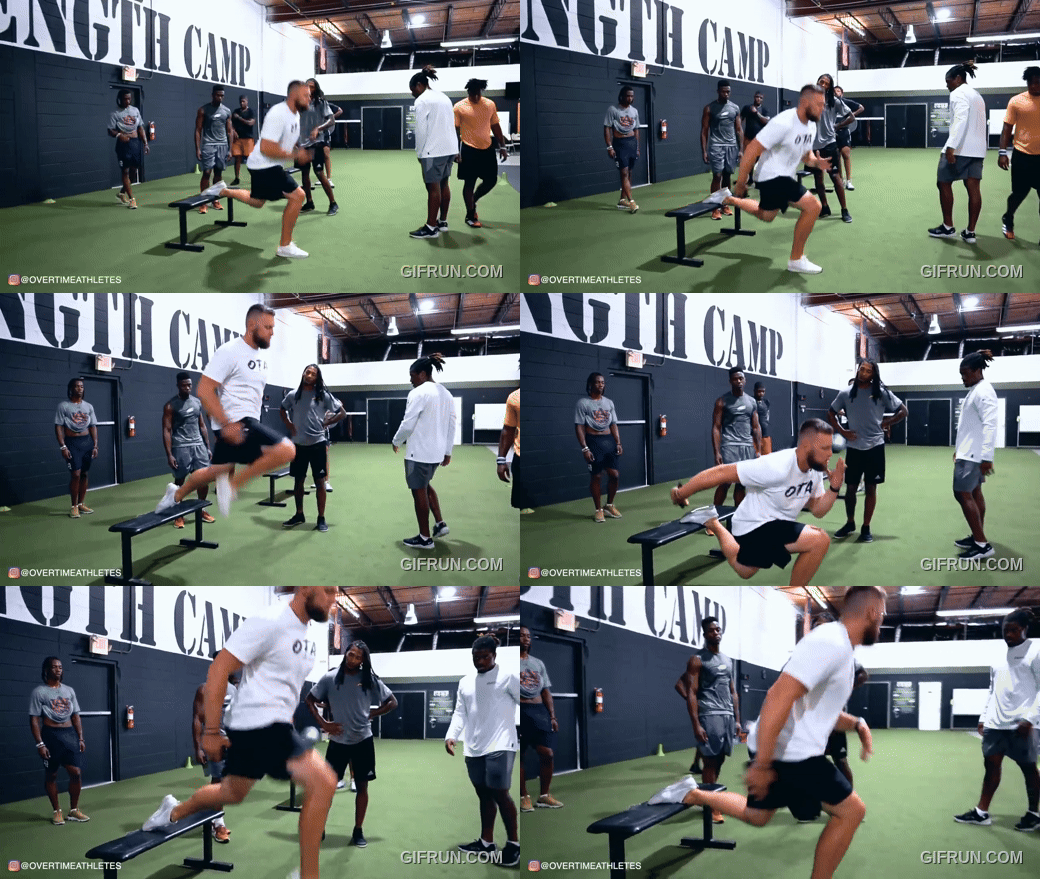
Athletic movement is rarely symmetrical. Most sport actions happen off one leg, with the body needing to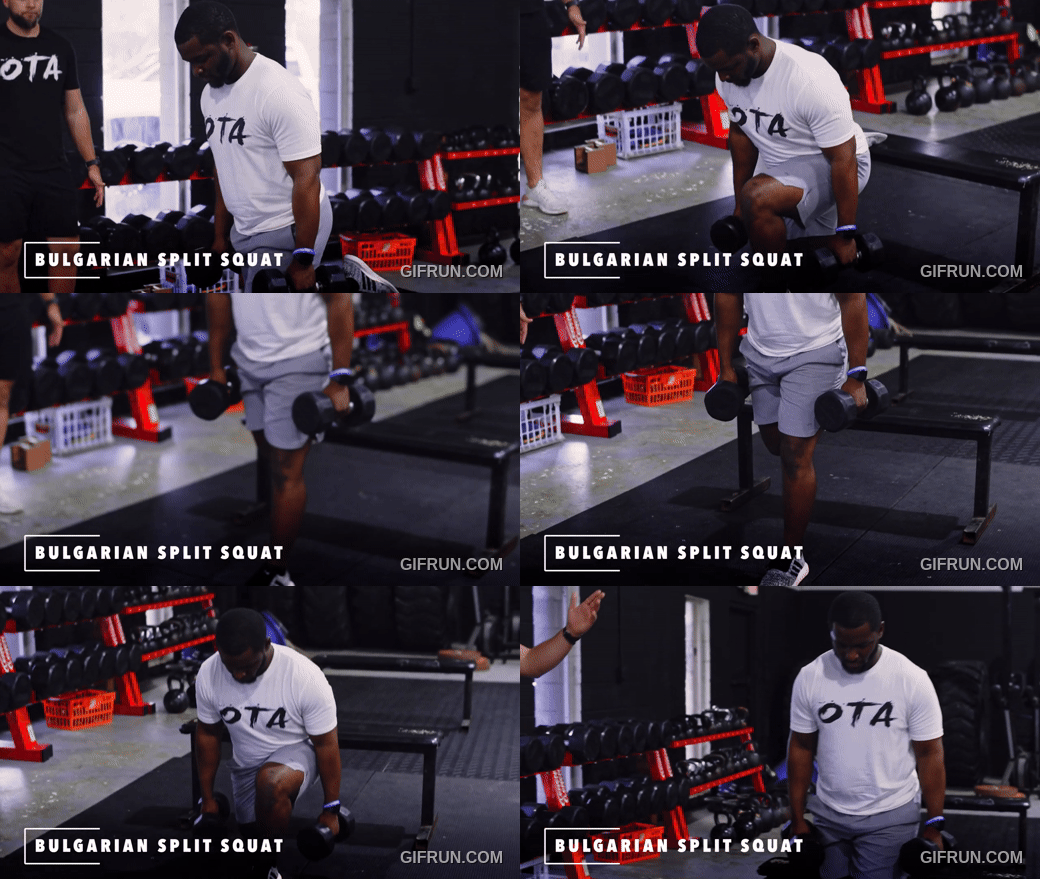 produce force while staying balanced and controlled.
Bulgarian split squats put athletes in a position where the front leg must do the majority of the work while the hips and trunk stabilize the body. This creates a high demand on the quads, glutes, and supporting musculature while reinforcing proper joint alignment and posture.
Over time, this leads to:
- Stronger and more resilient hips, knees, and ankles
- Better control in deep and vulnerable positions
- Improved force production in unilateral movements
Because Bulgarian split squats challenge strength and stability at the same time, they’re one of the most efficient lower-body exercises an athlete can use.
Strength Variations of Bulgarian Split Squats
Strength is the foundation. Before chasing speed or explosiveness, athletes need to be able to produce and control force through one leg.
Dumbbell/Bodyweight Bulgarian Split Squats
The base variation every athlete should master. Youth should be able to efficiently perform bodyweight BSS before they begin loading.
Holding dumbbells allows the athlete to load the movement without excessive balance demands, making it ideal for building raw single-leg strength.
Primary physical and performance benefits:
- Develops quad and glute strength through a large range of motion
- Improves single-leg force production without heavy spinal loading
- Reinforces proper knee tracking and hip control
- Builds foundational unilateral strength needed for sprinting and jumping
This variation sets the table for everything that comes next. Athletes need to master the basic movement before progressing it into the more advanced variations.
Heel-Raised Bulgarian Split Squats
Heel-raised Bulgarian split squats are a challenging upgrade for athletes who need stronger quads and better control in knee-dominant positions. This also challenges the strength and stability of the ankle as it’s engaged when raising the heel.
Elevating the front heel increases knee flexion and places more demand on the quadriceps and ankle while still engaging the hips and glutes.
Primary physical and performance benefits:
- Increases quad strength in deep knee angles
- Improves knee resilience and force absorption capacity
- Challenges ankle stiffness and strength and lower-leg control
This variation is especially useful for athletes who need stronger knees without excessive barbell loading.
Contralateral and Ipsilateral Bulgarian Split Squats (Offset Loading)
Offset Bulgarian split squats introduce asymmetrical loading, which increases the demand on the trunk and hips.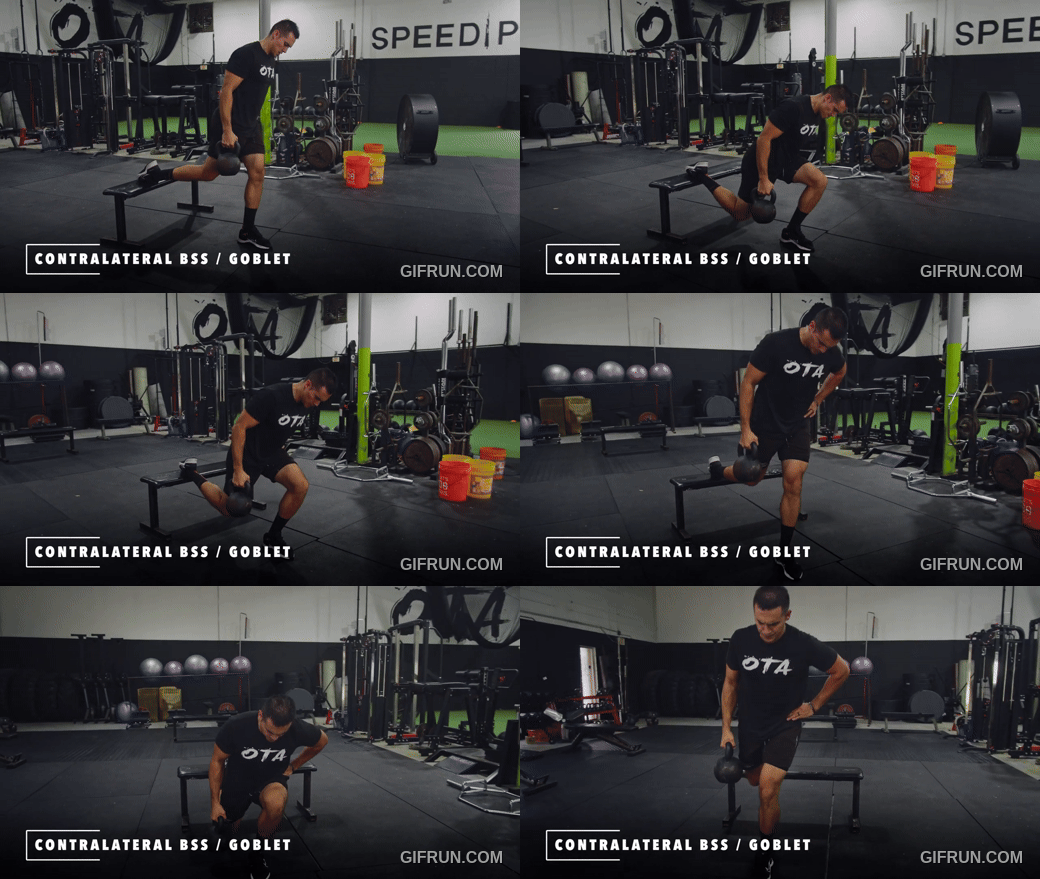
By holding the load on one side, the athlete must resist rotation and lateral shifting while still producing force through the front leg.
Primary physical and performance benefits:
- Improves pelvic and trunk stability during unilateral force production
- Strengthens the glutes’ role in controlling hip position
- Enhances coordination between the lower body and core
- Builds strength that feels more “athletic” and less rigid
Contralateral the athlete holds the weight in the opposite hand of the working leg. Ipsilateral the athlete holds the weight on the same side as the working leg. These variations are excellent for athletes who struggle with posture or stability during sprinting and change of direction.
Safety Squat Bar or Barbell Bulgarian Split Squat
For athletes ready to load Bulgarian split squats heavy, the safety squat bar or barbell allows for maximal strength development.
The SSB’s design encourages an upright torso while allowing heavier loads. Barbell is more difficult. For both the athlete should have spotters.
Primary physical and performance benefits:
- Builds high levels of single-leg strength in the quads and glutes
- Allows heavy loading with reduced shoulder and spinal stress
- Reinforces upright posture under load
- Supports off-season max strength development
This variation is best reserved for advanced athletes who have earned the right to load the movement heavily.
Stability and Dynamic Stability Variations
Strength alone isn’t enough. Athletes need to control that strength in unstable and changing environments.
Isometric Bulgarian Split Squats
Isometric BSS involve holding the bottom position under tension, usually for 20–45 seconds or up to 60-90 seconds.
This variation forces the athlete to maintain alignment while the muscles and connective tissue stay under constant load. You can also challenge this more by adding load by holding dumbbells.
Primary physical and performance benefits:
- Builds strength at specific joint angles
- Improves tendon health and joint integrity
- Enhances positional awareness and control
- Prepares the body for deceleration and landing demands
Isometrics are especially valuable during high-speed training phases or return-to-play situations.
Oscillatory Bulgarian Split Squats
Oscillatory BSS use oscillating rapid movements and loads to introduce controlled instability. You canhave the athletes perform bodyweight or weighted.
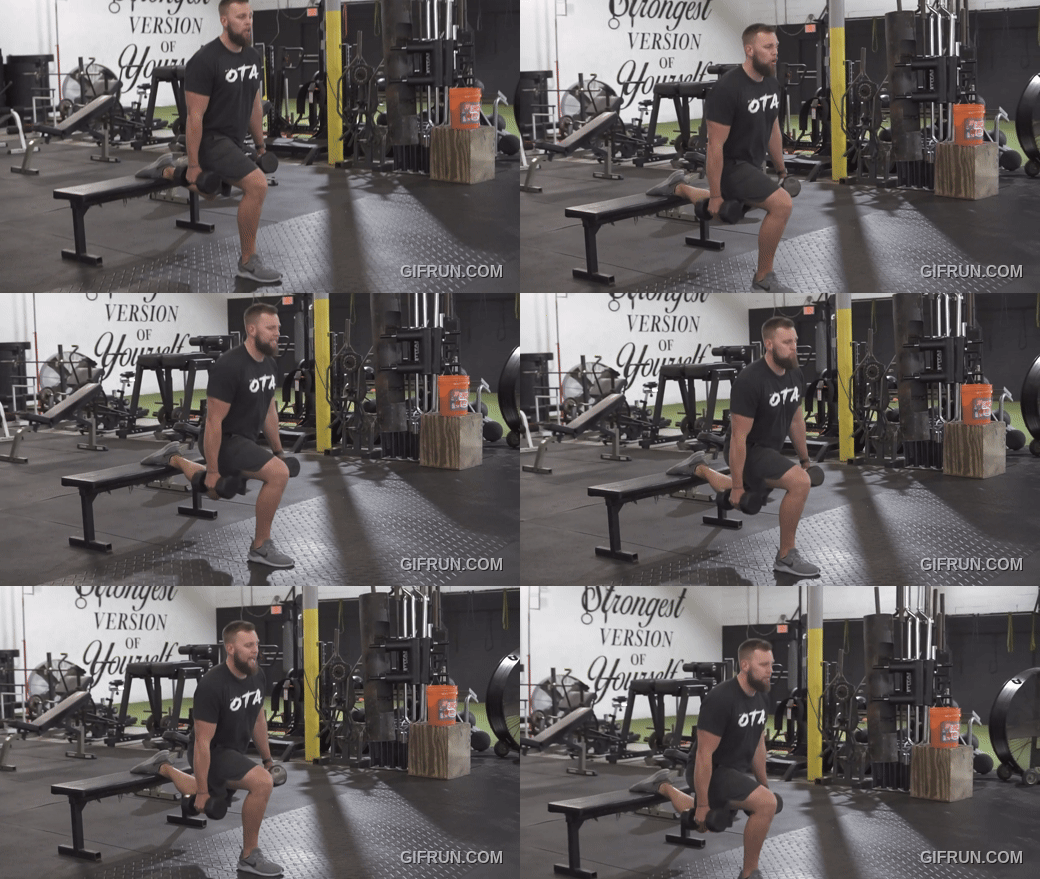
This is a dynamic isometric exercise, where the athlete must hold the joint position through dynamic oscillations or a series of low, rapid jumps.
Primary physical and performance benefits:
- Improves reflexive stability at the hip, knee, and ankle
- Enhances neuromuscular coordination under load
- Builds joint stiffness and control in unpredictable environments
- Supports resilience in contact and chaotic sport situations
These are best used once the athlete already owns the basic movement and to prepare the athletes joints and tendons for higher intensity plyometrics.
Speed and Explosive Bulgarian Split Squat Variations
Once strength and stability are established, Bulgarian split squats can be progressed into explosive movements that convert strength into usable power.
Bulgarian Split Squat Jumps
BSS jumps emphasize rapid force production from a unilateral stance.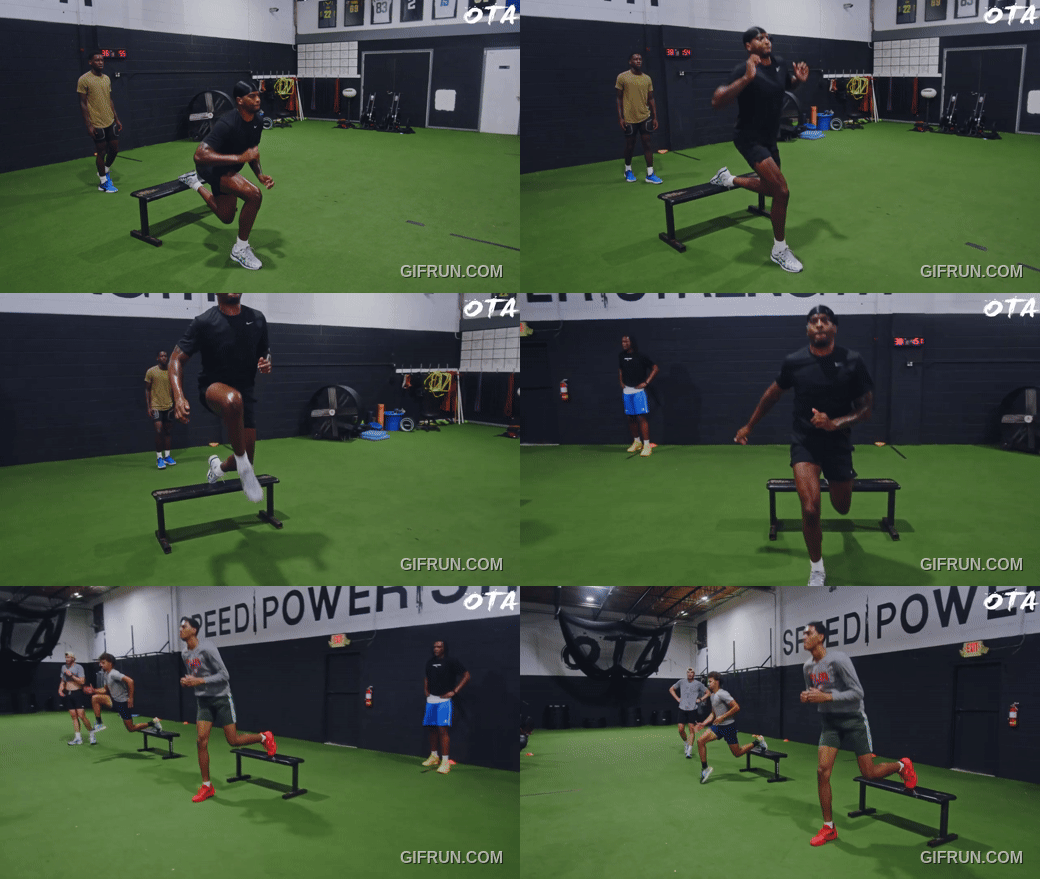
The athlete must absorb force at the bottom and reapply it quickly to leave the ground.
Primary physical and performance benefits:
- Improves rate of force development in one leg
- Strengthens tendons involved in explosive takeoffs
- Reinforces proper unilateral landing mechanics
- Bridges the gap between strength training and sprinting
Quality and intent matter far more than volume with this variation.
Bulgarian Lateral Hops and Lateral Hurdle Jumps

These variations shift the emphasis to lateral force production and absorption.
From the split stance, the athlete produces power sideways while maintaining balance and control. Start off with lower lateral hops and then advance to lateral hurdle jumps, forcing the athlete to produce more force both laterally and vertically.
Primary physical and performance benefits:
- Improves lateral strength and power
- Enhances hip and knee control in frontal-plane movement
- Builds stiffness and reactivity in the lower leg
- Supports cutting, shuffling, and reactive movement demands
These are especially valuable for field and court sport athletes.
How Athletes Should Progress Bulgarian Split Squats
Bulgarian split squats are most effective when progressed smartly. Athletes should start with standard and heel-raised variations to build strength, then increase demands through offset and safety squat bar loading. Stability-focused variations refine control, while jump and lateral progressions convert strength into speed and explosiveness.
When used this way, Bulgarian split squats become a long-term development tool rather than a temporary accessory exercise.
Final Thoughts
Bulgarian split squats are one of the most effective staple exercises athletes can use to build lower-body strength, single-leg control, and explosive power.
They strengthen the quads, glutes, and hips while reinforcing stability and coordination that directly support athletic movement. When progressed properly, they help athletes move faster, jump higher, and stay healthier.
If you want to get real athletic performance results, check out our Game Speed Agility program with the image below!
Train with intent.