
Best Single Leg Plyometrics for Football Athletes
Football is not a two‑legged sport.
Every acceleration, cut, deceleration, and jump in football happens primarily off one leg at a time. Yet many training programs still rely heavily on bilateral plyometrics and symmetrical jumping patterns that don’t fully reflect the demands of the game.
At Overtime Athletes, we emphasize single leg plyometrics because they bridge the gap between weight room strength and on‑field speed, power, and durability. When programmed correctly, single leg plyometrics improve football athletes lower body ability to produce force, absorb force, and redirect force at high speeds—exactly what the sport demands.
(See our previous article on the Top 15 Single Leg Plyometrics)
This article breaks down:
- Why single leg plyometrics are essential for football athletes
- How elite football movements rely on unilateral power
- The importance of intelligent plyometric programming
- The best single leg plyometrics for football, and how to perform them correctly
Why Single Leg Plyometrics Matter for Football
Football is a game of violent intent executed at extreme speed. Linemen explode out of a staggered stance. Skill players accelerate, decelerate, and re‑accelerate within fractions of a second. Defensive players react laterally, close space, and change direction under chaos.
All of this happens off one leg at a time.
Single leg plyometrics train the body to:
- Produce force efficiently through one limb
- Stabilize the pelvis and trunk during high‑speed movement
- Absorb ground forces safely during deceleration
- Transition between movement vectors (horizontal, vertical, lateral)
When athletes lack single leg power or control, we see:
- Slower first steps
- Poor braking ability
- Inefficient cutting mechanics
- Increased risk of hamstring, groin, knee, and ankle injuries
That’s why single leg plyometrics aren’t just about jumping higher—they’re about playing faster, safer, and more explosively.
The Demands of Elite Football Athletes
Elite football performance depends on four key movement abilities:
1. Acceleration
Athletes must apply large amounts of horizontal force into the ground quickly. Early acceleration is dominated by single leg force production with aggressive hip extension.
2. Deceleration
Being fast isn’t enough—athletes must also stop. Deceleration requires eccentric strength and stiffness on one leg to safely absorb force and prepare for re‑acceleration.
3. Change of Direction
Cutting requires the ability to redirect force from horizontal to lateral or vertical. This is one of the highest stress demands placed on the lower body.
4. Jumping and Top‑Speed Mechanics
Vertical force production influences sprinting mechanics, stride stiffness, and the ability to maintain speed at max velocity.
Single leg plyometrics target all four of these demands when programmed intentionally.
The Importance of Proper Plyometric Programming
Plyometrics are not conditioning drills. They are high‑intensity neural exercises that demand precision.
Poor plyometric programming—random jumps, excessive volume, or fatigue‑based circuits—leads to sloppy mechanics and increased injury risk.
Effective single leg plyometric programming should:
- Progress from low to high intensity
- Emphasize quality over quantity
- Match the force direction to the desired outcome
- Allow adequate rest between reps and sets
Now let’s break down the best single leg plyometrics for football athletes and why they work.
1. Single Leg Double Broad Jumps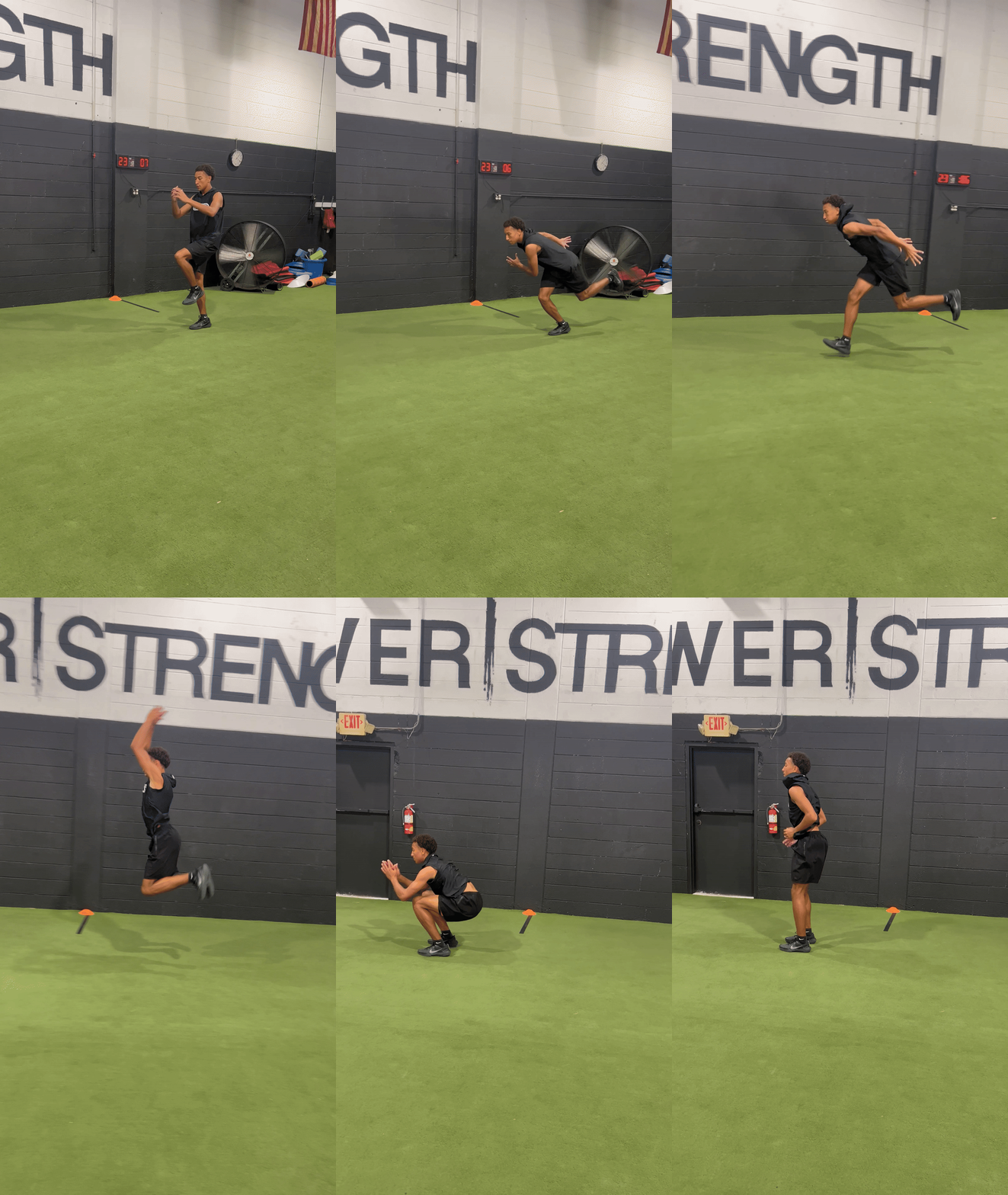
(Horizontal Force Production for Acceleration)
How to Perform
- Start on one leg with a slight knee bend
- Load the hip by pushing the hips back
- Explode forward into a broad jump
- Land on the same leg with control
- Immediately perform a second jump forward, reach full extension
- Stick the final landing before switching legs
Why It Works
Early acceleration in football is about horizontal force application. Single leg double broad jumps teach athletes to apply force backward into the ground while maintaining balance and posture.
This drill improves:
- First‑step explosiveness
- Hip extension power
- Single leg stiffness
It also exposes side‑to‑side asymmetries that bilateral jumps often hide.
2. Sprinter Step Ups

(Vertical Force and Deceleration Strength)
How to Perform
- Place one foot on a box or bench
- Drive the opposite knee up aggressively
- Push through the stance leg to full hip extension
- Control the descent back to the ground
- Try to not allow weight to shift to leg touching the ground
Why It Works
Sprinter step ups combine vertical force production with controlled deceleration. The athlete must generate force upward while maintaining pelvic and trunk stability.
Benefits include:
- Improved single leg power
- Better deceleration strength
- Enhanced posture for sprinting
This movement closely mirrors the stance phase of sprinting and helps athletes transition force vertically without collapsing at the hip or knee.
3. Single Leg Broad to 90‑Degree Lateral Jump
(Change of Direction: Horizontal to Lateral Force)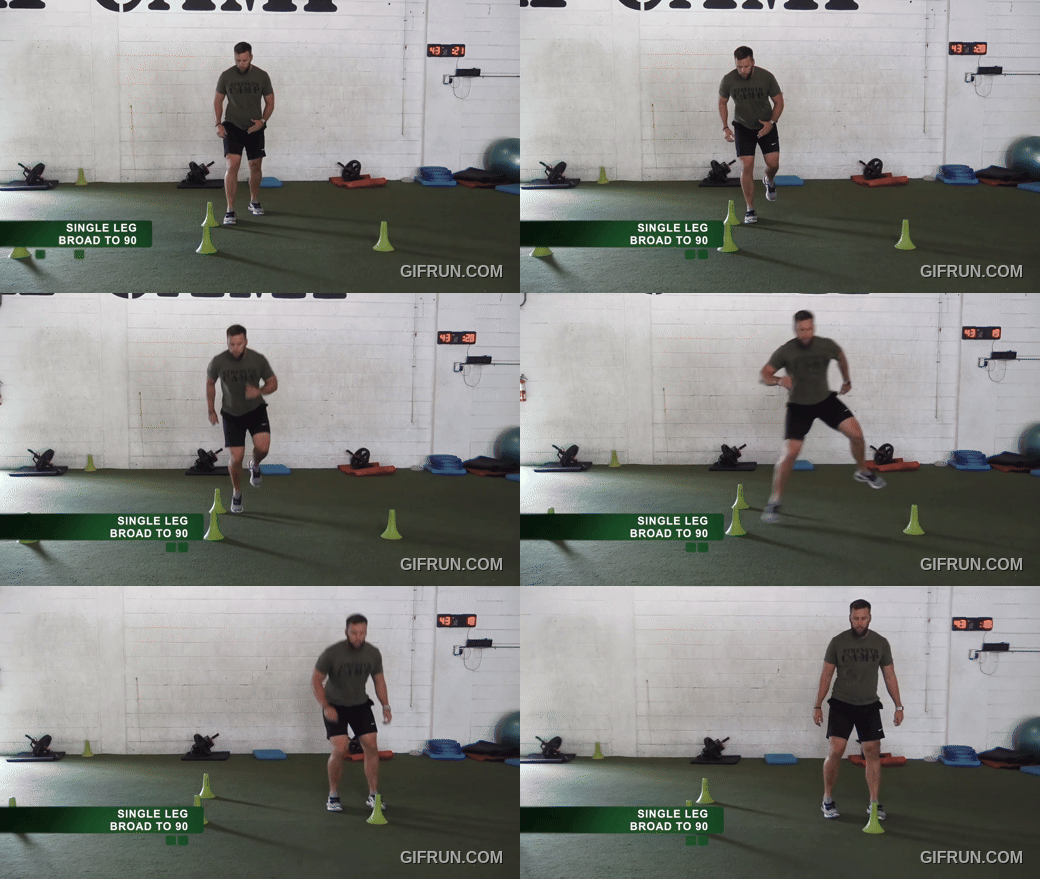
How to Perform
- Start on one leg
- Perform a controlled single leg broad jump forward
- Upon landing, immediately redirect into a lateral jump at 90 degrees
- Stick the final landing
- Reset before the next rep
Why It Works
Football athletes rarely move in straight lines. This drill trains the ability to absorb horizontal force and rapidly redirect it laterally.
Key benefits:
- Improved cutting efficiency
- Stronger braking mechanics
- Reduced knee valgus during change of direction
This is a high‑value drill for skill players and defenders who must react and redirect under pressure.
4. Alternating Bounds for Height

(Vertical Force Transfer to Top Speed)
How to Perform
- Begin with a skip‑like rhythm
- Drive one knee up aggressively
- Bound vertically off the opposite leg
- Alternate legs with each bound
- Focus on height, posture, and stiffness
Why It Works
Top‑end speed depends heavily on vertical force production and elastic stiffness. Alternating bounds for height teach athletes to apply force quickly while maintaining rhythm and coordination.
This drill enhances:
- Sprint stride mechanics
- Elastic reactivity
- Vertical force output at speed
It also reinforces proper arm action and trunk alignment under dynamic conditions.
5. Band Resisted Single Leg Bounds
(Horizontal Force and Cyclical Hip Action)
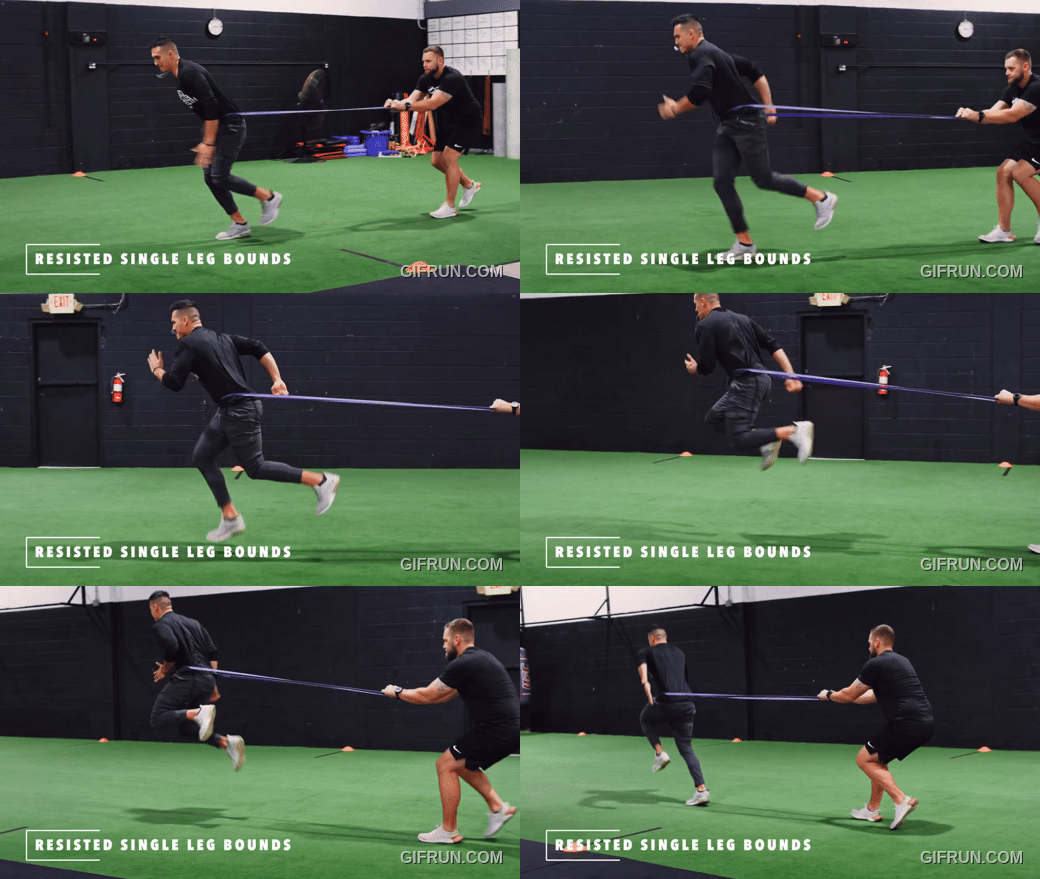
How to Perform
- Attach a resistance band around the waist
- Start on one leg
- Perform repeated forward bounds against resistance
- Emphasize aggressive hip extension and knee drive
- Maintain posture and rhythm
Why It Works
This drill targets horizontal force production while reinforcing the cyclical action of the hip—critical for sprinting efficiency.
Benefits include:
- Improved sprinting mechanics
- Stronger hip drive
- Better force application angles
The band provides overload without sacrificing movement quality when used correctly.
Conclusion
Single leg plyometrics are not optional for football athletes—they are essential.
They teach athletes how to accelerate faster, decelerate safely, cut more efficiently, and express power at game speed. When programmed intelligently, single leg plyometrics build resilient, explosive, and adaptable football players.
We don’t chase fatigue—we chase performance. Every jump, bound, and contact with the ground has a purpose and intent.
If you’re serious about dominating this football off‑season, now is the time to train with intent.
Football off‑season is where games are won.
Our Football Performance Program is built for athletes who want to get faster, stronger, and more explosive—without wasting time on random workouts.
If you’re ready to separate yourself this off‑season, train with Overtime Athletes and build the speed, power, and durability required to perform at the highest level.
Start your off‑season the right way.

