

Why Parents and Athletes Obsess Over Sprint Mechanics
Mechanics are easy to see. Arm swing, knee drive, posture. You can film it, point at it, and coach it in five minutes. So it feels like the answer.
But here’s what we see all the time at Overtime Athletes: a kid with “messy” form who is still the fastest player on the field, and a kid with picture-perfect mechanics who can’t pull away from anyone.
Why? Mechanics don’t create speed. Force does. Good mechanics simply help an athlete apply the force they already have. If there isn’t much force there to begin with, cleaning up their arm swing won’t move the needle.
In fact, many “mechanical flaws” in young athletes are strength problems in disguise. A kid who collapses at the hips or can’t hold posture at top speed usually isn’t forgetting the cue. They just aren’t strong enough to hold the position yet.
See our previous article on max velocity training and developing top speed!
Why Random Speed Drills Every Week Won’t Build Speed
The second trap is the random-drill approach. A new ladder pattern this week, cone shuffles next week, parachute sprints after that. It looks busy, and it makes a great video. But it rarely builds real speed.
Speed is both a skill and a physical quality. Building it takes a plan with progression: the right stress, repeated consistently, increasing over time. Random drills give the body no clear signal to adapt, so the athlete stays the same.
Worse, a lot of “speed training” is really conditioning in disguise. Short rest, high reps, kids bent over gasping. That trains them to be tired, not fast. Real speed work means short, max-intent sprints with full recovery, two to three times per week.
That sprinting is non-negotiable. But sprinting alone eventually hits a ceiling. To break through it, your athlete needs two more things.
#1: Strength Training (Most Young Athletes Are Simply Too Weak)
This is the big one. Most young athletes aren’t slow because of their technique. They’re slow because they can’t produce enough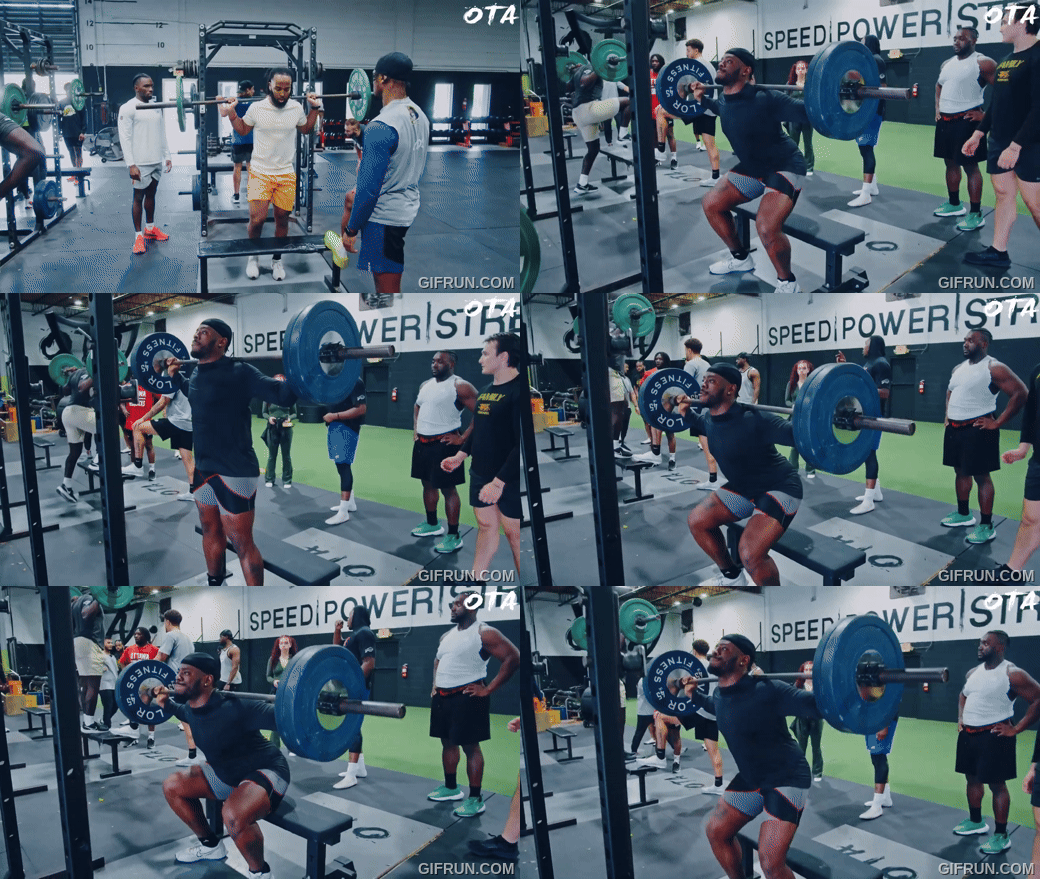 force into the ground.
Every stride at top speed hits the ground with forces several times your athlete’s bodyweight. Speed requires an extremely high amount of force relative to bodyweight. If their legs can’t produce and handle that force, no drill will make them fast.
That’s why relative strength (how strong they are for their size) is one of the best predictors of speed in young athletes. A stronger athlete pushes the ground harder, holds better positions, and gets more out of every stride. Remember those “mechanical flaws”? Strength fixes a lot of them on its own.
The good news: strength training for young athletes is safe and effective when it’s properly coached. It doesn’t mean maxing out on day one. It means mastering the basics and progressing over time:
• Squat and hinge patterns (goblet squats, trap bar deadlifts)
• Single-leg strength (split squats, step-ups, lunges)
• Posterior chain work for the hamstrings and glutes
• Core and trunk strength to hold sprint posture
Two to three strength sessions per week, built around their sport schedule, is enough to see real change. As a bonus, stronger athletes also tend to get injured less.
Check out our article on best strength exercises to get faster and more explosive!
#2: Plyometrics (Producing Force Fast)
Strength builds the engine. Plyometrics teach your athlete to use it fast.
Here’s why that matters: at top speed, the foot is only on the ground for about a tenth of a second. That’s not enough time to use all the strength an athlete has. What separates fast kids from strong-but-slow kids is how quickly they can apply force. Coaches call this rate of force development.
Think of a strong athlete who can’t apply force quickly as a sports car stuck in first gear. All that power, with no way to use it at speed.
Plyometrics for youth athletes (jumps, hops, bounds and skips) train the muscles and tendons to act like springs. They store energy on landing and release it instantly. The result is shorter ground contacts, a stiffer, bouncier stride, and more force applied in less time.
Like strength, plyometrics need a progression:
1. Landing mechanics and sticking jumps
2. Jumps for height and distance
3. Hops, skips and bounds
4. Fast, reactive work like pogo hops and low drop jumps
Keep the quality high and the volume low. Every rep should be crisp and explosive, with enough rest to stay that way.
Read our article on building speed for youth with plyometrics!
Final Thoughts: How to Actually Make Your Child Faster
If you’ve been wondering how to make your child faster, stop chasing perfect form and random drills. Real speed training for kids is built on three pillars that work together:
• Sprint: short, max-intent sprints with full rest, 2 to 3 times per week
• Strength: so they can produce a high amount of force relative to their bodyweight
• Plyometrics: so they can apply that force fast and spend less time on the ground
Mechanics still matter. But they’re the finishing touch, not the foundation. Build the force first, and the form gets better with it.
The hard part for most parents isn’t knowing this. It’s knowing exactly what to do, how much, and when, without guessing or overloading a young athlete who’s already playing a sport.
That’s exactly why we built the Athletic Speed System. It’s a step-by-step program that combines sprint training, strength training and plyometrics into one clear plan, progressed week by week so your athlete keeps getting faster instead of stalling out.
This is a proven system for athletes to build speed.

Not sure if it’s the right fit? Book a free call with us to see what would be best for you! api.leadconnectorhq.com/widget/bookings/main-calendars/application-callwxw28a
