

The Best Change of Direction Warm-Up for Faster, Sharper Athletes
If you’re serious about improving your change of direction, your warm-up can’t just be about breaking a sweat. A few high knees, butt kicks, and static stretches won’t prepare your body for the demands of explosive cuts, deceleration, and rapid acceleration.
The best athletes don’t just warm up—they prepare their bodies for the exact movements they’re about to perform.
That’s why every speed and agility session should begin with a speed-specific dynamic warm-up. The goal isn’t simply to increase body temperature. It’s to prepare the muscles, tendons, joints, and nervous system to produce force quickly while improving movement quality and reducing injury risk.
Your warm-up should make you a better athlete before the workout even starts. Learn more about agility with our previous article sharing drills for pro football agility!

Why a Change of Direction Warm-Up Matters
Elite change of direction isn’t just about moving your feet faster. It’s about how efficiently you absorb force, stabilize your body, and redirect that force into a new direction.
Every hard cut places enormous stress on the ankles, knees, hips, and connective tissues. If those structures aren’t prepared, you’ll move slower, leak force, and increase your risk of injury.
A proper warm-up helps improve:
- Joint stiffness for more explosive force production
- Tendon elasticity to store and release energy efficiently
- Neuromuscular activation for faster reaction times
- Movement quality and body control
- Deceleration mechanics before aggressive cuts
- Overall speed and agility performance
Think of your tendons like springs. When they’re prepared to handle high-speed loading, they become more efficient at storing and releasing energy. The result is quicker first steps, faster cuts, and more explosive movement.
That’s why our warm-up progresses from simple elastic drills into increasingly demanding change of direction movements.
1. Lateral Pogo Jumps

The first drill begins building stiffness through both ankles.
Lateral pogo jumps teach athletes to stay tall while making quick, elastic contacts with the ground. Instead of sinking into every jump, athletes learn to rebound rapidly using the ankle complex.
Purpose:
- Improve ankle stiffness
- Prepare the Achilles tendon
- Develop reactive strength
- Introduce lateral movement patterns
2. Single Leg Lateral Pogo Jumps
Once both legs are prepared, we challenge each side individually.
Most sports require athletes to produce force off one leg while changing direction. This drill improves unilateral stability while continuing to build reactive tendon qualities.
Purpose:
- Improve single-leg stability
- Increase ankle and foot strength
- Build unilateral tendon stiffness
- Reduce side-to-side weaknesses
3. Lateral Line Hops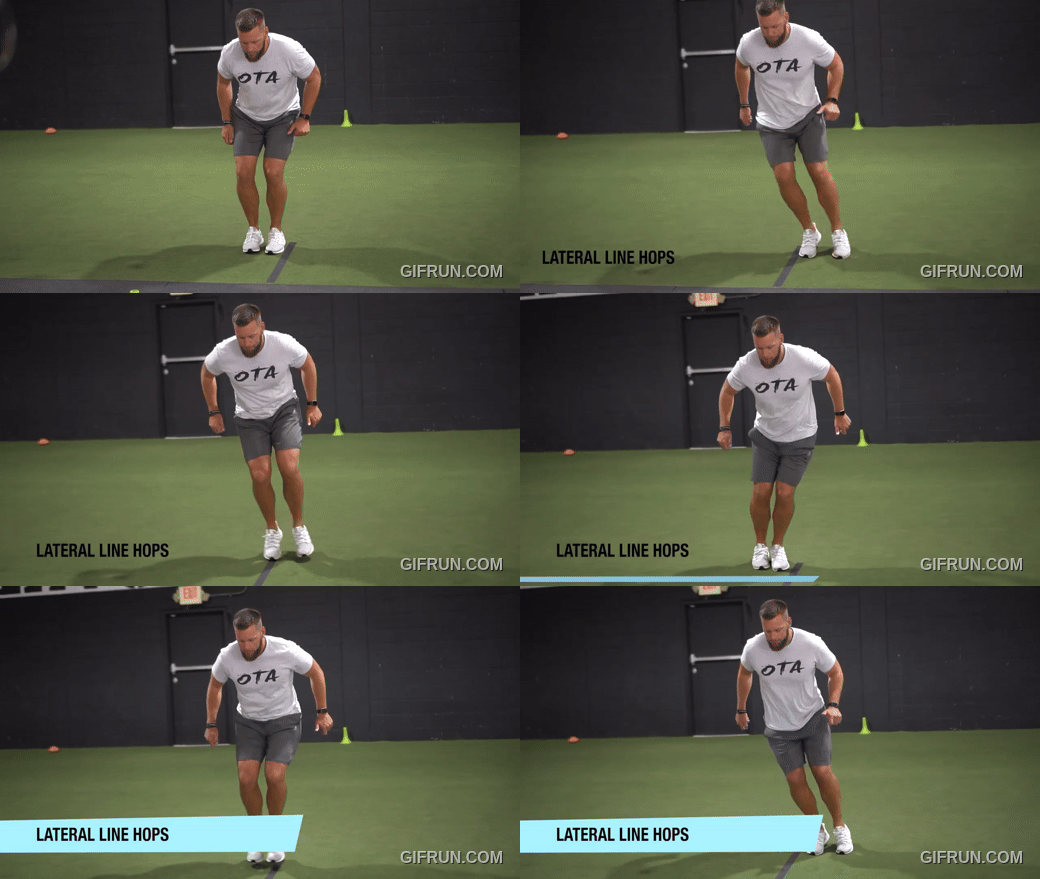

Now we increase foot speed.
Lateral line hops teach athletes to make extremely fast contacts while maintaining posture and rhythm. The goal isn’t jumping high—it’s minimizing ground contact time.
Quick feet are the product of efficient force production, not simply moving your legs faster.
Purpose:
- Increase foot speed
- Improve reactive ability
- Reduce ground contact time
- Reinforce athletic posture
4. Single Leg Lateral Line Hops
Next, athletes perform the same movement on one leg.
This creates a greater demand on balance, ankle stability, and force absorption while closely resembling the single-leg demands of sport.
Athletes who struggle here often struggle changing direction efficiently during competition.
Purpose:
- Improve balance under speed
- Strengthen stabilizers
- Increase unilateral coordination
- Enhance force absorption
5. Skater Jumps (Stability)
Before athletes learn to move faster, they must first learn to control their landings.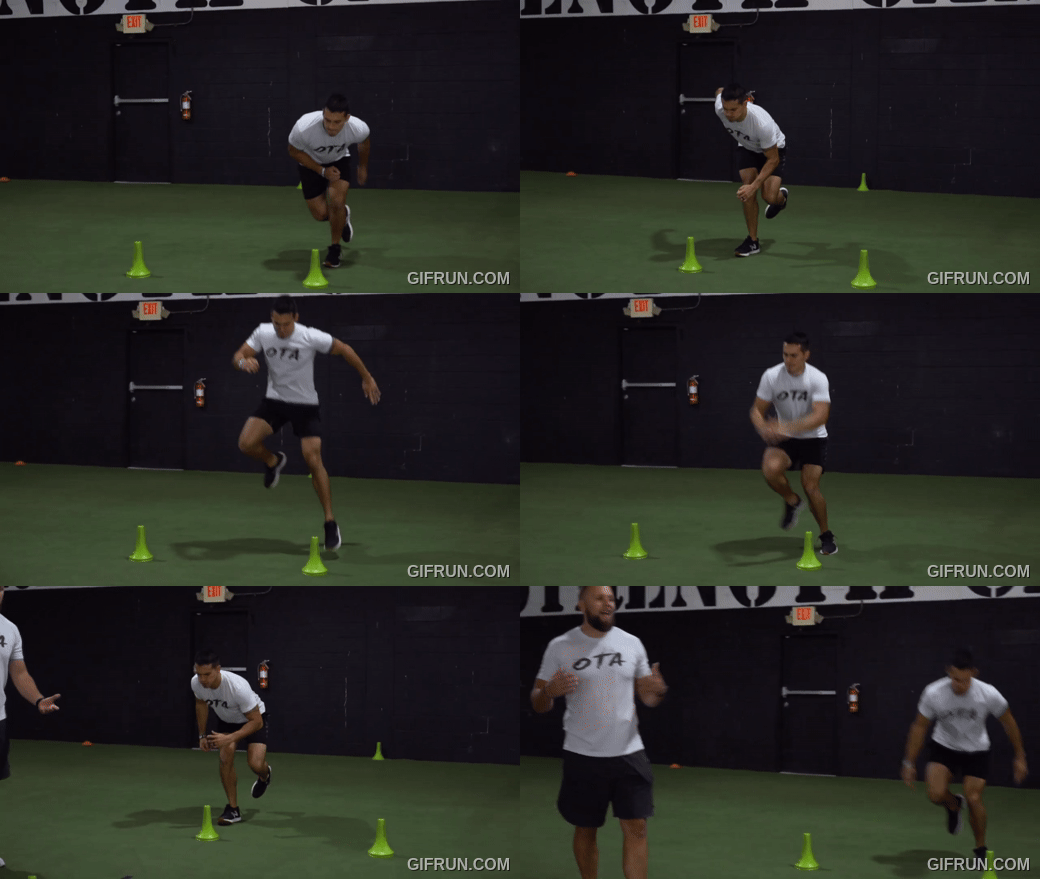
Skater jumps with a controlled stick teach athletes how to absorb force safely through the hips, knees, and ankles while maintaining proper body position.
Good deceleration creates great acceleration.
If an athlete can’t control the landing, they won’t produce an explosive cut.
Purpose:
- Improve deceleration mechanics
- Develop hip stability
- Increase body control
- Teach proper force absorption
6. Skater Jumps (Continuous)
Once athletes own the landing, we remove the pause.
Continuous skater jumps train athletes to absorb force and immediately redirect it into the next movement. This closely mimics what happens during live sport.
Instead of stopping after every cut, athletes must rapidly transition from braking to accelerating.
Purpose:
- Improve reactive strength
- Increase lateral explosiveness
- Develop elastic power
- Train continuous force production
7. Low Lateral Quick Shuffle
Now we transition into true change of direction mechanics.
Athletes stay in an athletic position while rapidly shuffling side to side over short distances.
The emphasis is staying low, keeping the hips loaded, and producing quick lateral pushes without crossing the feet.
This reinforces efficient defensive movement patterns used across nearly every field and court sport.
Purpose:
- Improve lateral acceleration
- Reinforce athletic posture
- Develop quick feet
- Increase movement efficiency
8. Lateral Power Shuffle

The final drill increases speed and power.
Instead of taking quick, short steps, athletes now produce larger, more explosive pushes while covering greater distance.
This bridges the gap between warm-up drills and full-speed agility work.
The nervous system is fully activated, the tendons are primed, and the athlete is ready to attack high-intensity change of direction training.
Purpose:
- Develop lateral power
- Increase force production
- Improve acceleration into cuts
- Prepare for maximum-speed agility work
Final Thoughts
Your warm-up sets the tone for everything that follows.
A properly designed change of direction warm-up doesn’t just prepare the body—it improves performance. By progressively increasing joint stiffness, activating the nervous system, preparing the tendons, and reinforcing quality movement patterns, athletes enter every speed session ready to move explosively instead of wasting the first 20 minutes trying to “feel loose.”
Too many athletes skip this process and wonder why they feel slow, stiff, or inconsistent during agility work.
If you’re ready to become faster, more explosive, and dominate every cut on the field or court, check out our Game Speed Agility Program. Inside, you’ll get the exact progressions, drills, and coaching methods we use to help athletes improve their change of direction, acceleration, and game-changing speed.
