
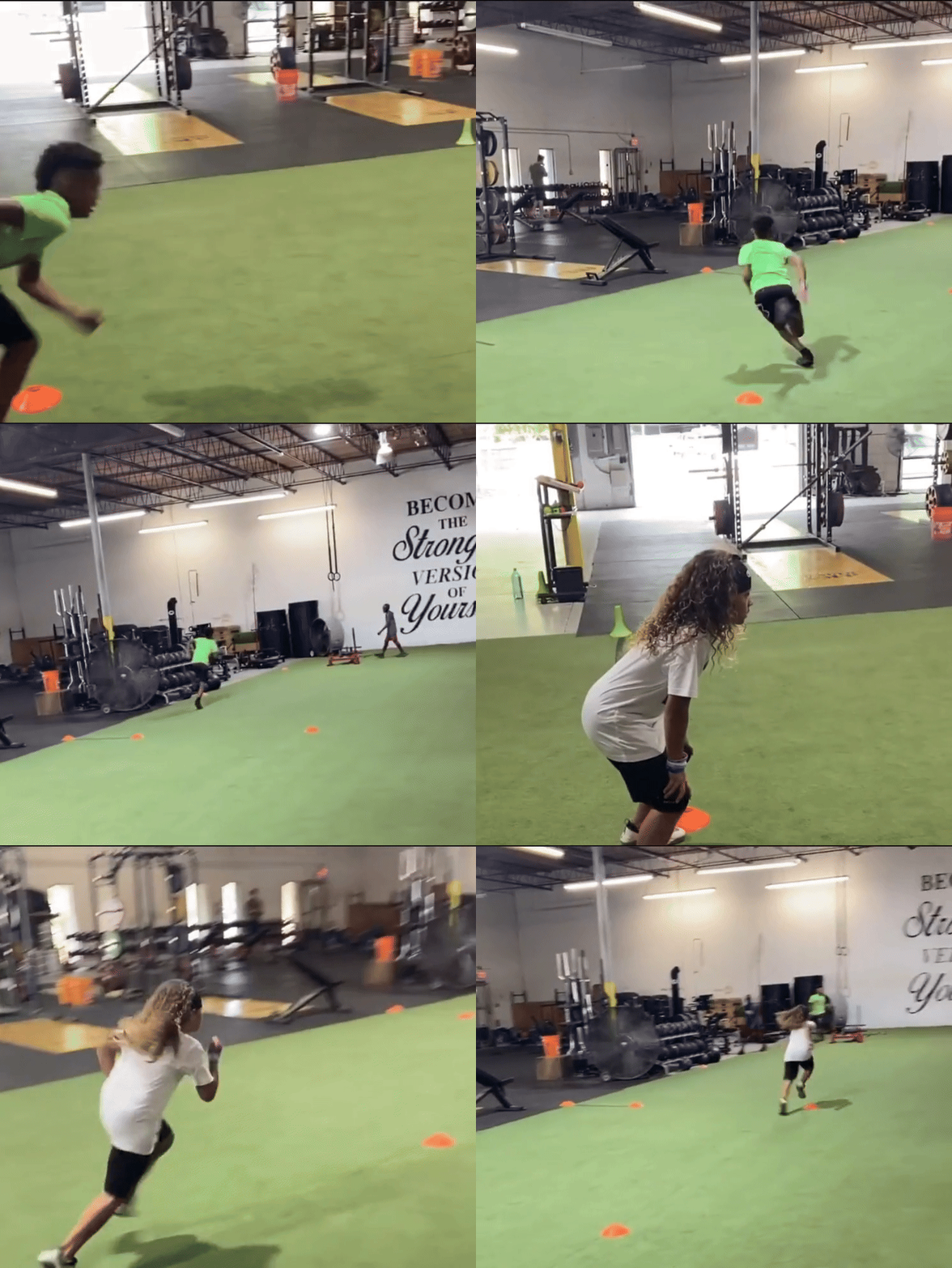
Youth Speed Training: How Young Athletes Should Be Training Speed
If you spend five minutes on social media, you’ll see it: slow-motion sprint clips, hyper-technical cueing, ladder drills with ten variations, and “speed coaches” promising instant results with fancy movements. Parents watch. Athletes copy. And suddenly youth speed training turns into a constant chase for the next flashy drill instead of actual speed development.
Here’s the hard truth from the sport performance world:
Most young athletes are not slow because their mechanics are bad. They’re slow because they aren’t physically developed enough to move fast.
At OTA, speed has never been about gimmicks. Speed is an outcome. And when you understand how speed is actually developed, youth speed training becomes a lot simpler—and far more effective. Check out a couple of our previous article about youth training:
The Problem With Modern Youth Speed Training
Everyone knows speed wins. Parents care. Coaches care. Athletes want to be faster. That part is great.
The issue is where the focus has shifted.
Today’s youth speed training culture often revolves around:
- Over-coaching sprint mechanics
- Copying elite sprinters or NFL athletes
- Fancy “speed drills” that look impressive on Instagram
- Endless cueing instead of actual movement
Most of this obsession comes from social media and online gimmick coaches. These drills look advanced, scientific, and high-level—so people assume that’s what speed training should look like.
But here’s what gets missed:
Elite sprinters EARN the right to perform advanced speed drills.
They have decades of training, strength, tendon capacity, and coordination behind them.
An 8 to 13-year-old athlete does not.
Trying to copy elite sprint drills without the physical foundation is like giving a Formula 1 engine to someone who can’t drive a stick shift. It doesn’t work—and it often backfires.
Mechanics Are Not the Starting Point
This is where parents often get stuck.
They’ll say:
- “My kid’s arm swing looks wrong.”
- “His knee drive isn’t high enough.”
- “She doesn’t look smooth when she runs.”
But mechanics are developed, not forced. Just because you can train a kid to run with the “right mechanics” does not mean they’ll suddenly be faster.
Sprint mechanics improve when:
- The athlete is stronger
- The athlete can apply more force into the ground
- The athlete has better stiffness and elasticity
- The athlete is exposed to real sprinting
If an athlete lacks the physical qualities needed to sprint fast, no amount of cueing will fix it. In fact, obsessing over mechanics too early often slows athletes down, makes them stiff, and increases injury risk.
Youth speed training should be about building capacity first, not perfection.
Young Athletes Must Be CAPABLE Before They Can Be TECHNICAL
This is the part most people skip.
Many “speed drills” require:
- High levels of single-leg strength
- Tendon stiffness and elasticity
- Coordination at high velocities
- The ability to produce and absorb force rapidly
If a young athlete doesn’t have those qualities, the drill will never look right—because it can’t. The kid is literally physically INCAPABLE of performing most mechanics drills correctly.
So instead of asking:
“Why can’t my kid do this drill well?”
The better question is:
“Does my kid have the physical tools to do this drill correctly?”
Most of the time, the answer is no.
That’s not a knock on the athlete—it’s normal development.
Which brings us to what actually matters.
The 3 Things Youth Athletes Need to Develop REAL Speed
If you strip away the noise, youth speed training comes down to three pillars. When these are in place, speed improves naturally.
1. Plyometrics and Jumping
(Tendon stiffness, elasticity, and rate of force development)

Speed is not just about how strong a muscle is—it’s about how fast force can be applied and recycled.
That’s where plyometrics come in.
Jumping, hopping, skipping, and landing teach the body to:
- Store elastic energy in the tendons
- Release that energy quickly
- Improve stiffness at ground contact
- Increase rate of force development
In sprinting, ground contact times are incredibly short. If an athlete can’t produce force quickly, they won’t run fast—no matter how “clean” their mechanics look.
For youth athletes, plyometrics should be:
- Simple
- Repetitive
- Low to moderate volume
- Focused on quality and intent
Examples include:
- Pogo jumps
- Broad jumps
- Vertical jumps
- Skips and bounds
- Low-level hops and stick landings
These movements build the engine behind speed. They don’t need to be fancy to be effective, just consistent.
2. Sprinting With HIGH Intent
(Exposure to real speed)
This might be the most overlooked aspect of youth speed training.
If an athlete never sprints fast, they will never be fast.
Speed is a skill. The nervous system needs exposure to:
- High velocities
- Max intent
- Full recovery between reps
Too often, youth athletes only “run” in:
- Conditioning drills
- Practice tempos
- Sport play at submax speeds
That’s not sprinting.
True speed development requires:
- Short sprints
- Full effort
- Plenty of rest
This teaches the nervous system how to:
- Coordinate movement at high speeds
- Apply force efficiently
- Relax while moving fast
You don’t need complex drills to do this. You need:
- Space
- Intent
- Consistency
Even 1–2 sessions per week of true max-intent sprinting can dramatically improve youth speed over time.
3. Developing Strength
(A weak athlete will NEVER get faster)
This is where people get uncomfortable—but it’s non-negotiable.
A weak athlete will never be fast. Period.
Many “slow” youth athletes aren’t slow because of genetics or mechanics. They’re slow because they can’t produce force. Strength is the foundation to nearly every single other athletic physical quality, like speed.
Strength allows an athlete to:
- Push harder into the ground
- Accelerate more efficiently
- Maintain speed longer
- Handle higher sprint volumes safely
This does NOT mean maxing out barbells every session.
Youth strength training should focus on:
- Bodyweight control
- Fundamental movement patterns
- Progressive overload over time
- Teaching athletes how to produce force
Squats, hinges, lunges, pushes, pulls, carries—done well—lay the foundation for speed.
As strength improves, speed often improves without ever cueing mechanics.
That’s not an accident. That’s physics.
It’s happened more often than not where a parent brings their young kid in and stressing that their kids mechanics is why they’re slow, when really the kid is just weak and not physically developed.
Why Obsessing Over Mechanics Can Hurt Speed Development
When youth speed training becomes overly technical:
- Athletes get stiff
- Movement becomes robotic
- Natural rhythm is lost
- Confidence drops
Instead of running fast, athletes start running carefully.
Mechanics matter—but they should be addressed:
- After physical qualities improve
- With minimal cueing
- Through constraints and intent, not over-thinking
Bringing It All Together
Real youth speed training is not about chasing drills—it’s about building athletes.
Plyometrics develop elasticity.
Sprinting builds coordination at speed.
Strength creates the force behind it all.
When these pieces work together:
- Mechanics clean themselves up
- Speed improves naturally
- Injury risk goes down
- Confidence goes up
Putting too much focus on one area—especially mechanics—creates imbalance and slows long-term development.
Young athletes don’t need more fancy drills.
They need well-rounded physical development.
That’s how youth athletes get faster and build a foundation to continue getting faster as they get older and more serious about their athletic career.

1 Response to "Youth Speed Training: How Young Athletes Should Be Training Speed"
The Speed Code
https://fc158asdsz5p2udb0ekosaydwn.hop.clickbank.net