

The Best Plyometric Routine to Prep and Build Speed
If your idea of speed training is lifting heavy weights and then running a few sprints afterward, you’re leaving one of the biggest pieces of the puzzle on the table.
This is one of the biggest mistakes I see athletes make.
They’ll crush a leg workout, head to the field, run a few 10- or 20-yard sprints, and call it a speed session. While strength training and sprinting are both critical for developing speed, they’re only two-thirds of the equation.
The missing piece?
Plyometrics.
If you want to become a faster, more explosive athlete, your training needs to combine strength, sprinting, and plyometrics. These three qualities work together. Strength gives you the ability to produce force. Sprinting teaches you how to apply that force at high speeds. Plyometrics bridge the gap by improving how quickly you can produce force and how efficiently your body uses the stretch-shortening cycle.
Leave one out, and you’re limiting your speed potential.
A great speed program blends all three together to maximize acceleration, top-end speed, and explosiveness. Make sure you read our last article on plyometrics and building speed for youth athletes!
Let’s get into it.
Why Plyometrics Matter
Every time your foot hits the ground during a sprint, you have a fraction of a second to absorb force and redirect it back into the ground. The faster you can do this, the faster you’ll run.
That’s exactly what plyometric training develops.
The right plyometric routine improves:
- Explosive power
- Ground contact time
- Reactive strength
- Tendon stiffness
- Force production
- Sprint mechanics
In other words, it teaches your body to produce more force while spending less time on the ground—exactly what elite sprinters do.
Below is a simple plyometric routine you can perform consistently before your sprint workouts to help prime your nervous system and build better speed.
1. Stationary Pogo Jumps for Height
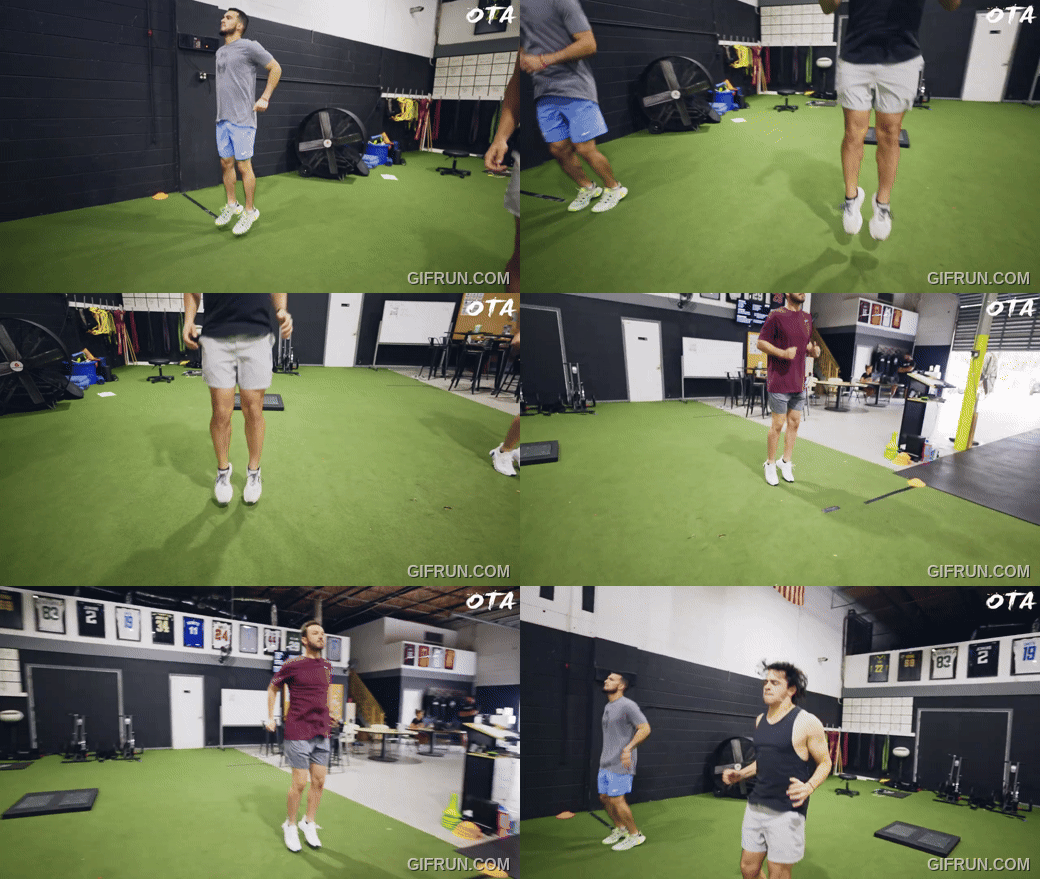
Start with stationary pogo jumps, focusing on staying tall while producing quick, explosive contacts with the ground. Instead of sinking into a deep squat, let your ankles do the work.
This drill teaches your lower legs to become more reactive while improving ankle stiffness—an essential quality for sprinting.
2. Linear Pogo Jumps
Once you’ve mastered jumping in place, begin traveling forward.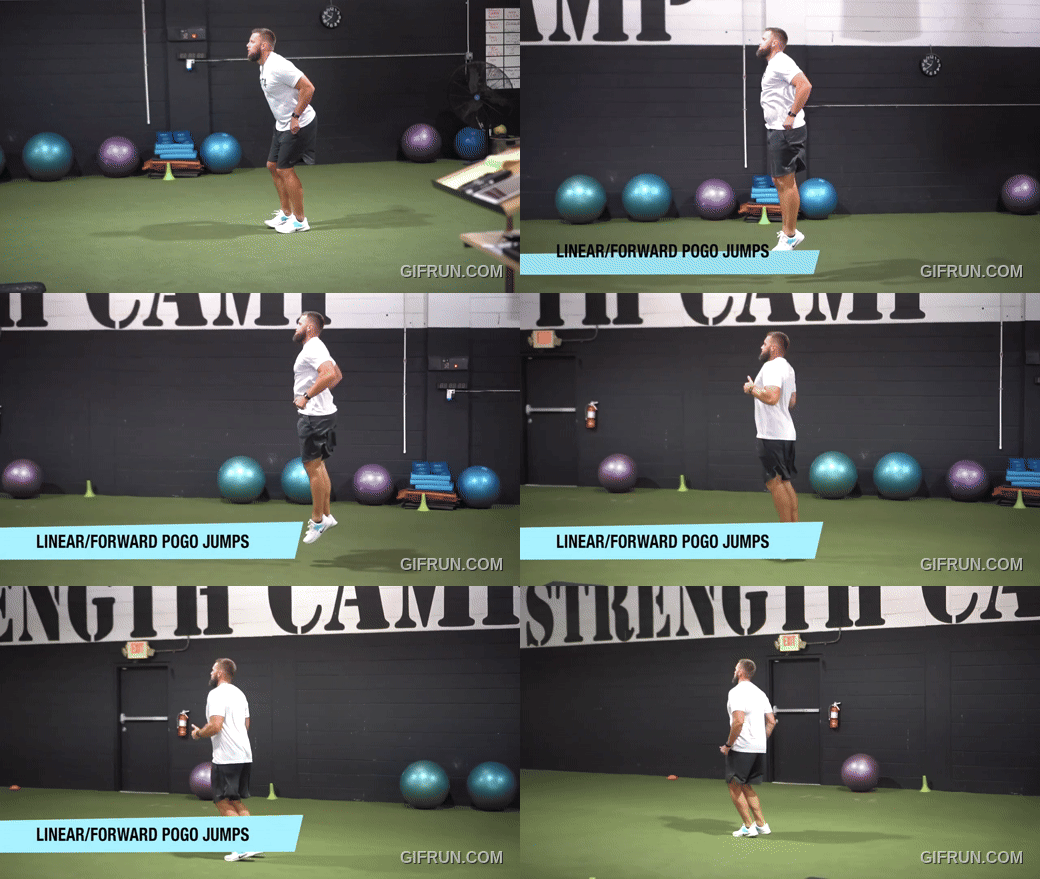
Linear pogo jumps reinforce quick ground contacts while teaching your body to project force horizontally, which directly carries over to acceleration.
Stay tall, stay stiff, and let each jump cover a little ground without losing rhythm.
3. Single-Leg Linear Pogo Jumps
Sprinting is ultimately a series of powerful single-leg jumps.
That’s why unilateral plyometrics are so important.
Single-leg linear pogos challenge ankle stability, improve balance, and develop reactive strength one leg at a time. Focus on maintaining posture while producing quick, elastic contacts.
4. Single-Leg Linear Hops (Vertical & Distance Focused)
This progression develops more force than pogo jumps while teaching athletes to control landing mechanics.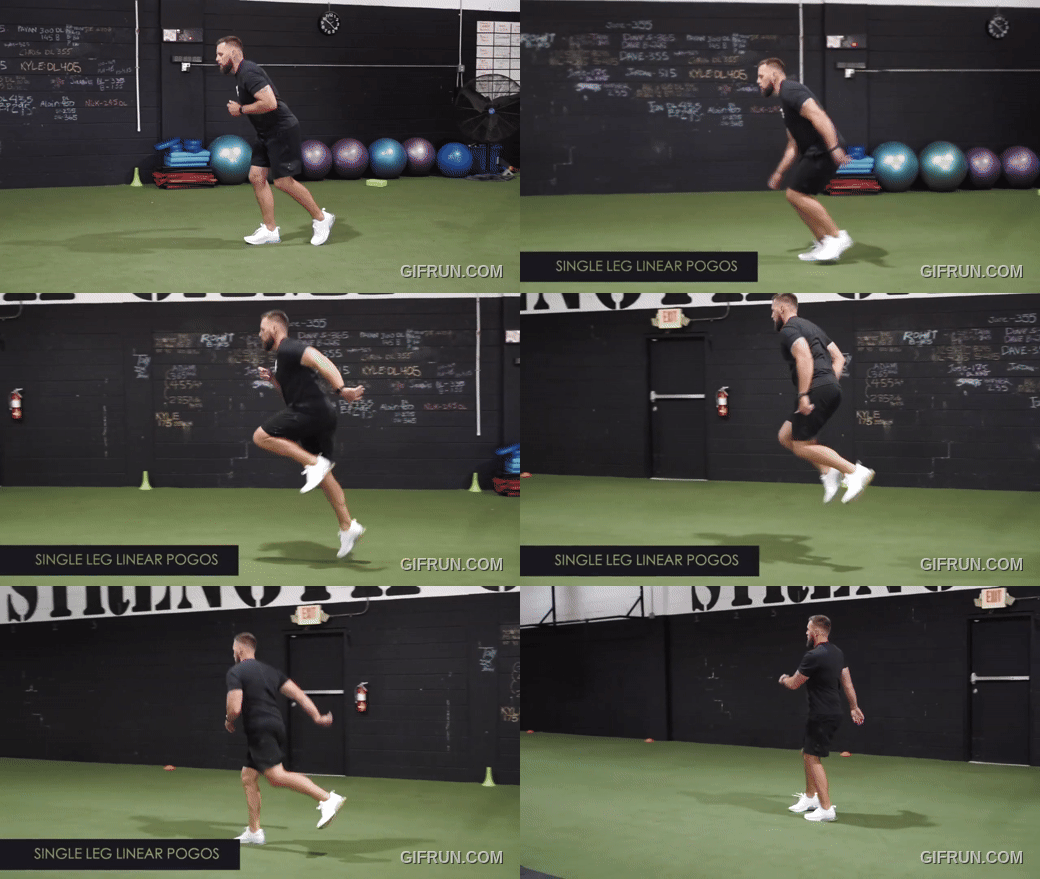
Alternate between:
- Vertical-focused hops to improve vertical force production.
- Distance-focused hops to improve horizontal force production for acceleration.
Both variations are valuable because sprinting requires athletes to project force in multiple directions depending on the phase of the sprint.
5. Power Skips for Height and Distance

Power skips are one of the best transition exercises between plyometrics and sprinting.
Drive your knee aggressively, attack the ground, and explode either vertically for max height or horizontally for max distance.
This drill reinforces rhythm, coordination, posture, and powerful hip extension while teaching athletes to strike the ground with intent.
6. Power Bounds for Height and Distance
Bounds take everything from power skips and amplify it.
Each bound should be aggressive, explosive, and controlled.
Perform reps for height and reps for distance. Focus on producing as much force into the ground as possible.
Bounding develops power, elasticity, and vertical and horizontal force production—all critical for becoming faster.
7. Depth Drop to Vertical Jump
Finish your plyometric routine with one of the best reactive strength exercises available.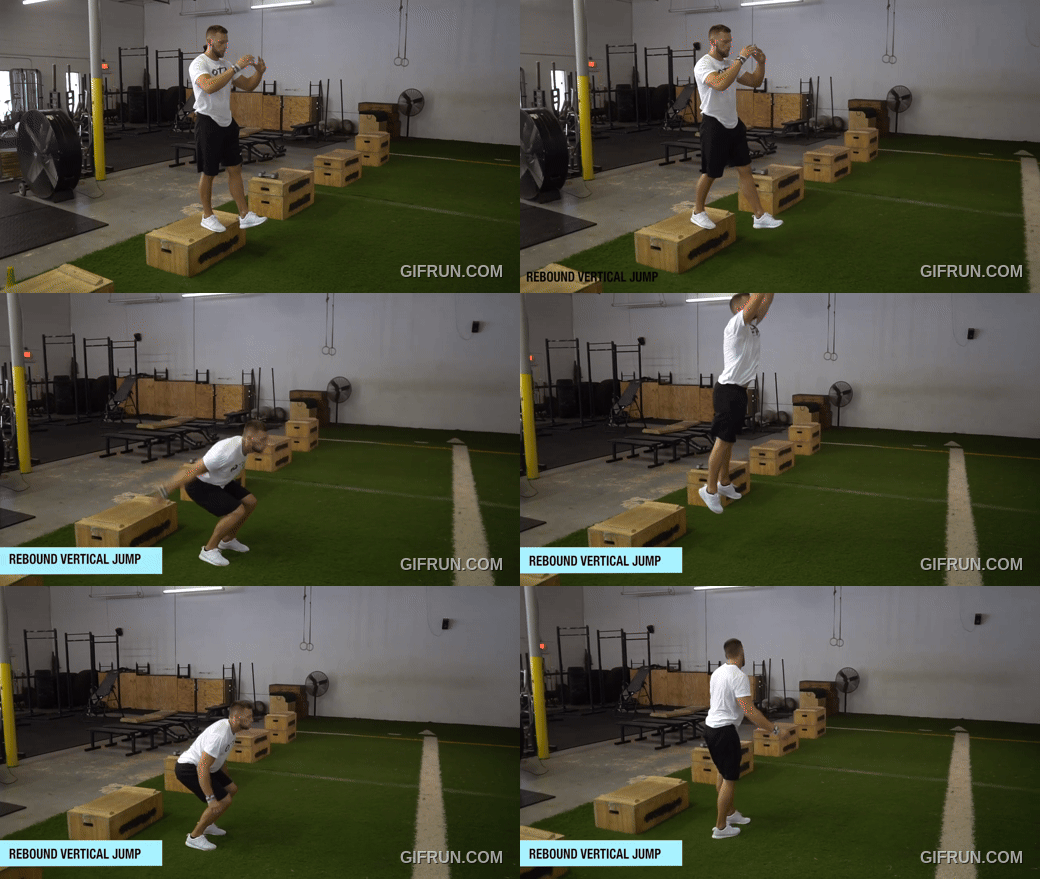
Step off a box, absorb the landing quickly, and immediately explode into a maximal vertical jump.
The goal isn’t spending time on the ground.
It’s learning to absorb force, reverse direction instantly, and explode upward.
This exercise trains the stretch-shortening cycle at a high level while preparing your nervous system for maximal sprinting.
Now You’re Ready to Sprint
After completing this plyometric routine, your body is primed to express maximum force production and velocity.
Your nervous system is activated. Muscles and tendons are ready to store and release elastic energy. And the body is prepared to produce faster, more explosive ground contacts.
Now is the perfect time to perform your acceleration work, flying sprints, or top-speed training.
Don’t make the mistake of simply lifting weights and running.
Train your body to produce force, to react off the ground faster, and improve the stretch-shortening cycle.
That’s where real speed is built.
Final Thoughts
Getting faster isn’t about finding one magic exercise.
It’s about putting together the right system.
Strength training builds your engine.
Sprint training teaches you how to use it.
Plyometrics teach your body to produce force faster and become more reactive.
When all three are programmed together consistently, that’s when athletes make the biggest jumps in speed.
If you’re serious about becoming a faster athlete, don’t leave plyometrics out of your program.
If you want a complete, step-by-step speed program that combines sprint mechanics, strength training, plyometrics, and proven speed development methods into one system, check out our Athletic Speed System. It’s the exact blueprint we use to help athletes become more explosive, improve acceleration, and maximize their speed on the field.
