General Physical Preparedness: How to Build Strong, Well-Rounded Athletes
In today’s performance world, every athlete wants the same thing: to get faster, jump higher, move better, and dominate in their sport. But before you can stack elite speed, power, and sport-specific skills on top… you need a base. That foundation is what coaches call general physical preparedness, or GPP.
GPP is the phase where you take an athlete and build them into a complete physical machine—strong, durable, mobile, conditioned, and able to handle the workload of real performance training. In other words, GPP is where you build the engine before adding the turbo.
Below, we’ll break down exactly what general physical preparedness is, why every athlete needs it, and the three keys to programming elite-level GPP that carries over into speed, power, and performance on the field. If you’d like to go deeper and learn more on how to program for Elite athletes, check out our performance coach certification, OTA University!
What Is General Physical Preparedness (GPP)?
General physical preparedness is the foundational phase of an athlete’s training cycle. This is where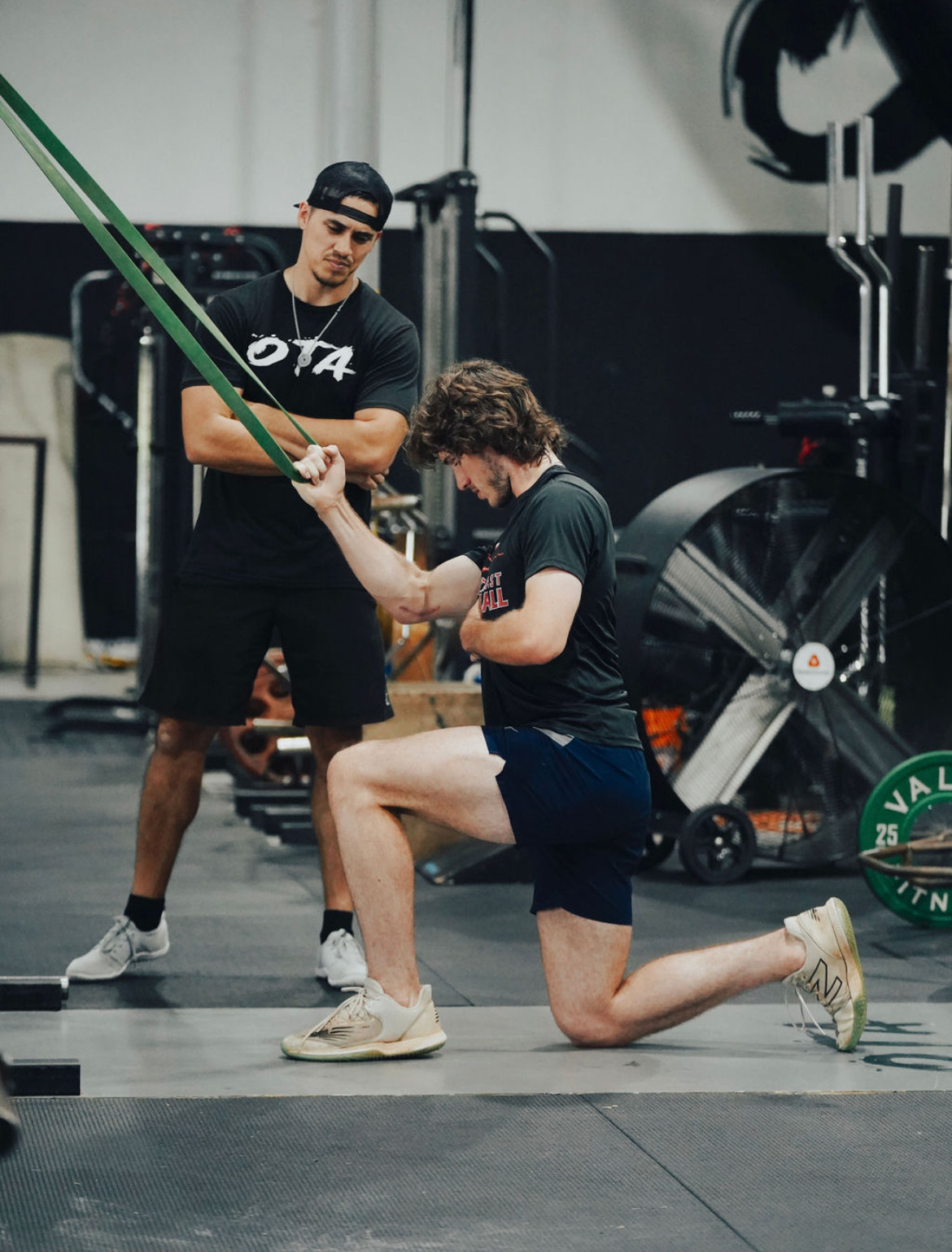 you develop the broad qualities every athlete needs—strength, mobility, conditioning, coordination, and overall durability—before transitioning into more specific phases like speed development, power, or skill work.
Another way to think about it:
- If sport-specific training is building a high-performance race car…
- GPP is building the chassis, engine block, and suspension that lets you actually handle high speeds.
During the general physical preparedness phase, athletes train with the goal of becoming more well-rounded, not more specialized. The athletes who skip GPP are usually the ones who get injured, hit plateaus, or never reach their potential.
Why General Physical Preparedness Benefits Athletes
In the Overtime Athletes system, GPP has three main purposes. If I’m getting an athlete ready for a full off-season, these are the exact benefits I’m trying to unlock.
1. Build Up Their Athletic Base and Fitness Level
The biggest mistake athletes make is assuming they’re ready for advanced training before their body is prepared for it.
GPP sets the foundation.
This phase boosts:
- Aerobic capacity
- Movement efficiency
- Basic strength
- Muscular endurance
- Coordination and athletic fundamentals
Think of it like leveling up the foundation stats in a video game: stamina, durability, strength, mobility. Once these go up, everything else—speed, power, explosiveness—can rise higher.
When your fitness base is strong, you:
- Recover faster between reps
- Handle more training volume
- Improve work output
- Gain more from later phases like max strength or speed development
Everything improves when the base improves.
2. Address Weak Links, Imbalances, and Overcompensations
Every athlete has movement issues—tight hips, weak glutes, lazy core, imbalanced legs, poor posture from school or gaming, or overdeveloped muscle groups from their sport.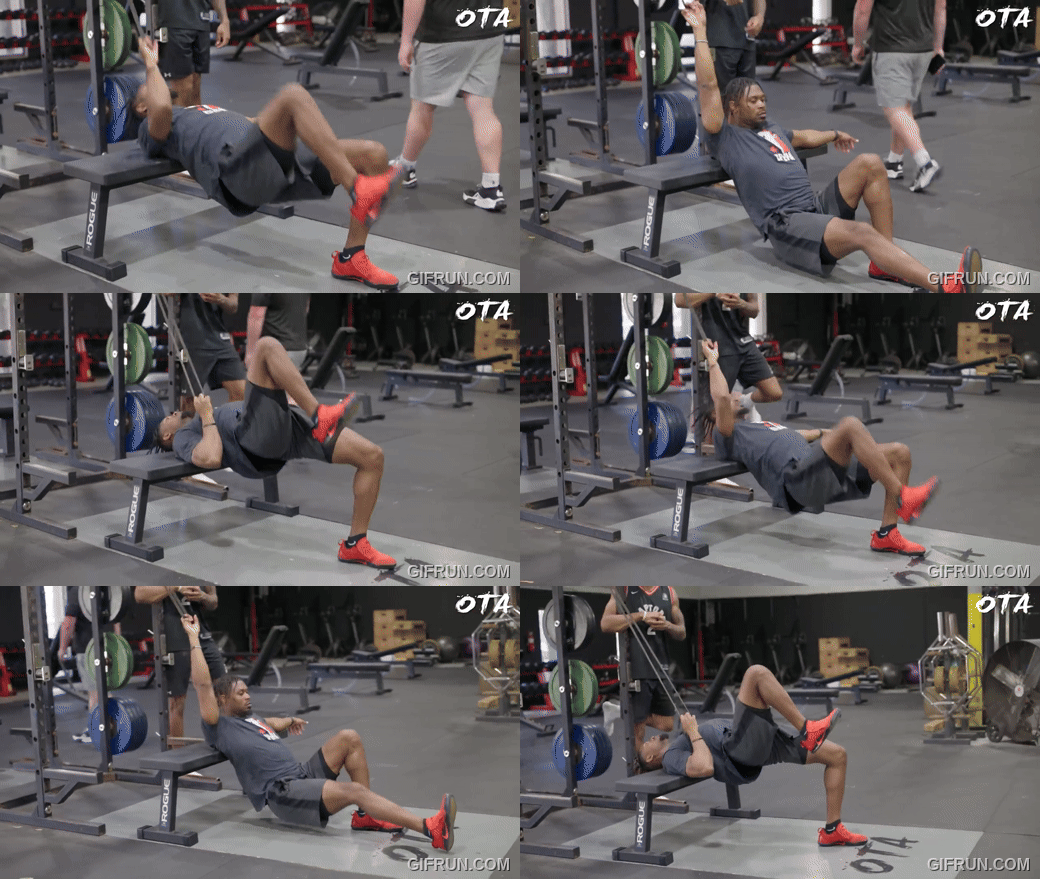
Ignoring these is how:
- Knees start hurting
- Low backs flare up
- Hamstrings get pulled
- Ankles get rolled
- Groins get strained
In the general physical preparedness phase, you slow down and rebuild the athlete.
You hammer:
- Unilateral strength
- Posterior chain activation
- Mobility drills
- Corrective exercises
- Stability work
- Core strength and trunk control
This is where we balance the body and fix the issues that are holding back performance… before layering on explosive work.
When you eliminate weak links early, athletes stay healthier and hit higher peaks later in the training cycle.
3. Build Lean Muscle Mass and Physical Durability
GPP is where you build muscle—not bodybuilding-style muscle, but athletic muscle.
This is important because athletes need: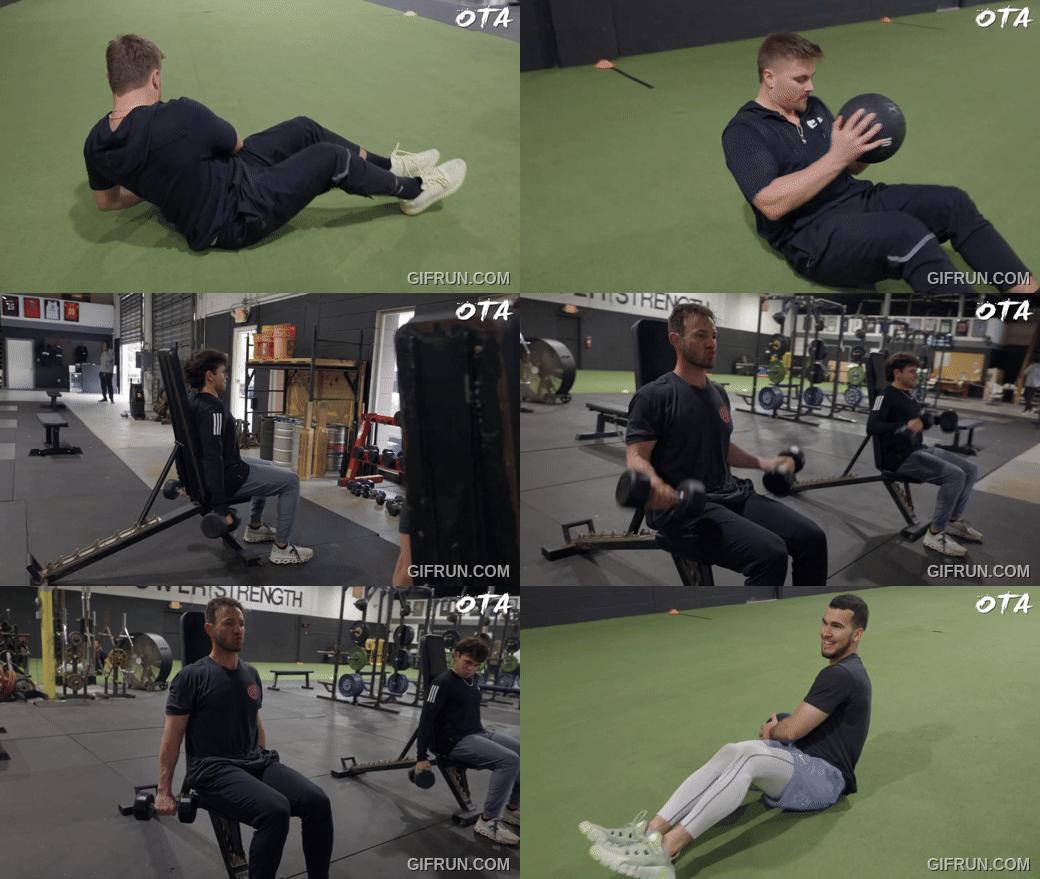
- More armor for contact
- More tissue tolerance for high workloads
- More structural integrity for sprinting and jumping
- More force-producing capabilities
Lean muscle increases durability. It protects joints, reinforces tendons, and adds horsepower. Every athlete benefits from adding 5–15 pounds of lean, functional muscle in this phase, especially younger athletes who have never had a true building block in their training.
Stronger tissue = fewer injuries.
More muscle = more force.
More force = more speed, power, and explosiveness.
Please check out our previous article on general physical preparation training that shares more specifics on exercise selection.
3 Keys for Programming General Physical Preparedness for Athletes
In Overtime Athletes style programming, GPP follows three core pillars. These are the foundation of building a well-rounded athlete ready to dominate the next phase.
1. Focus on General Strength
Before we chase max strength or advanced plyometrics, we focus on general strength—the type that builds structure, stability, and movement integrity.
Key components of general strength in GPP: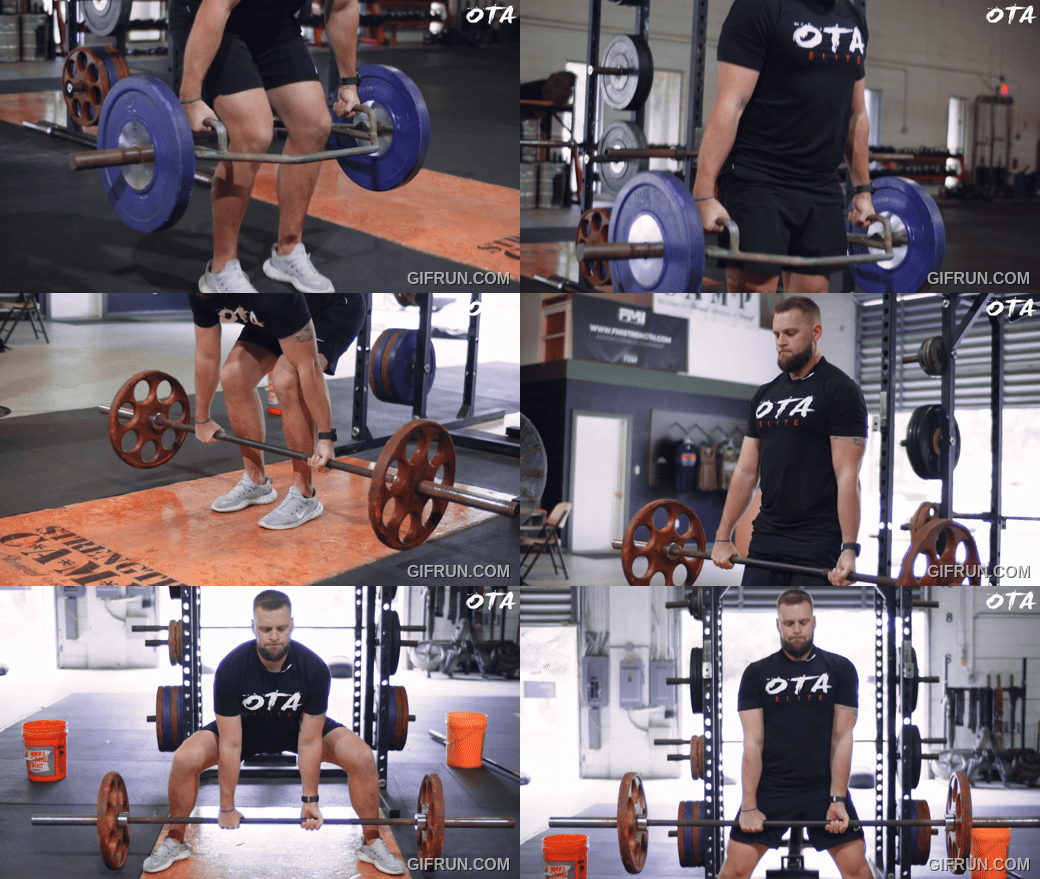
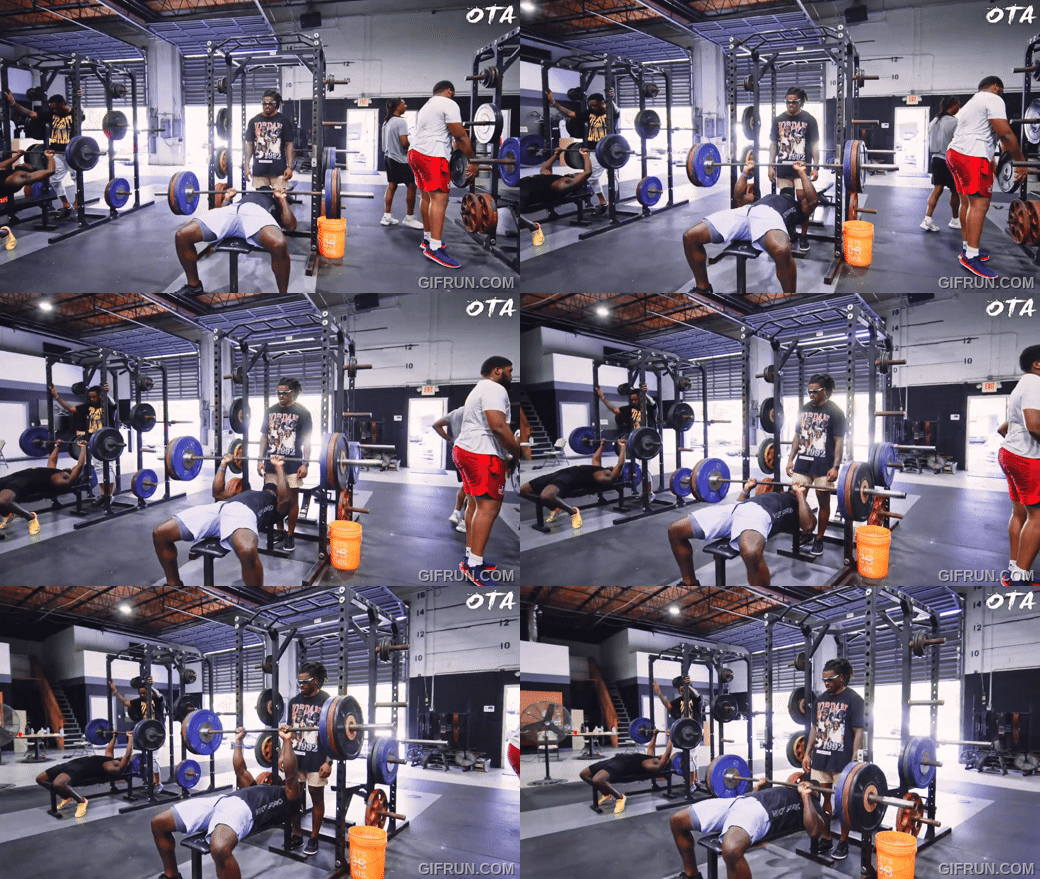
- Foundational lifts: squat variations, deadlifts, lunges, hinge patterns
- Push/pull balance: rows, presses, face pulls, push-ups
- Posterior chain development: RDLs, glute bridges, hip thrusts
- Unilateral strength: split squats, step-ups, single-leg RDLs
- Trunk/anti-rotation work: planks, Pallof presses, dead bugs
General strength is about:
- Bracing
- Maintaining posture under load
- Moving weight with control
- Strengthening joints
- Improving tendon capacity
This sets the stage for explosive training later on.
2. Movement Quality and Mobility
In GPP, athletes don’t just get stronger—they learn to move better.
Movement quality is priority number one. Mobility is tied to that. Athletes need to improve their range of motion and ability to move well with load in those ranges.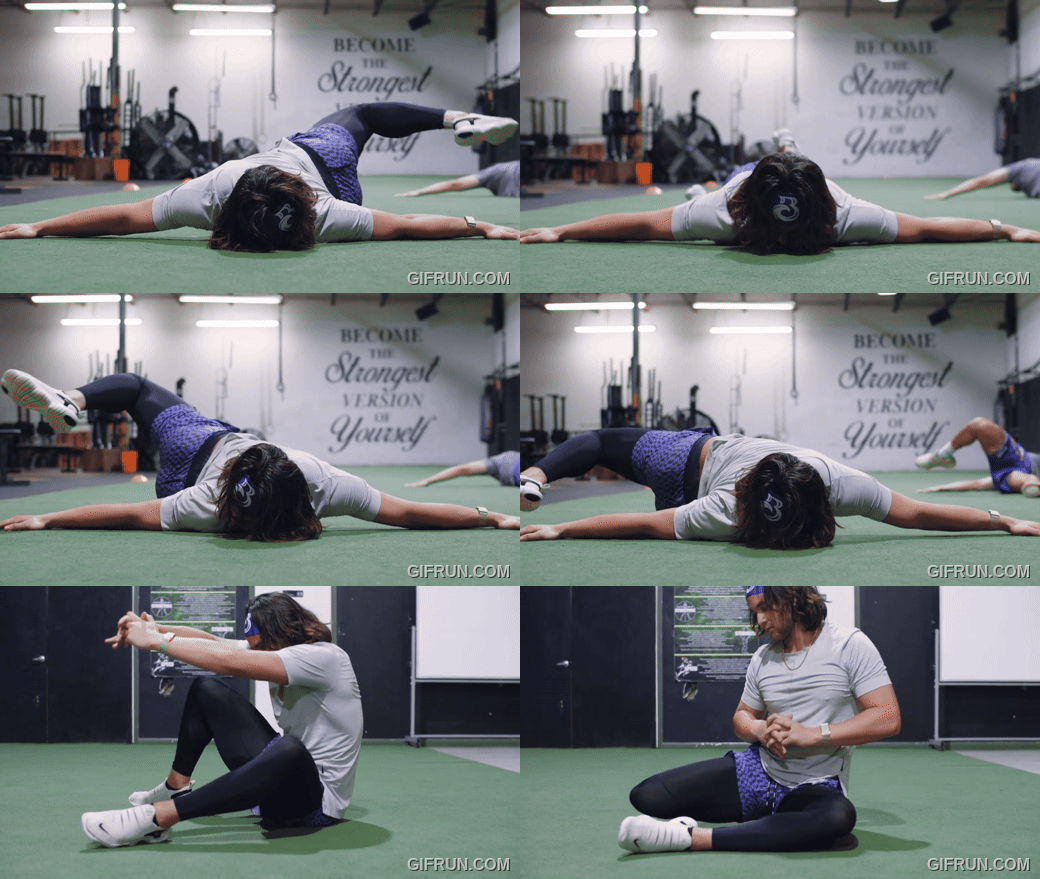
This means:
- Learning proper squat mechanics
- Improving hip mobility and ankle dorsiflexion
- Opening the T-spine
- Strengthening the deep core
- Cleaning up landing mechanics and hinge patterns
If an athlete can’t move well in slow environments, they’ll fall apart in fast environments like sprinting, planting, or changing direction.
Good movement is what allows an athlete to:
- Transfer force
- Absorb force
- Change directions fluidly
- Stay injury-free
- Express speed and power later in the program
Mobility + movement quality = athletic longevity.
3. Improve the Athlete’s Physical Work Capacity
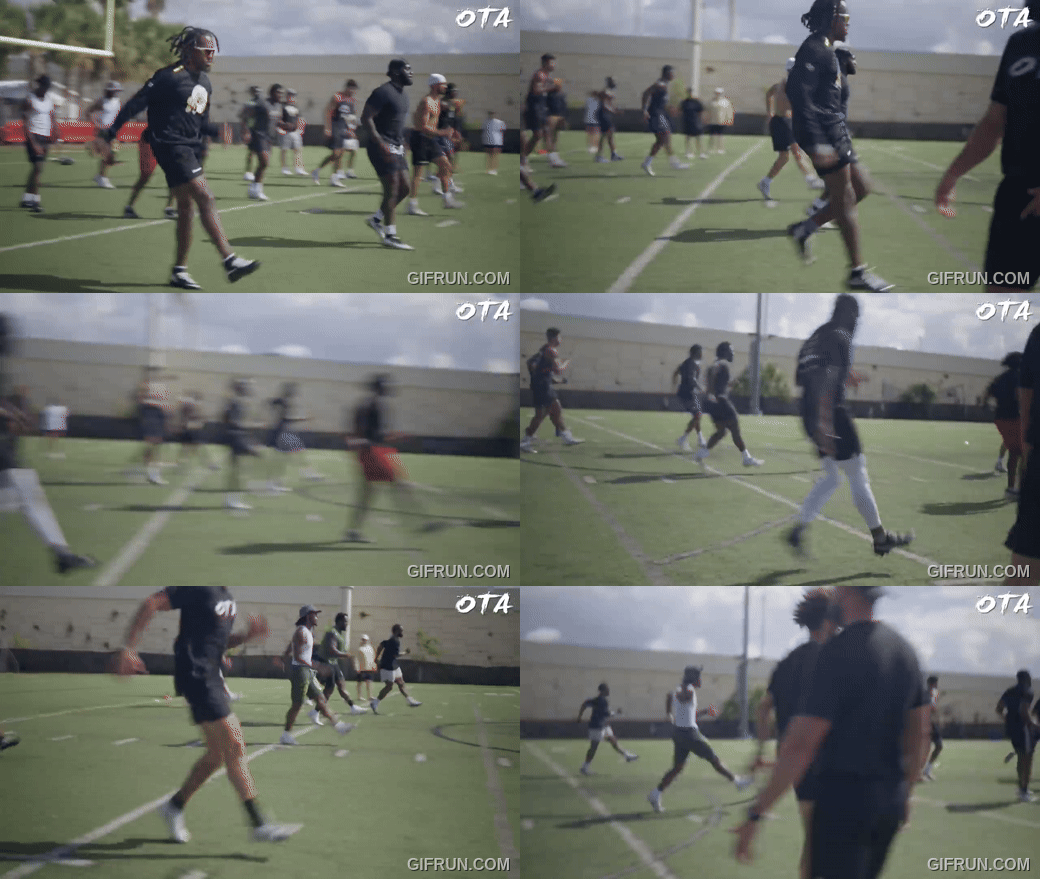
Work capacity is the engine that drives the athlete’s entire season.
During the general physical preparedness phase, your goal is simple:
Build an athlete who can train harder, recover faster, and handle more workload than their competition.
We improve work capacity using:
- Circuit-based strength training
- Tempo-based lifts
- High volume/low intensity running/sprinting
- Sled pushes/pulls
- Medball conditioning
- Aerobic capacity development
- High-volume calisthenics
When an athlete increases their work capacity:
- They can handle more intense workouts
- They recover faster between sets
- They can stay explosive for the full game
- They avoid late-game fatigue injuries
- They unlock higher performance ceilings
This is why general physical preparedness is a non-negotiable training phase.
Conclusion: Why General Physical Preparedness Comes First
General physical preparedness is the phase that builds the foundation every athlete needs before they can truly become explosive, powerful, and sport-dominant. When you develop an athlete’s base fitness, clean up their movement patterns, and build lean muscle and durability, you set them up for long-term success instead of short-term gains. This is the part of training where you transform an athlete from “just getting by” to becoming a complete physical machine.
During GPP, athletes learn how to move well, handle higher workloads, and train with proper strength and mobility. They correct the weak links that have been holding them back, reinforce their joints and tendons, and build the conditioning they need to train harder and recover faster. By the time they exit this phase, they’re stronger, more mobile, more stable, and capable of expressing far more power when the program shifts into speed, strength, and explosiveness.
General physical preparedness isn’t optional—it’s the backbone of elite performance. The stronger the base you build now, the higher the athlete’s ceiling becomes in every phase that comes after. This is the phase that separates athletes who stay average from athletes who dominate.
If you want to learn how to build a foundation of strength and muscle that will translate to better athletic performance, click the image for our Athletic Strength Formula program!