
Youth Speed Training: 2 Strength Exercises Every Young Athlete Needs to Master
Your athlete is putting in the work. Speed camps, ladder drills, cone drills, sprint sessions every week. And they’re still not getting faster.
Sound familiar?
You’re not alone. Every week we talk to parents who are frustrated because their son or daughter has been doing youth speed training for months, sometimes years, and the stopwatch hasn’t moved.
Here’s what most programs won’t tell you: your athlete probably doesn’t need more speed drills. They need to get stronger.
The Problem With Most Youth Speed Training
Walk into most youth speed training sessions and you’ll see the same thing: random drills. Ladders. Cones. Mini hurdles. Parachutes. Kids running from station to station, sweating and looking busy.
It looks impressive. It feels productive. But there’s no plan behind it.
Random drills done over and over don’t build an athlete. They just tire one out. Without a clear progression, and without building the strength underneath the movement, your athlete is just practicing running at the same speed again and again.
Read our previous article on youth speed training and plyometrics!
“If They Just Fixed Their Form…”
This is the one we hear the most. Parents watch their athlete run and think, “If they just fixed their arm swing… if they just got their knees higher… they’d be so much faster.”
Nothing could be further from the truth.
Sprint mechanics matter. But form is not what’s holding most young athletes back. You can coach perfect arm action all day long. If your athlete can’t push into the ground hard enough, they won’t get faster.
In fact, a lot of “bad form” is really a strength problem in disguise. An athlete who collapses at the hips, takes short choppy steps, or can’t hold a good position out of a start usually isn’t missing a coaching cue. They’re missing the strength to hold the position.
Speed Is a Force Problem
Here’s the simple version: speed comes from force.
With every stride, your athlete pushes into the ground. The harder they can push, and the faster they can do it, the faster they move. Elite sprinters don’t just move their legs fast. They hit the ground with a huge amount of force in a very short window of time.
Most young athletes can’t produce that kind of force yet. Their legs, hips and core simply aren’t strong enough. No amount of cone drills will fix that.
That’s why the fastest way to make your athlete faster usually isn’t more running. It’s building the strength that makes every stride more powerful. Read here for more key’s on youth strength training!
The good news? You don’t need a fancy gym or heavy barbells. It starts with mastering two foundational exercises.
Exercise #1: The Squat
The squat is the foundation of lower body strength. It trains the quads, glutes and hips, the same muscles that drive your athlete forward in a sprint and launch them out of a start.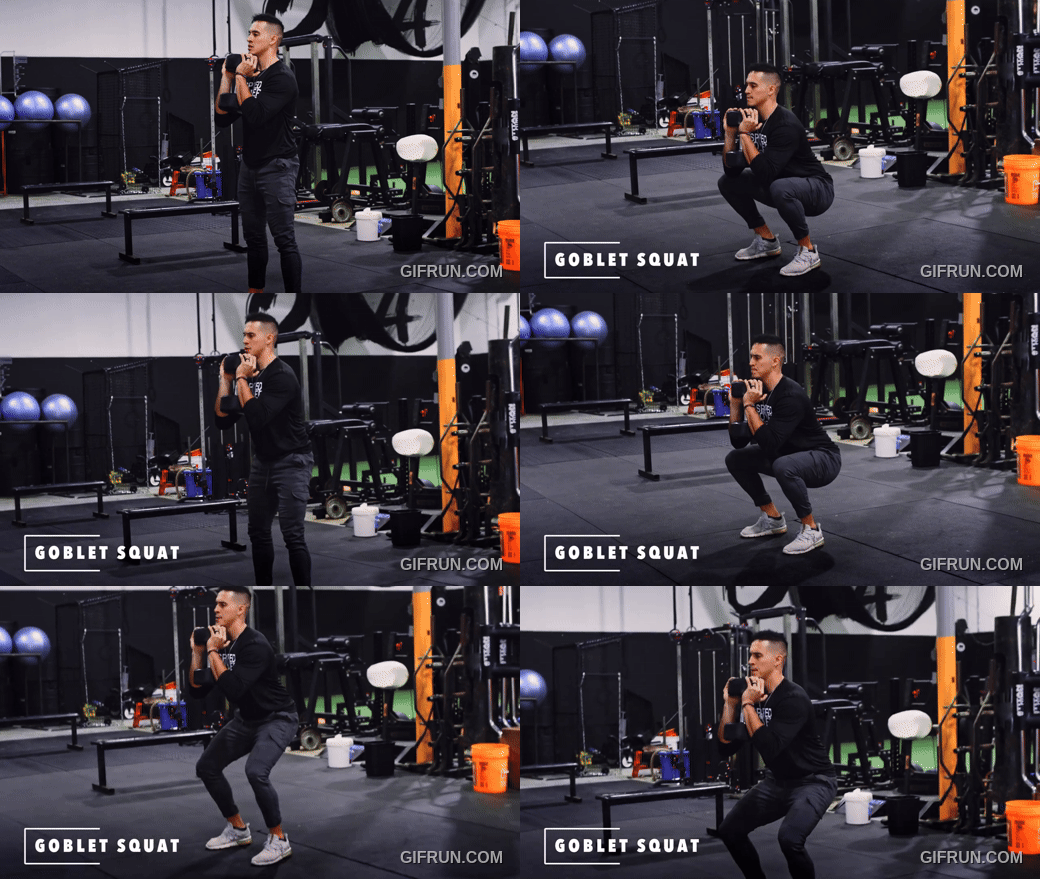
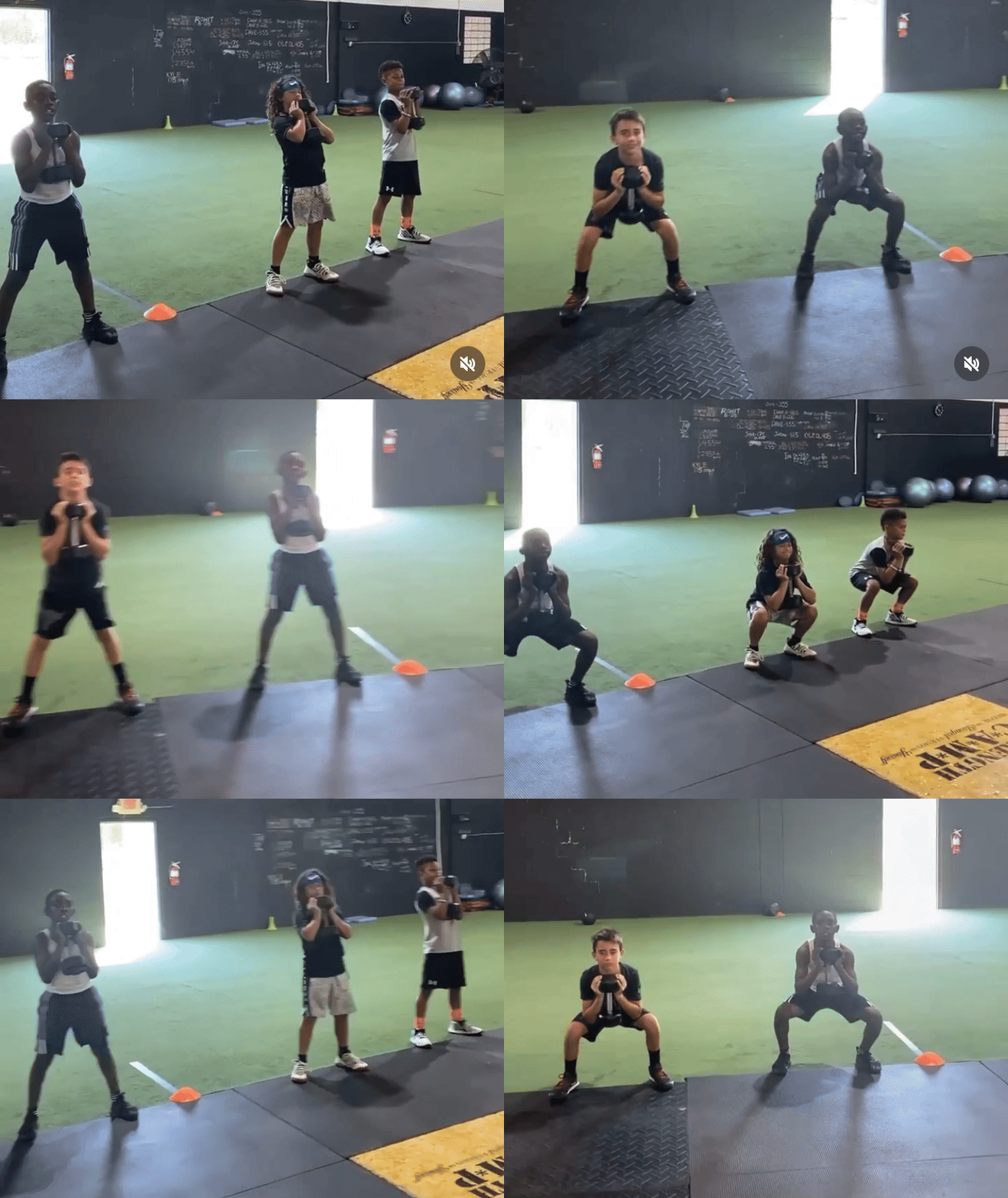
For young athletes, we’re not loading up a barbell. Not at this stage. The goal is to pick the variation that fits where your athlete is right now:
• Bodyweight squat: for beginners learning the pattern
• Goblet squat: holding a dumbbell or kettlebell at the chest, great for teaching an upright posture
• Box squat: sitting back to a box to build depth, control and confidence
What we’re looking for: feet flat, chest up, knees tracking over the toes, a controlled lowering, and a strong drive up through the whole foot.
Here’s why this matters so much. The strength and movement quality your athlete builds now sets them up for years of success. Athletes who learn to squat well at 11, 12 or 13 years old are the ones ready to train harder, lift heavier and keep getting faster in high school and beyond. Athletes who skip this step often hit a wall, or get hurt.
Go read our article on the best squats for athletes!
Exercise #2: Step Ups
Here’s something most parents never think about: sprinting is a single-leg sport. Every stride is one leg pushing into the ground while the other recovers. The same goes for cutting, jumping off one foot and accelerating out of a break.
That’s why step ups are a must.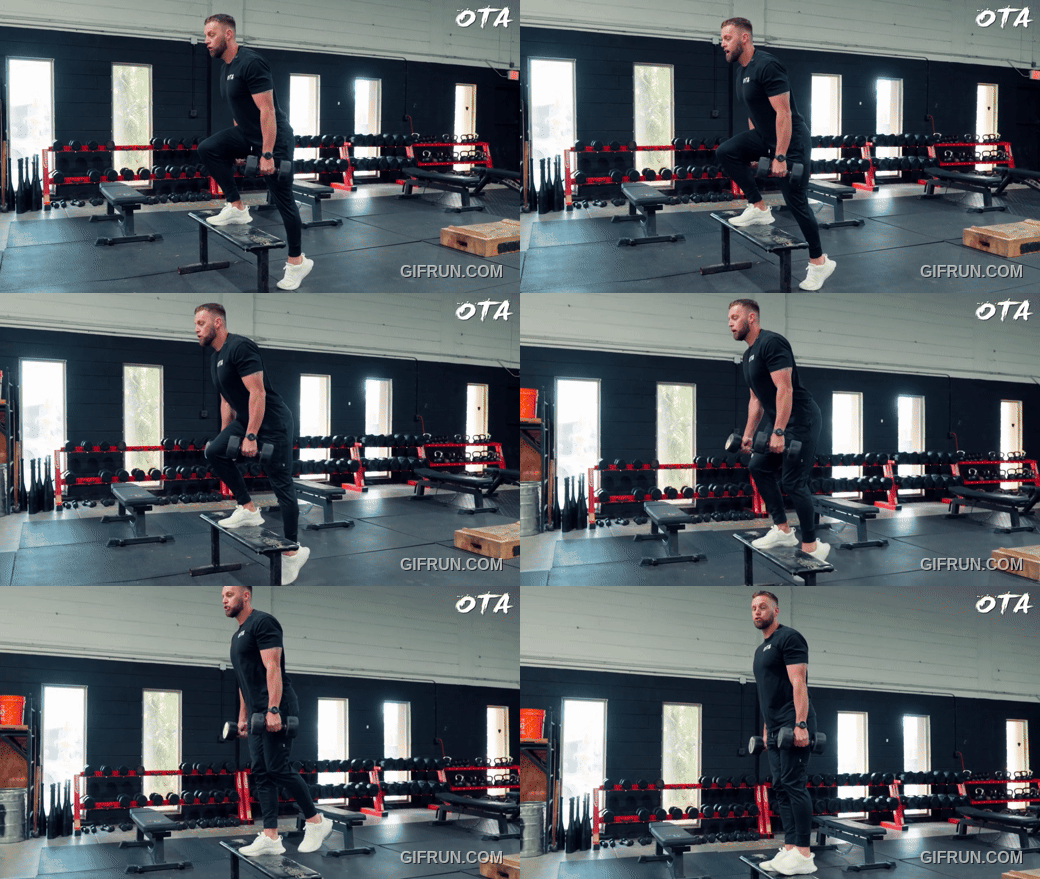
Step ups build unilateral (single-leg) strength and control. Your athlete has to drive through one leg, stabilize the hip and knee, and hold their balance at the top. That’s exactly what happens every time their foot hits the ground at full speed.
How to do them right:
• Use a box or bench around knee height (lower for beginners)
• Plant the whole foot on the box
• Drive up through the front leg. Don’t push off the back foot
• Stand tall at the top, then lower down slowly and under control
Control is everything. If your athlete can perform step ups with control, then get stronger by raising the box or holding dumbbells, they’ll build the single-leg force production that shows up on the field as a quicker first step and a higher top speed.
Watch for knees caving in or a hip that drops. That’s a sign your athlete needs more time at their current level before progressing.
Final Thoughts
If your athlete has been doing speed drill after speed drill and still isn’t getting faster, it’s not because they aren’t working hard. It’s because they’re missing the foundation.
Speed is built on strength. Form matters, but force matters more. For most youth athletes, the biggest speed gains are right there, waiting on them to get stronger.
Master the squat and the step up. Build the strength now, and the speed will follow, this season and for years to come.
Ready to Help Your Athlete Get Faster?
You don’t have to guess what your athlete should be doing, and they don’t need another season of random drills.
The Overtime Athletes Youth Performance Program gives your athlete a clear, step-by-step plan to build the strength, speed and confidence they need to stand out. Every session has a purpose. Every exercise is matched to where your athlete is right now, and progressed as they get stronger.
No more guessing. Just a proven path to a stronger, faster athlete.
Or click here to schedule a free call for guidance on the best option for your athletes training!
api.leadconnectorhq.com/widget/bookings/main-calendars/application-callwxw28a
