

Speed Training in a Park: How to Structure and Build Elite Speed Without a Gym
Think you need a fully equipped sports performance facility to get faster?
You don’t.
While having access to sleds, force plates, timing gates, and weight rooms is great, they’re tools—not requirements. Some of the fastest athletes in the world built elite speed long before they had access to expensive equipment. What separated them wasn’t the facility. It was the quality of the training.
If you’re an athlete or coach training in a park, you can still build elite speed. The key is having a structured plan instead of showing up and making up random “speed drills” as you go.
That’s where most people get it wrong.
Too many speed sessions look like a collection of random cone drills, ladder work, and conditioning exercises thrown together because they look athletic on social media. There is no progression. No purpose. No system.
Athletes notice that.
When a session feels disorganized, it usually is. And disorganization almost always means you’re leaving performance on the table.
The best speed coaches don’t just know drills—they know how to organize those drills into a session that prepares the body, builds power, and allows athletes to produce their fastest sprint times.
Here’s the exact framework we recommend for structuring a high-level speed training session in a park. Make sure to read our previous article on the best bodyweight exercises for speed.
1. Dynamic Warm-Up (10 Minutes)
Every great speed session starts with movement preparation.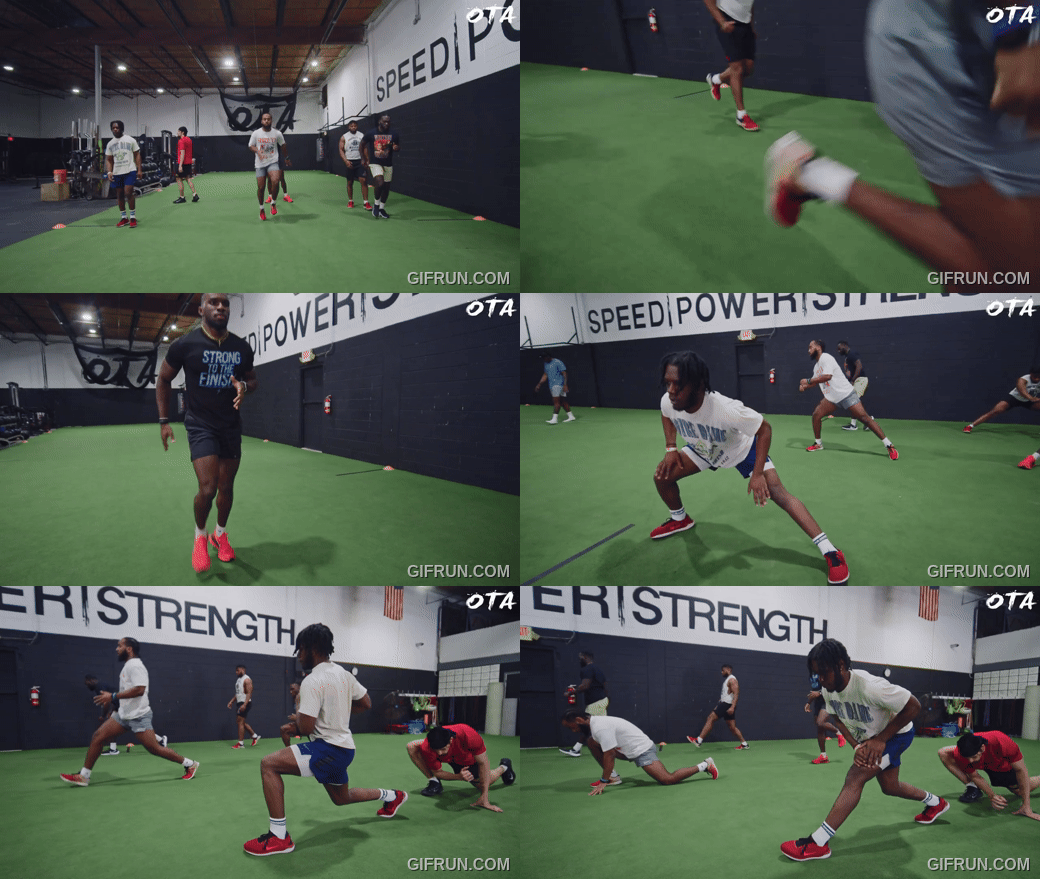
A proper dynamic warm-up increases body temperature, improves mobility, activates the muscles used during sprinting, and prepares the nervous system for explosive movement.
Instead of static stretching, focus on dynamic movement patterns that challenge coordination while gradually increasing intensity.
The goal isn’t to get tired.
The goal is to get prepared.
When athletes skip this step or rush through it, movement quality suffers for the rest of the workout.
2. Lower Limb Preparation (10 Minutes)
Now it’s time to prepare the feet, ankles, Achilles, and lower leg for the high forces of sprinting.
This is where linear pogos, lateral pogos, single-leg hops, and low-level plyometrics come in.
These drills improve tendon stiffness, ankle reactivity, and lower limb elasticity—all critical qualities for running faster.
Think of this phase as waking up your suspension system.
If your ankles and tendons aren’t prepared to absorb and redirect force, your speed potential drops dramatically.
This progression also reduces injury risk while gradually increasing the intensity of the session.
3. Power Development (10 Minutes)
Once the body is prepared, it’s time to become explosive.
This portion should focus on max-effort jumps and plyometrics that improve rate of force development—how quickly an athlete can produce force.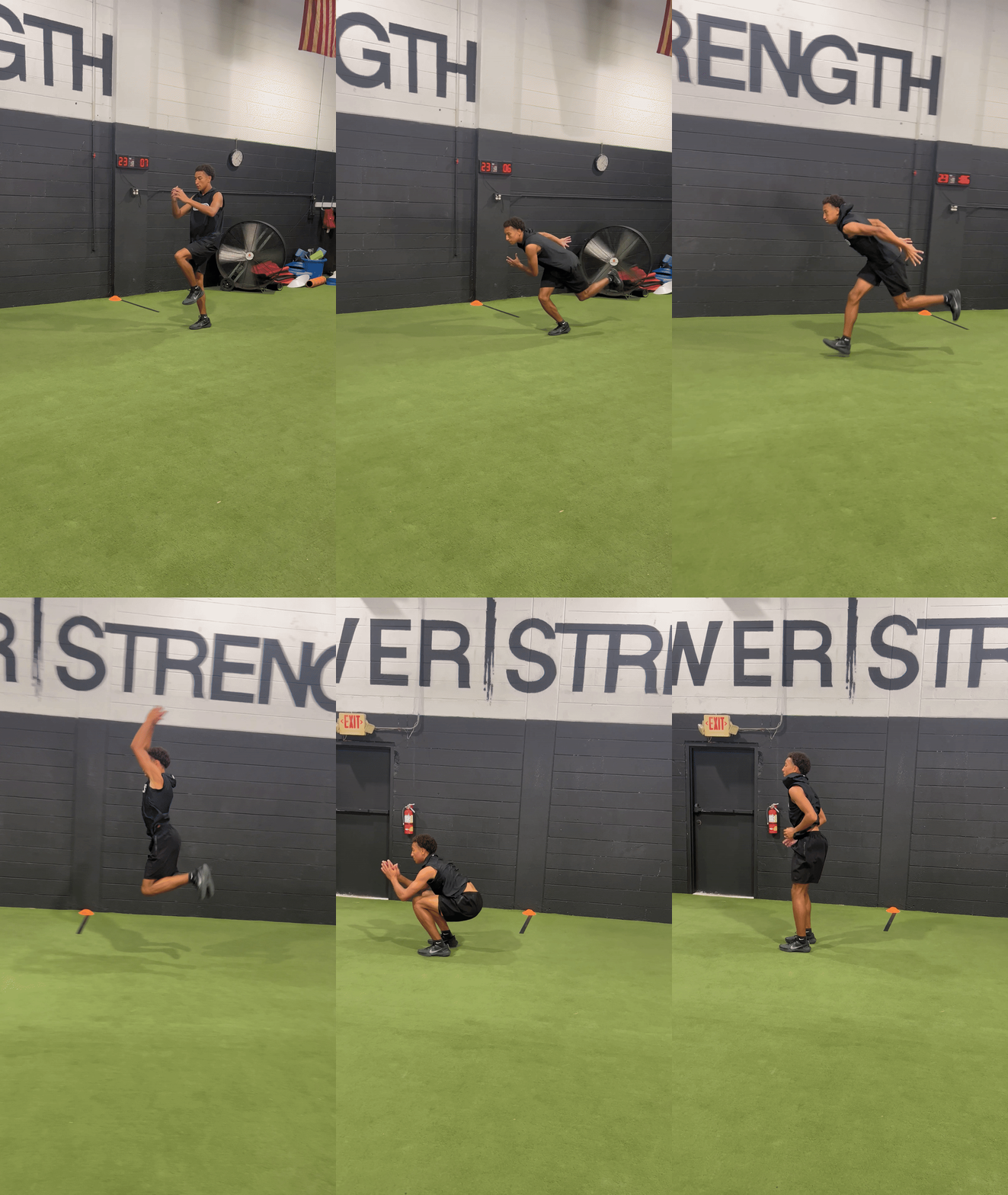
Broad jumps, vertical jumps, hurdle hops, bounds, and reactive plyometrics are all excellent choices.
Remember:
Speed isn’t just about producing force.
It’s about producing force fast.
Power work bridges the gap between preparation and sprinting by teaching athletes to express maximum explosiveness before they ever hit a sprint.
4. Sprint Mechanics & Neural Activation (10 Minutes)
Before asking athletes to sprint at maximum intensity, clean up the movement pattern.
This is where drills like A-Skips, B-Skips, sprinter marches, piston runs, straight-leg bounds, wicket progressions, and wall drills shine.
These exercises reinforce efficient sprint mechanics while increasing nervous system activation.
The goal isn’t conditioning.
The goal is teaching athletes to move efficiently while getting the central nervous system firing at full speed before the main sprint work begins.
When mechanics improve, speed improves.
5. Acceleration, Top Speed, or Change of Direction (10-20 Minutes)
This is the money portion of the workout.
Everything before this point has been preparing athletes for one objective:
Producing maximum speed with maximum quality.
Choose one primary focus for the day.
Acceleration: Starts, first-step explosiveness, and 10-20 yard sprints.
Top Speed: Flying sprints, build-ups, and max velocity mechanics.
Change of Direction: Deceleration, reacceleration, cutting mechanics, and reactive movement.
Trying to train everything in one session usually means you don’t train anything particularly well.
Instead, attack one quality with intent.
Every sprint should be high quality, every rep should have a purpose, and every athlete should receive enough rest between repetitions to produce true max effort.
Remember:
You’re training speed—not conditioning.
If athletes are exhausted, they’re no longer training speed.
They’re simply practicing running while fatigued.
6. Bodyweight Strength, Core & Cool Down (10-15 Minutes)
After the speed work is complete, you have options.
If athletes still have quality left, you can continue the day’s speed emphasis with additional sprint variations or technical work.
Otherwise, finish with bodyweight strength circuits, core training, single-leg stability work, and mobility.
Exercises like split squats, push-ups, pull-ups, Copenhagen planks, side planks, hollow holds, reverse lunges, and glute bridges can build strength without requiring a weight room.
Finish with a cool-down that helps athletes recover and prepares them for their next training session.
Speed Doesn’t Require Fancy Equipment—It Requires Great Coaching
The biggest mistake coaches make isn’t lacking equipment.
It’s lacking structure.
A park can become an elite speed training environment when every drill builds into the next.
The dynamic warm-up prepares movement.
Lower limb prep builds stiffness and elasticity.
Power work develops explosiveness.
Mechanics sharpen technique.
Sprint work develops the quality that matters most.
Strength finishes the session.
Everything has a purpose.
Everything builds on the previous step.
That’s how you maximize athlete development.
The athletes who improve the fastest aren’t always the ones with the nicest facility.
They’re the ones following a proven system every single week.
Ready to Train Like the Fastest Athletes?
If you’re tired of guessing what to do every workout, our Athletic Speed System gives you the exact blueprint we use to develop faster, more explosive athletes.
Inside the program, you’ll get structured speed workouts, progressive sprint programming, plyometric progressions, strength training, and coaching guidance that removes the guesswork from speed development.
Whether you’re training in a world-class facility or at your local park, the system stays the same:
Train with purpose. Progress with structure and get faster.
