

Youth Speed Training: Why Plyometrics Build the Foundation for Faster Athletes
Every parent wants their athlete to get faster.
The problem is that most parents start in the wrong place.
Search “youth speed training” on YouTube or Instagram and you’ll find endless videos on sprint mechanics. Coaches are dissecting arm action, shin angles, knee lift, foot strike, and every tiny detail of sprint form.
While technique has its place, most young athletes don’t have a mechanics problem.
They have a power problem.
If an athlete doesn’t produce enough force into the ground, no amount of technical cueing will magically make them fast. Great sprint mechanics simply allow athletes to express the physical qualities they already possess. If those qualities aren’t there, changing arm swing or knee position isn’t going to create elite speed.
Strength Comes First
We’ve talked about youth strength training before which you can read here!
Strength is the foundation of speed.
Every sprint begins with applying force into the ground. The stronger an athlete becomes, the greater potential they have to create that force.
But building strength is only the first step.
Once an athlete develops a solid strength foundation, the next question becomes:
How quickly can they produce that force?
That’s where the next phase of youth speed training begins.
Strength Without Speed Isn’t Enough

Imagine two athletes who can both squat the same amount.
One takes nearly a full second to produce force.
The other produces that same force almost instantly.
Who wins the race?
The faster athlete.
Elite speed isn’t just about how much force you can create—it’s about how quickly you can create it.
Sports happen in fractions of a second. During sprinting, ground contact times become incredibly short. The fastest athletes don’t have time to slowly build force. They must hit the ground, produce massive amounts of force, and get off the ground almost immediately.
That’s called Rate of Force Development (RFD).
One of the best ways to improve it?
Plyometrics.
Why Plyometrics Are Essential for Youth Speed Training
Plyometrics teach athletes to become explosive.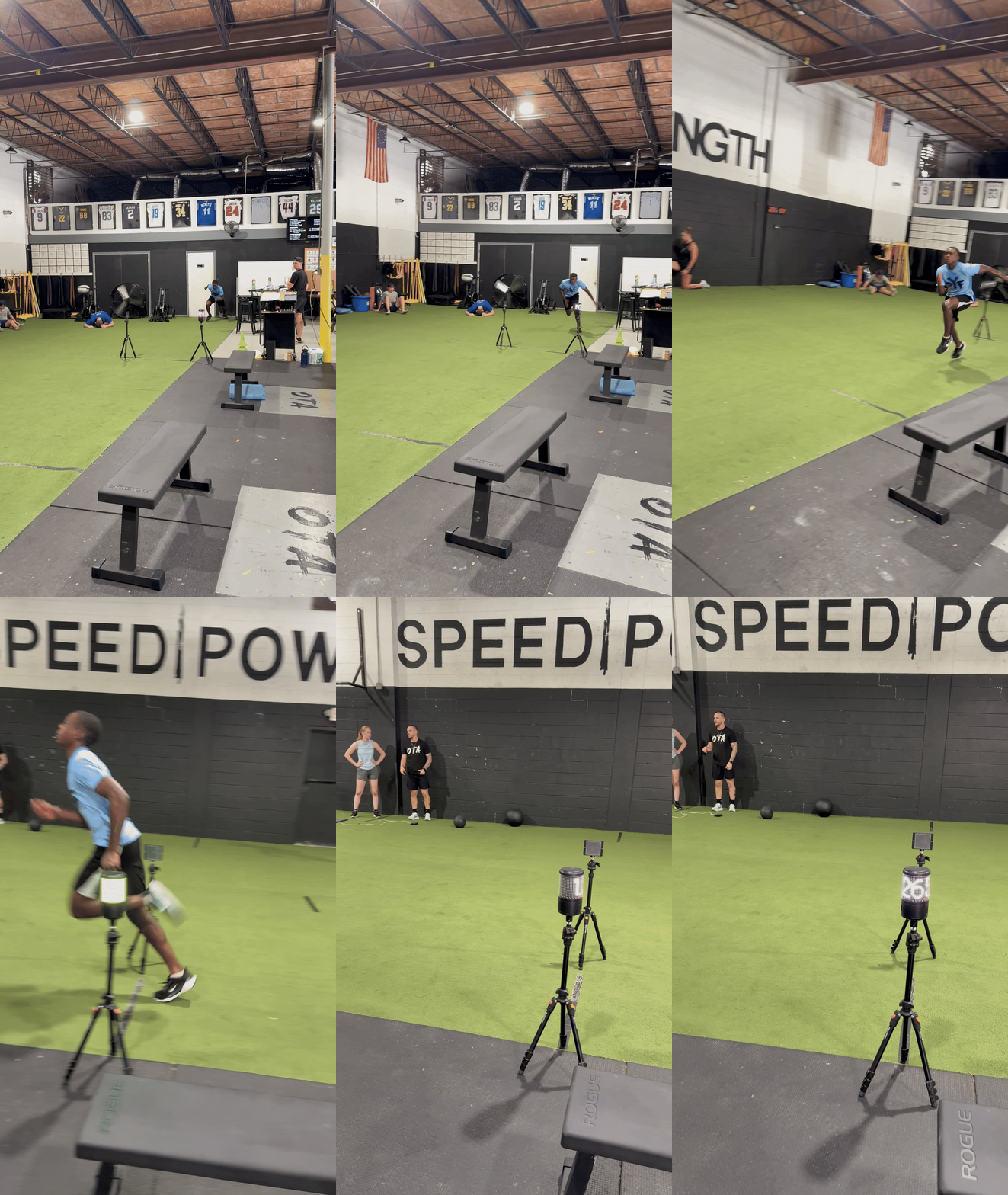
They improve the nervous system’s ability to recruit muscle fibers quickly while teaching athletes how to apply force into the ground efficiently.
Instead of simply becoming stronger, athletes become more powerful.
That’s a huge difference.
Every jump, hop, bound, and explosive movement teaches young athletes to absorb force, redirect force, and produce force faster.
Those qualities directly transfer to acceleration, top speed, change of direction, and jumping ability.
The athletes who consistently perform quality plyometric training don’t just become better jumpers.
They become faster athletes.
Max Effort Jump Training Builds Explosive Speed
One of the most overlooked tools in youth speed training is simple:
Jump.
Not endless box jumps.
Not jumping until athletes are exhausted.
High-quality, max effort jumping.
When athletes give maximum intent on every jump, they’re teaching their nervous system to recruit as many muscle fibers as possible in the shortest amount of time.
That explosive intent carries over to sprinting.
Great options include:
- Countermovement jumps
- Broad jumps
- Single-leg jumps
- Vertical jumps
- Standing triple jumps
- Repeated bounds
- Lateral jumps
The goal isn’t simply to complete reps.
The goal is to jump as high, as far, or as explosively as possible every single repetition.
Quality always beats quantity.
How Plyometrics Should Be Programmed for Youth Athletes
One mistake we see all the time is coaches throwing together random jump exercises without a plan.
Plyometrics should be progressed just like strength training.
A well-designed youth speed training program gradually increases complexity as athletes improve.
A typical progression might look like this:
Phase 1: Learn to Land
Before athletes worry about jumping higher, they need to learn how to absorb force.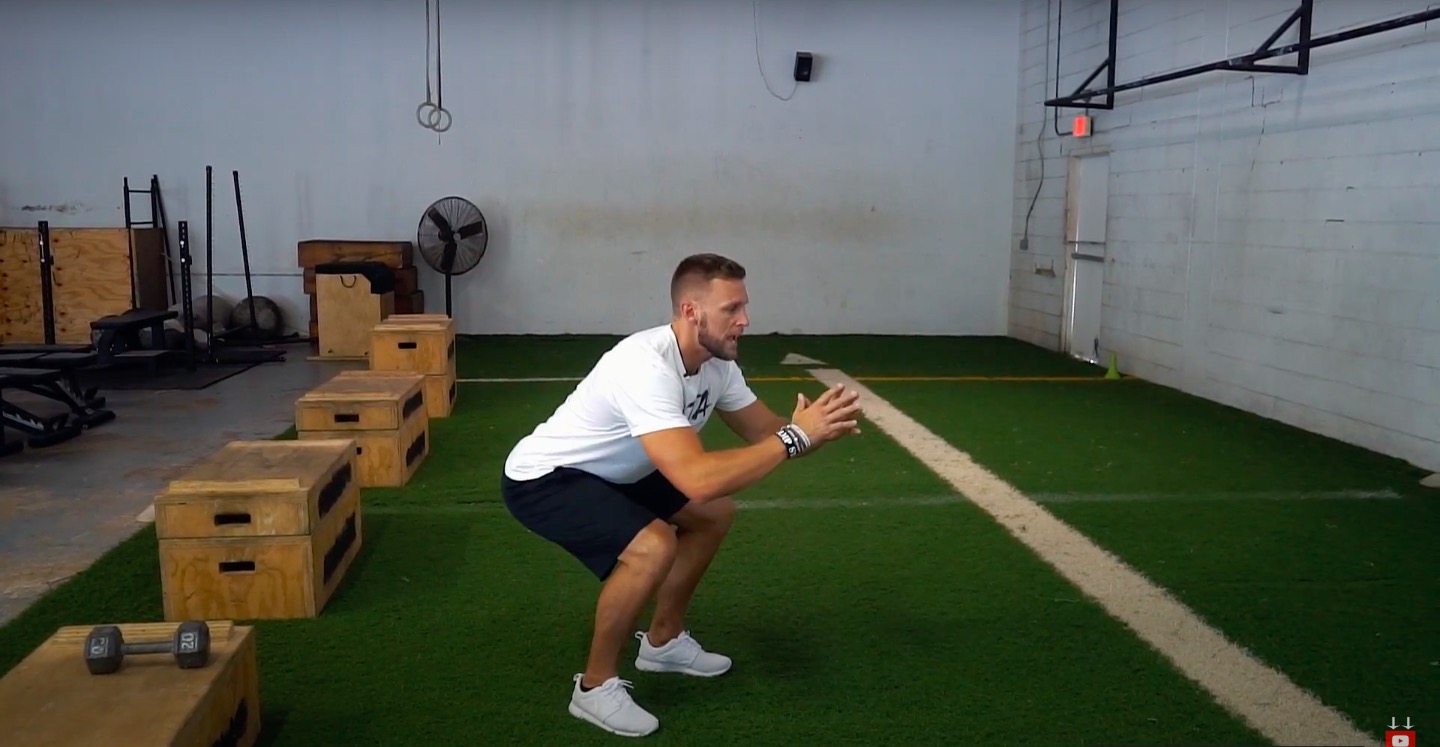
Focus on:
- Landing mechanics
- Athletic posture
- Balance
- Body control
Good landings build durable athletes.
Phase 2: Build Elasticity
Once landing mechanics are solid, athletes begin learning to use the stretch-shortening cycle.
Exercises may include:
- Pogo jumps
- Line hops
- Ankle jumps
- Low-level repeated jumps
These teach athletes to become reactive and efficient.
Phase 3: Max Effort Power
Now athletes begin emphasizing maximum output.
Training may include:
- Vertical jumps
- Broad jumps
- Single-leg jumps
- Bounds
- Med ball throws
Every repetition should be explosive.
Phase 4: Sport-Specific Speed Development
As athletes mature, plyometrics become more advanced and closely resemble the demands of their sport.
Exercises can include:
- Sprint bounding
- Single-leg reactive jumps
- Multi-directional plyometrics
- Reactive hurdle jumps
- Speed and jump combinations
This is where strength, power, and speed begin working together.
The Best Youth Speed Training Program Uses All Three
Parents often ask what’s most important:
Strength?
Speed work?
Plyometrics?
The answer isn’t choosing one.
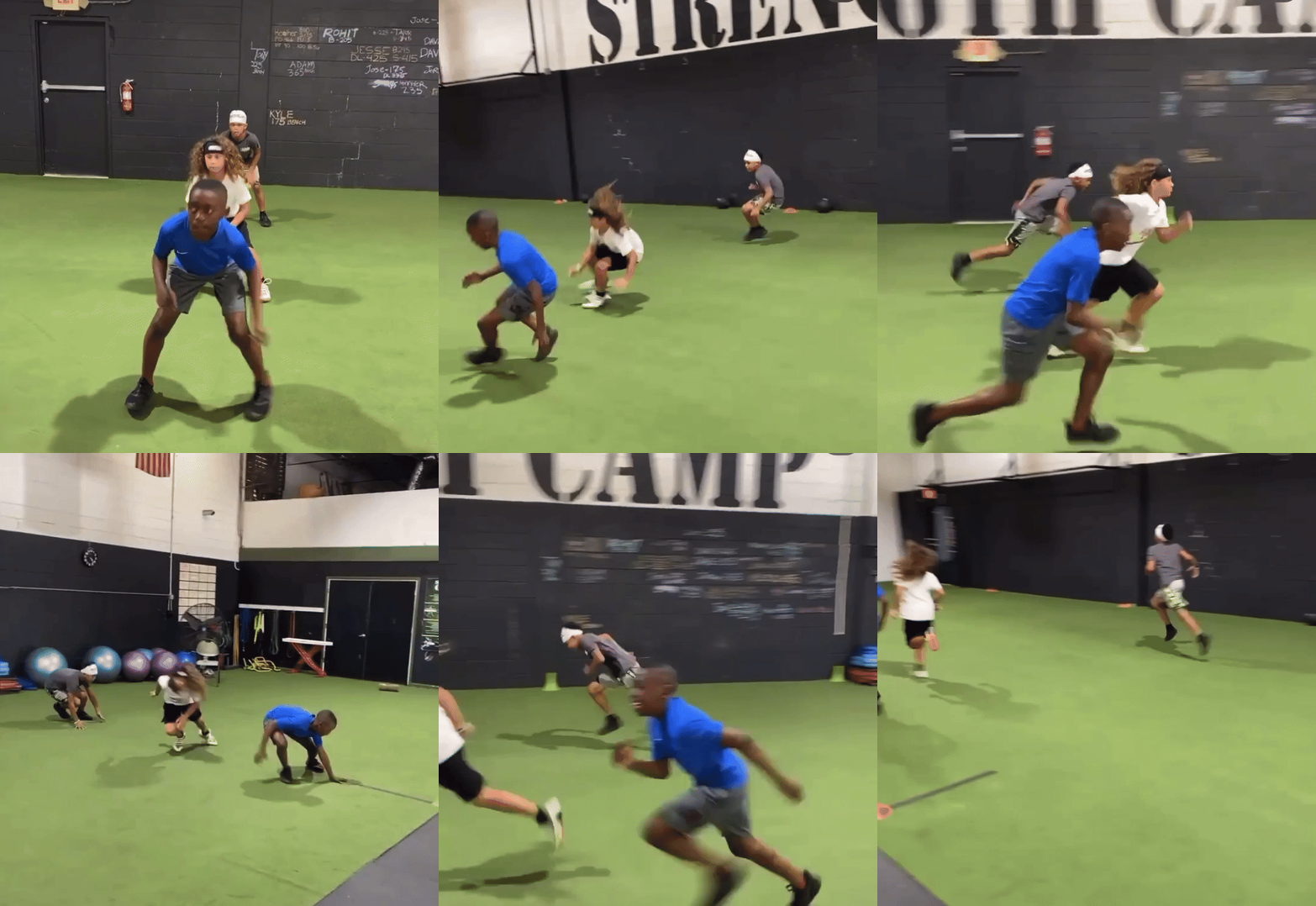
Elite athletes train all three.
A complete youth speed training program develops:
- Strength to produce more force.
- Plyometrics to produce force faster.
- Sprint training to apply those qualities at game speed.
Each builds on the others.
When these pieces are trained together, athletes develop the explosive qualities needed to accelerate faster, reach higher top speeds, jump higher, and become more dynamic competitors.
That’s how long-term athletic development should work.
Not chasing quick fixes.
Building better athletes.
Final Thoughts
There are no shortcuts to elite speed.
The fastest young athletes don’t become fast because they memorized perfect sprint mechanics.
They become fast because they built the physical qualities that make great mechanics possible.
First, build strength.
Then develop explosive power through consistent plyometric training and max effort jumping.
Finally, apply those qualities through quality sprint training.
That’s the formula we use every day to help athletes become faster, more explosive, and more confident on the field and court.
Ready to Help Your Young Athlete Get Faster?
If you’re looking for a proven youth speed training program that combines strength development, plyometrics, and speed training into one complete system, our Youth Performance Program is built for exactly that.
