Deceleration Exercises for Athletes: Stop Faster and Stay Healthier
Deceleration exercises train an athlete’s ability to absorb force, stop efficiently, and re-accelerate—making them essential for speed, change of direction, and injury prevention. When most athletes think about performance training, they think about speed, power, and explosiveness. They want to run faster, jump higher, and hit harder. But there’s a critical piece of athletic performance that gets ignored far too often—and it’s the reason so many non-contact injuries occur.
That piece is deceleration.
In real sport, athletes don’t get hurt because they can’t sprint in a straight line. They get hurt when they can’t slow down, plant, or cut under control.
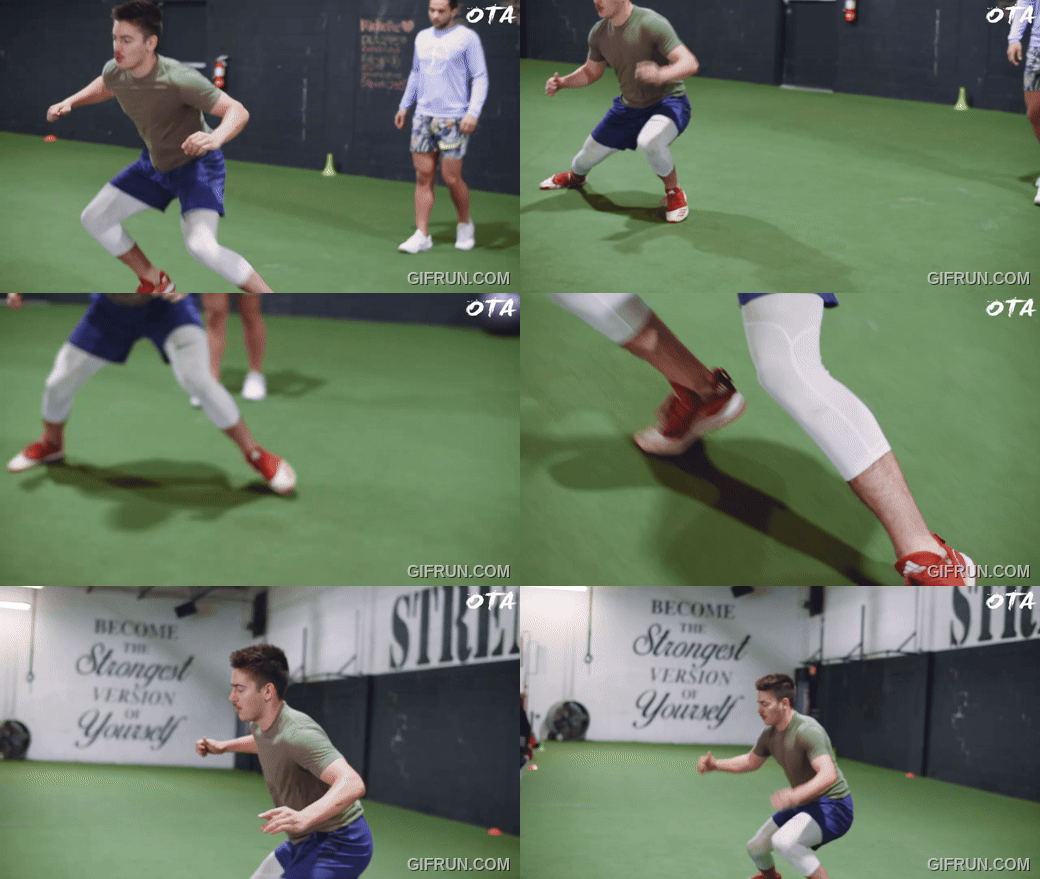
At Overtime Athletes, we don’t just train athletes to move fast—we train them to own every position they land in. Because the ability to decelerate efficiently is what separates durable, explosive athletes from those stuck in the injury cycle. Check out our article sharing a full warm up for change of direction sessions!
Why Deceleration Exercises Matter for Athletes
Every sport demands repeated stopping and cutting:
- Football players braking and redirecting
- Basketball players planting to change direction
- Baseball players decelerating to field or steal
- Soccer athletes absorbing force on every cut and landing
Yet most training programs obsess over acceleration while completely neglecting deceleration exercises.
Here’s the hard truth:
Most non-contact injuries happen during deceleration, not acceleration.
ACL tears, meniscus injuries, hamstring strains, ankle injuries—these often occur when an athlete is:
- Planting the foot
- Cutting laterally
- Landing from a jump
- Slowing down rapidly under high force
If an athlete lacks the strength, coordination, and control to absorb force, the body finds another way to stop—and that usually means joints and passive structures take the hit. See our previous article on preventing injuries here also.
The Injury Problem: Poor Deceleration Mechanics
Athletes who struggle with deceleration often show the same patterns:
- Collapsing knees
- Excessive forward trunk lean
- Stiff, loud landings
- Inability to stabilize quickly
- Long ground contact times
These athletes aren’t “weak.” They’re undertrained in deceleration exercises.
They may squat heavy and jump high, but if they can’t control force through a full range of motion or stabilize instantly on landing, they’re vulnerable.
That’s why deceleration training is non-negotiable if you want:
- Faster change of direction
- Cleaner cuts
- Better agility
- Fewer injuries
- Longer careers
How We Program Deceleration Exercises at Overtime Athletes
At Overtime Athletes, we don’t treat deceleration as an afterthought or a warm-up filler. We program deceleration exercises intentionally, just like speed and strength.
Our deceleration training focuses on two critical modalities:
1. Eccentric Control
This is the athlete’s ability to absorb force smoothly and under control through the full range of motion.
Eccentric strength allows an athlete to:
- Lower into positions without collapsing
- Control joint angles during planting
- Decelerate momentum safely and efficiently
2. Isometric Absorption
This is the athlete’s ability to completely stop momentum and stabilize instantly.
Sport doesn’t give you time to “ease into” a landing. Athletes must hit the ground and own the position immediately.
This is why many of our deceleration exercises emphasize:
- Rapid landing
- Immediate stabilization
- Short ground contact
- Zero wobble
The goal is simple: land fast, stop hard, stabilize instantly.
Key Coaching Principle: Land and Stabilize Immediately
With every deceleration exercise we coach, the objective is not just landing—it’s how fast the athlete can stabilize after contact.
If an athlete lands and needs multiple adjustments, that’s a red flag.
Elite deceleration looks like:
- Quiet landings
- Strong posture
- Knees tracking clean
- Hips loaded
- Immediate control
This is how we build athletes who can cut harder without breaking down.
4 Foundational Deceleration Exercises We Use
Below are four of our go-to deceleration exercises that we use with youth, high school, collegiate, and adult athletes.
Each one targets a different deceleration demand while reinforcing eccentric control and isometric absorption.
1. Sprinter Step-Ups (Vertical Deceleration Focus)
What it trains:
Vertical deceleration, unilateral eccentric strength, hip control
In sprinter step-ups, the athlete drives up explosively off a bench or box, then controls the descent back to the ground. This teaches them to absorb vertical force through one leg through the entire lower chain—critical for sprinting, jumping, and landing.
Key coaching points:
- Explode up, control down
- Stay tall through the torso
- Own the bottom position
- No crashing into the box
- Keep foot from hitting the ground hard
This is one of the best deceleration exercises for athletes who struggle with vertical landings and knee control.
2. Single-Leg Broad Jump to Single-Leg Landing (Horizontal Deceleration)
What it trains:
Horizontal braking, unilateral deceleration, cutting mechanics
This drill mimics what happens every time an athlete sprints and has to slow down or change direction.
The athlete jumps forward and lands on one leg, focusing on stopping horizontal momentum immediately.
Key coaching points:
- Stick the landing instantly
- Knee tracks over toes
- Chest stays controlled
- No extra hops or steps
This is a high-value deceleration exercise for field and court sport athletes who need to cut hard without losing control.
3. Russian Lunges / Speed Russian Lunges
What it trains:
Isometric stabilization, hip control, joint stiffness and control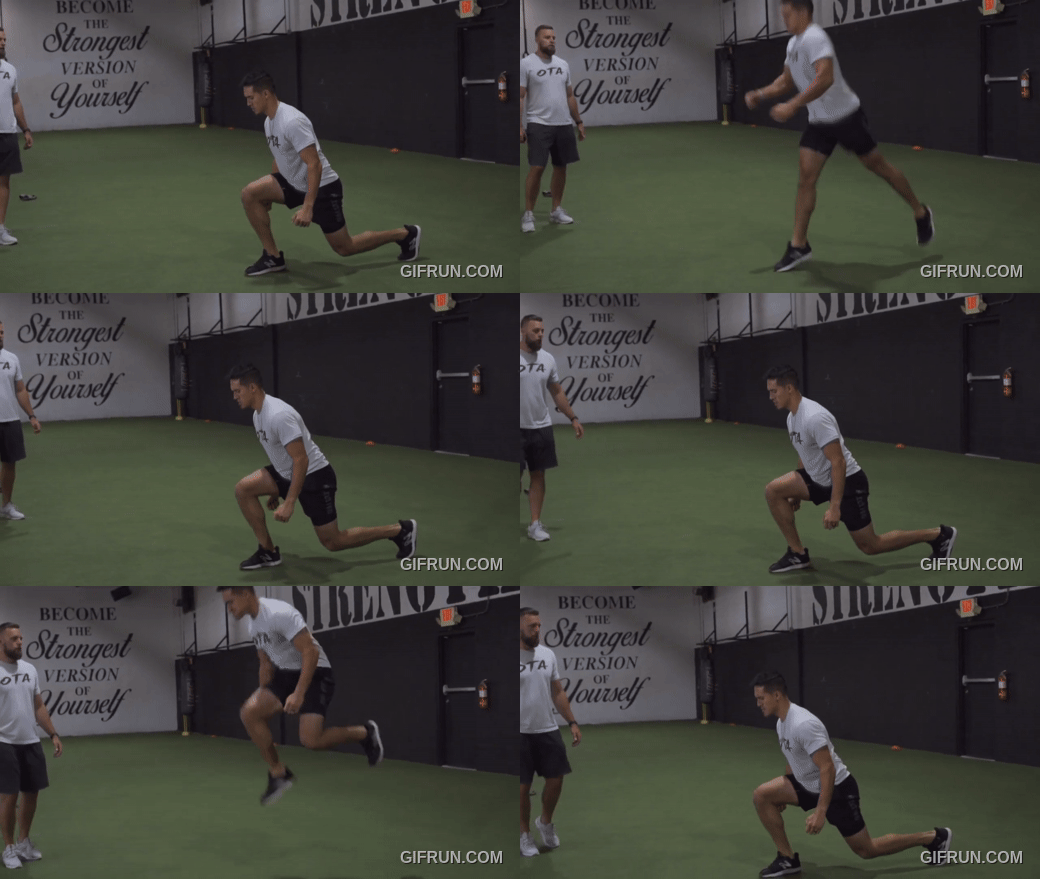
Both of these are to build stability and deceleration in a deep lunge position. Russian lunges the athlete is locking the hips in position as they jump and land, trying to quickly absorb and stop momentum.
Speed Russian lunges, the athlete will hold the deep position and rapidly switch the hips by extending one back and flexing the other. The goal is to immediately lock the position each switch without changing the level of the hips.
Key coaching points:
- Locking hips in the low position
- Strong front-leg stability
- Rapid stabilization on contact
- No collapsing at the bottom
This is one of our favorite deceleration exercises for building resilience and unilateral dynamic stabilization.
4. Approach Tuck Jumps to Split Lunge Landing
What it trains:
Reactive deceleration, landing mechanics, isometric stabilization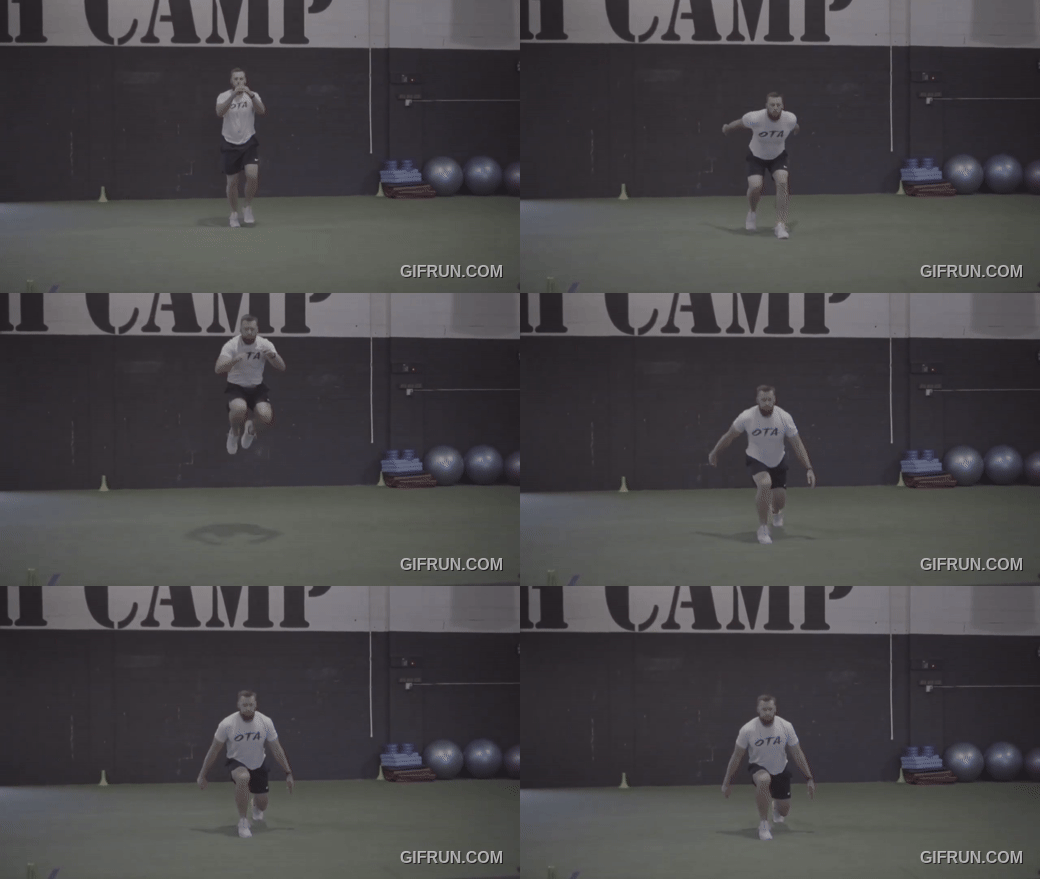
This is a high-level deceleration drill that challenges athletes to land from speed and height into a split stance—then freeze.
The goal is not height. The goal is control on impact.
Key coaching points:
- Approach with intent
- Quick tuck
- Land and stabilize instantly
- Zero movement after contact
This exercise exposes poor deceleration mechanics fast—and builds elite landing control when coached properly.
How Deceleration Exercises Improve Performance
When athletes train deceleration exercises correctly, performance improves across the board:
- Faster cuts and sharper change of direction
- Better re-acceleration after stopping
- Improved agility and reaction time
- Increased confidence in planting and landing
- Reduced injury risk during high-speed play
Athletes don’t just move better—they feel more athletic, more controlled, and more explosive.
The Missing Link in Most Training Programs
Most athletes already do enough jumping, sprinting, and lifting.
What they don’t do enough of is learning how to stop.
Deceleration exercises bridge the gap between strength and sport. They teach the body how to handle real-world forces under speed, fatigue, and pressure.
If you want athletes who:
- Stay healthy
- Move efficiently
- Cut with confidence
- Perform at a high level year after year
Then deceleration training isn’t optional—it’s essential.
Conclusion: Train to Stop So You Can Go
At Overtime Athletes, we believe great athletes aren’t just fast—they’re controlled.
Deceleration exercises teach athletes how to absorb force, protect their joints, and dominate change-of-direction situations. They reduce injury risk while unlocking higher levels of performance.
Train acceleration without deceleration, and you build fragile athletes.
Train both, and you build athletes who not only last, but perform far better.
If you want to train agility and decelerate like an elite athlete, check out our Game Speed Agility program with the image below. We build speed, strength, power, and deceleration the right way so you can move better, stay healthier, and compete at a higher level.