
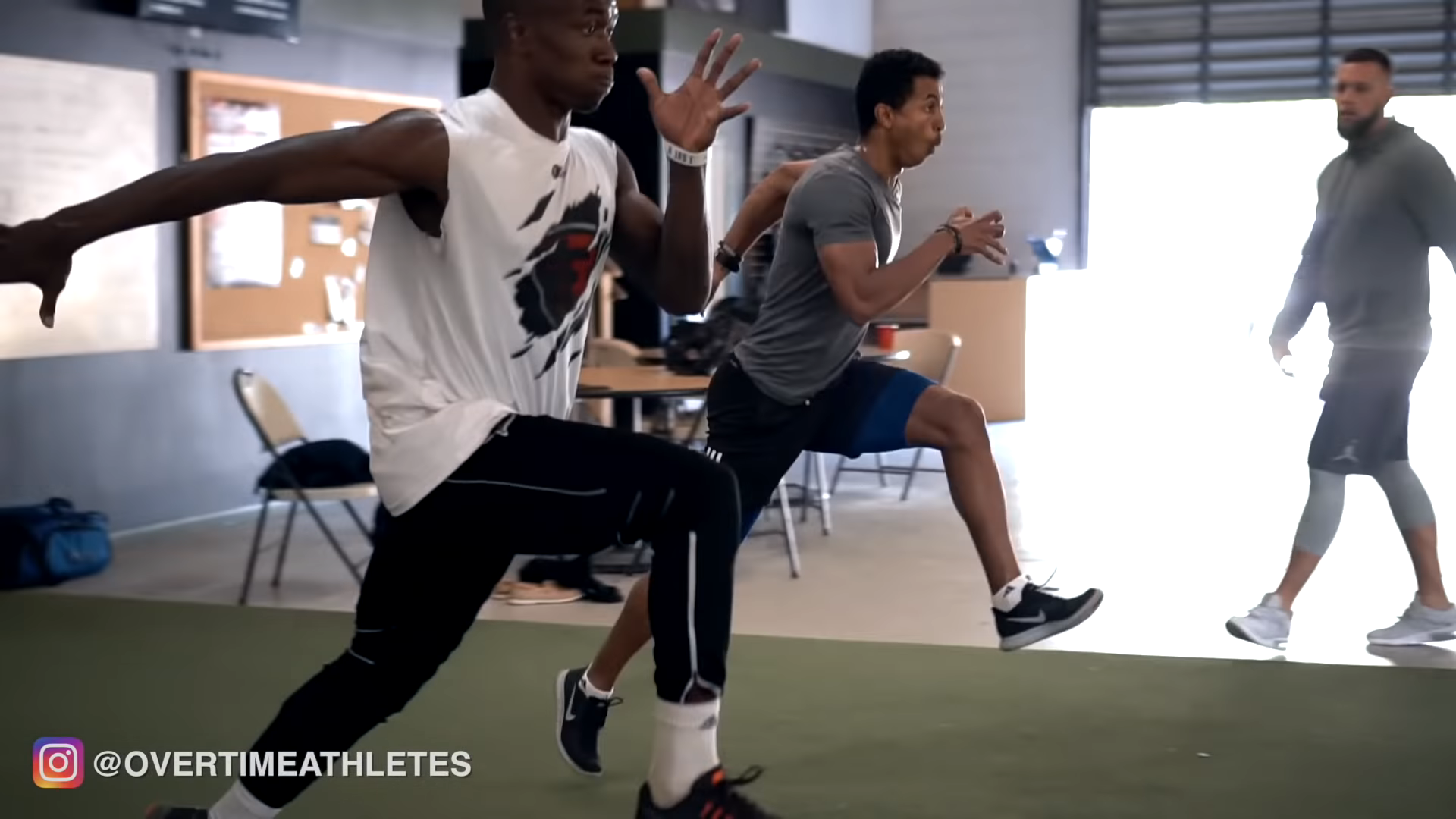
5 Best Strength Exercises to Sprint Faster and Dominate Speed Training
If you want to get faster and improve your speed training, you have to get stronger. It’s really that simple.
Too many athletes waste time chasing speed with ladder drills, fancy speed mechanic drills, and random “speed” circuits while ignoring the one thing that separates elite movers from average athletes: force production.
Speed is the result of how much force you can put into the ground and how fast you can apply it. Every sprint step is a violent strike into the turf. The more force you create, the more powerfully you move your body forward.
A weak athlete will always struggle to be fast.
That may sound harsh, but it’s true. If you don’t have the strength to create high levels of force, your acceleration, top speed, and explosiveness will always be limited.
Look at elite Olympic sprinters. These athletes are not just fast—they are incredibly strong. Many can deadlift 3x their bodyweight and power clean 2x their bodyweight. Why? Because elite strength creates elite force, and elite force shows up in elite speed.
That doesn’t mean every athlete needs to become a powerlifter. It means you need the right strength exercises that directly transfer to sprinting mechanics, single-leg power, hamstring health, and force output. Like it or not, building strength plays a huge part in athlete’s speed training.
Here are the 5 best strength exercises to sprint faster and dominate speed training. Be sure to check out our last article on the best plyometric routine for increasing speed!
1. Reverse Lunges (DB or BB)
Reverse lunges are one of the best lower body exercises for athletes because sprinting is a single-leg activity. Every stride happens one leg at a time, so training single-leg strength is critical. 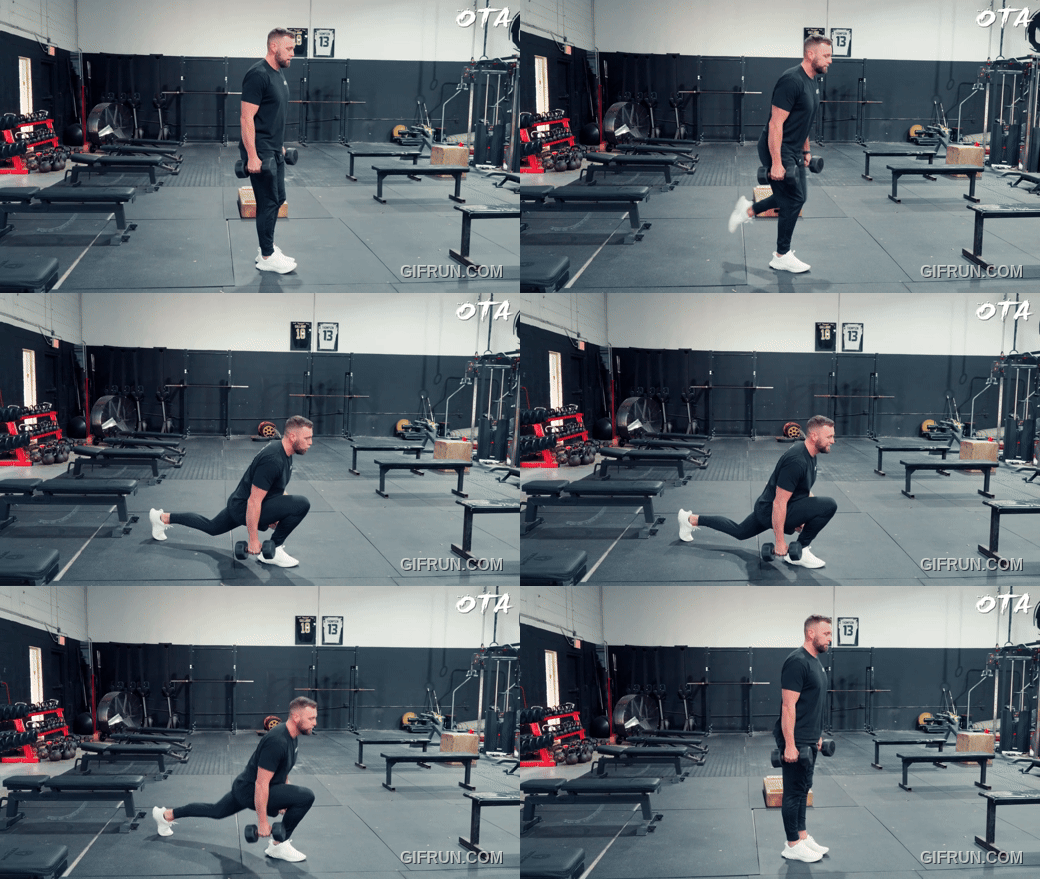
The reverse lunge builds:
- Glute strength
- Quad strength
- Hip stability
- Balance and coordination
- Force production through one leg
Unlike traditional forward lunges, the reverse lunge is easier on the knees while allowing athletes to load heavy and move explosively.
When an athlete drives out of the bottom position, they’re training the same kind of forceful push needed during acceleration. Reverse lunges also help address imbalances between legs, which can improve mechanics and reduce injury risk.
Why it matters for speed:
If one leg is weak, your sprint stride leaks power. Reverse lunges help each leg become stronger and more explosive.
Use dumbbells for control and stability or a barbell for max loading.
2. Heavy Sled Marches
Heavy sled marches are one of the most underrated speed-building exercises in sports performance.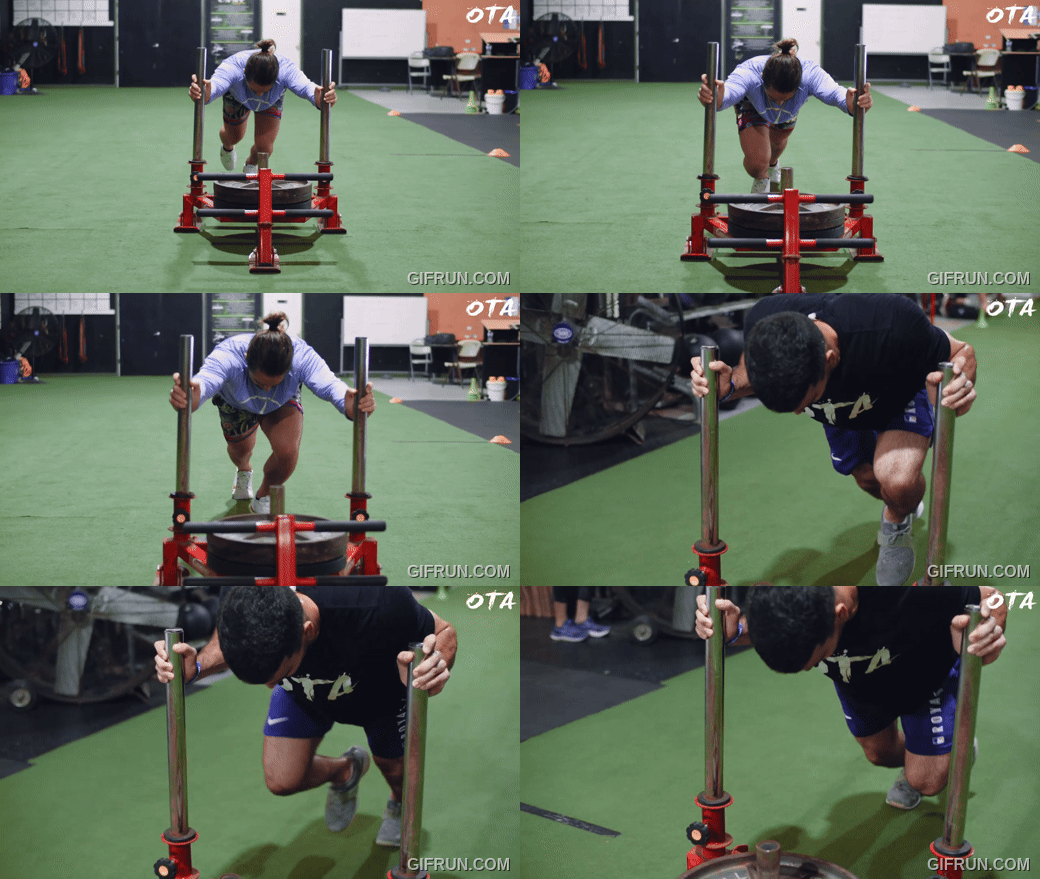
Load up a heavy sled and march with aggressive knee drive, full foot contact, and strong forward body angles.
This movement builds:
- Horizontal force production
- Acceleration mechanics
- Glute and hamstring strength
- Core stiffness
- Powerful shin angles for sprint starts
Acceleration is all about projecting force backward into the ground so your body moves forward. Heavy sled marches teach athletes how to own those positions while getting stronger at the same time.
If you struggle with your first 10 yards, heavy sled marches need to be in your program.
Why it matters for speed:
The first few steps of a sprint can decide the play. Heavy sled work develops the force needed to explode out of the gate.
Stay low, punch the knee up, and aggressively drive back into the ground with intent.
3. Staggered Stance / B-Stance Single Leg RDLs
The hamstrings are a game changer for speed. They help extend the hip, control the leg during swing phase, and protect you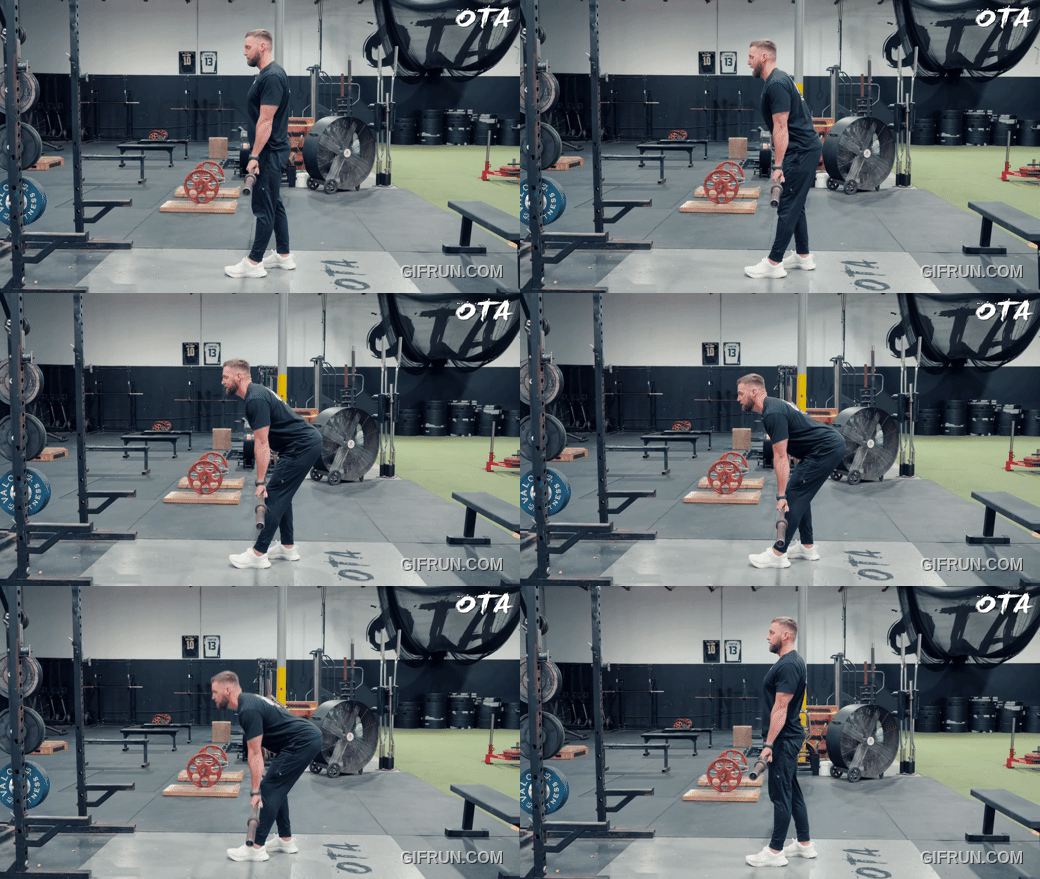 from pulls and strains.
The staggered stance or B-stance RDL is one of the best ways to hammer the posterior chain while still challenging one side at a time.
This exercise builds:
- Hamstring strength
- Glute strength
- Hip hinge mechanics
- Single-leg stability
- Posterior chain power
The front leg does most of the work while the back leg provides balance. That means you can load it heavier than a full single-leg RDL while still getting unilateral benefits.
This is huge for athletes who need stronger hamstrings but struggle balancing on one leg.
Why it matters for speed:
Strong hamstrings help create more backside force, improve stride mechanics, and reduce soft tissue injuries.
Control the lowering phase and drive hips through hard at the top.
4. Step Ups (DB or BB)
Step ups are an athlete goldmine.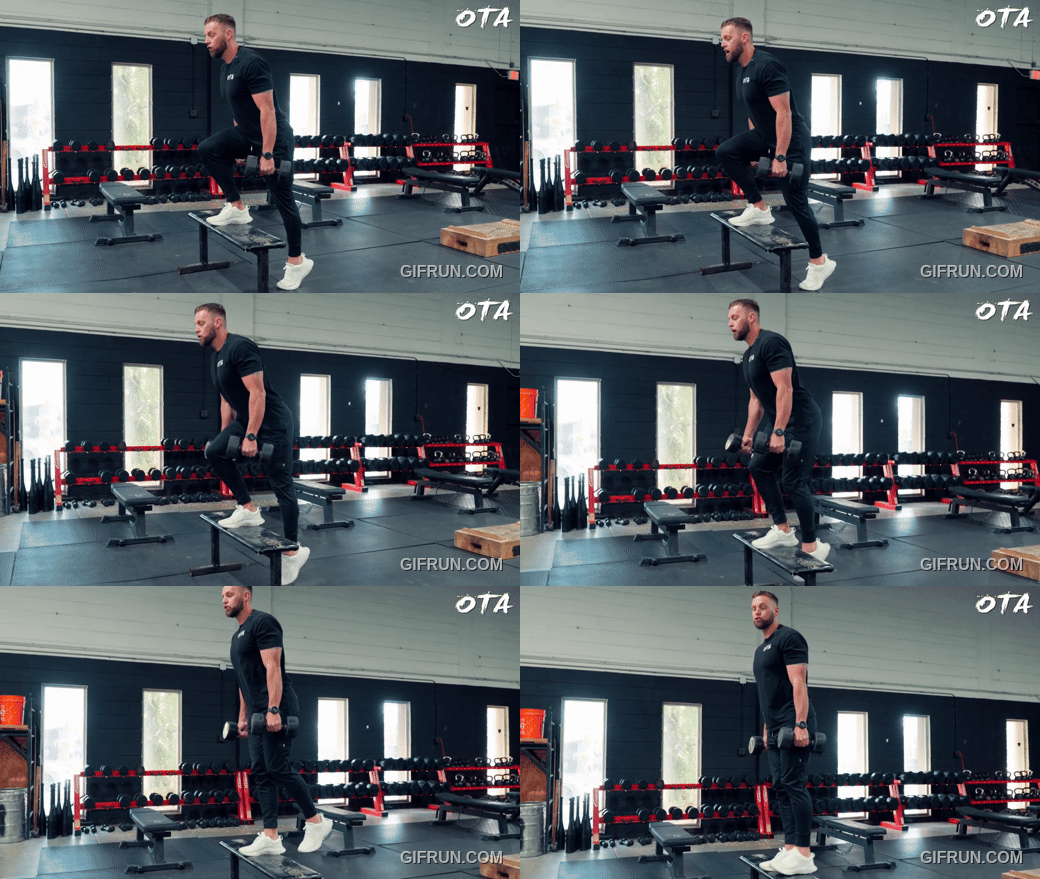
They train triple extension through the ankle, knee, and hip while also building unilateral leg strength. Since sprinting requires driving the body upward and forward off one leg, step ups have tremendous transfer.
This movement builds:
- Quad power
- Glute strength
- Balance and coordination
- Explosive force production
The key is using the working leg to drive onto the box, not pushing off the trail leg.
Higher boxes can challenge hip mobility and force production, while lower boxes can be used for speed and power.
Why it matters for speed:
Step ups train the same forceful knee drive and push-off mechanics used in sprinting.
Drive through the whole foot and finish tall at the top.
5. Nordic Hamstring Curls
If speed training had a secret weapon, Nordic hamstring curls would be near the top of the list.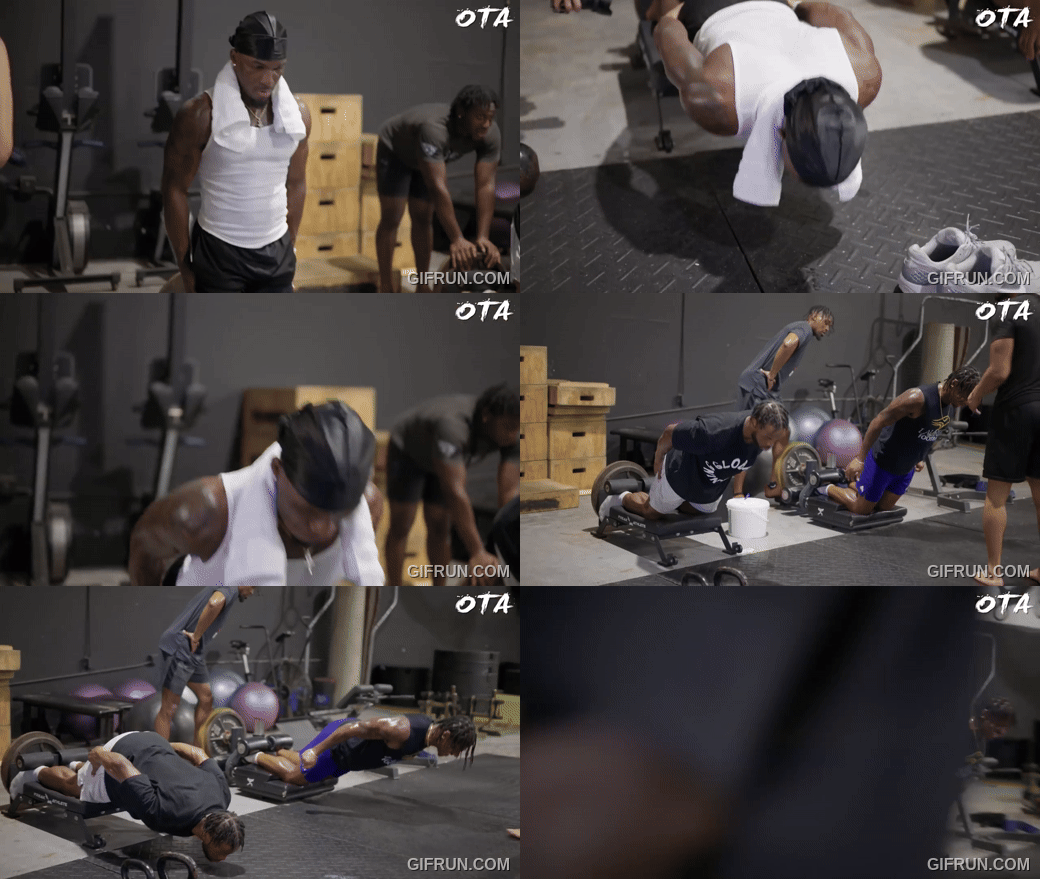
Nordics are brutal—but effective.
This exercise strengthens the hamstrings eccentrically, meaning the muscles get stronger while lengthening. That’s exactly what happens when sprinting at high speeds.
This movement builds:
- Elite hamstring strength
- Deceleration control
- Injury resilience
- Posterior chain durability
Hamstring pulls are one of the most common injuries in speed sports. Nordics help strengthen the hamstrings while improving their ability to absorb and produce force.
Why it matters for speed:
Healthy, powerful hamstrings are essential for max velocity sprinting.
Lower slowly with control and keep the hips in extension. Use your hands to catch yourself if needed.
Final Thoughts
If you want to sprint faster, stop chasing gimmicks and start building real strength.
Speed is force. Force comes from strength.
The athletes who dominate on the field, court, or track are usually the ones who can produce the most force into the ground. That’s why stronger athletes are often faster athletes.
Add these 5 movements into your training:
- Reverse Lunges
- Heavy Sled Marches
- B-Stance RDLs
- Step Ups
- Nordic Hamstring Curls
Master them. Progress them. Attack them with intent.
That’s how you build speed that actually shows up in competition.
Ready to Get Faster?
If you’re serious about improving acceleration, sprint mechanics, explosiveness, and game speed, check out our Athletic Speed System.
This proven program is designed to help athletes build real speed through elite training methods that work.
Start developing elite speed today!

