Best Plyometric Exercises for Basketball: Jump Higher, Move Faster, and Dominate the Court
Basketball is one of the most physically demanding and chaotic sports on the planet. Every possession requires rapid acceleration, violent deceleration, explosive jumping, and constant changes of direction — often all within the same sequence.
If your training doesn’t prepare you to produce force quickly, absorb force safely, and redirect force efficiently, you’re not training for basketball — you’re just working out.
That’s why plyometric exercises for basketball are a cornerstone of high-level athlete development at Overtime Athletes. Plyometrics aren’t optional. They are the bridge between weight-room strength and on-court dominance.
This article will break down:
- The true physical demands of basketball
- Why plyometrics are essential for performance and durability
- How lower limb strength, tendon stiffness, and RSI impact the game
- 5 of the best plyometric exercises for basketball players
The True Physical Demands of Basketball
Basketball is not a slow, linear sport. It is:
- Explosive
- Multi-directional
- Reactive
- High impact
Players sprint, stop, jump, land, cut, shuffle, and rotate hundreds of times per game. Unlike track or even soccer, basketball movements happen in tight spaces, under fatigue, and often on one leg.
Key demands include:
- Repeated maximal and submaximal jumps
- Rapid braking and re-acceleration
- Lateral and diagonal cutting
- Unilateral takeoffs and landings
- Short ground contact times
This is exactly why traditional strength training or just training vertical jump alone is not enough. Please also see our previous article on a full plyometric routine for basketball!
Why Plyometric Exercises for Basketball Are Non-Negotiable
Strength gives you potential. Plyometrics teach you how to express that strength at game speed.
In basketball, you don’t have time to grind through force production. You must apply force fast — often in milliseconds. Plyometric training targets this exact quality.
Key Reasons Plyometrics Matter for Basketball
- Improve rate of force development (RFD)
- Increase reactive strength index (RSI)
- Enhance tendon stiffness and elastic energy return
- Prepare joints and tissues for repeated impact
- Improve movement efficiency and coordination
Plyometrics teach the nervous system to:
- Turn strength into speed
- Turn stiffness into bounce
- Turn chaos into control
Lower Limb Strength and Tendon Stiffness: The Hidden Performance Multiplier
Most athletes think jumping higher is about muscles. In reality, it’s just as much about tendons. When we’re thinking of the best plyometrics for basketball, we’re thinking of exercises that will help the athletes develop stiffer tendons for more bounce!
Tendons act like springs. The stiffer and more elastic they are, the more efficiently they can:
- Store energy during landing
- Release energy during takeoff
- Reduce energy leaks at the ankle, knee, and hip
Basketball players with poor tendon stiffness often:
- Spend too long on the ground
- Lose explosiveness late in games
- Experience overuse injuries
Plyometric exercises for basketball build functional stiffness, not rigidity — allowing athletes to move fast while staying resilient.
Reactive Strength Index (RSI): Why Fast Ground Contacts Matter
RSI measures how quickly an athlete can transition from eccentric to concentric force — in simple terms, how fast you can get off the ground. Here is a great article on RSI and it’s importance to overall performance.
In basketball, RSI shows up when:
- You go up for a second jump after a rebound
- You react to a pump fake
- You close out on a shooter
- You explode out of a defensive stance
High RSI = faster reactions, less wasted motion, more explosive play.
The goal of plyometric training is not just to jump high — it’s to jump fast. Two players may be able to jump high and with a lot of power, but the one who can do it faster repeatedly is going to win that matchup.
The 5 Best Plyometric Exercises for Basketball Players
Each of the following exercises targets a specific basketball quality and fits directly into a performance-based program. These are 5 of our best plyometrics for basketball:
1. Mini Hurdle Hops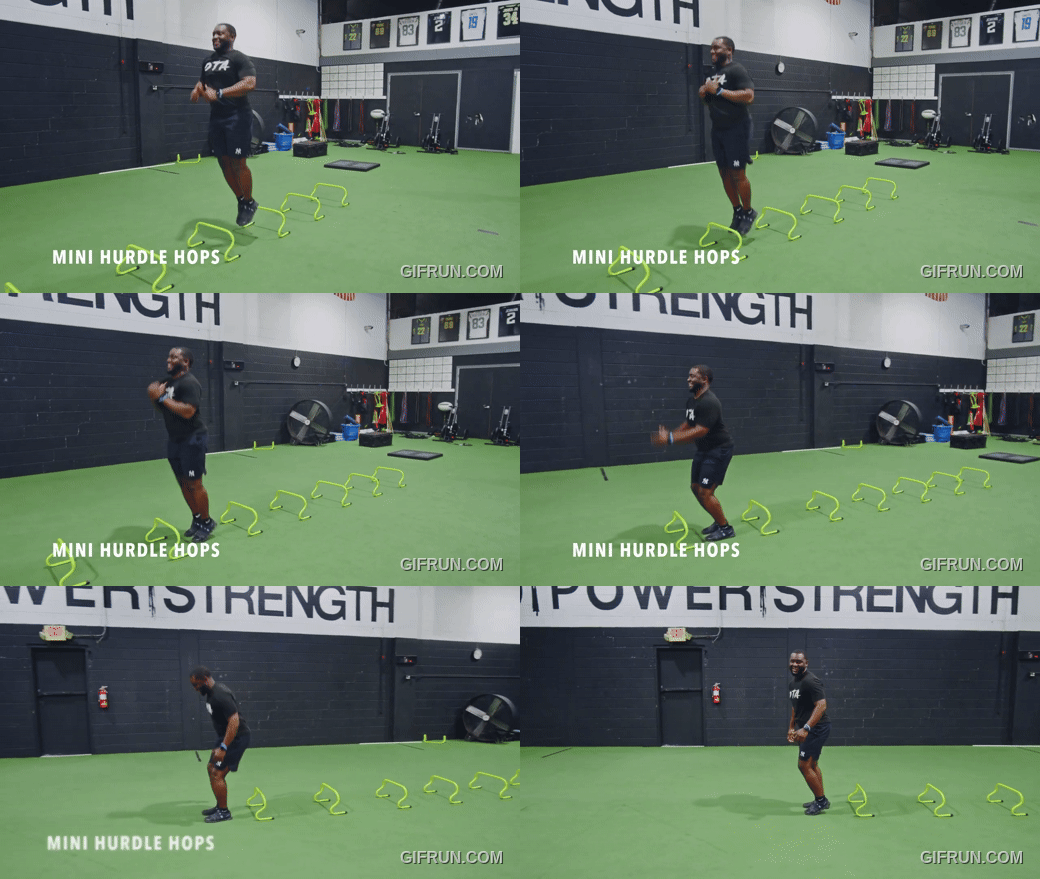

Focus: Lower limb development, tendon stiffness, RSI
Mini hurdle hops are one of the most effective tools for improving elastic reactivity in basketball athletes. Should have them perform both legs and single leg.
Why This is One of the Best Plyometric Exercises for Basketball:
- Reinforce short, efficient ground contacts
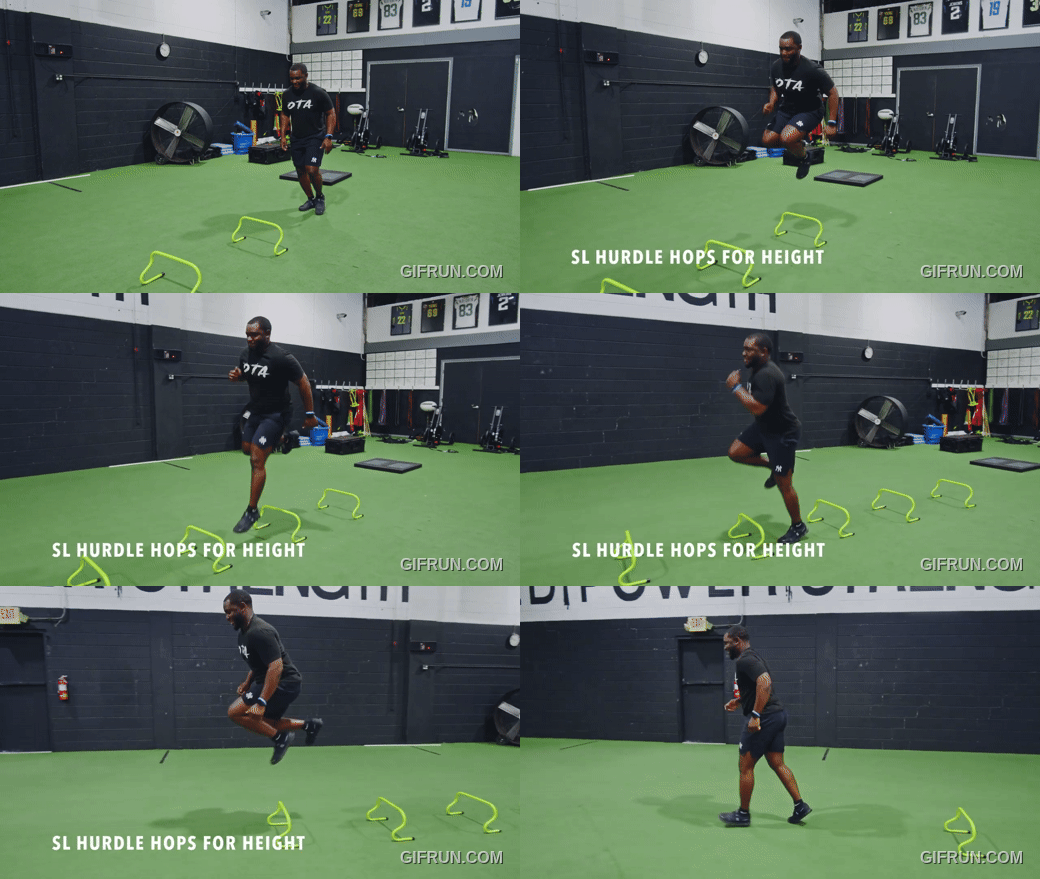

- Improve ankle and Achilles stiffness
- Enhance vertical reactivity without excessive fatigue
Basketball Transfer:
Better second jumps, quicker closeouts, improved rebounding reactions.
2. Sprinter Step Ups
Focus: Unilateral vertical force, force absorption, deceleration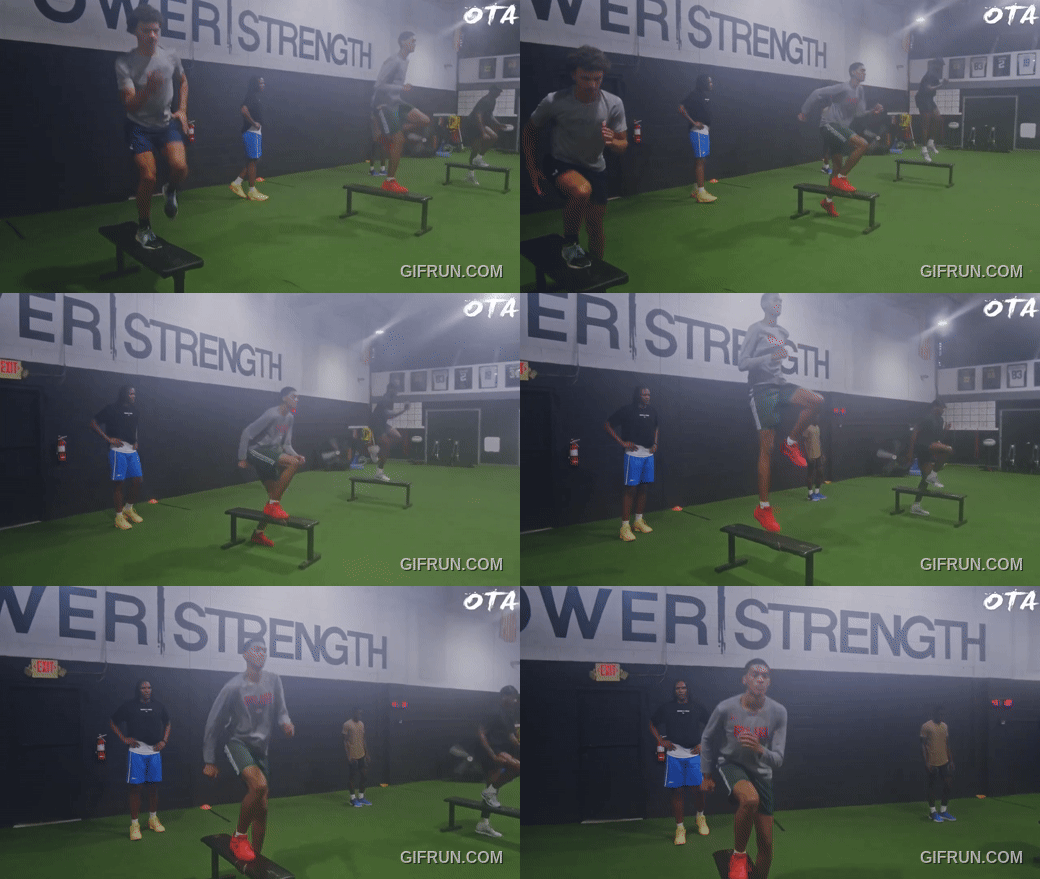
Basketball takeoffs rarely happen symmetrically. Sprinter step ups develop single-leg power while teaching the body to absorb and reapply force. During this drill, the athlete is producing vertical force concentrically and then decelerating back down and focusing on absorbing through the full lower chain from the ankle, knee, and hip.
Why This is One of the Best Plyometric Exercises for Basketball:
- Build unilateral vertical drive
- Improve eccentric control on landings
- Reduce limb-to-limb asymmetries
Basketball Transfer:
More powerful layups, stronger finishes through contact, better deceleration control.
3. Skater Jumps 45° Continuous
Focus: Lateral force production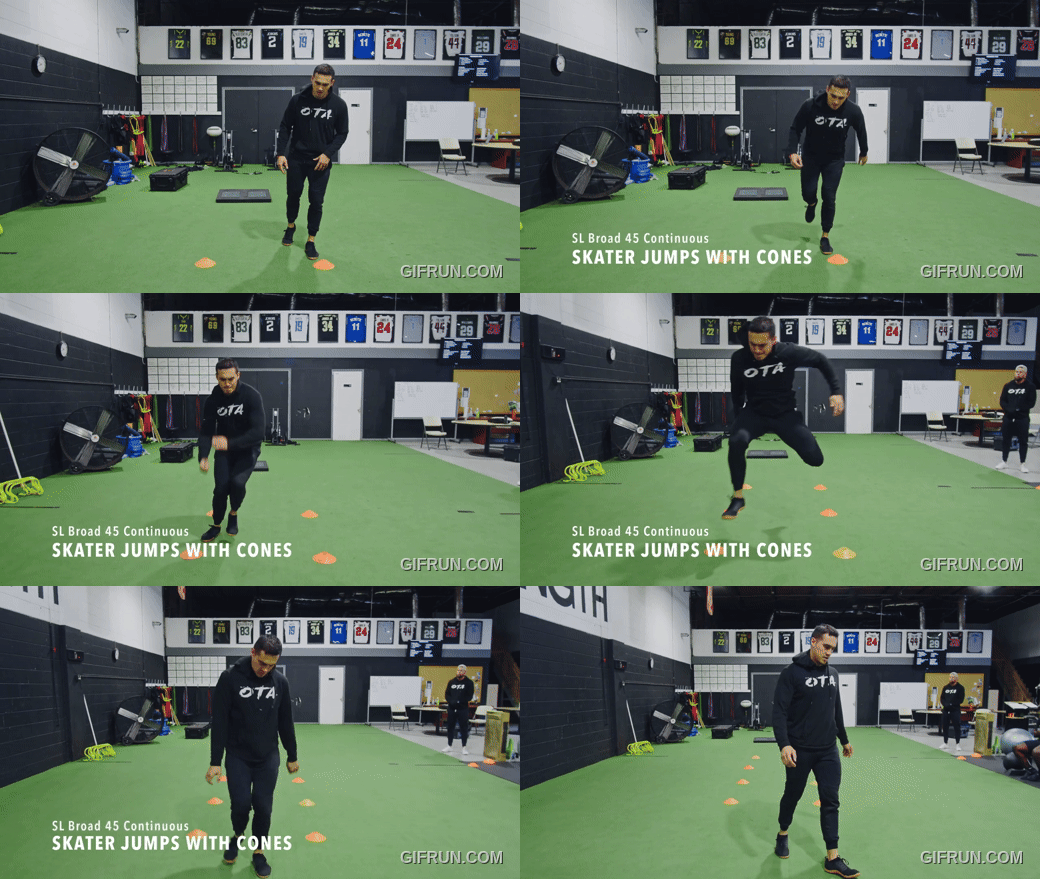
Basketball is won and lost laterally — on defense, in transitions, and in space. Most of the sport is played laterally.
Why This is One of the Best Plyometric Exercises for Basketball:
- Improve lateral acceleration and deceleration
- Strengthen hips and groin
- Enhance frontal plane stability
Basketball Transfer:
Quicker defensive slides, sharper cuts, improved on-ball defense.
4. Single-Leg Broad Jump to 90° Turn
Focus: Multi-directional force production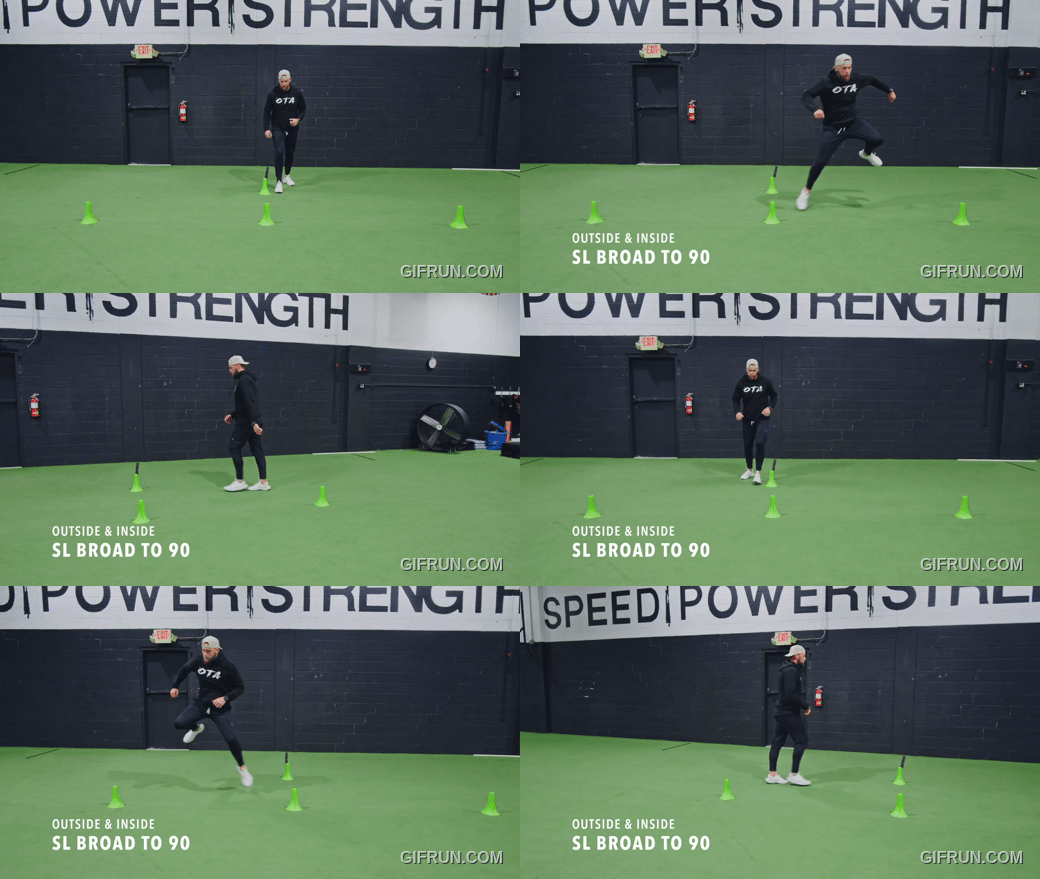
This drill trains the ability to produce force forward, absorb it, and redirect it laterally — a constant demand in basketball. Now there’s multiple variations to this drill. You can perform horizontal to lateral, lateral to horizontal, lateral to vertical, vertical to lateral, etc. The goal is improving their ability to quickly change and produce force in multiple directions.
Why This is One of the Best Plyometric Exercises for Basketball:
- Improve force redirection
- Build stability in multiple directions
- Enhance body awareness and proprioception
Basketball Transfer:
Attacking closeouts, chasing loose balls, reacting in unpredictable situations.
5. Rebound Box Jumps
Focus: RSI and vertical force production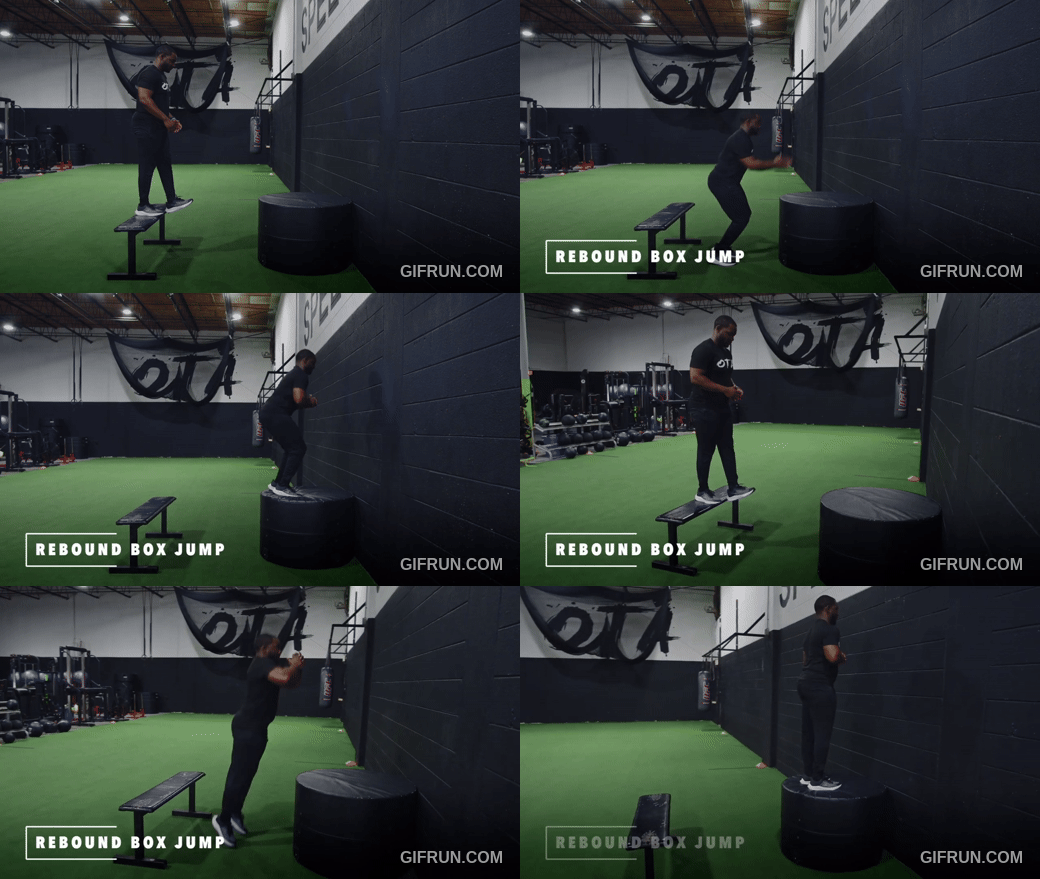
Rebound box jumps emphasize max intent with minimal ground contact, making them ideal for basketball athletes.
Why This is One of the Best Plyometric Exercises for Basketball:
- Improve vertical explosiveness
- Train rapid force application
Basketball Transfer:
Better rebounding, quicker second efforts, more explosive finishes.
How to Program Plyometric Exercises for Basketball
Plyometrics are about quality and intent, not exhaustion.
Programming Guidelines:
- Perform early in the session
- Keep reps low (3–6)
- Allow recovery
- Emphasize intent and technique
Plyometrics should enhance performance — not crush the nervous system. Any good program for basketball athletes should have plyometric programming included with their strength training. Read our previous article on building core strength for basketball and how it helps improve basketball performance.
Conclusion: Train the Qualities Basketball Actually Demands
Basketball rewards athletes who can apply force fast, change direction instantly, and repeat explosive actions without breaking down.
That’s why plyometric exercises for basketball are essential for:
- Jump height
- Speed and quickness
- Injury resilience
- Game-ready athleticism
When programmed correctly, plyometrics turn strength into dominance and preparation into confidence. We don’t want to just train athletes to jump higher — we train them to play faster, move better, and stay explosive all around when it matters most.