
Best 5 Single Leg Exercises for Athletes
If you train athletes and you’re still programming mostly bilateral lifts, you’re leaving performance on the table.
Speed is single leg.
Acceleration is single leg.
Cutting is single leg.
Change of direction is single leg.
Sport is unilateral.
That’s why single leg exercises are non-negotiable if you want athletes to build real unilateral strength, eliminate imbalances, and transfer strength to the field.
If you really want to train athletes that dominate, then single leg strength should be a priority in their programming. It can be one of the biggest missing pieces in most programs.
Let’s break down why it matters — and the 5 best single leg exercises every athlete should perform regularly and get stronger at.
Please check out our last article on the best single leg plyometrics for football!
Why Unilateral Strength Is Critical for Athletes
When an athlete sprints, jumps off one foot, or plants to cut, they’re producing force through one leg at a time. If they can’t control and produce force on a single limb, their speed, power, and durability suffer.
Here’s what proper unilateral training does:
- Builds explosive single-leg force production
- Improves balance and coordination
- Corrects left-to-right imbalances
- Reduces knee and hip injury risk
- Improves acceleration and change of direction
If your athlete squats 400 pounds but collapses on a single-leg landing, that strength isn’t transferring.
That’s why these five single leg exercises should be staples in your program.
1. Bulgarian Split Squats
The Bulgarian split squat is definitely one of the best unilateral strength builders in existence.
It loads the front leg heavily while forcing hip stability, quad strength, and glute engagement. If done correctly, it exposes weaknesses fast.
How to Perform:
- Elevate your back foot on a bench.
- Step your front foot far enough forward so your shin stays relatively vertical.
- Drop your back knee straight down.
- Drive through the entire front foot to stand tall.
- Keep your torso slightly forward, ribs down, core tight.
Coaching Cues:
- Own the bottom position.
- Don’t bounce.
- Drive through the mid-foot.
- Control the eccentric.
This exercise builds brutal unilateral strength that directly improves sprint acceleration mechanics. Athletes can perform these with dumbbells or a barbell.
2. Cossack Squats
Most athletes are strong in the sagittal plane, but sports aren’t played in only straight lines.
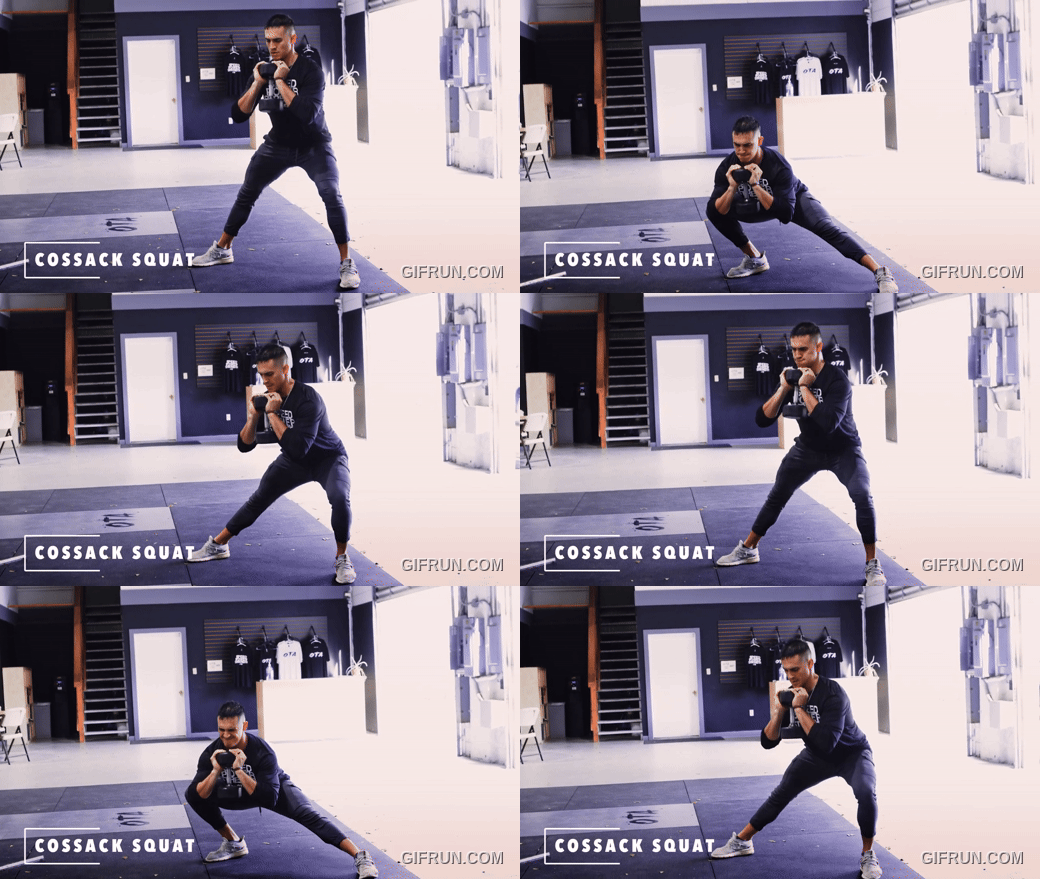
Cossack squats develop lateral strength, adductor mobility, and hip control. They build strength in positions athletes actually use when cutting and changing direction.
How to Perform:
- Start in a wide stance.
- Shift your hips over one leg.
- Sit down into that leg while keeping the opposite leg straight.
- Keep your chest up and heel flat.
- Push back to center and alternate sides.
Coaching Cues:
- Sit back and down.
- Keep the heel grounded.
- Control the range.
- Don’t rush the reps.
This builds frontal plane strength that protects groins and knees during lateral movement.
3. Walking Lunges
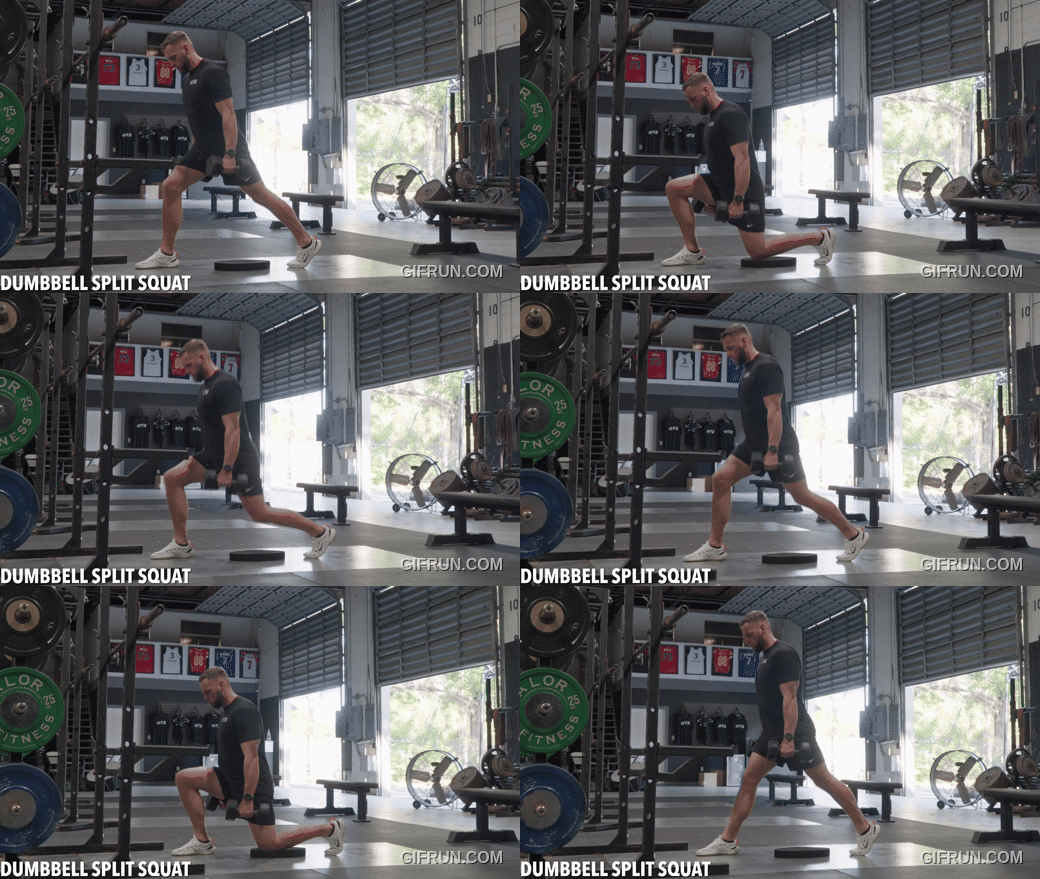
Walking lunges are dynamic unilateral strength in motion. They challenge balance, hip stability, and force production while moving forward. This is one of our favorites because it moves through the full range of motion of the hips from full flexion all the the way through extension.
They also expose asymmetries immediately.
How to Perform:
- Step forward into a lunge.
- Lower until both knees hit roughly 90 degrees.
- Drive through the front heel.
- Bring the back leg forward into the next rep.
- Stay tall and stable through the torso.
Coaching Cues:
- Don’t let the knee cave inward.
- Stay tall.
- Drive aggressively through the ground.
- Own each rep.
Loaded walking lunges build strength endurance and stability that translates directly to field performance.
4. Step Ups
Step ups are one of the most underrated single leg exercises for athletes.
They mimic acceleration mechanics better than most lifts. When done properly, they teach athletes to produce vertical force through one leg without relying on the back leg.
How to Perform: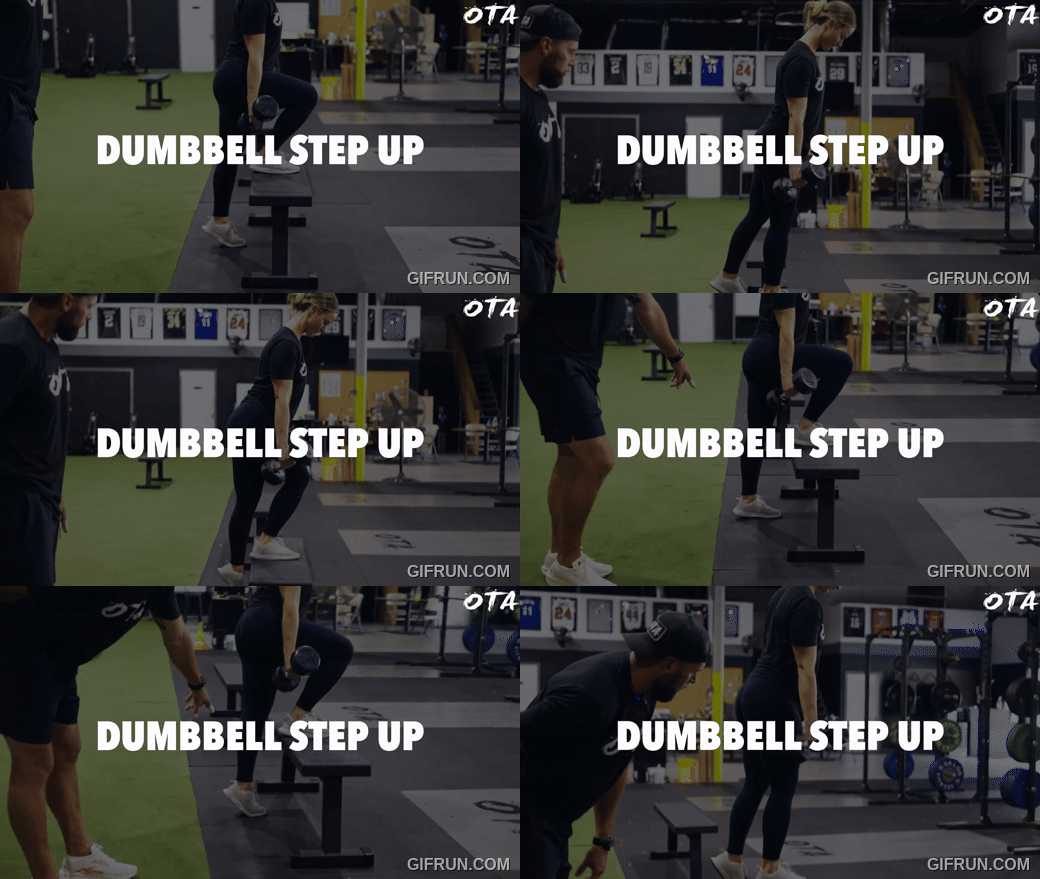
- Place one foot fully on a box (knee roughly 90 degrees).
- Lean slightly forward.
- Drive through the top leg.
- Do NOT push off the bottom leg.
- Stand tall at the top with full hip extension.
- Lower under control.
Coaching Cues:
- No bouncing.
- Control the eccentric.
- Drive the knee through.
- Own the top position.
If your athlete struggles with early acceleration, heavy step ups should be in their program.
5. Front Rack Split Squats
The front rack split squat takes unilateral strength to another level by forcing core stability and upright posture under load.
This variation builds anterior core strength while hammering quads and glutes.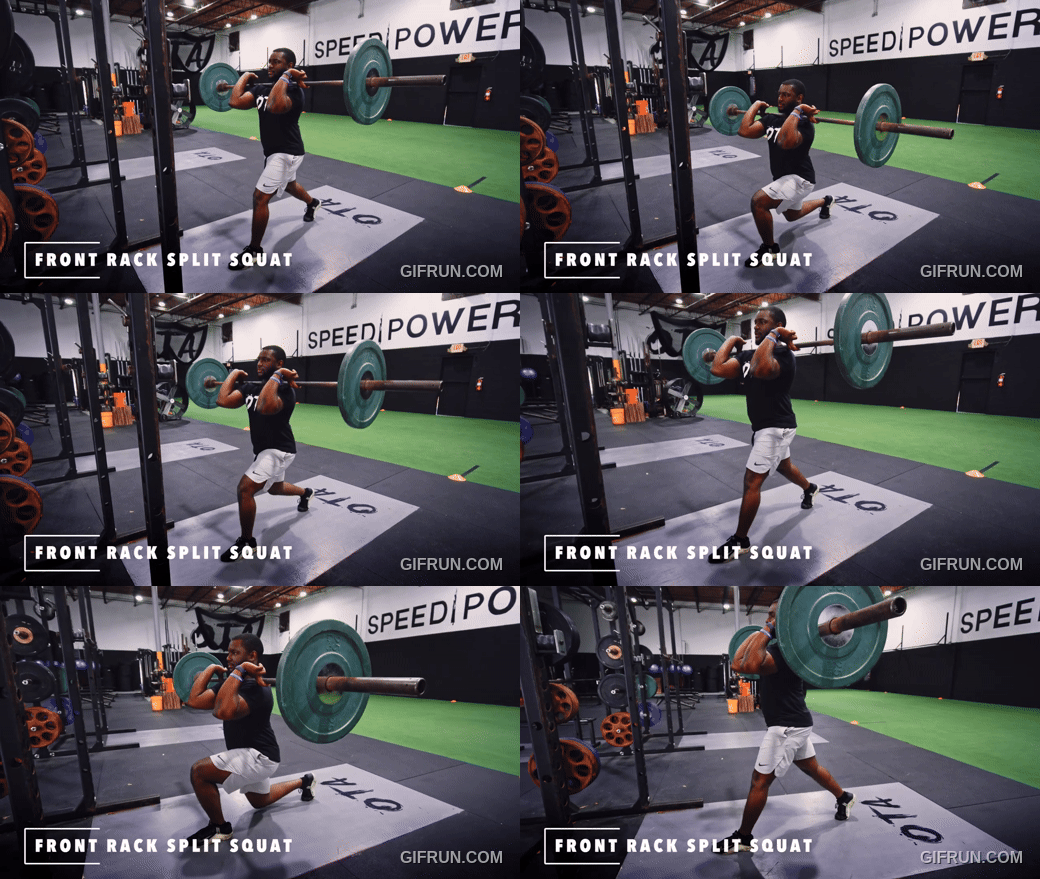
How to Perform:
- Hold a barbell in the front rack position.
- Step into a split stance.
- Drop the back knee straight down.
- Stay tall through the torso.
- Drive up aggressively through the front leg.
Coaching Cues:
- Elbows high.
- Core tight.
- Control the descent.
- Explode up.
This variation improves posture, bracing, and force production simultaneously, making it a high-return exercise for serious athletes.
How to Program These Single Leg Exercises
To maximize performance:
- Train unilateral strength 2–3 times per week.
- Use heavy strength ranges (4–8 reps) for force production.
- Add moderate ranges (8–12 reps) for control and hypertrophy.
- Pair with plyometrics for transfer to speed.
Strength without transfer is wasted potential.
The Performance Transfer
Here’s the reality:
If your athlete can’t produce force on one leg, they can’t sprint at top speed.
>If they can’t control force on one leg, they can’t cut safely.
>If they can’t stabilize on one leg, they will break down under fatigue.
Unilateral strength is the bridge between weight room strength and game-day speed.
Final Thoughts: Build Strength That Transfers
Too many programs chase numbers that look good on paper.
At Overtime Athletes, we focus on building athletes that move differently.
If you want to:
- Increase acceleration
- Improve change of direction
- Eliminate imbalances
- Reduce injury risk
- Build explosive unilateral strength
Then these exercises must be part of your system.
But strength alone isn’t enough.
If you want to truly convert unilateral strength into speed, power, and dominance on the field, you need a structured performance system that integrates strength, plyometrics, and sprint mechanics.
Stop training just to lift.
Start training to perform.
If you’re ready to build real speed and real power check out the Athletic Speed System today and take your performance to the next level!
