
Want to Jump Higher? 3 Best Exercises to Build Vertical Jump Power
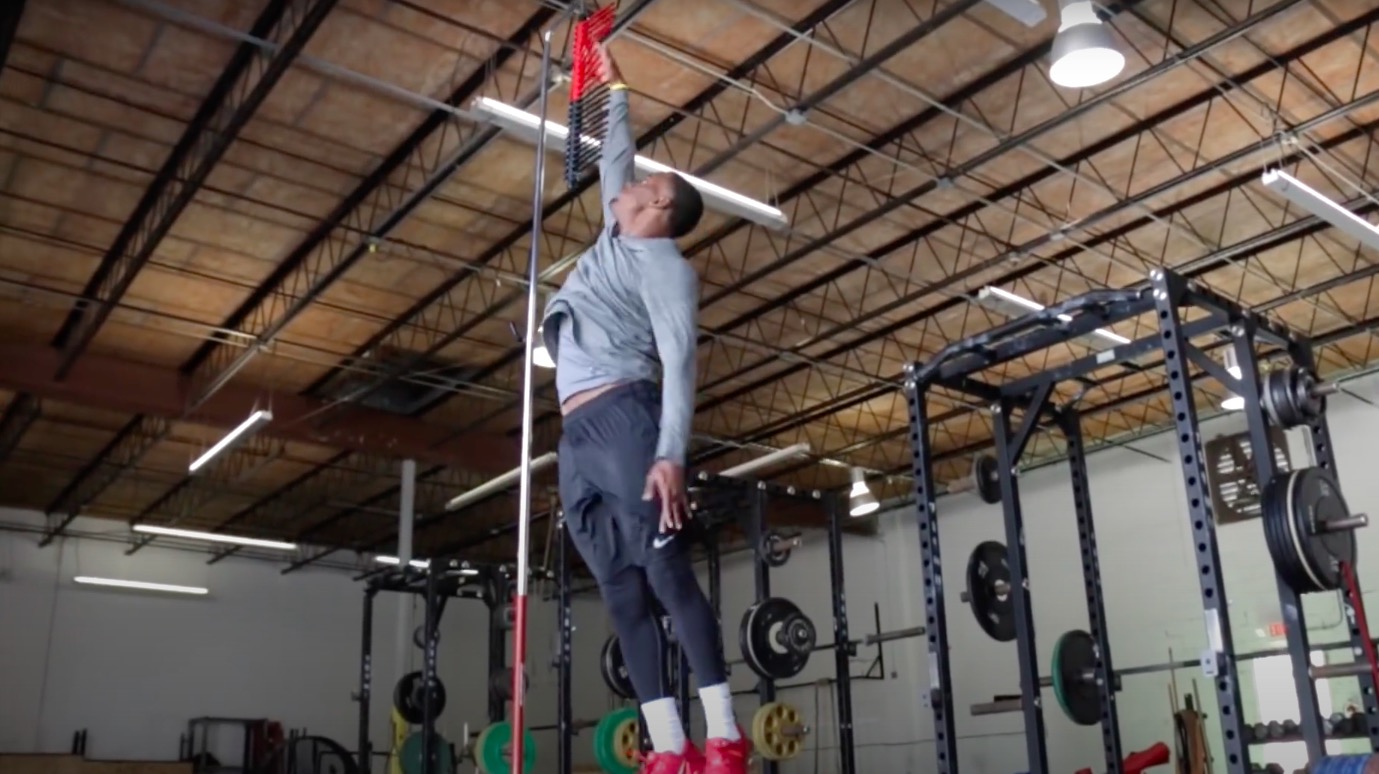
Every athlete wants to jump higher. Whether you’re a basketball player trying to dunk, a volleyball player looking to become more dominant at the net, or a multi-sport athlete looking to become more explosive, improving your vertical jump can make a major difference in your performance.
But here’s where many young athletes go wrong. They spend countless hours performing box jumps, jumping rope, doing bodyweight squats, and repeating random plyometric exercises without ever developing the strength and power needed to make meaningful improvements.
If you’ve been training your vertical jump for months but your numbers aren’t moving, you’re probably missing an important piece of the equation.
Getting a higher vertical jump isn’t about doing more jumps. It’s about developing the ability to produce more force into the ground and express that force quickly.
In this article, we’re breaking down three of the best exercises to increase your vertical jump power, why they work, and how to incorporate them into your training to become a more explosive athlete.
Why Improving Your Vertical Jump Matters for Athletes
Your vertical jump is more than just a number on a testing sheet. It’s an indicator of your lower-body power and your ability to produce force rapidly.
For basketball players, a higher vertical jump can help you finish above defenders, grab rebounds, contest shots, and become a more effective finisher around the rim.
For volleyball players, it can improve your ability to attack above the net, block opposing hitters, and become a more dominant presence on the court.
Developing more lower-body power also carries over to sprinting, acceleration, and overall athletic performance.
For high school athletes with aspirations of playing college sports, improving your vertical jump can also help you stand out during recruiting evaluations, showcases, and athletic testing. Coaches want explosive athletes who can produce results on the field or court.
While a higher vertical jump alone won’t earn you a college scholarship, it can become another measurable advantage that separates you from other athletes competing for opportunities. Go read our previous article on vertical jump training!
Start by Getting Your Legs Extremely Strong
Before worrying about advanced plyometrics or complicated jumping programs, you need to build a strong foundation.
If you want to significantly increase your vertical jump, you need extremely strong legs.
Your ability to jump higher is directly influenced by how much force you can produce through your hips, knees, and ankles. The stronger your lower body becomes, the greater your potential to produce force against the ground.
One of the strength standards we want athletes working toward is being able to squat or deadlift at least twice their bodyweight.
For example, a 160-pound athlete should work toward a 320-pound squat or deadlift.
This doesn’t mean every young athlete needs to immediately chase these numbers. Strength development should be progressive, technically sound, and appropriate for the athlete’s training age. But developing high levels of relative strength should be a major priority.
Think about it this way: If you aren’t strong enough to produce significant force, you’re limiting how much power you can develop.
Once you’ve established a strong foundation, you can begin incorporating more advanced exercises to improve your vertical jump power. Here’s our article on best exercises for serious lower body strength!
1. Seated Box Jumps
One of the best exercises to increase vertical jump power is the seated box jump.
Unlike traditional box jumps, where you begin standing and use a countermovement to generate momentum, seated box jumps eliminate much of that initial assistance.
You start sitting on a box or bench with your hips and knees bent. From this position, explosively jump onto a box in front of you, focusing on producing as much force as possible in a short amount of time.
Why does this exercise work?
It challenges your ability to generate force from a static position. By removing the initial countermovement, you’re forced to rely more heavily on concentric force production from your hips, quads, and glutes.
This is particularly valuable for athletes who struggle to produce explosive power from a stationary position.
The goal isn’t to jump onto the tallest box possible. It’s to maximize your explosive intent while maintaining good mechanics and landing safely.
2. Band Accelerated Squat Jumps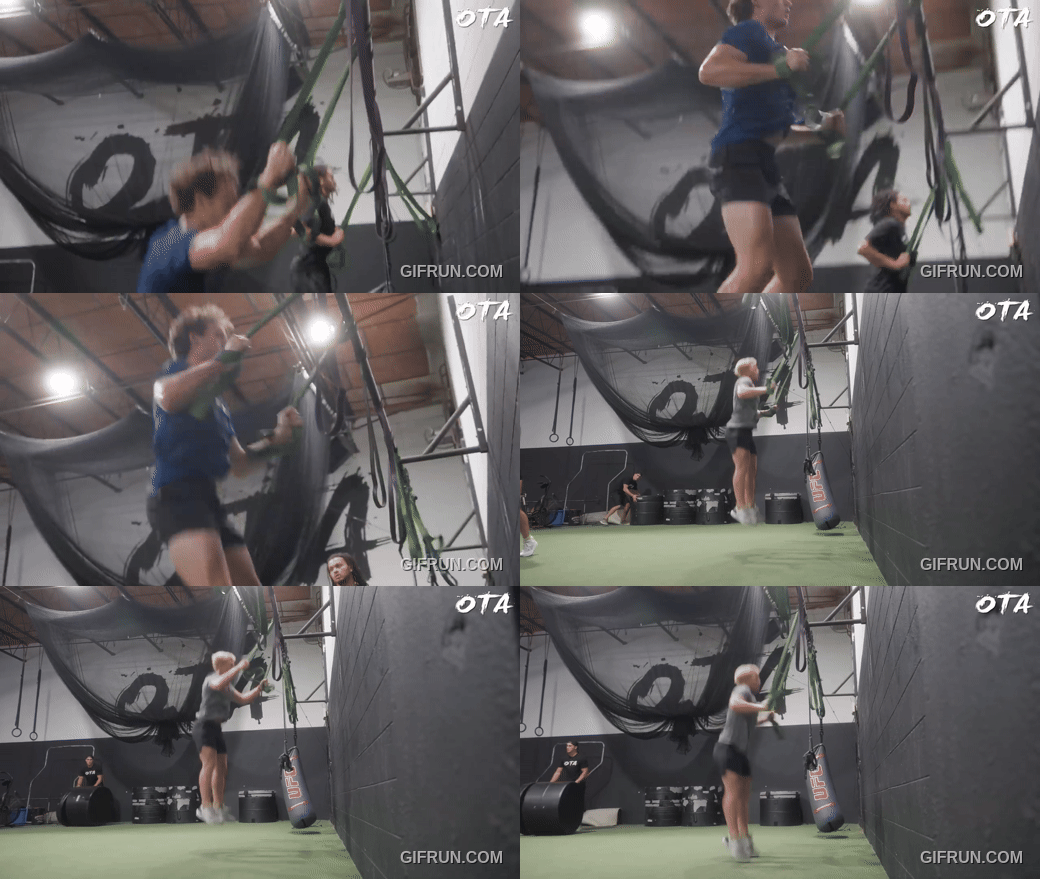

If you want to jump higher, you need to improve your ability to produce force at high velocities.
This is where band-accelerated squat jumps become extremely valuable.
With this exercise, you use resistance bands to assist the upward portion of the jump. The bands help accelerate your body through the concentric phase, allowing you to move at higher velocities than you might achieve with bodyweight alone.
The objective is to develop explosive movement speed and improve your ability to express power quickly.
Remember, jumping isn’t just about how much force you can produce. It’s also about how quickly you can produce it.
An athlete might have an impressive squat but still struggle to translate that strength into an explosive vertical jump. This is because maximum strength and high-velocity power are different physical qualities that both need to be developed.
Band-accelerated squat jumps help bridge that gap by emphasizing rapid force production and movement velocity.
3. Rebound Underhand Med Ball Vertical Tosses
The third exercise is rebound underhand medicine ball vertical tosses.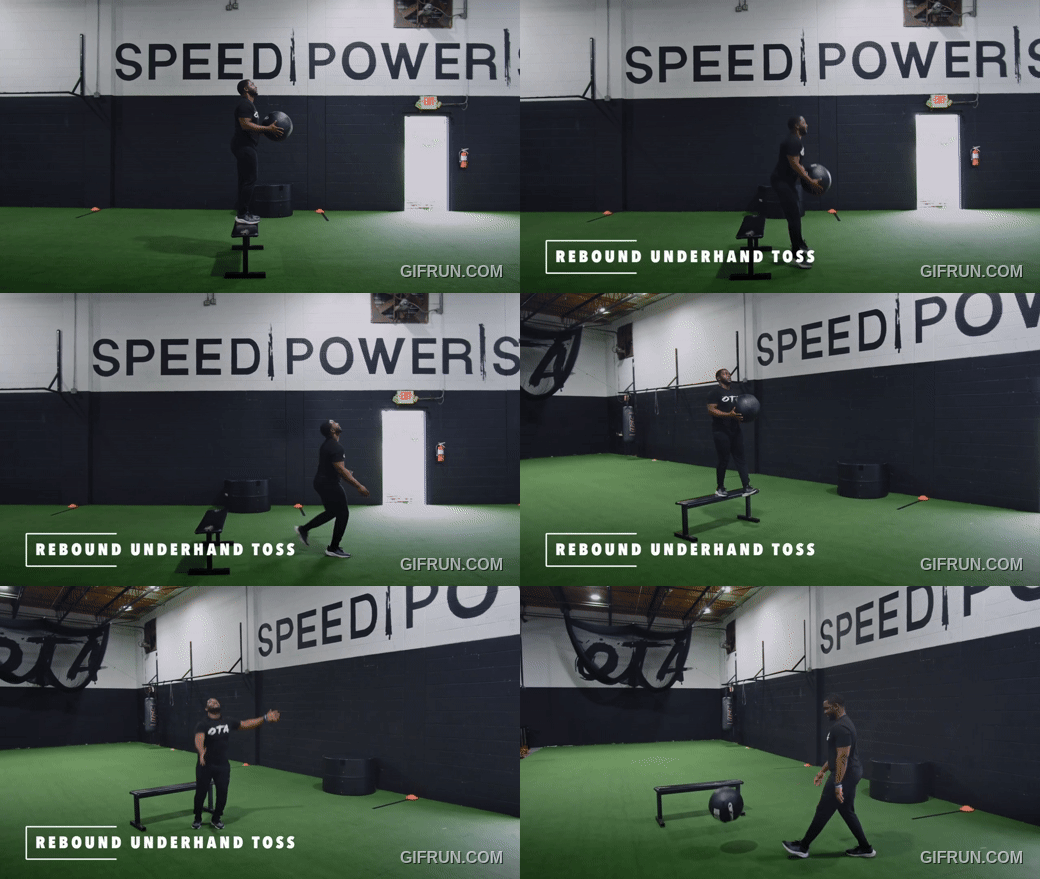
This is an excellent exercise for developing reactive strength and improving your ability to rapidly produce force through the lower body.
Start by holding a medicine ball with both hands in front of your hips. Quickly drop from a box or bench into a partial squat, then explosively extend your hips, knees, and ankles while throwing the medicine ball vertically overhead.
The objective is to minimize the time spent on the ground into the throw while maintaining high levels of force production.
This exercise emphasizes the stretch-shortening cycle, which is an important component of jumping performance.
When you jump, your muscles and tendons rapidly absorb and redirect force. The more efficiently you can utilize this process, the better your ability to produce explosive movements.
Rebound medicine ball vertical tosses train this rapid transition between eccentric loading and concentric force production.
How to Incorporate These Exercises Into Your Vertical Jump Training
The biggest mistake athletes make is treating these exercises like conditioning workouts. These are power-development exercises, and they should be performed when you’re fresh.
You want maximum intent, high-quality repetitions, and adequate recovery between sets. More fatigue doesn’t necessarily mean more power development.
Incorporate these exercises into a structured lower-body training program alongside progressive strength training, sprinting, and other appropriately programmed plyometrics.
Remember, improving your vertical jump takes time. You need to progressively develop strength, improve rate of force development, and teach your nervous system to produce force more efficiently.
Final Thoughts: Stop Guessing and Start Training to Jump Higher
If you’ve been stuck with the same vertical jump for months, it’s time to take a different approach.
You don’t need another random collection of jumping exercises. You need a structured program that develops the physical qualities responsible for explosive jumping.
Start by building extremely strong legs. Develop your ability to produce force quickly. Then incorporate explosive plyometrics that challenge your reactive strength and power output.
These three exercises are excellent additions to your training, but the real difference comes from consistently following a progressive program designed to improve your vertical jump.
If you’re serious about jumping higher, dunking, becoming more dominant at the net, and developing the explosiveness needed to compete at the next level, check out our Elite Vertical Academy.
Our program is designed to help athletes systematically develop lower-body strength, explosive power, reactive strength, and vertical jump performance.
Stop wasting time guessing what exercises to do. Start following a proven system designed to help you become a more explosive athlete.
