
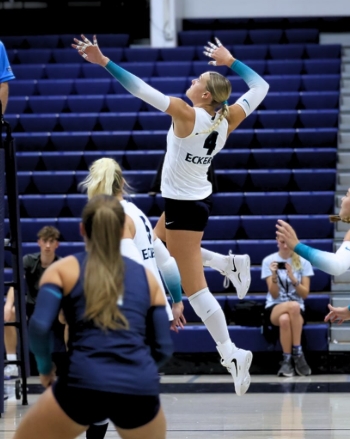
Volleyball Training for a Higher Vertical: The Ultimate Guide to Elite Jumping Ability
Volleyball is one of the most explosive sports on the planet. Every rally demands rapid acceleration, hard deceleration, powerful jumping, and repeated landing. A volleyball athlete may jump dozens of times in a single match, depending on position and playing style, and every one of those jumps creates another high-force landing that the muscles, tendons, and joints have to absorb.
That is why developing a higher vertical jump isn’t just about being able to touch a higher point on the net. A higher vertical can completely change a volleyball athlete’s game. It can help an outside hitter attack over a higher contact point, allow a middle blocker to close blocks faster, and give an athlete more options when attacking, blocking, and competing at the net.
But here’s the problem: simply playing more volleyball isn’t necessarily the answer.
The best volleyball training programs build the physical qualities that allow an athlete to repeatedly produce and absorb force. If you want an elite vertical jump, you need a progression that develops strength first, teaches your body to absorb force, and then teaches you to express that force explosively.
Why Volleyball Players Need More Than Just Volleyball
For years, many volleyball athletes seemed to follow a simple philosophy: if you want to become better at volleyball, just play more volleyball.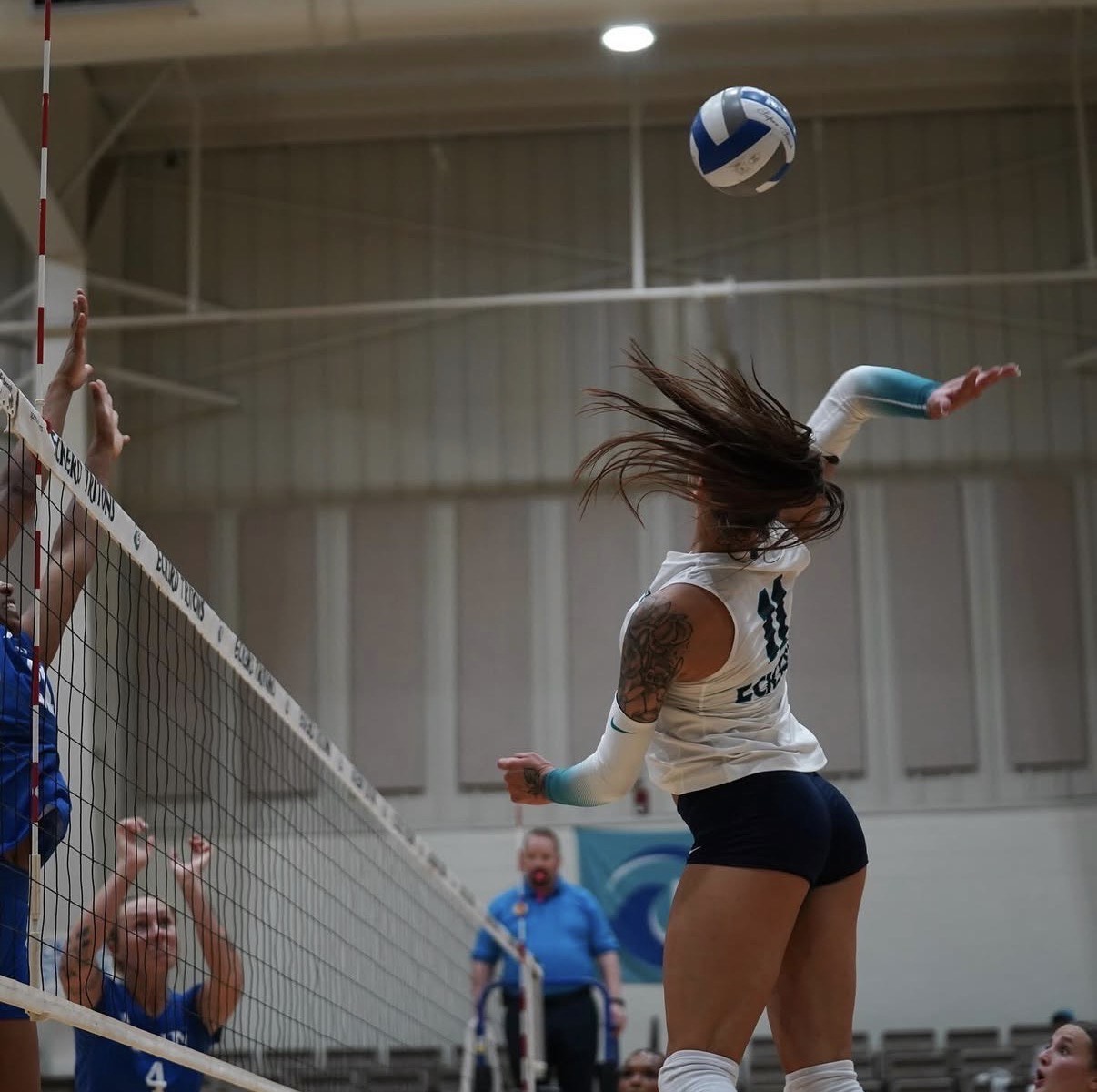
More reps, practices, tournaments, and jumping.
The problem is that this approach eventually runs into a wall.
Playing volleyball certainly develops technical skill and sport-specific ability, but it doesn’t replace a properly designed strength and performance program. In fact, adding more and more volleyball without developing the physical qualities required to tolerate that workload can contribute to overuse problems and performance plateaus.
Thankfully, we’re seeing more volleyball athletes recognize the importance of serious strength and conditioning.
That’s a major shift.
Elite volleyball training should complement the sport.
If you want to jump higher, you need to build the physical engine that makes a higher jump possible. Check out our previous article on how to program for elite vertical power here!
Step 1: Build Serious Lower-Body Strength
Before you worry about complicated plyometrics or advanced jump exercises, you need to build a strong lower body.
Think of strength as your foundation.
Your ability to jump comes from your ability to produce force into the ground. Your ability to land comes from your ability to absorb that force.
Without sufficient strength, you’re trying to build explosive power on top of a weak foundation.
This is why the first phase of effective volleyball training should emphasize developing serious lower-body strength.
Exercises such as:
- Squats
- Split squats
- Romanian deadlifts
- Rear-foot elevated split squats
- Lunges
- Step-ups
can all play a role in developing the strength volleyball athletes need.
But strength training isn’t about simply chasing the biggest number on the bar.
The goal is to build usable athletic strength.
Volleyball players need strong quads, glutes, hamstrings, calves, and feet that can produce and absorb force repeatedly throughout a match.
And don’t overlook single-leg training.
Volleyball isn’t performed exclusively from a perfectly symmetrical two-leg position. Athletes approach, jump, land, move laterally, and react from different positions constantly. Developing unilateral strength gives you another tool for producing force and controlling your body. Go check out our article on the best plyometric exercises for volleyball!
Step 2: Train Deceleration and Force Absorption
Here’s something many volleyball athletes don’t think about enough: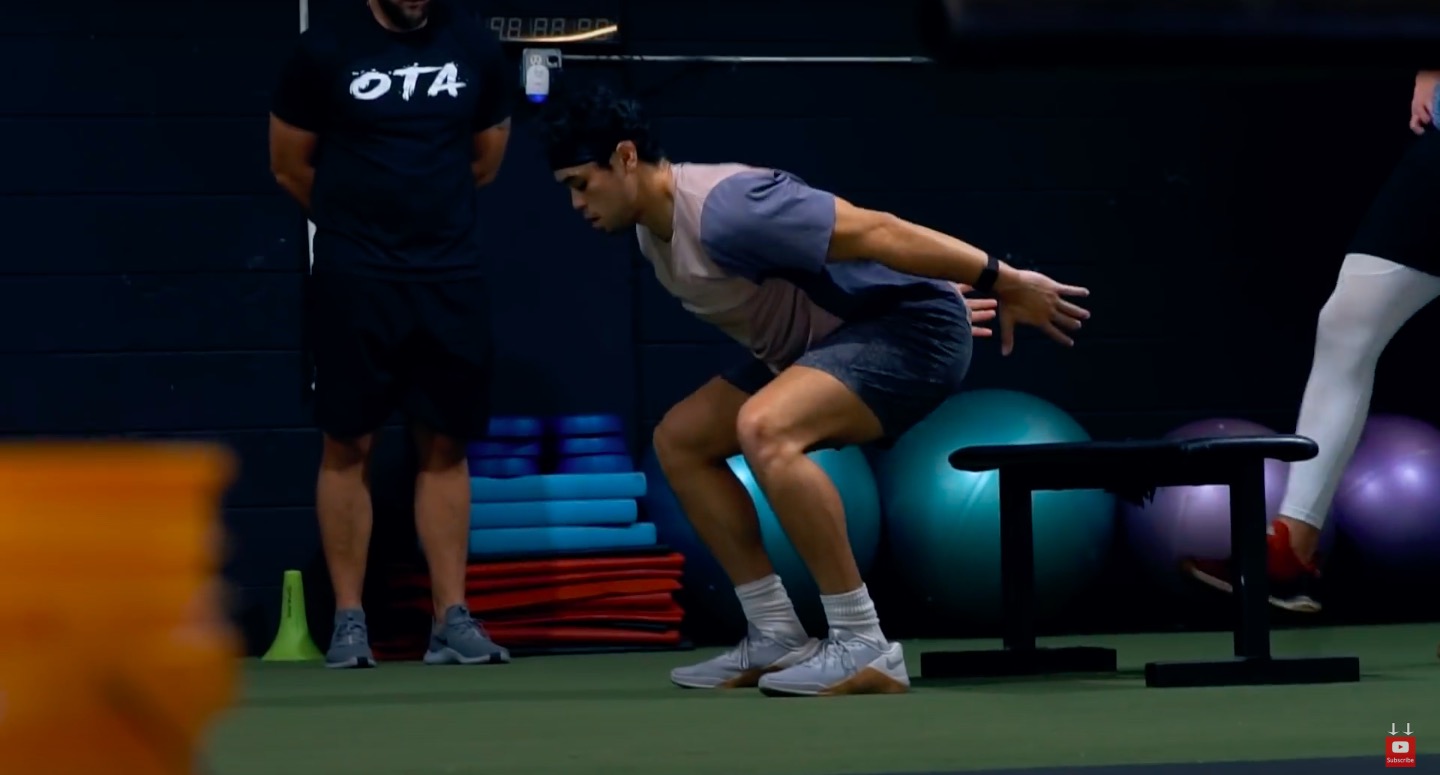
Jumping is only half of the equation.
You also have to come back down.
Every time you jump, gravity brings you back toward the floor. Your body has to absorb that force and stabilize the landing.
This is where deceleration and force absorption become critical.
It doesn’t matter how high you can jump if you can’t land strong and stable.
In fact, for a volleyball athlete, the ability to control your landing may be just as important as your ability to produce the jump itself.
A high-quality volleyball training program needs to teach athletes how to:
- Control their center of mass
- Absorb force through the hips, knees, and ankles
- Maintain proper alignment
- Stabilize after landing
- Decelerate efficiently
- Repeatedly tolerate high landing forces
This is why we like exercises such as depth drops and jump-to-stick variations.
Start with a relatively low box and step off, landing in an athletic position. The goal isn’t to make the exercise flashy.
The goal is to own the landing.
You can then progress into different jump variations where the athlete focuses on sticking the landing—vertical jumps, broad jumps, lateral jumps, single-leg variations, and other controlled landing drills.
The athlete should learn to go from:
Force to absorption to stability.
That’s a skill.
And just like jumping, it needs to be trained. Make sure you also read our article on volleyball training for in season performance.
Step 3: Develop Maximum Force Production
Once you’ve developed a strong lower body and taught yourself how to absorb force, it’s time to teach your body how to express force at maximum intent.
This is where jumping becomes the priority.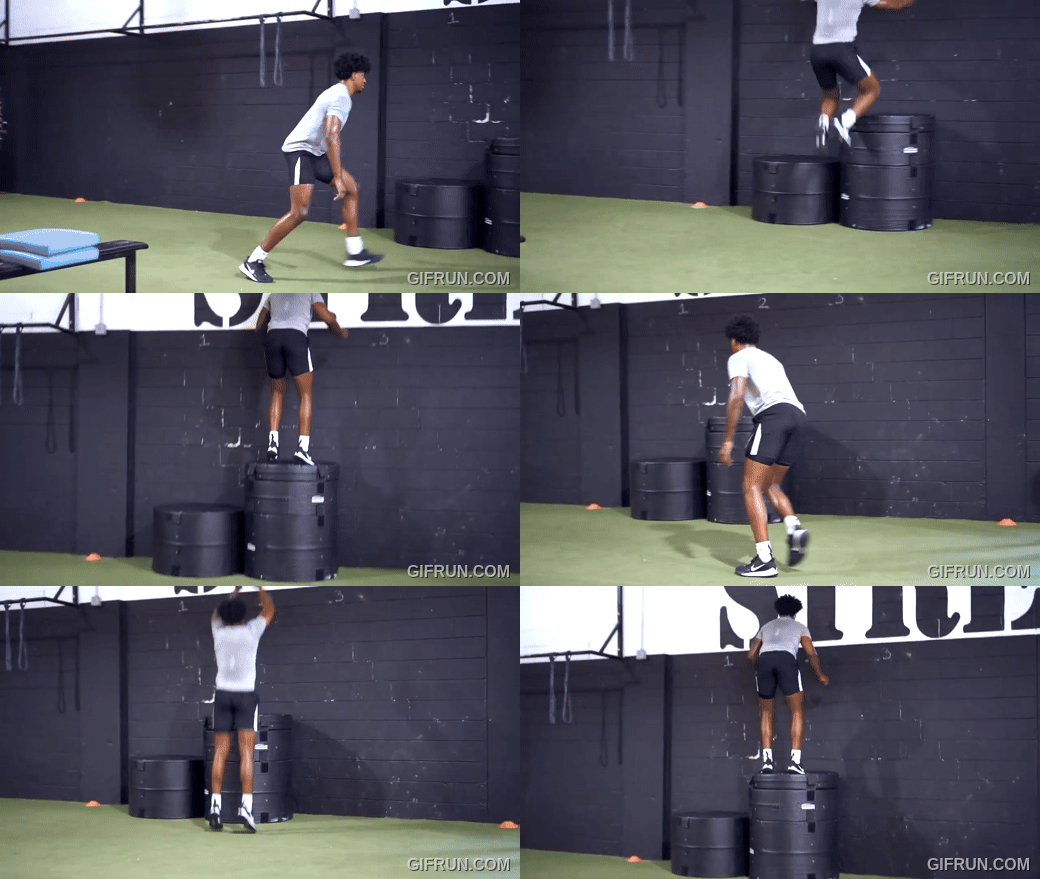
The goal isn’t to perform endless repetitions until you’re exhausted.
The goal is to produce high-quality, high-intensity efforts.
When you’re training for a higher vertical, every rep should have a purpose.
Exercises we like for developing vertical force include:
Approach Jumps
Approach jumps are extremely important because they allow volleyball athletes to practice producing vertical force in a movement pattern that resembles what they actually do during competition.
The approach creates horizontal momentum that the athlete must redirect into vertical force.
That’s a critical skill for hitters.
Vertical Medicine Ball Tosses
Vertical medicine ball throws allow athletes to express explosive force without the same landing demands associated with repeated maximal jumps.
They’re an excellent way to train aggressive extension through the hips, knees, and ankles.
Rebound Jumps
Rebound jumps teach athletes to quickly transition from landing into another explosive movement.
These can help develop reactive ability and the capacity to produce force quickly.
The key with all of these exercises is intent.
Don’t jump halfway.
Don’t train explosiveness slowly.
When the program calls for a maximal jump, attack the ground and jump with maximum intent.
That’s what high-level volleyball training should look like.
The Complete Vertical Jump Formula for Volleyball
If you want to develop an elite vertical for volleyball, don’t make the mistake of looking for one magical exercise.
There isn’t one.
Your program needs to develop the entire system.
Think of it as:
1. Strength
2. Force Absorption
3. Explosive Force Production
First, build the strength to produce and tolerate force.
Then, teach your body how to absorb and control force.
Finally, teach yourself how to express that force as quickly and violently as possible.
That’s the foundation of intelligent volleyball training.
And you don’t need to jump hundreds of times every week to get better.
In fact, more isn’t always better.
High-quality explosive training requires appropriate volume, recovery, and progression. Your goal should be to get more powerful, not simply more tired.
Final Thoughts
If you want to become an elite volleyball athlete, you need to stop thinking that playing more volleyball is the only way to improve.
Skill matters.
Technique matters.
But your physical abilities determine how much of that skill you can express on the court.
A stronger athlete can produce more force.
A better-trained athlete can absorb more force.
A more explosive athlete can turn that strength into a higher jump.
That’s why the best volleyball training programs don’t just make athletes stronger. They build the complete physical qualities required to jump higher, move better, land safely, and perform repeatedly.
If you’re serious about adding inches to your vertical and becoming a more explosive volleyball athlete, you need a structured plan, not random jump workouts.
Ready to Jump Higher?
Elite Vertical Academy was built to help athletes develop the strength, power, explosiveness, and jumping ability necessary to take their performance to another level.
Stop guessing.
Stop doing endless random jumps.
Start following a proven progression designed to help you become more explosive.

