

Why Tennis Training Needs to Include Heavy Lifting: Get Stronger, Faster, and More Explosive
Tennis is a game of skill, speed, reaction, and endurance. But underneath all of it is one physical quality that often gets overlooked: strength.
You can have a great serve, a nasty forehand, and excellent footwork—but if you can’t produce and absorb force at a high level, you’re leaving performance on the table.
That’s why serious tennis players need more than hitting sessions, conditioning, and endless tennis-specific drills. They need a **consistent strength training plan** designed to build the physical qualities that allow them to move faster, hit harder, change direction more efficiently, and compete at a high level throughout an entire match.
And when we’re talking about strength training, we’re not talking about doing a few light exercises with bands before practice.
We’re talking about getting strong. If you want to learn about upper body strength that can help with tennis, go check out our article on the best shoulder exercises for building upper body power!

Why Tennis Players Need Consistent Strength Training
One of the biggest mistakes athletes make is treating strength training like something they do when they have extra time.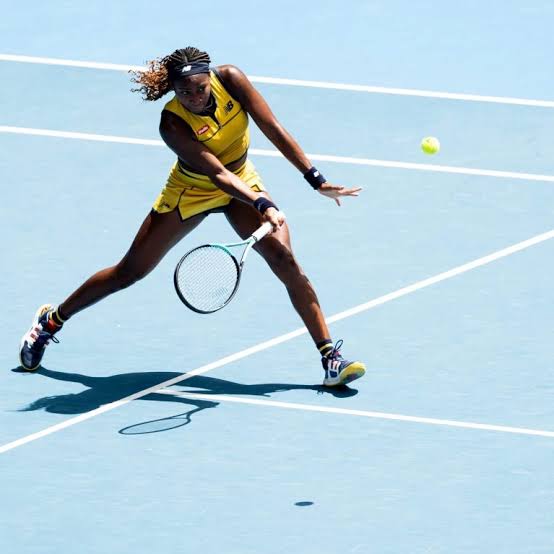
They’ll lift for a few weeks, stop during tournaments, start again in the offseason, and repeat the cycle.
That’s not a training system.
Strength is a physical quality that needs to be developed and maintained over time. A well-designed strength program gives the athlete a progressive stimulus, allowing them to gradually increase their ability to produce and absorb force.
For tennis players, that means building the foundation that supports everything else.
The goal isn’t to become a powerlifter.
The goal is to build the strength necessary to become a better tennis athlete.
Here are the top three reasons strength training should be a staple of your tennis training program.
1. More Strength = More Power
Tennis is filled with explosive actions.
Every serve, groundstroke, approach, acceleration, and change of direction requires you to produce force quickly.
Heavy strength training helps increase your ability to produce force. Once you have a stronger athlete, you have a greater physical foundation from which to develop power.
Think about your serve.
Your legs drive into the ground, hips and trunk transfer force, and shoulder and arm accelerate the racket. The entire body has to work together to transfer force efficiently into the ball.
The same concept applies to your groundstrokes.
A stronger lower body and trunk give you a better foundation to produce force into the court and transfer it through the kinetic chain.
Strength doesn’t automatically make you powerful, but it gives you the horsepower to become more powerful.
That’s where progressive strength training, plyometrics, medicine ball work, and explosive movements come together.
Build the engine first. Then teach the athlete how to use it fast.
2. Get Faster and More Explosive Around the Court
Tennis isn’t just about running.
It’s about accelerating, stopping, cutting, and reaccelerating.
You may only have a fraction of a second to react to a shot and get your body into position.
That requires an athlete who can rapidly produce force into the ground.
Heavy strength training can improve the foundation needed for acceleration and deceleration. Stronger legs and hips allow athletes to produce more force when pushing off, while also giving them greater capacity to absorb force when braking.
This is especially important for lateral movement.
The ability to plant, stop, redirect, and explode toward the next ball is a major part of tennis performance.
And here’s the key:
You don’t train game speed by simply doing more running.
You develop the physical qualities that allow you to express speed.
That’s why a complete tennis training program should combine strength development with acceleration, plyometrics, change-of-direction work, and reactive movement.
3. Build a More Durable Athlete
Tennis places a tremendous amount of repetitive stress on the body.
Hundreds of serves. Thousands of groundstrokes. Constant starts and stops. Repeated lunges. Repeated rotation.
The answer isn’t to avoid those stresses.
The answer is to build an athlete who is prepared to handle them.
Consistent strength training helps develop the muscles, tendons, joints, and connective tissues needed to produce and absorb force.
A stronger athlete can be better prepared for the demands of competition because they’re not starting from a position of weakness.
This is also why strength training shouldn’t disappear once tennis season starts.
In-season training may need to be adjusted based on match and practice demands, but completely eliminating strength work can allow important physical qualities to decline.
The best athletes don’t stop training because they’re in season.
They adjust their training so they can continue developing while managing fatigue.
Strength Training Should Support Your Tennis—Not Compete With It
This is where good programming matters.
Tennis players don’t need to walk into the gym and destroy themselves with random workouts.
They need a structured plan.
Strength training should be programmed around the athlete’s age, training experience, competition schedule, and current physical demands. Volume, intensity, exercise selection, and recovery all need to be considered.
The goal is simple:
Make the athlete better without taking away from the sport.
That means building strength progressively while also developing speed, power, mobility, elasticity, and movement quality.
Don’t chase soreness, random exercises, or train just to say you worked hard.
Train with a purpose.
Final Thoughts
If you’re serious about improving your tennis performance, strength training shouldn’t be an afterthought.
You don’t need to choose between being a strong athlete and being a skilled tennis player.
You need both.
Strength gives you the foundation to produce more force. More force gives you the potential for more power and explosiveness. Better force production and absorption can help you accelerate, decelerate, change direction, and handle the physical demands of competition.
That’s why tennis training needs to include heavy lifting.
Build the strength. Develop the power. Train the speed.
Then take those physical qualities onto the court.
If you’re a serious athlete who wants to become faster, more explosive, and harder to beat, our Game Speed Reloaded program is built to help you develop the physical qualities that translate to your sport.
Improve agility and change of direction speed while following a consistent strength training program!
