
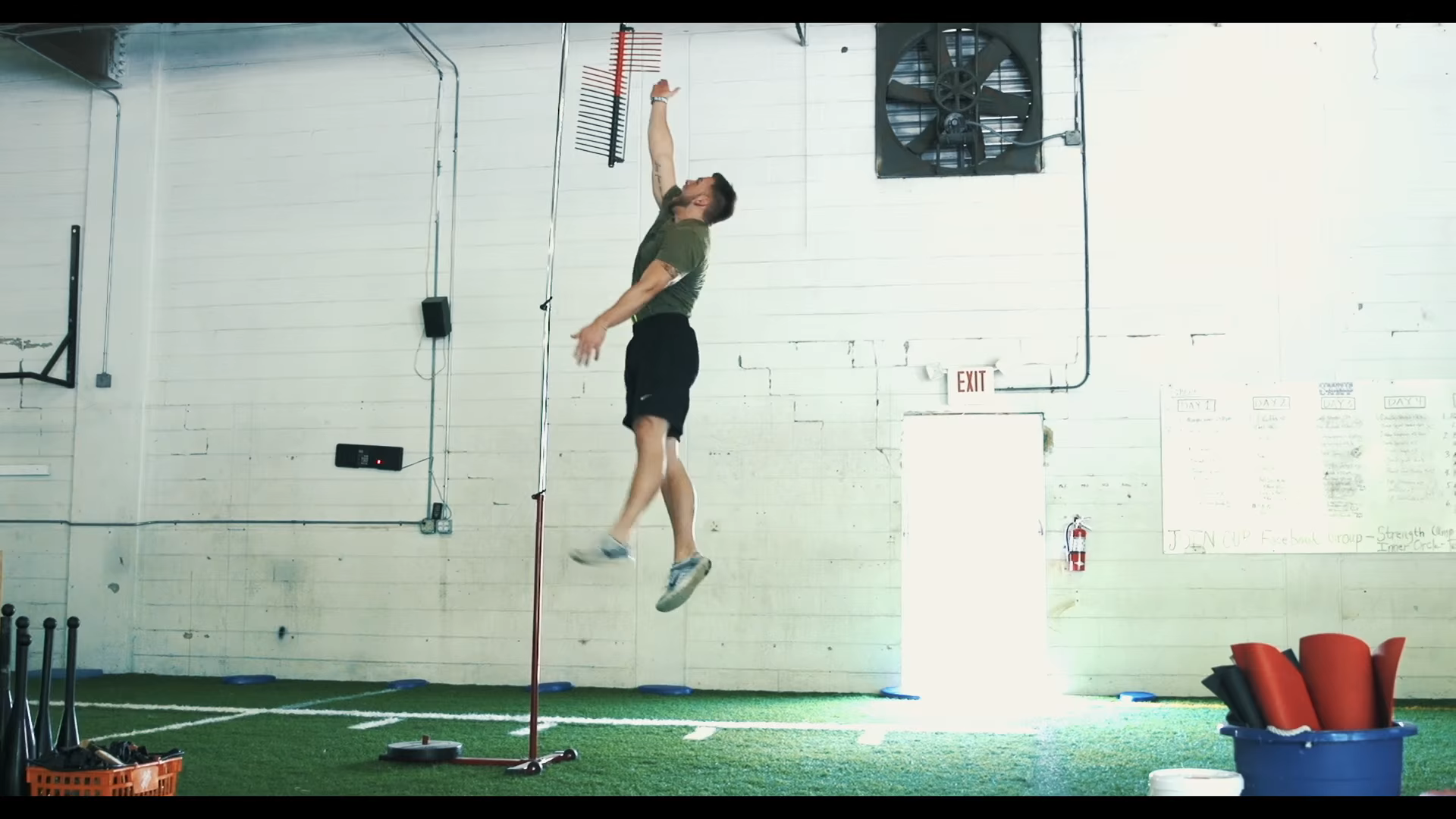
Best Single Leg Exercises to Increase Vertical Jump for Athletes
If you want to jump higher, move faster, and dominate your sport, you can’t ignore single leg exercises.
Because here’s the truth most athletes miss:
You don’t always jump off two legs evenly—most of the time you produce force one leg at a time.
Whether you’re taking off for a dunk, exploding into a sprint, or changing direction, your ability to create force through each leg individually is what separates average athletes from elite ones.
It’s no secret that we believe vertical is king. Meaning, if you can increase an athletes vertical, they’ll definitely improve in any other metric. Also, check out our previous article on the five best plyometrics for increasing vertical jump!
Lets get into it!
Why Single Leg Strength Key to Your Vertical Jump
Most athletes think vertical jump is all about plyos. And yeah—plyos matter.
But if you don’t have the strength foundation, you’re leaving inches on the table.
The best jumpers in the world aren’t just “bouncy”—they produce massive amounts of force relative to their bodyweight.
That’s the real game.
And where does that come from?
Strength training—especially single leg strength.
When you improve the total force one leg can produce, you directly improve how much vertical force you can apply into the ground.
And vertical jump is simple:
More force into the ground = more height off the ground.
The Force Problem Most Athletes Have
Here’s what I see all the time working with athletes:
- One leg is stronger than the other
- Poor balance and stability
- Weak hip control
- Lack of force production on takeoff
That’s a problem.
Because your body will always default to the path of least resistance. If one leg is weaker, you’ll compensate—and that kills power, efficiency, and performance.
Single leg training fixes that.
It builds:
- Unilateral strength
- Stability and control
- Force production per limb
- Injury resilience
And all of that transfers directly to your vertical.
The Best Single Leg Exercises to Increase Vertical Jump
1. Single Leg Trap Bar Deadlift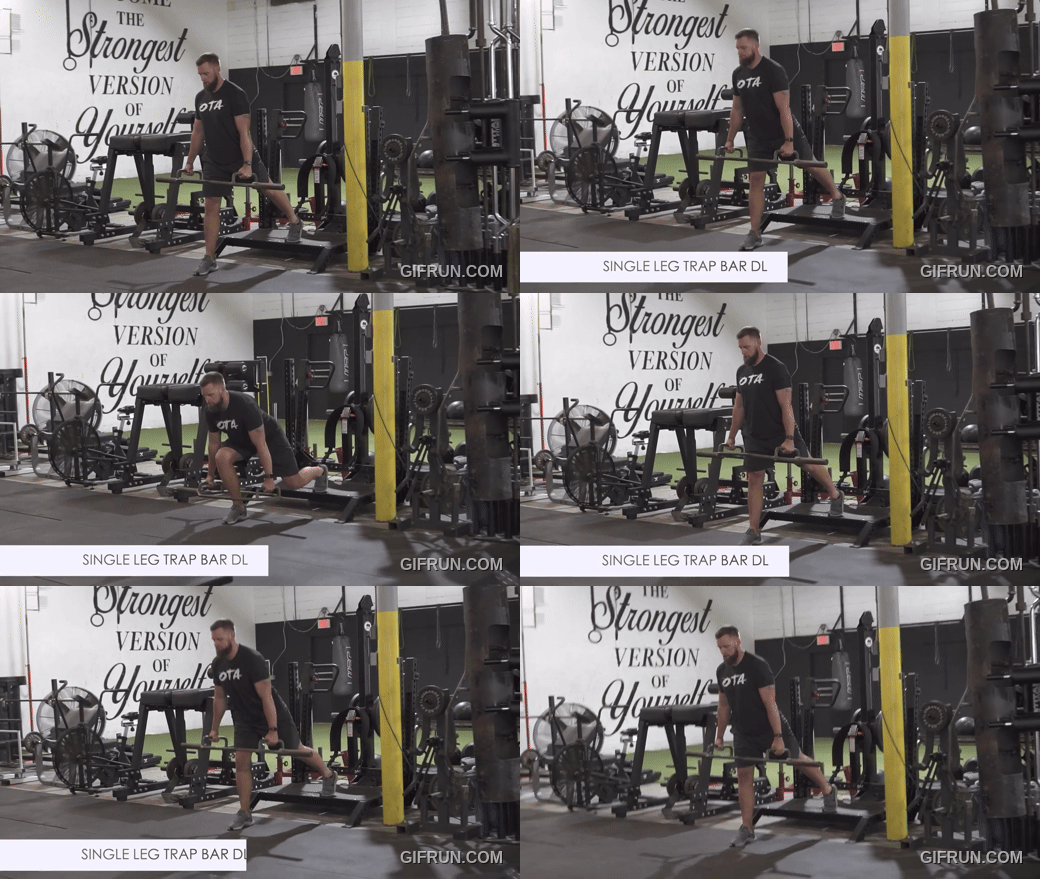

This is one of the most underrated exercises for building pure force production.
You’re loading one leg while keeping the movement stable with the trap bar—allowing you to go heavier than most single leg variations.
Why it works:
- Builds max strength per leg
- Trains hip extension (key for jumping)
- Improves balance under load
If you want to produce more force into the ground, this is a must.
2. Bulgarian Split Squat
This is a staple—and for good reason.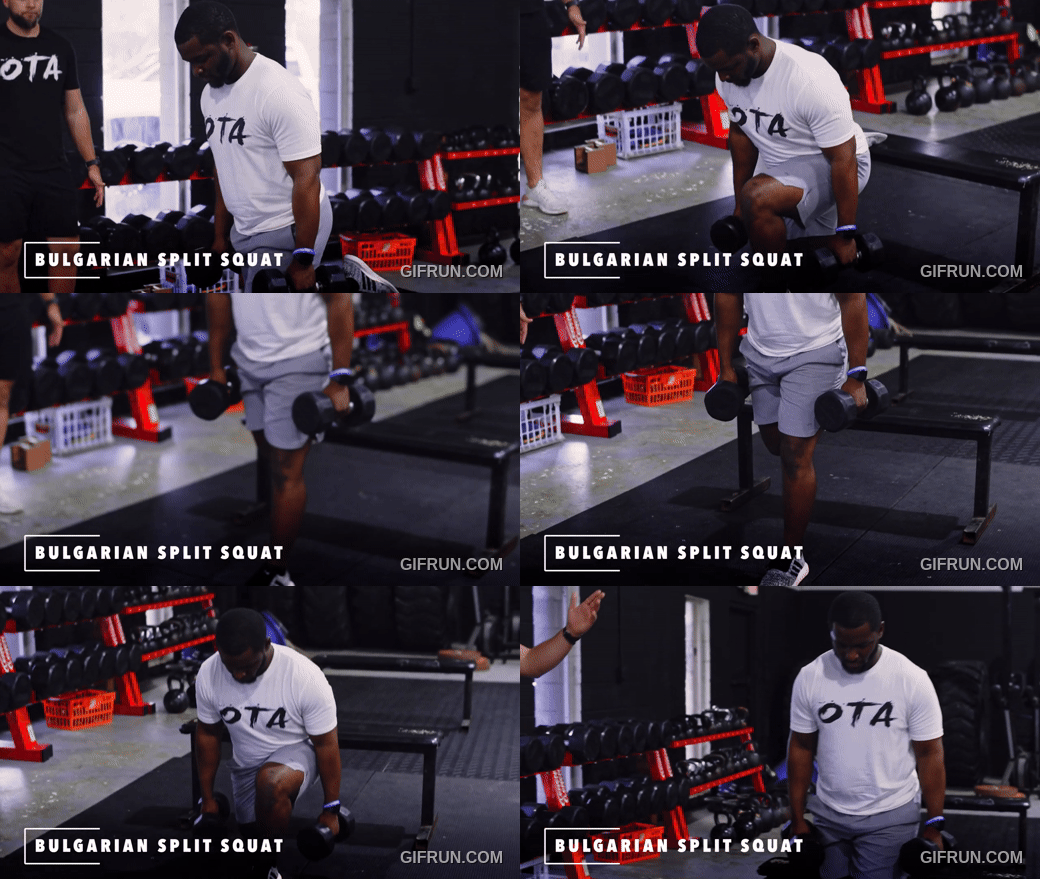
The Bulgarian split squat builds quad strength, glute power, and stability all in one.
Why it works:
- Increases unilateral leg strength
- Forces stability through full range
- Transfers directly to takeoff
If you’re serious about your vertical, this needs to be in your program.
3. Barbell Step-Ups
This is one of the most sport-specific single leg exercises you can do.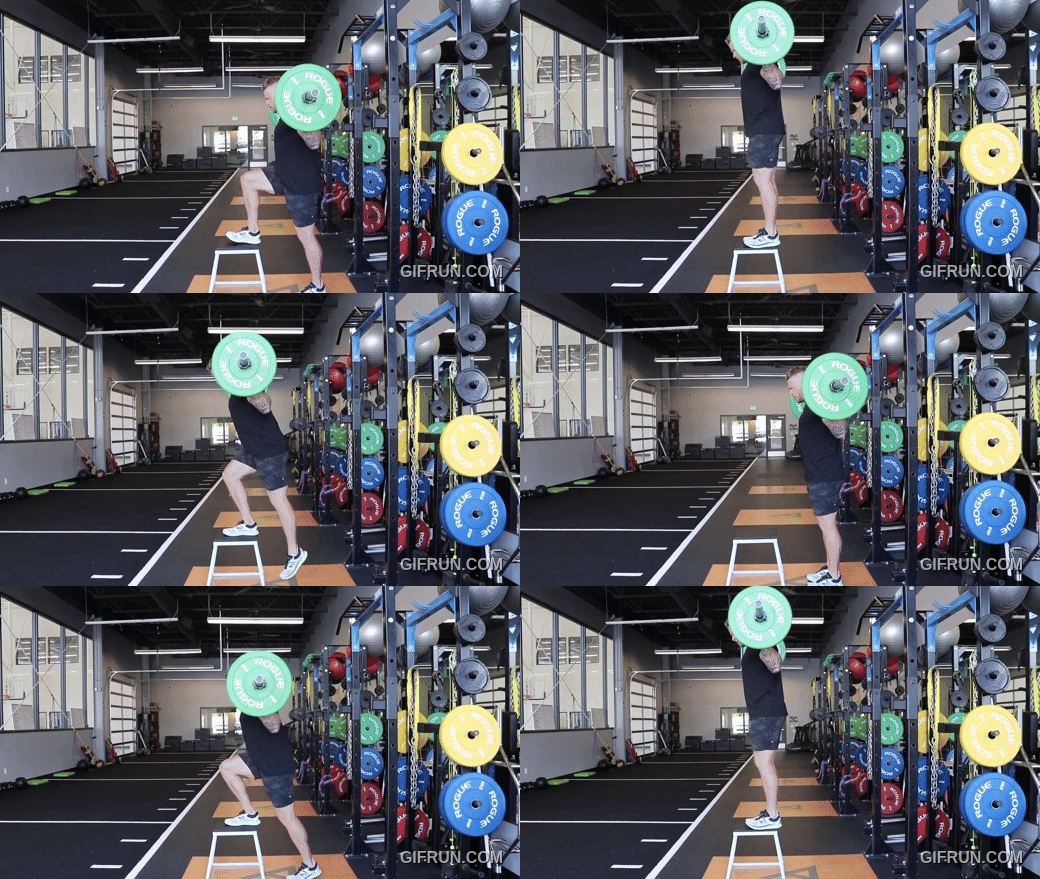
Think about it—you’re literally training the same pattern as a jump takeoff.
Why it works:
- Trains force production in a vertical direction
- Reinforces knee drive mechanics
- Builds power through a full step pattern
Pro tip: Control the way down. Don’t just drop.
4. Front Rack Barbell Split Squats
Now we’re leveling up.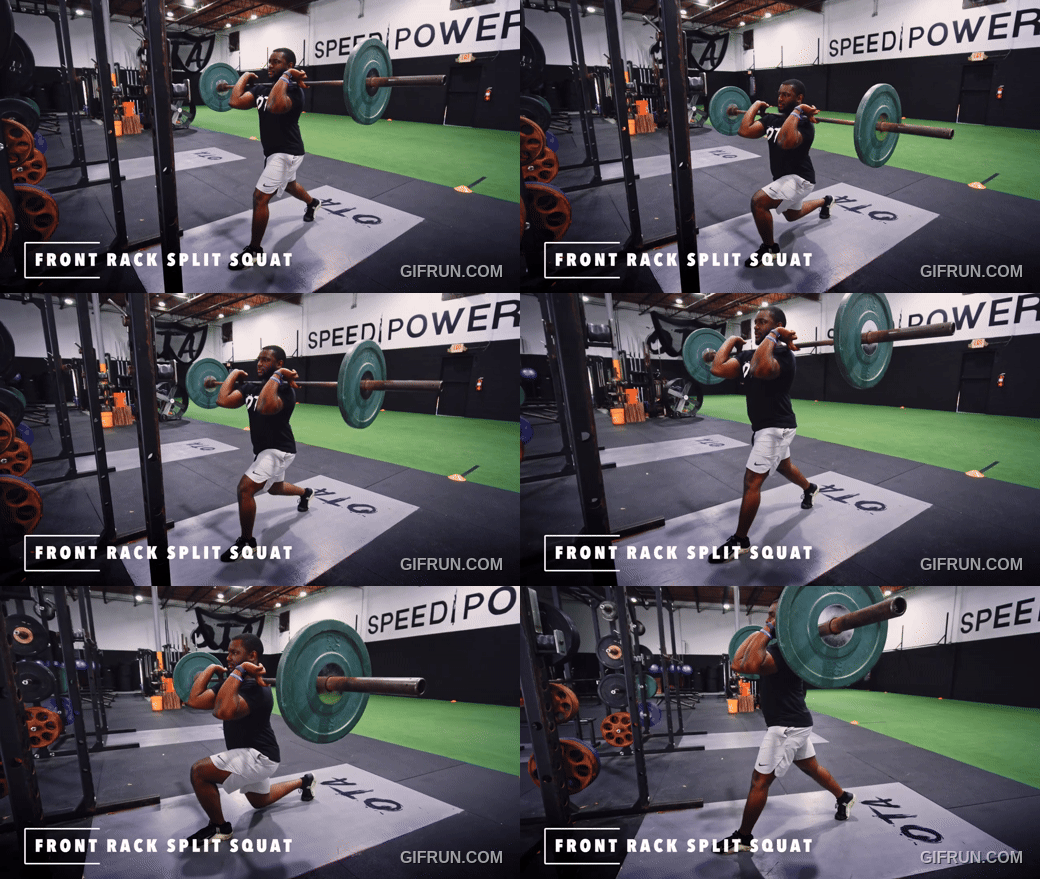
Holding the barbell in the front rack forces:
- Core stability
- Upright posture
- Better force transfer
Why it works:
- Builds strength in a more athletic position
- Challenges your core and balance
- Improves coordination under load
This is huge for athletes who fold forward or lose posture on takeoff.
5. Staggered Barbell/Dumbbell RDLs
If you can’t hinge, you can’t jump.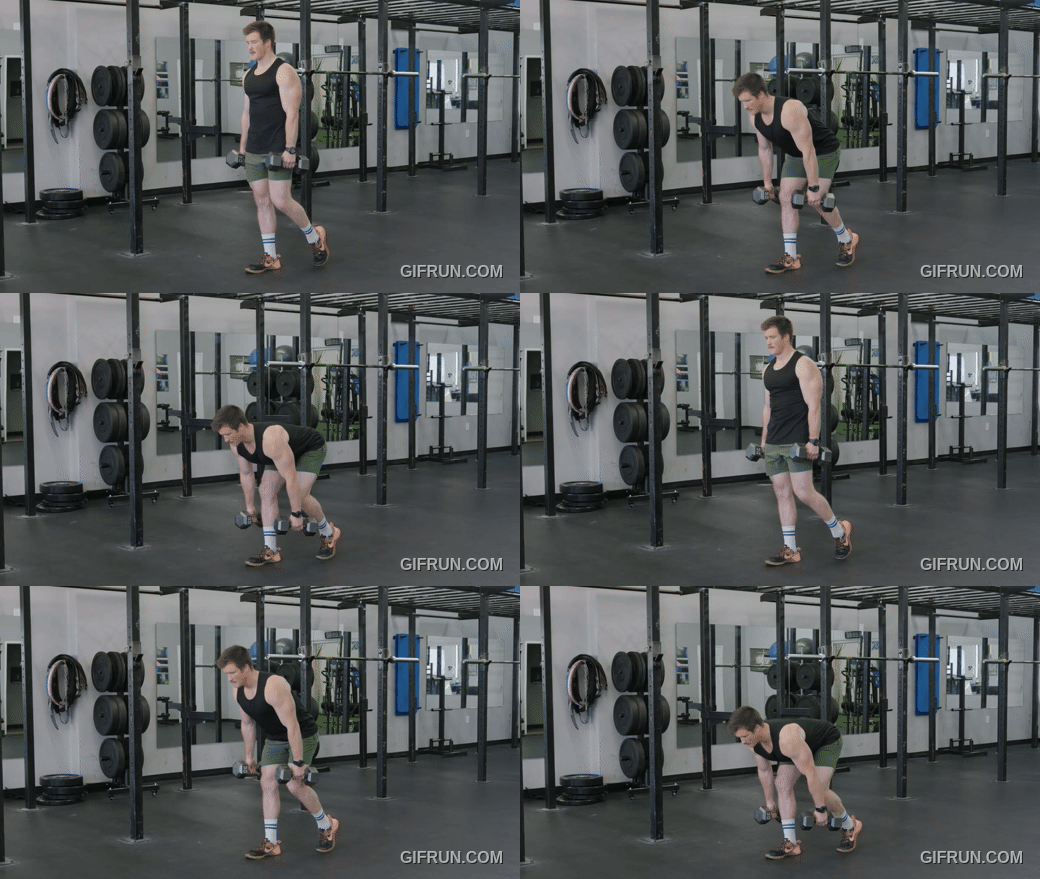
The staggered RDL is perfect for training the posterior chain while still focusing on one leg.
Why it works:
- Builds glutes and hamstrings (your engine for jumping)
- Improves hip hinge mechanics
- Develops control and balance
Explosive and powerful athletes have strong and powerful posterior chains.
How This All Carries Over to Your Vertical
Let’s connect the dots.
When you:
- Increase single leg strength
- Improve force output per leg
- Build better stability and control
You create a stronger, more efficient system.
And that system produces more force into the ground, faster force production, and higher vertical jumps
This is why the best athletes in the world aren’t just doing plyos all day—they’re getting really strong.
Final Thoughts
If your goal is to increase your vertical jump, stop skipping single leg work.
This is where a lot of gains can happen.
Build your foundation. Fix imbalances. Increase force output per leg.
Because at the end of the day, your vertical isn’t just about how fast you move—
It’s about how much force you can produce and how efficiently you apply it.
Ready to Take Your Vertical to the Next Level?
If you’re serious about adding inches to your vertical, you need more than random workouts—you need a system.
That’s exactly what we built inside the Elite Vertical Academy.
👉 Structured strength training
👉 Explosive plyometrics
👉 Proven progressions used by real athletes
If you’re ready to jump higher, move better, and unlock your full athletic potential…
Click the image below to join the Elite Vertical Academy today!
