The Role of Plyometric Training for Athletes
If you’ve been around high school sports long enough, you’ve seen the same strength and conditioning model repeated over and over again. Lift heavy. Get bigger. Get stronger. Then finish workouts with something labeled as “speed,” which usually ends up being nothing more than conditioning—gassers, sled pushes to exhaustion, or endless sprints done while already fatigued.
As an experienced coach who has trained athletes for years, I can tell you flat out: that approach leaves a massive amount of athletic potential on the table. Strength matters. Weightlifting matters. But weightlifting alone does not make an athlete fast, explosive, or agile.
That missing link is plyometric training for athletes.
Unfortunately, many parents and coaches are still old school. They don’t truly understand plyometrics, why they matter, or how to properly program them. So athletes end up strong in the weight room but slow, stiff, and unreactive on the field.

Heavy Lifting Alone Doesn’t Equal Athleticism
Here’s the reality most people don’t want to admit: you can be muscular and strong and still be a poor athlete.

I know this firsthand. Earlier in my training career, I was bigger and stronger than I had ever been when I was starting college football. Preparing to play defensive end, I weighed 240 and was able to bench 325. My lifts were up across the board. I had muscle mass.
But I wasn’t an athlete.
I had no real speed, no agility, and no true athletic explosiveness. Couldn’t express my strength quickly and couldn’t change direction efficiently. Everything I did felt heavy and slow.
That all changed when I truly committed to plyometric training and followed a structured vertical jump program. Over time, my vertical jump increased from 27 inches to 36 inches in about 6 months. Yes, I lost some mass. Yes, I even lost some maximal strength.
But I became a far better athlete.
I was faster, more reactive, more explosive, and far more prepared for real sport demands. Yes, it was after my football playing days was over, but that experience completely reshaped how I train athletes today.
The Problem With “Speed Training” in High School Programs
A huge issue in high school programs is that “speed training” is misunderstood.
True speed training requires high intent, low fatigue, and adequate rest.
What most athletes actually get is:
- Conditioning disguised as speed
- Sprinting while exhausted, which carries over to terrible mechanics
- No focus on ground contact time
- No focus on elastic qualities
This is where plyometric training for athletes should live—but doesn’t.
Plyometrics aren’t conditioning. They’re not jump-until-you’re-tired workouts. They are a highly specific method designed to teach the body how to produce force quickly and efficiently.
Where Plyometric Training Comes From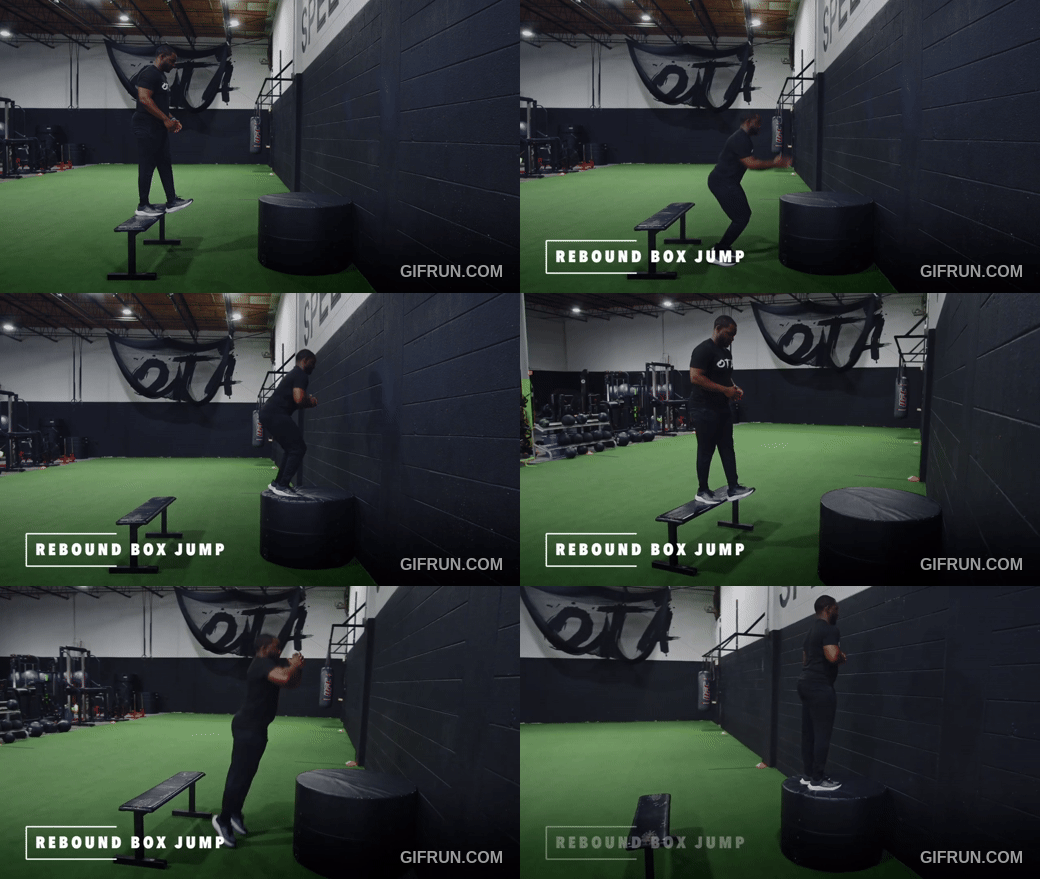

Plyometric training originated from the “shock method,” coined by Soviet scientist Yuri Verkhoshansky in the 1960s. This method focused on exposing the neuromuscular system to high-speed eccentric loading followed by an immediate concentric action.
In simple terms:
- Absorb force fast
- Reverse it faster
- Produce more power with less time on the ground
This method became a cornerstone of elite athletic performance long before it ever trickled down into mainstream training. Today, it remains one of the most effective ways to bridge the gap between strength and on-field performance.
Please check out our previous article on the best plyometrics for football athletes!
Why Plyometric Training for Athletes Is the Missing Link
Most high school athletes are doing two things:
- Lifting weights
- Playing their sport
That’s it.
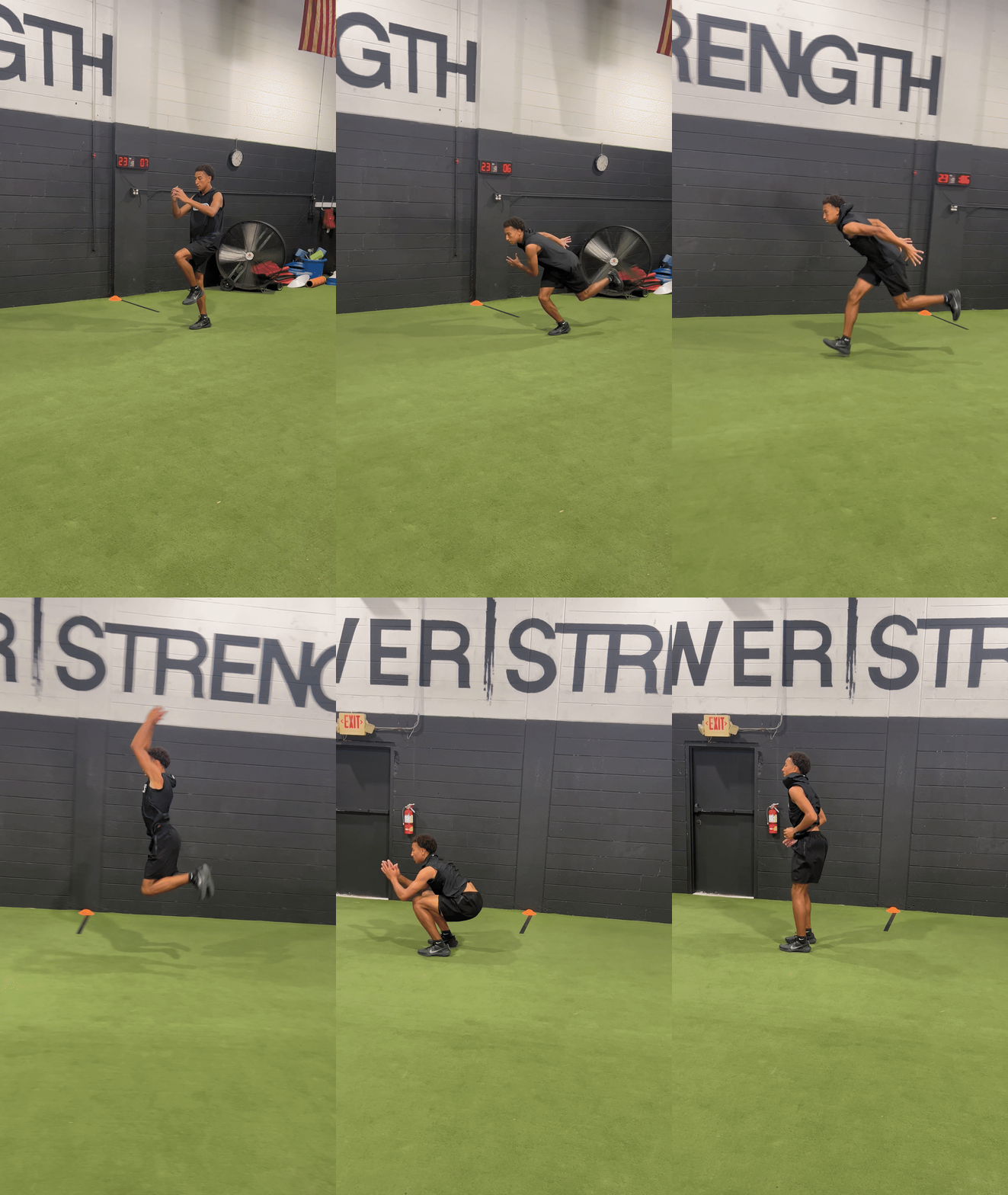
While both are important, neither fully develops explosive athleticism. Plyometrics are what connect the weight room to game speed. They teach athletes how to use the strength they already have.
Below are three major benefits of plyometric training for athletes that every parent and coach should understand.
1. Improves Rate of Force Development (RFD)
Rate of Force Development is how quickly an athlete can produce force. In sports, this is everything.
Athletes don’t have time to grind out strength. Sprinting, jumping, cutting, and reacting all happen in fractions of a second. Ground contact times are incredibly short.
Plyometric training for athletes:
- Reduces ground contact time
- Improves acceleration and top-end speed
- Enhances change of direction ability
An athlete who can apply force faster will almost always outperform a stronger athlete who applies force slowly. Plyometrics teach the nervous system to fire quickly and efficiently.
2. Improves the Stretch-Shortening Cycle
The stretch-shortening cycle (SSC) is the athlete’s ability to:
- Absorb force eccentrically
- Store elastic energy in the tendons
- Rapidly redirect that energy concentrically
This is what allows athletes to jump repeatedly, sprint efficiently, and move explosively with less fatigue.
Proper plyometric training for athletes improves their tendon stiffness and allows repeated explosive efforts.
When the SSC is trained correctly, athletes feel “bouncy” instead of heavy. They move with rhythm, coordination, and efficiency, qualities that weightlifting alone cannot provide.
3. Builds Braking Ability and Injury Resilience
One of the most overlooked benefits of plyometric training for athletes is injury resilience.
Most non-contact injuries happen when planting, cutting, landing, and decelerating.
Plyometrics condition the tendons, joints, and connective tissue to tolerate high-speed forces. Athletes learn how to land properly, absorb force, and control their body in space.
This builds:
- Better deceleration mechanics
- Stronger tendons and joints
- Improved body control under speed
Athletes who can brake efficiently are not only safer—they’re faster and more agile.
Plyometrics Must Be Properly Programmed
Here’s the catch: plyometrics are powerful, but only when programmed correctly.
Random jumps at the end of a workout won’t cut it. Plyometric training for athletes must be:
- Progressive
- Intent-driven
- Matched to the athlete’s strength and training age
- Integrated with sprinting and lifting
When done right, plyometrics don’t burn athletes out—they unlock performance.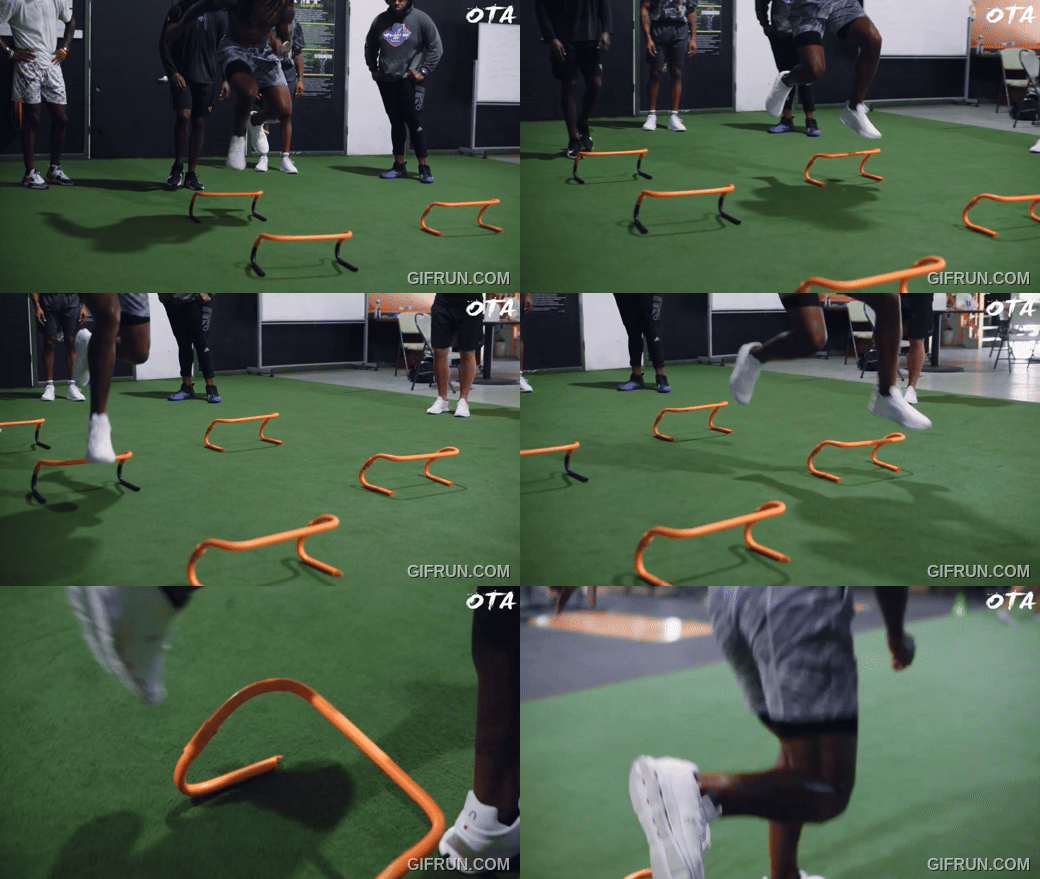
Final Thoughts: Strength Is the Foundation, Plyometrics Are the Bridge
Weightlifting builds the engine. Plyometric training teaches the athlete how to use it.
Too many high school athletes are strong but slow. Big but not explosive. Conditioned but not athletic. That’s not because they lack talent—it’s because their training is incomplete.
Plyometric training for athletes is what bridges the gap between strength and true game speed.
If an athlete wants to jump higher, sprint faster, cut sharper, and stay healthier, plyometrics must be a non-negotiable part of their program. Strength alone is not enough. Athletic performance demands more—and plyometrics are where it all comes together.