
At-Home Plyometric Routine for Athletes: Build Speed and Power Without a Gym
One of the biggest lies athletes tell themselves is this:
“I can’t really train unless I have a gym.”
No racks or fancy equipment. Training just… stops.
That mindset is holding a lot of athletes back.
The truth is power, speed, and explosiveness are not owned by the weight room. They’re qualities of how you move, how much intent you bring, and how consistently you show up. If you have a body, some space, and the desire to get better, you can still train at a high level.
That’s where an at-home plyometric routine comes in.
Plyometrics are one of the most efficient ways for athletes to train explosiveness, elastic strength, and rate of force development — and they require very little equipment. When done right, they bridge the gap between strength and speed. When done with intent, they can absolutely maintain or even improve performance during times when gym access is limited.
This article is about stripping away excuses and giving athletes a real, effective plyometric routine they can do at home, while also teaching them how to approach plyo training so it actually transfers to the field or court.
You Don’t Need a Gym to Build Power
Let’s clear this up right away:
- You do not need barbells to train explosiveness
- You do not need machines to train speed
- You do not need elite facilities to train like an athlete
What you do need is:
- Intent
- Structure
- Discipline
Power is about how fast you can produce force. Plyometrics train the nervous system to fire faster, improve tendon stiffness, and increase how efficiently you move through the ground.
That happens whether you’re in a $50,000 facility or your driveway.
Too many athletes think training only “counts” if it looks impressive on social media. Real development doesn’t care where you train — it cares how you train. Check out our previous article on the best plyometrics for increasing your vertical jump!
Why Plyometrics Are Perfect for At-Home Training
A properly designed plyometric routine checks a lot of boxes:
- Minimal space required
- Bodyweight dominant
Plyometrics improve:
- Jump performance
- Acceleration and deceleration
- Change of direction
- Overall athletic stiffness and reactivity
And when you can’t lift heavy, plyometrics help preserve power output, which is often the first quality athletes lose when training consistency drops.
How to Do Plyometrics Correctly at Home
Before jumping into the routines, there are a few non-negotiables.
1. Train Multiple Planes of Motion
Athletes don’t just move up and down.
Your at-home plyometric routine should include:
- Vertical (jumping, rebounding)
- Lateral (side-to-side force)
- Unilateral (single-leg or split stance work)
Staying stuck in only bilateral vertical jumps is a mistake. Sport happens in chaos, and your training should reflect that.
2. Increase Intensity Without Adding Weight
No equipment doesn’t mean no progression.
At home, you increase intensity by:
- Jumping higher
- Moving faster
- Reducing ground contact time
- Adding volume (more reps or rounds)
- Increasing intent on every rep
Intent matters more than load in plyometrics. A lazy jump is just cardio. A violent, aggressive jump trains power.
3. Quality First, Fatigue Second
Plyometrics are not conditioning drills disguised as “speed work.”
Each rep should be explosive, crisp, and purposeful.
If technique falls apart, slow down or reduce volume. That said, pushing volume within good movement is a powerful way to challenge the system when equipment isn’t available.
At-Home Plyometric Routine #1 (Lower Body Focus)
Complete 3–5 rounds
This routine emphasizes vertical force production, unilateral power, and lateral stability — all critical for field and court athletes.
1. Rebound Vertical Jump
Max Effort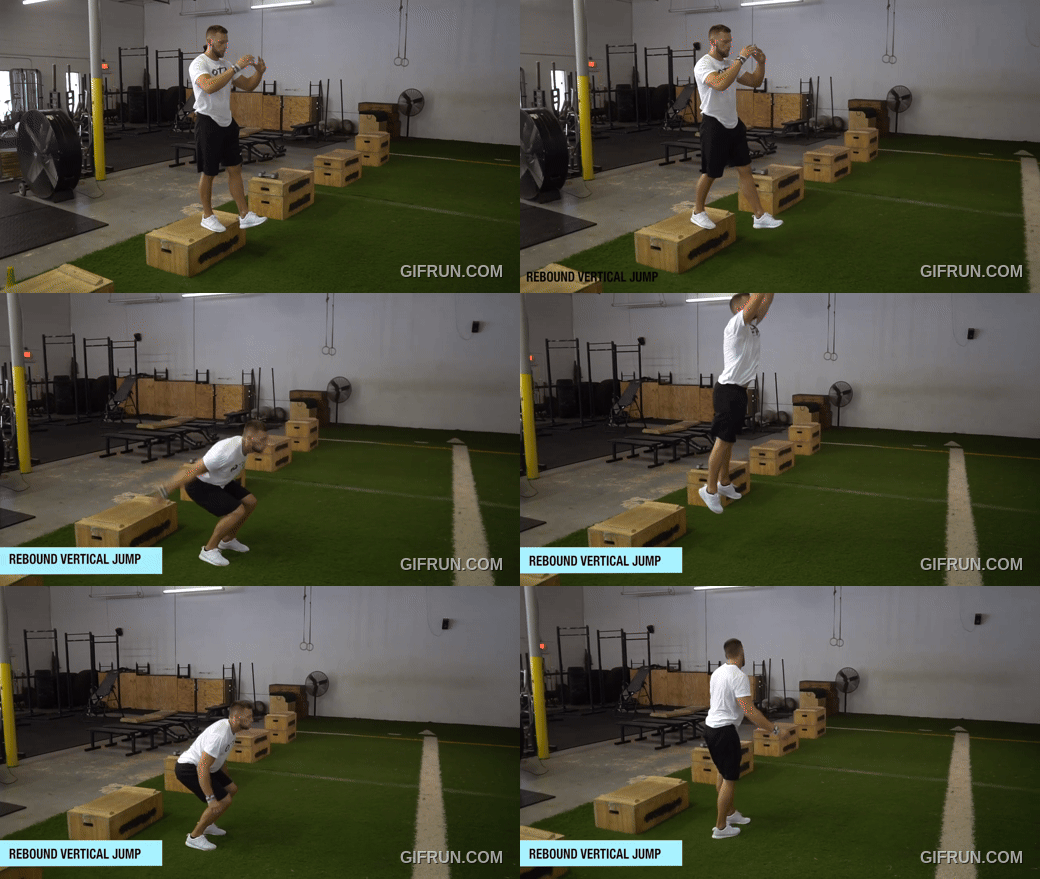 5 reps
This is your primary power movement. You can use a chair or drop off of steps. Doesn’t really matter as long as you’re able to drop from a height to the ground.
- Start tall
- Drop quickly
- Explode straight up
- Minimize ground contact between jumps
Think “spring off the floor.” The goal isn’t just height — it’s reactivity. Every rep should look aggressive.
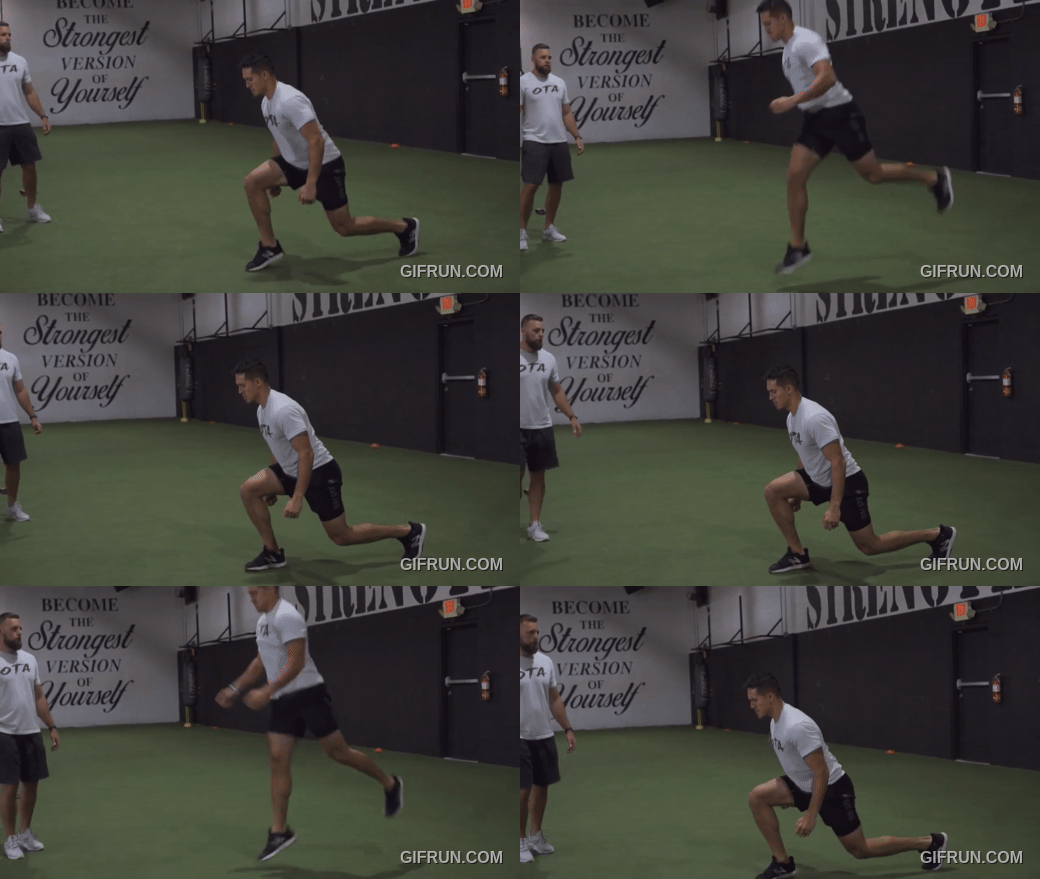
2. Lunge Jumps
Unilateral Vertical Plyometric 5 reps each leg
Start in a split stance and explode upward, switching legs in the air.
Key cues:
- Fast off the ground
- Stay tall through the torso
- Attack each rep
This trains unilateral power and exposes side-to-side differences most athletes ignore.
3. Skater Jumps (For Time)
Unilateral Lateral Plyometric 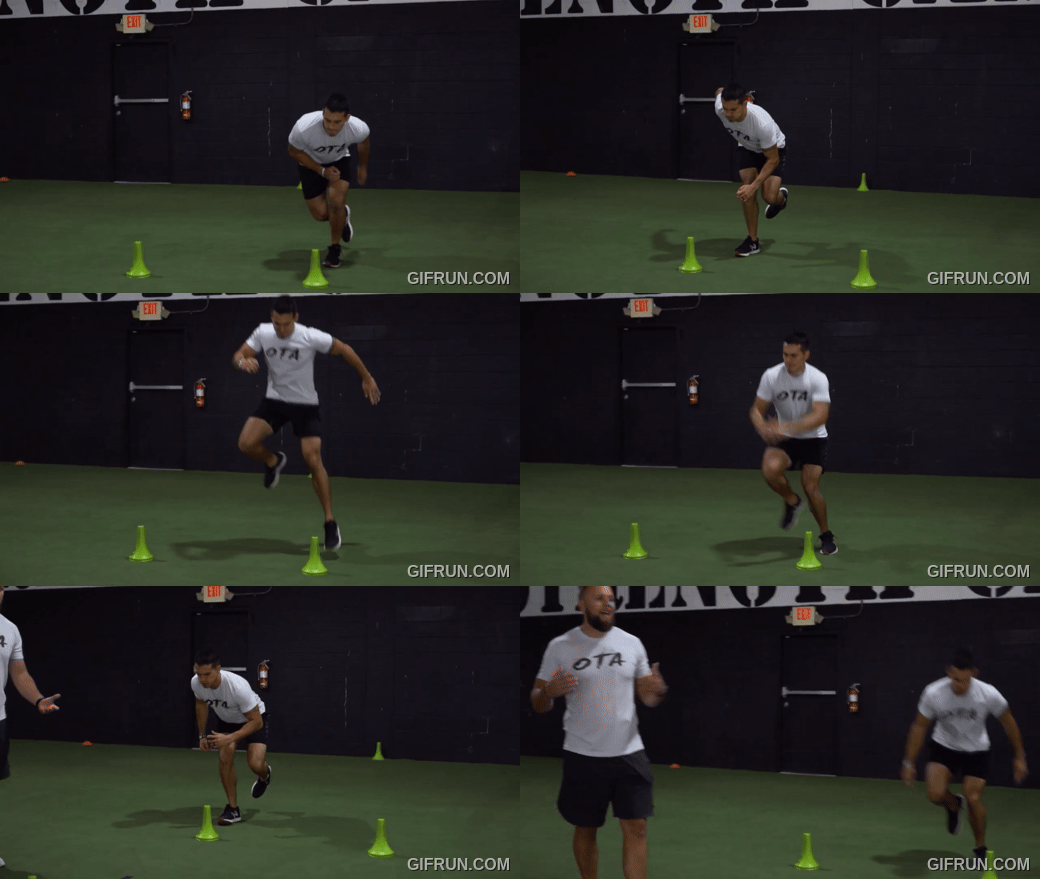 20 seconds
This is where lateral power meets stability.
- Jump side to side
- Stick each landing briefly
- Stay athletic and controlled
- Push the pace while maintaining balance
This drill builds lateral explosiveness while teaching the body to absorb and reapply force quickly.
At-Home Plyometric Routine #2 (Total Body Emphasis)
Complete 3–5 rounds
This routine layers upper-body power, lower-body reactivity, and explosive core work — perfect when you want a full-body stimulus without a gym.
1. Explosive Push-Ups
Upper-Body Plyometric 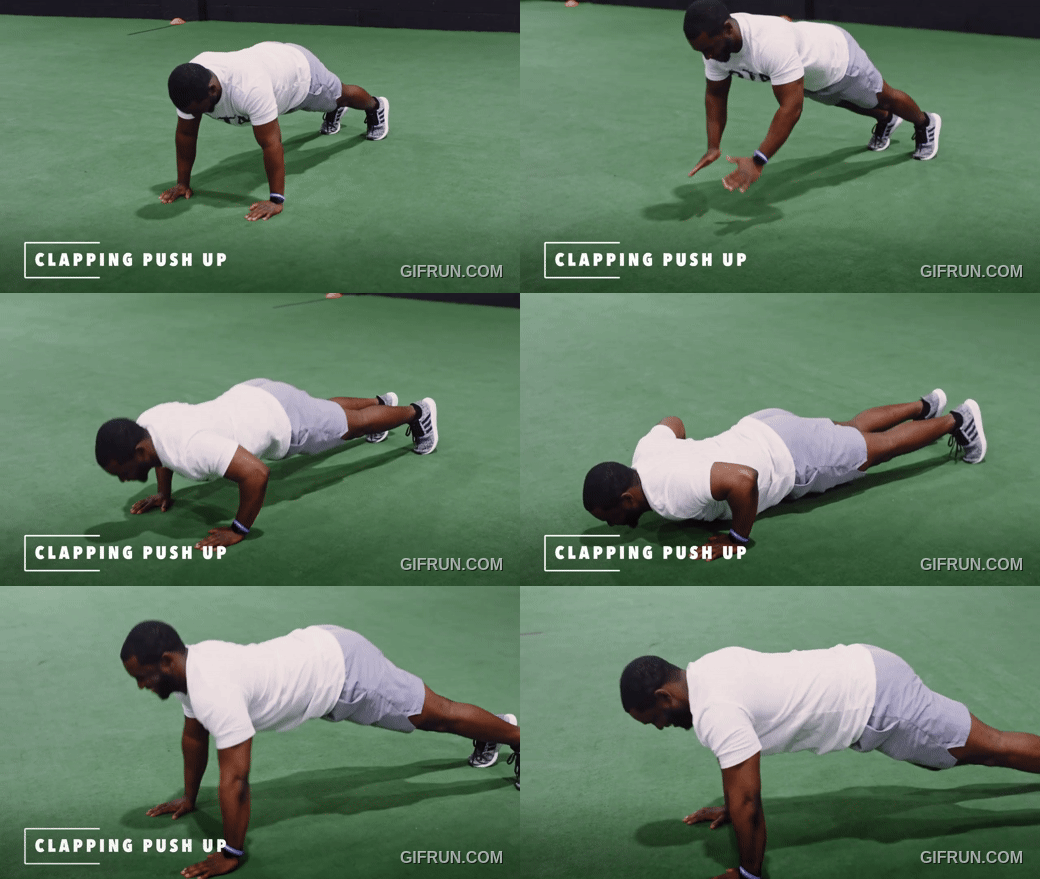 10 reps
Lower under control, then explode off the ground so your hands leave the floor. Catch yourself and quickly rebound straight into the next rep.
This trains:
- Upper-body power
- Shoulder stability
- Rate of force development
This is a very underrated at-home plyometric exercises for athletes.
2. Tuck Jumps
Bilateral Vertical Plyometric 10 reps
Focus on:
- Speed off the floor
- Minimal ground contact
- Tucking the knees into the chest each rep
Don’t turn this into a slow squat jump. The goal is quick, elastic movement.
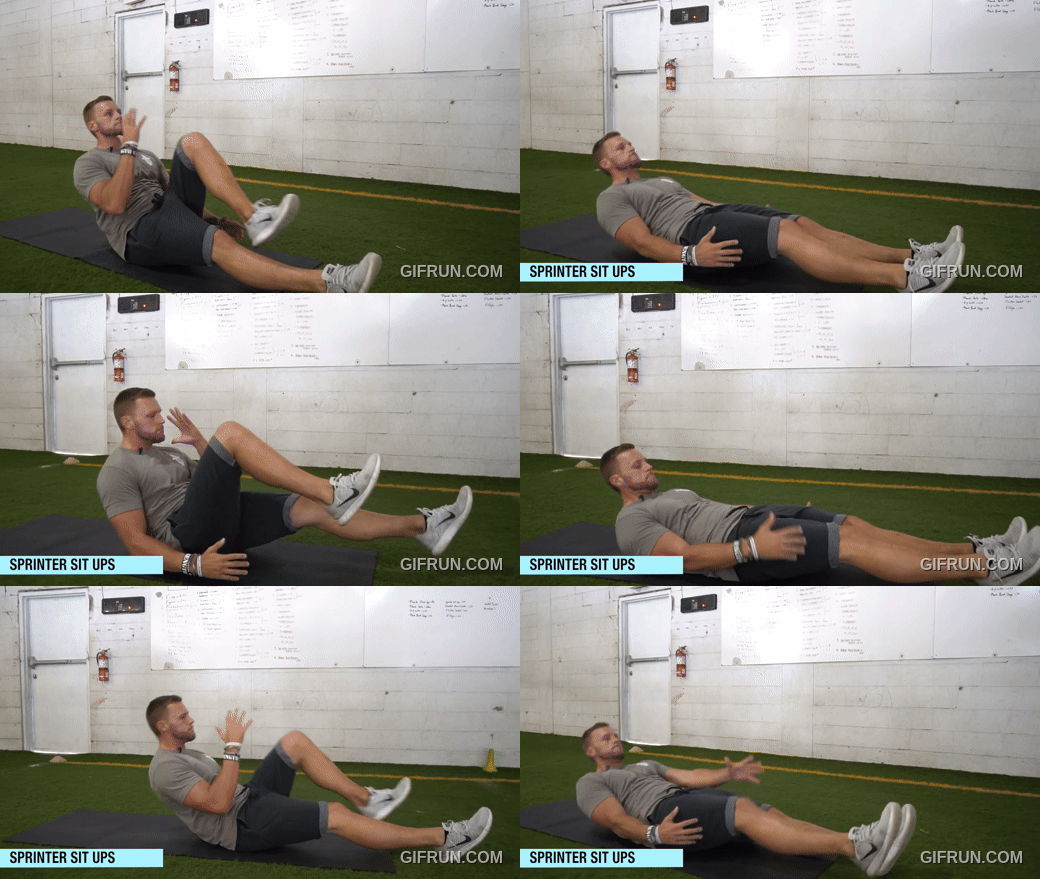
3. Sprinter Sit-Ups
Explosive Core Finisher 30 seconds
Not technically a plyometric, but still explosive.
Drive the arms like you’re sprinting while snapping the torso up aggressively. This reinforces sprint mechanics and core stiffness under speed.
How to Program These Plyometric Routines
You can use these routines in several ways:
- As a standalone workout
- As a warm-up primer before a lift (when you do have gym access)
- On off-days to maintain explosiveness
- During in-season or travel weeks
You can perform these a couple times a week and make sure you’re resting between rounds to maintain quality reps.
The Mindset That Actually Gets Results
Here’s the real separator.
Athletes who continue to improve without a gym aren’t special — they’re committed.
They don’t ask:
“Is this optimal?”
“Is this as good as a full facility?”
They ask:
“Did I train with intent today?”
“Did I push myself?”
A good plyometric routine at home, done consistently and aggressively, will beat a perfect gym program that never gets followed.
Final Thoughts: No Gym Is Not an Excuse
You can build speed, strength, power, and stay explosive without a gym.
The athletes who separate themselves aren’t the ones with the best equipment — they’re the ones who refuse to let circumstances dictate their effort.
If you truly want to get better, you’ll find a way.
If you don’t, you’ll find an excuse.
These plyometric routines that can be done anywhere remove the excuse. The rest is on you.
Stop waiting for “perfect” conditions to get better.
