
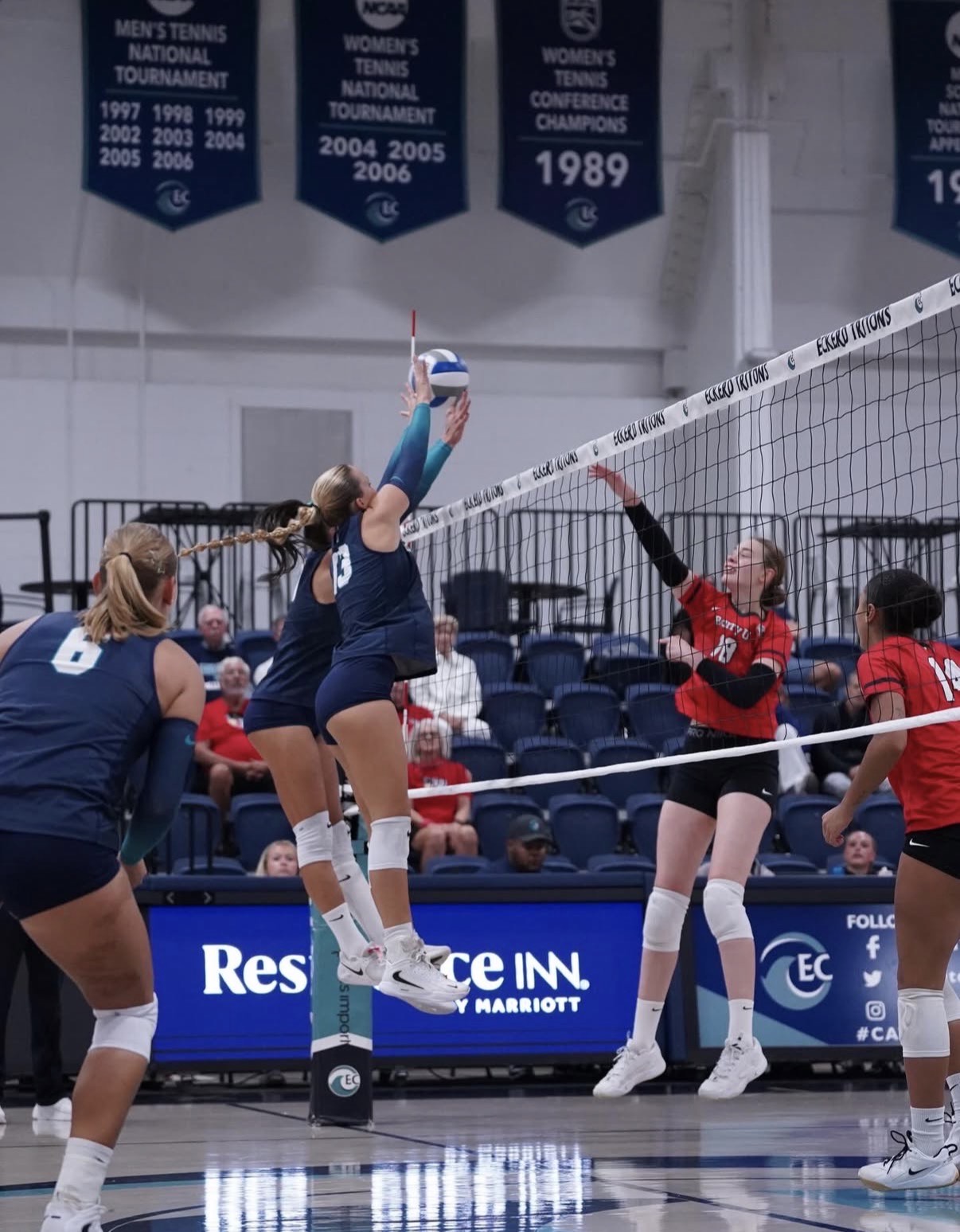
Best Plyometric Exercises for Volleyball: Build Elite Explosiveness (Beach & Indoor)
If you coach or play volleyball at a high level, you already know this truth: vertical jump, first-step explosiveness, and tendon durability separate elite volleyball athletes from average ones. Whether you’re attacking at the net, blocking late, or transitioning from defense to offense, volleyball is an explosive sport that demands power in every plane.

That’s why plyometric exercises for volleyball are non-negotiable if you want to build high-level athletes who jump higher, move faster, and stay healthy across long seasons.
As an elite sports performance coach who has trained volleyball athletes in Florida for years—both indoor and beach from high school to D1 level and I wanted to share some of my favorite plyometric exercises I consistently like programming that transfer to the court. Plyometrics are not just about jumping for conditioning; they’re about developing elastic power, tendon stiffness, rate of force development, and deceleration strength—all while respecting the surface the athlete plays on.
In this article, I’ll break down:
- Why plyometric exercises for volleyball are essential
- The key differences between beach and indoor volleyball plyometrics
- How plyometrics build tendon strength, durability, and explosiveness
- My personal favorite plyometric exercises that I consistently program for volleyball athletes
- How to apply them intelligently for real performance carryover
Why Plyometric Exercises for Volleyball Matter
Volleyball is a repeated jump-dominant, elastic sport. Every rally demands:
- Explosive approach jumps
- Rapid deceleration on landing
- Reactive rebound ability
- Lateral shuffling and cutting
- Single-leg force production
This is exactly where plyometric exercises for volleyball shine.
Plyometrics train the stretch-shortening cycle (SSC)—the ability to absorb force quickly and reapply it explosively. This isn’t just about jumping higher; it’s about:
- Faster takeoffs
- More efficient landings
- Reduced knee and Achilles stress
- Improved tendon resilience
Plyometrics and Tendon Health
One of the most overlooked benefits of plyometric exercises for volleyball is tendon adaptation. Volleyball athletes deal with:
- Patellar tendon stress
- Achilles tendinopathy
- Ankle overload
- Chronic knee pain
Well-programmed plyometrics improve:
- Tendon stiffness
- Energy storage and release
- Force tolerance over time
This is how you build durable athletes, not just explosive ones.
For more on tendons and joint strength for athletes, see our previous article on Isometrics Training Exercises!
Beach vs Indoor Volleyball: Why Surface Matters
Not all plyometric exercises for volleyball should be programmed the same way—surface changes everything.
Indoor Volleyball Plyometrics
Volleyball indoor courts are hard and reactive, meaning:
- Faster ground contact times
- Higher elastic rebound
- Greater stress on joints if poorly managed
These athletes benefit from:
- Higher-intensity reactive plyos
- Short ground contact jumps
- More vertical-dominant work
Beach Volleyball Plyometrics
Sand is unstable and force-absorbing, which:
- Reduces elastic return
- Increases muscular demand
- Slows force production
Beach athletes need:
- More strength-based plyometrics
- Longer ground contact times
- Higher unilateral demand
The best plyometric exercises for volleyball must reflect the environment the athlete competes in—this is where bad programming separates from elite coaching.
My Personal Favorite Plyometric Exercises for Volleyball Performance
These are not random exercises. These are plyometric exercises for volleyball that I consistently program because they:
- Transfer directly to jumping and movement
- Build tendon resilience
- Scale for beach and indoor athletes
- Improve performance without unnecessary wear and tear
1. Weighted Jumps (DB Squat Jumps, DB Lunge Jumps, Trap Bar Jumps)
Weighted jumps are one of the most underrated plyometric exercises for volleyball, especially for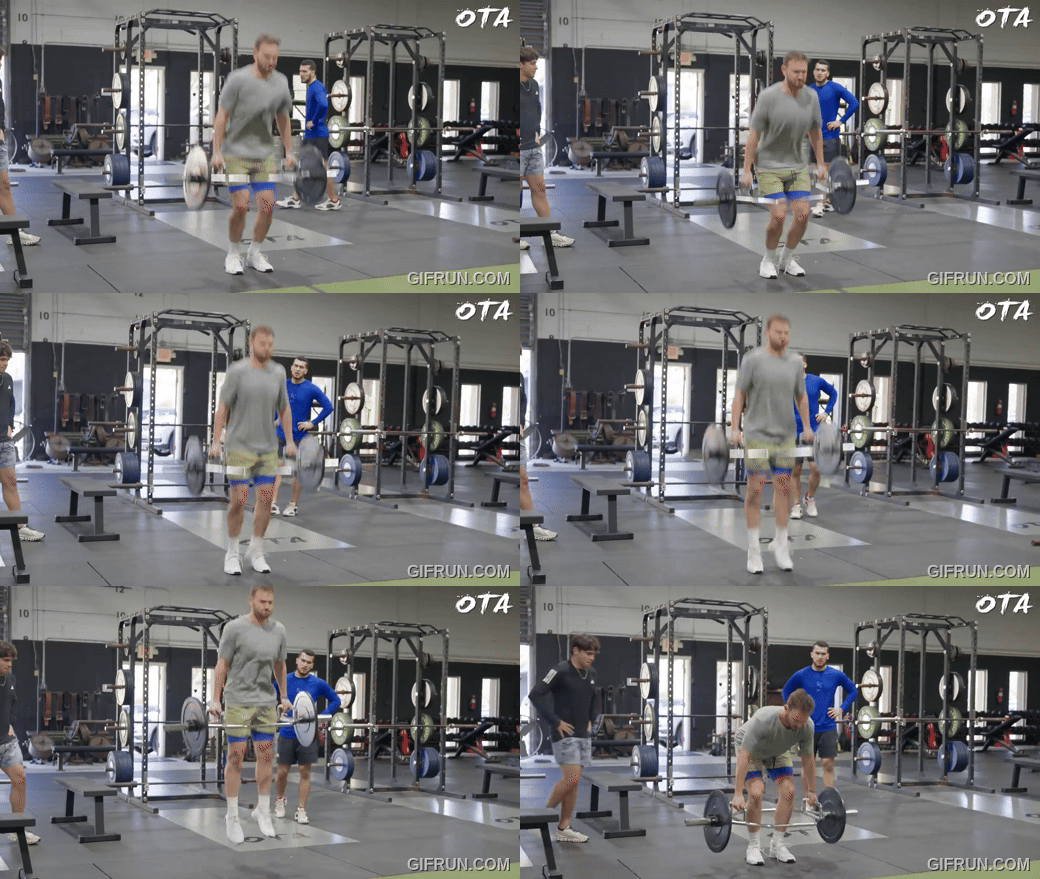 athletes who lack force production.
Why They Work
Weighted jumps bridge the gap between:
- Max strength
- Explosive power
They teach athletes to apply force aggressively through the ground, which is critical for approach jumps and blocking.
Best Variations
- Dumbbell Squat Jumps – Great for vertical force development
- Dumbbell Lunge Jumps – Builds unilateral power and landing control
- Trap Bar Jumps – Allows heavier loading with reduced joint stress
Beach vs Indoor Application
- Indoor: Lighter loads, faster intent
- Beach: Slightly heavier loads, slower but powerful execution
See our previous article on the best exercises for building lower body strength.
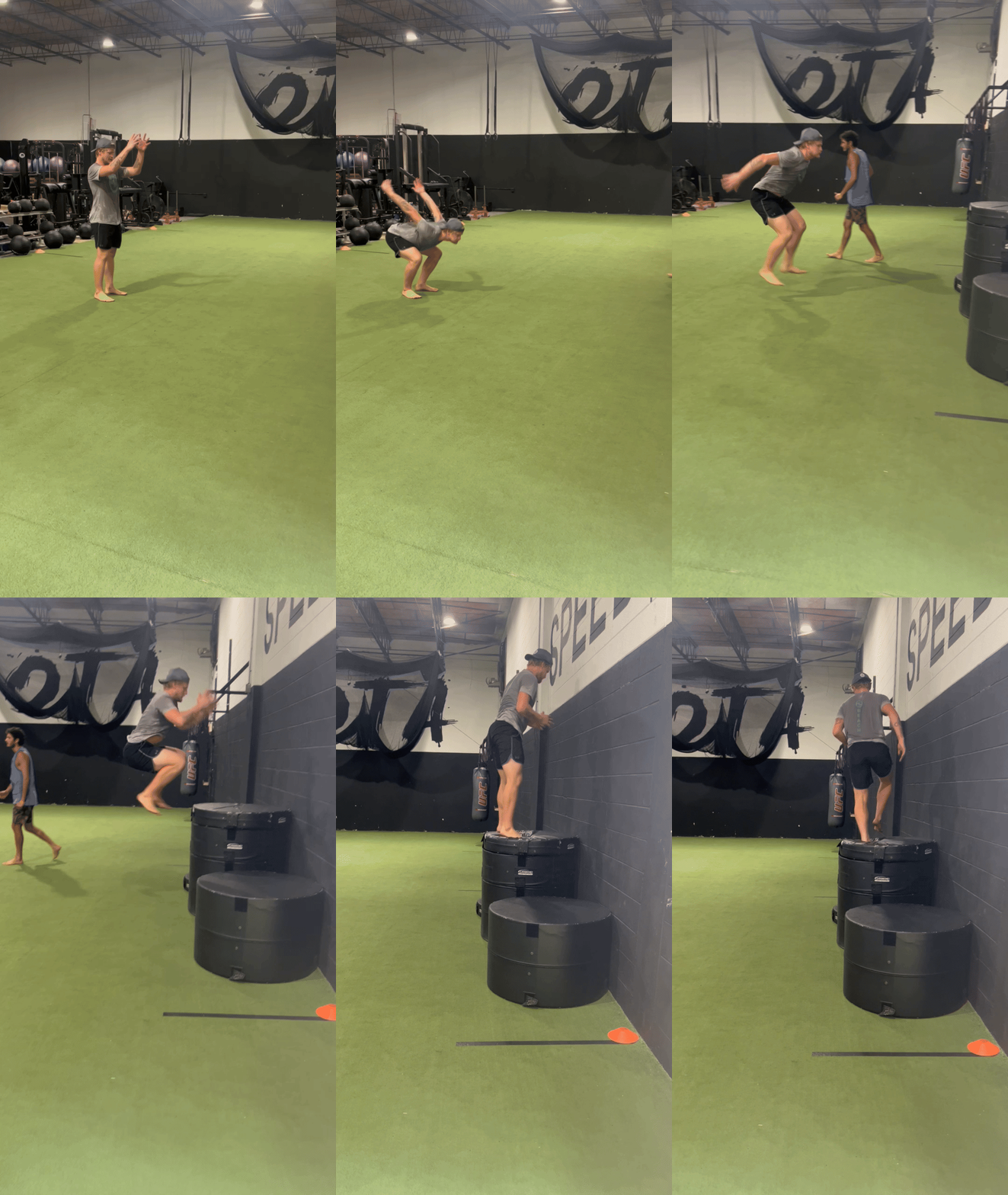
2. Multi-Directional Jumping (Broad to Hurdle, Hurdle to Broad, Lateral Hurdle to Broad)
Volleyball is not a straight-up-and-down sport. Athletes must transition force in multiple directions, which is why multi-directional plyometric exercises for volleyball are essential.
Why They Work
These drills train:
- Force redirection
- Spatial awareness
- Landing mechanics
- Transitions of power in multiple directions
Examples
- Broad Jump → Hurdle Jump
- Hurdle Jump → Broad Jump
- Lateral Hurdle → Broad Jump
This is gold for:
- Defensive transitions
- Blocking footwork
- Ability to quickly land prepared to make another move

3. Unilateral Lateral Plyometrics (Skater Jumps, V Jumps)
Volleyball athletes rarely jump symmetrically in sport. Unilateral lateral plyos expose asymmetries and build real-world resilience.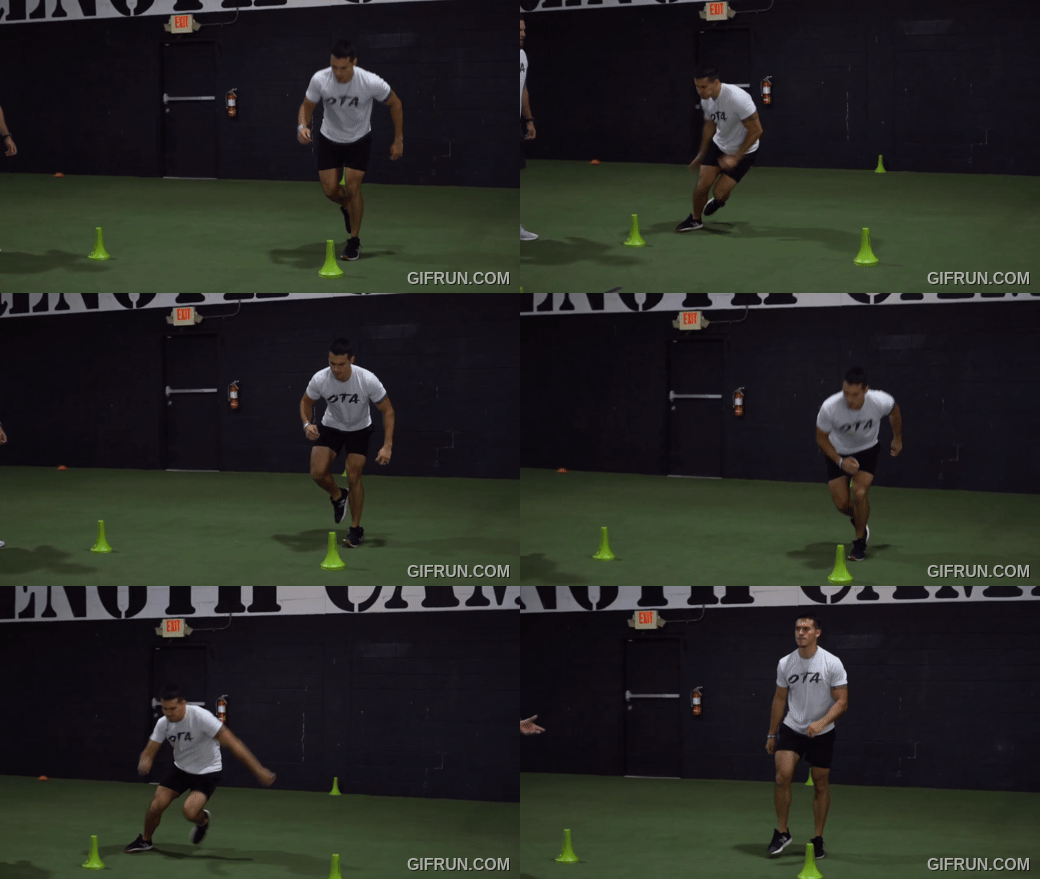
Why They Work
These plyometric exercises for volleyball improve:
- Lateral force production
- Hip and ankle stability
- Single-leg deceleration strength
Best Exercises
- Skater Jumps – Elite for lateral power and control
- V Jumps – Forces diagonal force transfer and push the intensity more with increasing distance
These are important for both indoor and beach volleyball athletes, as both sports require a high amount of ability to move and transfer forces laterally.
- Indoor – Focus more on lateral speed and rabid lateral contacts
- Beach – Add resistance to increase strength on landing and reproducing lateral forces
4. Rebound Underhand Med Ball Tosses / Rebound Med Ball Broad Tosses (Depth Drop → Ballistic Throw)
Volleyball is a full-body elastic sport, not just a lower-body jump. Rebound tosses combine a controlled depth drop directly into an explosive med ball toss and helps athletes improve neuromuscular coordination for producing power from lower to upper.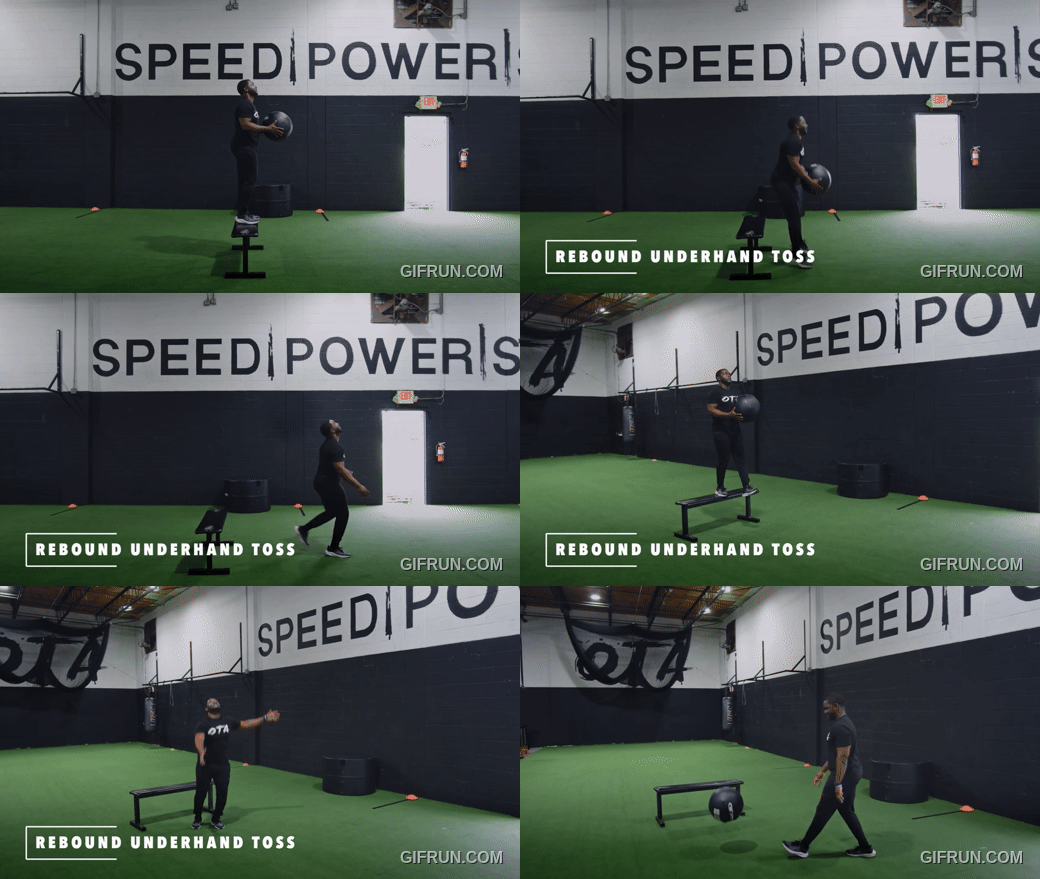
The depth drop pre-loads the system through a true stretch-shortening cycle, teaching the athlete to absorb force quickly and redirect it immediately into power. The ballistic toss forces efficient lower-to-upper power transfer and reinforces the upper body's role in jump performance.
This drill develops:
- Triple extension under reactive load
- Elastic reactivity without excessive jump volume
- Timing between lower-body force and upper-body explosion
These are ideal during in-season phases, high jump-volume weeks, and for both indoor and beach volleyball athletes. Indoor focus on lighter, faster intent and beach more focus on higher force demands.
(Please check out my article on exercises you can do instead of power cleans to build explosive power!)
5. Approach Vertical Jumps / Approach Box Jumps (Most Sport-Specific)
If you coach volleyball and don’t program approach jumps, you’re missing the point.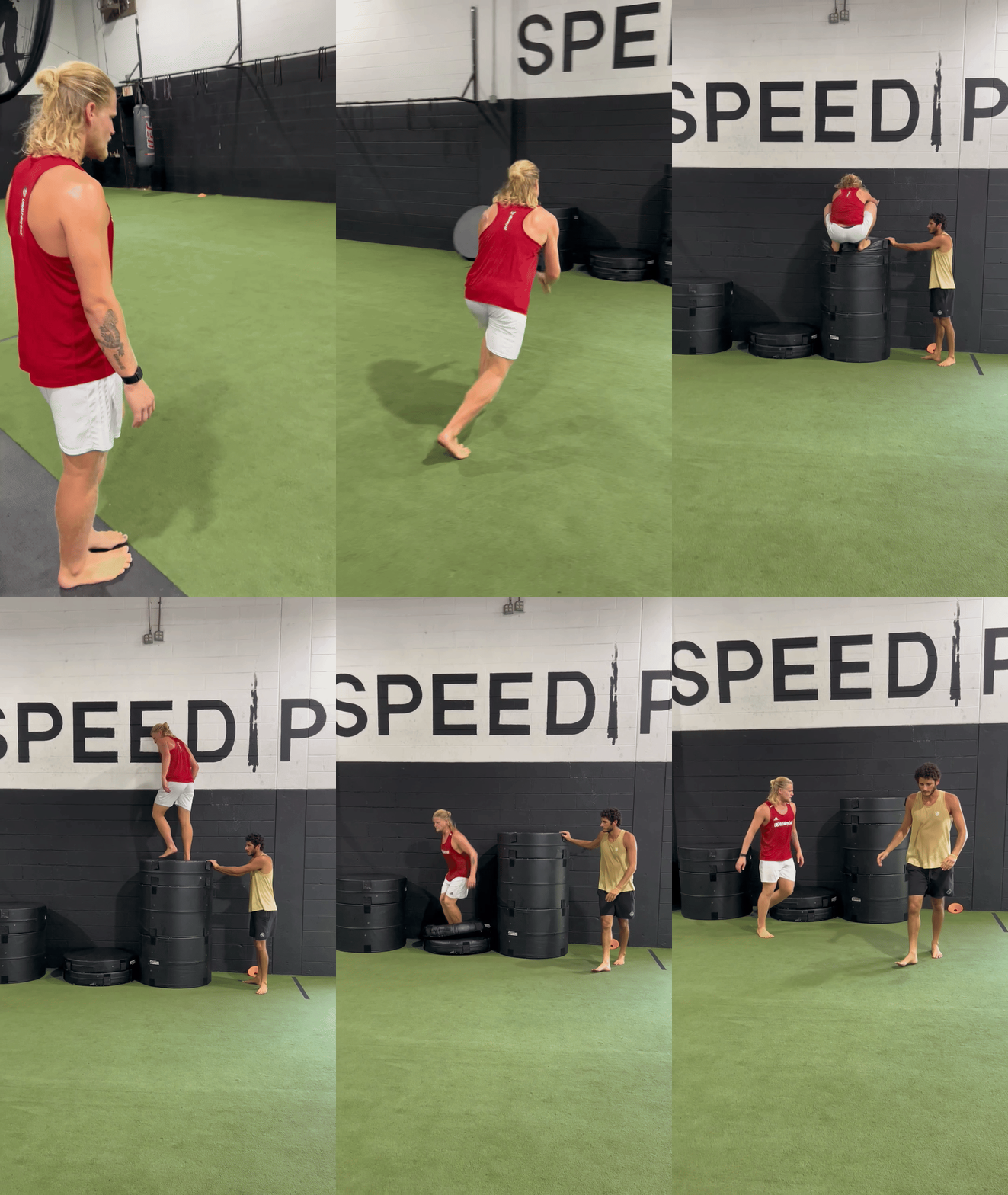
Why They Work
These are the most sport-specific plyometric exercises for volleyball because they directly replicate:
- Approach mechanics
- Arm swing timing
- Penultimate step loading
Indoor vs Beach
- Indoor: Emphasize max height and reactivity
- Beach: Emphasize force production and balance
This is where all training should eventually funnel. No overemphasis on mechanics. Just pushing the intensity and getting the athletes to push for max force.
How to Program Plyometric Exercises for Volleyball
Quality > quantity.
General guidelines:
- 2–3 plyometric sessions per week
- Focus on intent and execution
- Stop sets when jump quality drops
Plyometrics should support strength training, not replace it.
Something to also keep in mind is programming the jump volume around their volleyball training and taking that into account. In Florida where I coach volleyball is pretty much year-round, so these athletes are getting hundreds of jumps every week just in their practices and skill sessions. So, a lot of the time the focus is lower volume and really high quality, high intensity jumps in our sessions.
Again, we want to support their actual volleyball performance, not overload too much on top of it.
Conclusion: Build Explosive, Durable Volleyball Athletes
The best plyometric exercises for volleyball don’t just improve vertical jump—they build resilient, explosive athletes who can handle the demands of long seasons.
When programmed correctly, plyometric exercises for volleyball:
- Improve jump height
- Enhance lateral movement
- Strengthen tendons
- Reduce injury risk
- Transfer directly to performance
Whether you coach indoor or beach volleyball, plyometrics for volleyball are essential for long-term athlete development.
If you’re a volleyball athlete or coach serious about jumping higher, moving faster, and staying healthy:
- Train plyometrics with intent
- Respect the surface you play on
- Build power and durability
Please reach out to me for custom coaching and programming at jordon@overtimeathletes.com
Follow me on Instagram @coachhaslem2.0
Click the image below to join Elite Vertical Academy and improve your jump power!

