Sports Technology and Athletic Performance: Why Elite Coaching Still Wins
Sports technology has exploded over the last decade. Force plates, speed gates, GPS tracking, velocity-based training, wearables, and data dashboards are now common in high schools, colleges, private facilities, and pro sports. Everyone has access to numbers, the charts, and claims to be “science-based” and “data-driven.”
But here’s the truth most people won’t say out loud:
Sports technology does not create better athletes. Elite coaching and intelligent programming still does.
Technology can enhance coaching. It can support decision-making. It can help validate what a good coach already sees. But it cannot replace real coaching, real assessment, and real-time athlete development. Recently, we made a post on IG about this subject, which you can see here, but wanted to dive a little deeper with this article.
At Overtime Athletes, we use sports technology—but we don’t worship it. Because without strong coaching principles, experience, and programming skill, technology becomes a crutch instead of a tool.
Let’s break down why.
The Role of Sports Technology in Athletic Performance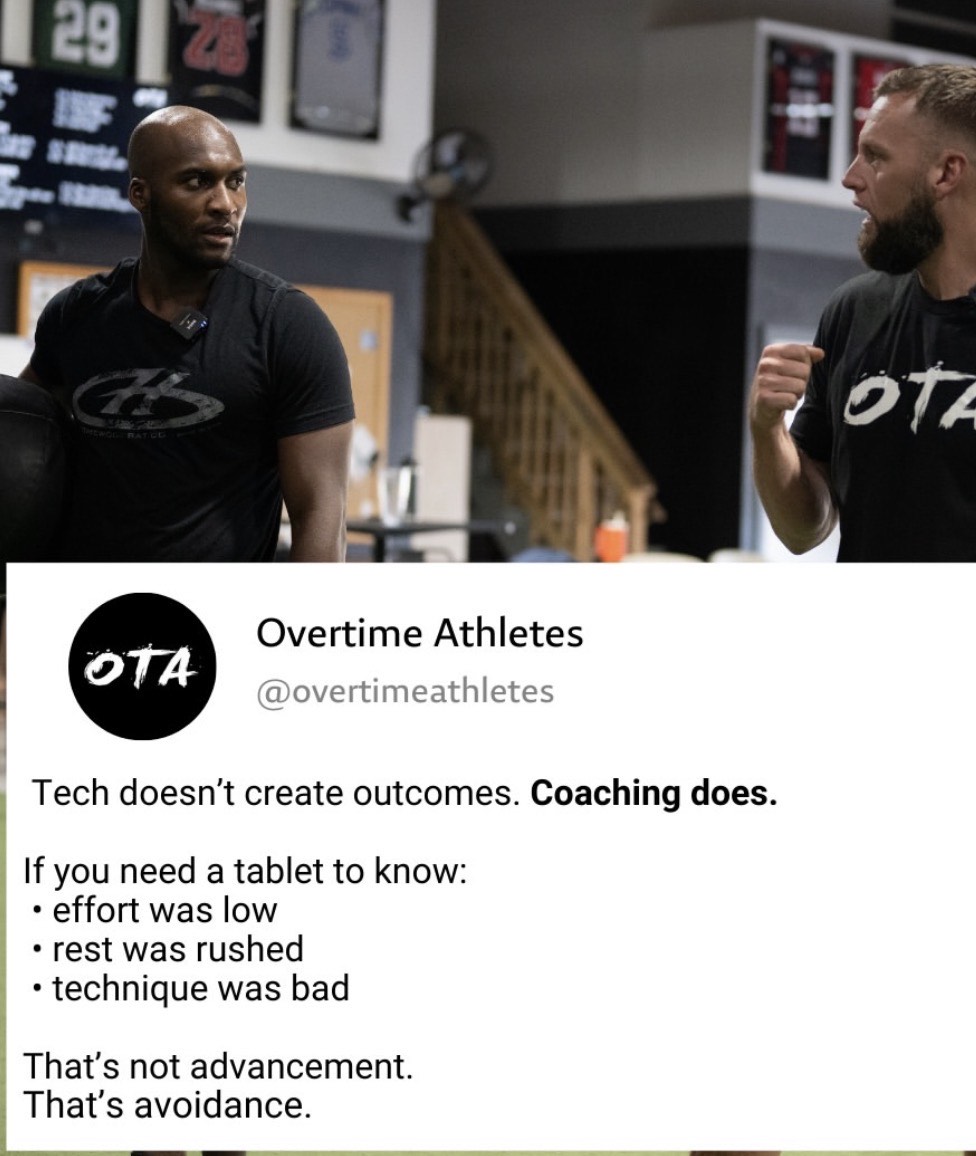
Sports technology exists to measure, not to coach. When used correctly, it provides objective feedback that can:
- Identify trends
- Track progress over time
- Highlight potential red flags
- Support return-to-play decisions
- Validate or challenge assumptions
Used incorrectly, it does this instead:
- Overcomplicates training
- Distracts from fundamentals
- Replaces coaching intuition with blind numbers
- Makes coaches chase metrics instead of outcomes
Technology is only as effective as the coach interpreting and applying it.
Benefits of Sports Technology (When Used the Right Way)
Let’s be clear: sports technology can be extremely valuable when it’s placed in the right hands. Too often though they’re used more as a gimmick in order for coaches to sell. Here are some benefits:
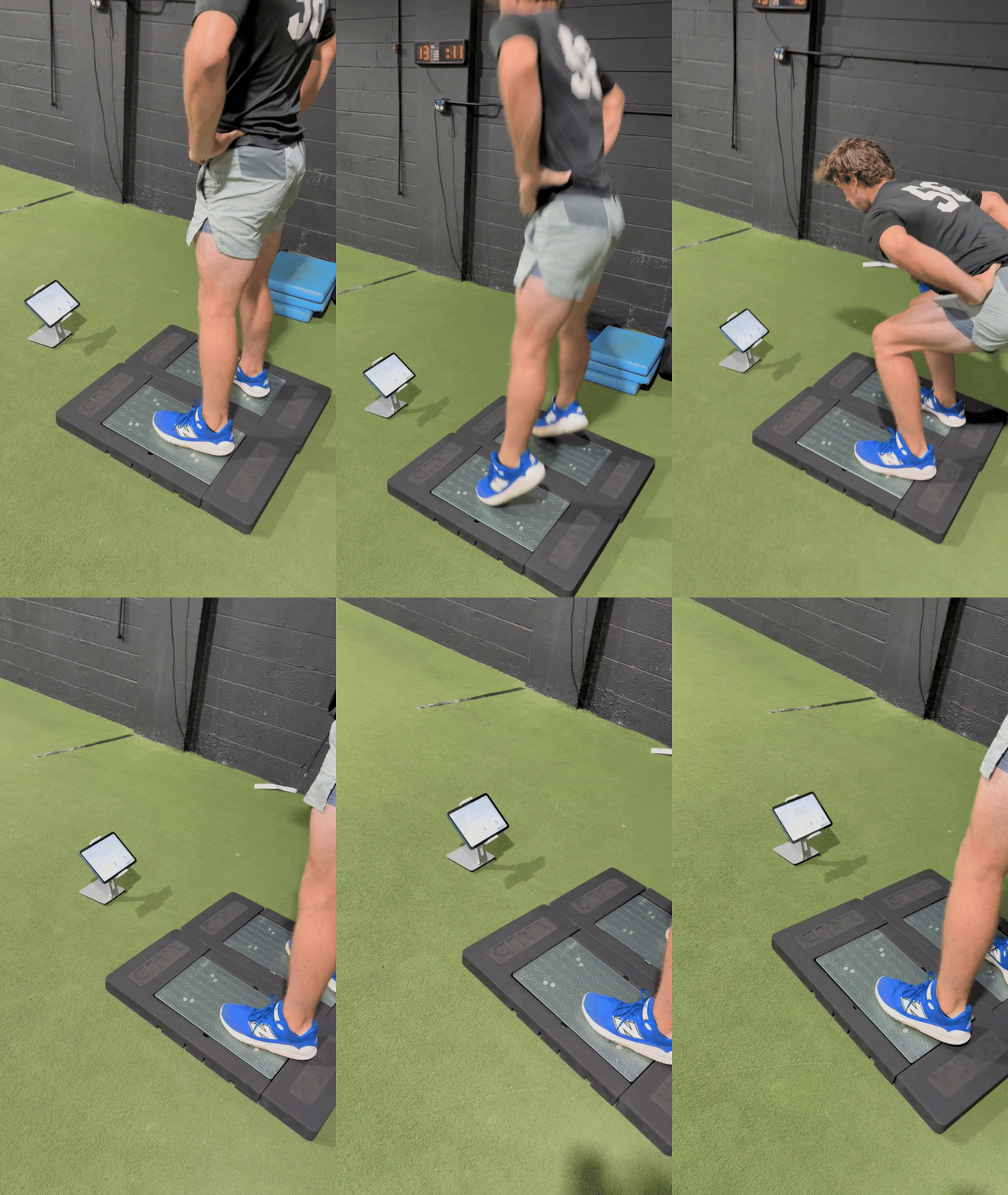
Force Plates
Force plates are powerful tools for measuring:
- Jump performance
- Rate of force development
- Asymmetries between limbs
- Braking and propulsive strategies
They can help a coach understand how an athlete produces force—not just how high they jump.
But force plates don’t tell you how to fix the problem.
>They don’t cue better landing mechanics.
>They don’t regress or progress exercises.
>They don’t decide whether an athlete needs more strength, elasticity, or coordination.
A coach does.
(Please check out this previous article on OTA’s baseline assessment)
Speed Gates and Timing Systems
Speed gates give accurate sprint times and split data. They’re great for: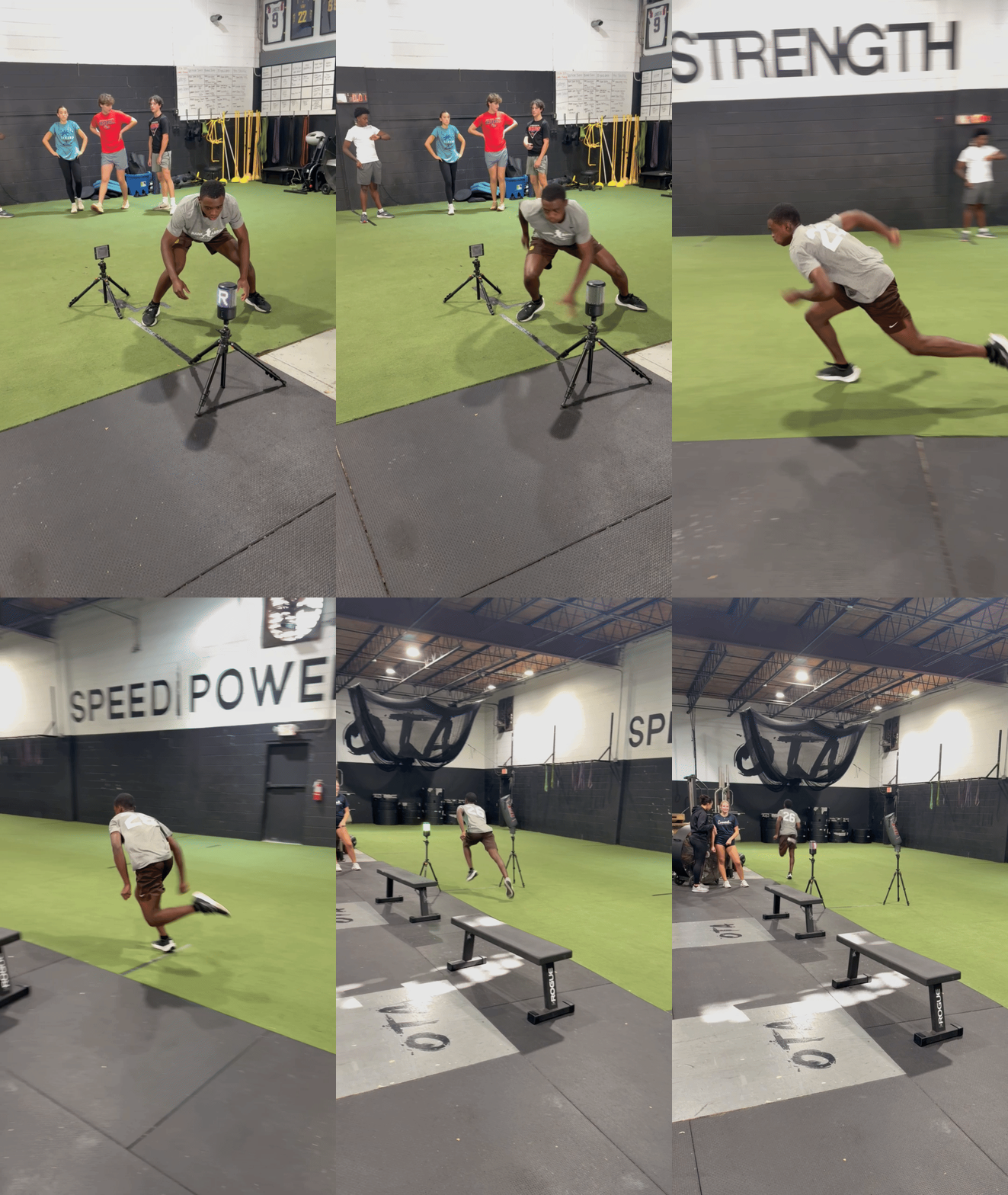
- Tracking true speed progress
- Identifying acceleration vs max velocity weaknesses
- Monitoring fatigue and readiness
But speed gates don’t:
- Teach sprint mechanics
- Fix front-side mechanics
- Adjust posture or arm action
- Coach intent and relaxation
If a coach doesn’t know how to teach speed, the numbers don’t matter.
And if you really want to get faster, check out our speed program Athletic Speed System!
Velocity-Based Training (VBT) Trackers
Velocity trackers help quantify bar speed and intent. When used well, they can:
- Auto-regulate training loads
- Prevent junk volume
- Encourage explosive intent
- Manage fatigue
But velocity numbers don’t:
- Fix bad technique
- Adjust exercise selection
- Teach athletes how to move efficiently
- Replace intelligent loading progressions
A coach still needs to program and adjust, not just react to a number. Just to be honest, a good coach should be able to spot an athlete’s velocity during a movement and be able to determine immediately whether they are fatigued or using too much load.
Again, the tracker is a great tool to get more specific, but if you have experience and a good coach’s eye and are coaching your athletes with intent, you should be able to see that right away.
GPS and Wearable Trackers
GPS and wearables track:
- Total distance
- High-speed running
- Acceleration loads
- Work-to-rest ratios
They’re useful for managing team volume and recovery.
But GPS doesn’t tell you:
- If an athlete moves well
- If they’re compensating
- If their mechanics are breaking down
- If their tissue capacity matches their workload
Only a trained coach watching movement can do that.
Why Elite Coaching Still Wins
Here’s the part that gets lost in the hype.
Elite coaching is about problem-solving in real time.
A great coach can:
- Watch an athlete move
- Spot asymmetries immediately
- Identify limitations without a dashboard
- Make instant corrections
- Adjust programming on the fly
Sports technology often confirms what elite coaches already know—but it rarely discovers something a great coach couldn’t see.
Coaching Is About Real-Time Decision Making
Athletes don’t move in spreadsheets. They move in chaos.
A coach must:
- Adjust sessions based on readiness
- Modify exercises when technique breaks down
- Regress or progress movements mid-session
- Change volume, intensity, or emphasis week to week
No piece of sports technology can do that effectively on its own. What good are all the numbers and data if you’re a coach that’s ineffective at actively coaching and modifying movements and intensity?
Programming Is Still the Foundation
Without intelligent programming, sports technology is useless.
Good programming accounts for:
- The sport
- The season
- The athlete’s training age
- Injury history
- Position demands
- Individual movement limitations
Force plates won’t build resilience.
GPS won’t teach coordination.
Velocity trackers won’t fix asymmetries.
Programming does. (Go read our previous article all about Athlete Programming)
Athletes Don’t Care About Most Data—and That’s Okay
Here’s a hard truth many coaches need to hear:
Most athletes don’t care about the data. They care about results.
Because why would a pitcher care about force plate numbers if:
- Their throwing velocity is increasing
- Their mechanics are improving
- Their arm feels healthier
Throwing velocity is the metric that matters to them—not ground reaction force graphs.
And why would a basketball player care about asymmetry percentages if:
- They’re dunking easier
- They’re jumping higher
- They feel more explosive
- Their confidence is up
Athlete performance outcomes matter more than internal metrics.
Elite coaches understand this and use sports technology behind the scenes, not as the main event.
Technology Can Be a Tool—or a Crutch
Here’s where many coaches are getting it wrong.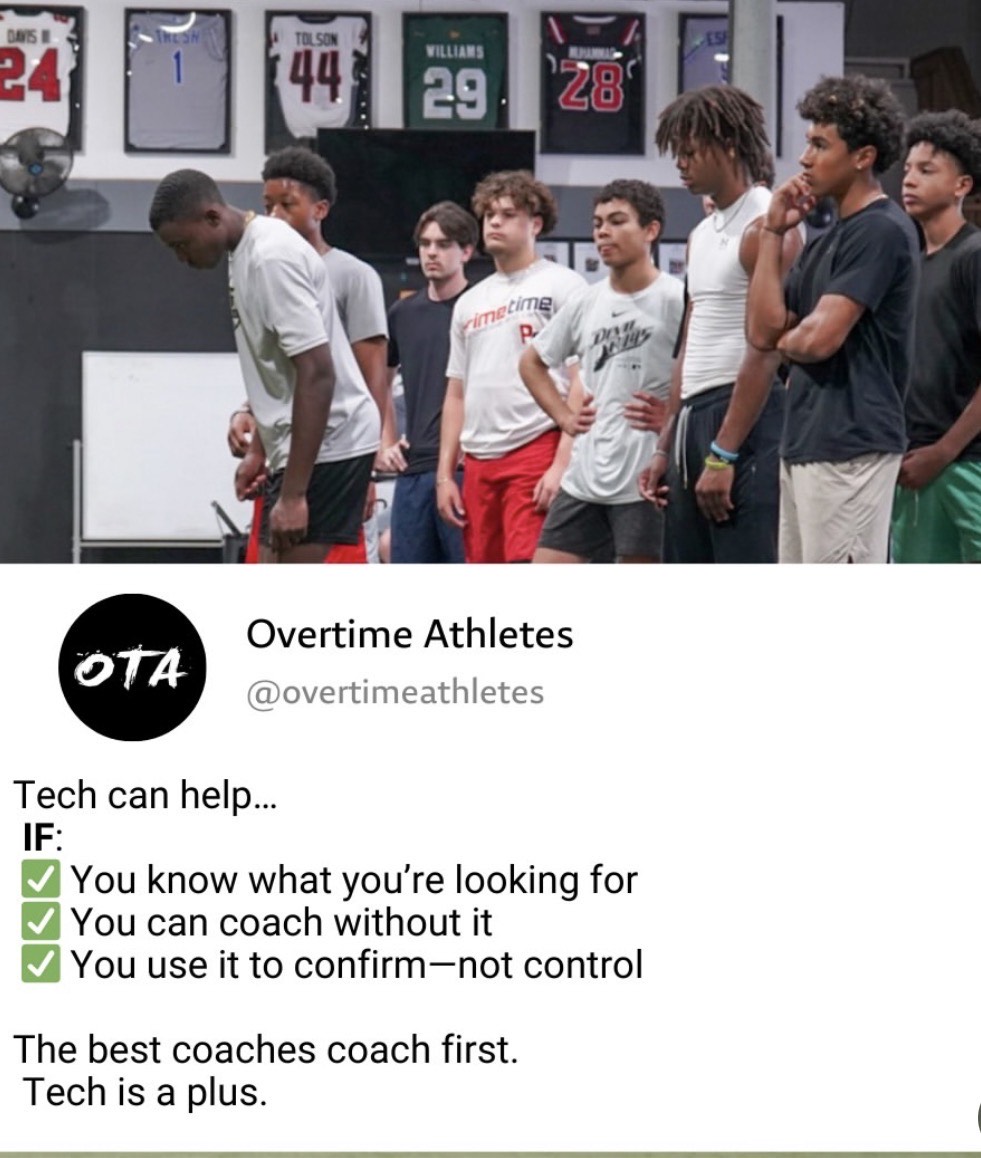
They:
- Hide behind data
- Overanalyze meaningless metrics
- Chase precision without purpose
- Confuse measurement with mastery
Sports technology becomes a crutch when coaches lack:
- Coaching confidence
- Movement knowledge
- Programming experience
- Real-world reps with athletes
Technology should support coaching—not replace it.
Coaches Must Learn to Coach First
Before worrying about dashboards and metrics, coaches must master:
- Teaching movement
- Coaching intent
- Building trust
- Reading athletes
- Adjusting programs quickly
- Solving problems under pressure
Sports technology is powerful only after these skills are developed. Practical coaching experience matters more than certifications, gadgets, or software access.
So, Where Does Sports Technology Actually Shine?
When it is paired with elite coaching, sports technology can:
- Validate programming decisions
- Track long-term progress
- Identify fatigue trends
- Support return-to-play strategies
- Enhance athlete buy-in after results are visible
Used correctly, it sharpens coaching. Used incorrectly, it distracts from it.
Final Takeaway: Coaching > Technology
Sports technology is here to stay—and that’s a good thing.
But let’s be clear, technology doesn’t build athletes:
- Coaching does
- Programming does
- Experience does
The best coaches don’t chase data—they chase outcomes.
They use sports technology as a tool, not a replacement for skill, intuition, and real-world coaching ability.
Become an Elite Coach, Not a Data Operator
If you want to truly understand:
- How to coach athletes in real time
- How to program for performance
- How to spot asymmetries quickly
- How to use sports technology without relying on it
Then you need principles—not just tools.
👉 Enroll in OTA University Certification
In this course, you can learn the foundations of elite coaching, intelligent programming, and athlete development—so technology enhances your coaching instead of replacing it. Click the image below to get started!
Because the future belongs to coaches who can think, adapt, and deliver results—not just read numbers.