Volleyball Training This Offseason
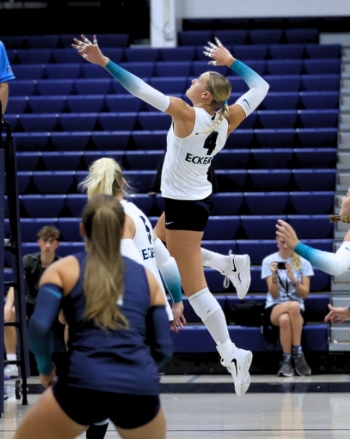
College commitments aren’t earned in the fall. They’re earned in the offseason, when nobody’s watching and the athletes who want it most are putting in the work.
Here’s the problem. Most volleyball athletes treat the offseason like more of the same. Another club season. More skill sessions. More reps of the exact same thing they’ve been doing all year. And they think that’s what’s making them better.
It’s not. Skills matter, but college coaches are recruiting athletes, not just players. They want the hitter who touches higher, the blocker who closes faster, and the defender who can move like it’s nothing. Those qualities come from one place: the weight room and a real volleyball training plan built around athletic development.
If you’re serious about playing at the next level, here are the three priorities that will separate you this offseason.
1. Build Serious Strength (This Is the Big One)
If you take one thing from this article, make it this: strength is the biggest thing most volleyball athletes are missing.
Not skill. Not touches. Strength.
Think about everything that wins at the next level. A higher approach jump. A harder arm swing. A quicker first step to the ball. A stronger, more stable block. Every one of those starts with how much force you can produce. And you can’t produce force you don’t have.
The athletes who go straight from one club season into the next never get the chance to build that foundation. They’re always playing, always tired, always just maintaining. That’s how you end up as a senior with the same body you had as a freshman, wondering why the commitments went to someone else.
The fix is simple, but it takes discipline. You need a year-round strength training program. Not a few random lifts in the summer. Not whatever your team does twice a month. A structured plan that builds through the offseason and keeps you strong during the season.
Your offseason strength work should focus on:
• Lower-body strength: squats, trap bar deadlifts, split squats, and hip hinges to build the legs and hips that power every jump.
• Single-leg strength: step-ups and rear-foot elevated split squats, because volleyball is played off one leg as much as two.
• Upper-body and core strength: presses, rows, pull-ups, and anti-rotation work to support a powerful, controlled swing.
• Progressive overload: adding weight, reps, or difficulty over time so you keep getting stronger instead of just staying busy.
Strength is the base everything else is built on. Build it first.
Check out our guide on building an elite vertical for volleyball!
2. Develop Real Explosiveness and Vertical Power
Once you’re building strength, the next step is turning that strength into speed. That’s explosiveness, and in volleyball it shows up everywhere: your approach, your block jump, your first step, and how fast you get off the floor.
A lot of athletes think they’re already training this. “We jump all the time in practice.” But jumping in practice isn’t the same as training your jump. Practice reps are about skill. They aren’t programmed, they aren’t progressive, and by the end of a long session you’re jumping tired, which doesn’t build power.
Real vertical power development looks different. It means progressive plyometric and jump training with a plan behind it:
• Start with landing mechanics. Learn to absorb force with good knee and hip position before adding intensity.
• Build to jumps and bounds. Box jumps, broad jumps, and lateral bounds teach you to produce force fast.
• Progress to reactive work. Depth jumps and repeated hops train your body to use the floor like a spring.
• Add loaded power. Trap bar jumps and med ball throws connect your strength to your speed.
• Keep the volume smart. Fresh, high-quality reps beat hundreds of sloppy ones.
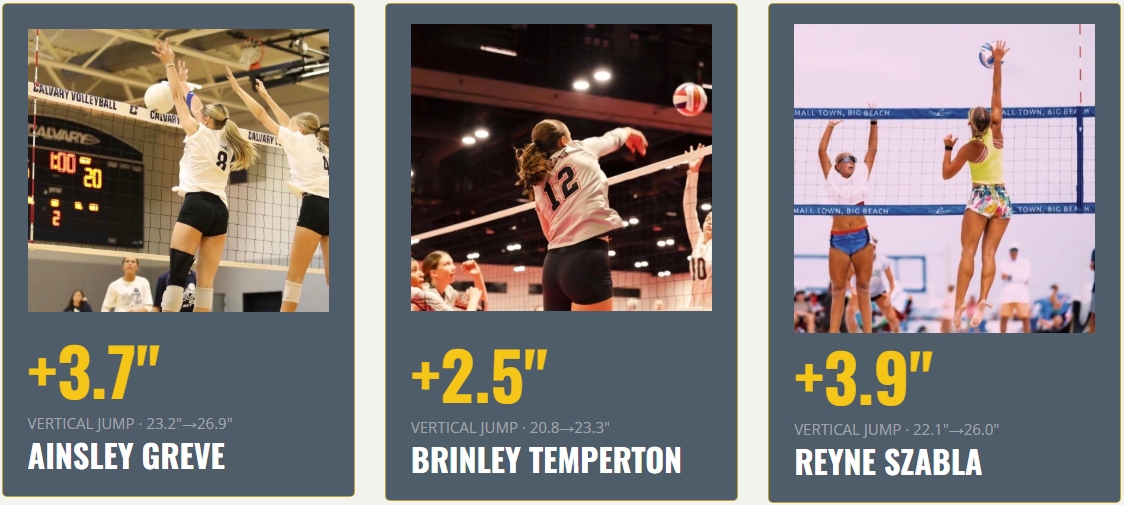
When strength and plyometrics work together, your vertical climbs. And a few extra inches on your touch is exactly what makes a college coach stop scrolling through highlight film.
3. Bulletproof Your Knees and Shoulders
You can’t get recruited from the bench, and you definitely can’t get recruited from the training room. The third priority is joint integrity, and for volleyball athletes that means two areas: knees and shoulders.
Your knees take a beating. Every approach, every block, every landing sends serious force through them, hundreds of times a week. If your knees aren’t strong and durable, that stress adds up fast. Build them up with:
• Slow, controlled eccentric work like tempo squats and split squats
• Single-leg balance and landing drills
• Hamstring and glute strength to support the knee from above
• Tibialis and calf work to support it from below
Your shoulders handle a different kind of stress. Swinging hard and blocking put huge demands on a small, mobile joint. Weak shoulders don’t just limit your arm swing, they put you at risk of the kind of overuse injury that can cost you a season.
Strengthen them with:
• Rotator cuff work, especially external rotation
• Scapular strength like rows, face pulls, and Y-T-W raises
• Overhead stability and controlled pressing
• Thoracic mobility so your shoulder isn’t doing all the work
Durable athletes stay on the court. Athletes who stay on the court get seen.
Read our article on the best isometrics for volleyball here!
Final Thoughts
More games and more skill sessions won’t fix what’s really holding you back. The athletes earning college commitments are the ones who use the offseason to change their bodies: stronger, more explosive, and durable enough to perform every single time they step on the court.
So here’s your offseason plan:
1. Build serious strength with a year-round program.
2. Develop explosiveness with progressive plyometric and jump training.
3. Protect your knees and shoulders so you stay healthy and on the court.
Do those three things consistently, and you won’t just be a better volleyball player. You’ll be the athlete college coaches are looking for.
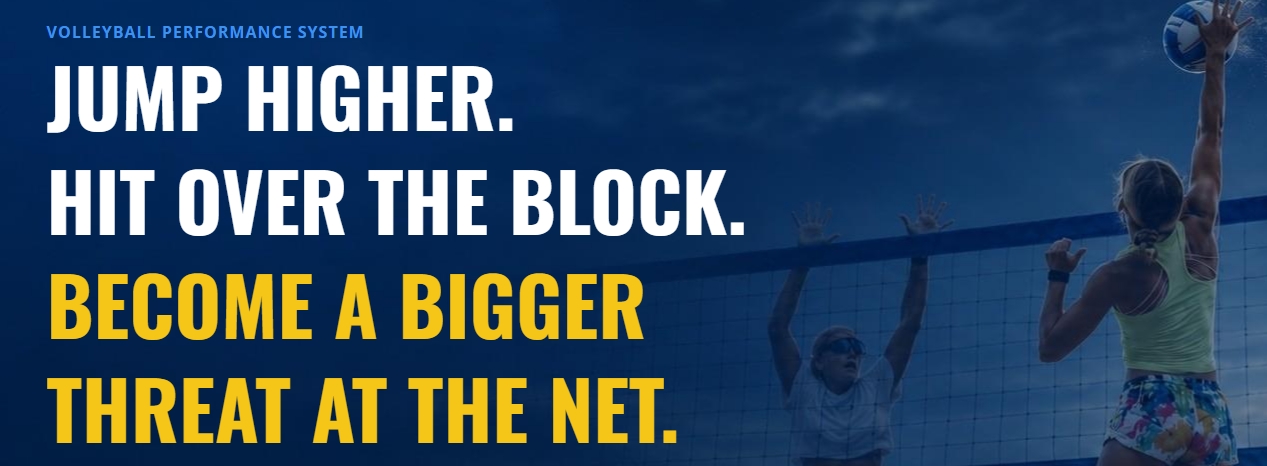
You don’t have to figure this out alone. Our brand new Volleyball Performance System gives you everything you need for a successful offseason, all in one place:
• A structured, year-round strength training program built for volleyball
• Progressive plyometric and vertical jump training to add inches to your touch
• Knee and shoulder durability work to keep you healthy all season
• A clear plan, so every session has a purpose
Get the Volleyball Performance System today →