
Top 5 Drills to Build Lateral Power for Baseball
When most people think about power training for baseball, they picture sprinting, vertical jumps, or big bilateral lifts. But baseball isn’t just a straight-line or vertical sport. It’s a lateral and rotational game.
If you want to improve first-step quickness, throwing velocity, bat speed, and defensive range, you need to train lateral power for baseball. You can help a baseball athlete get a big vertical jump, but if they can’t move and produce force efficiently laterally, it’s going to effect their game.
Lateral power is the ability to produce force side-to-side, absorb it efficiently, and re-apply it explosively. Every swing, throw, shuffle, and change of direction relies on how well an athlete can load and explode laterally. Below are five drills we use consistently to develop transferable lateral power that shows up on the field and on game day.
See our previous article on improving baseball velocity and swing speed!
Why Lateral Power Matters for Baseball Players
Baseball players live in the frontal plane more than they realize.
• Infielders shuffle and react laterally on every pitch
• Outfielders explode side-to-side before opening up to sprint
• Hitters generate force from the ground laterally before rotating
• Pitchers rely on lateral drive and hip extension to transfer force up the chain
Poor lateral power leads to slow reactions, weak force transfer, and higher injury risk at the hip, groin, and knee. Training lateral power for baseball helps athletes move faster, hit harder, throw harder, and stay healthier over a long season.
Now let’s get into the drills.
1. Single-Leg Lateral Broad Jump
This is a basic, fundamental drill that every baseball player should master.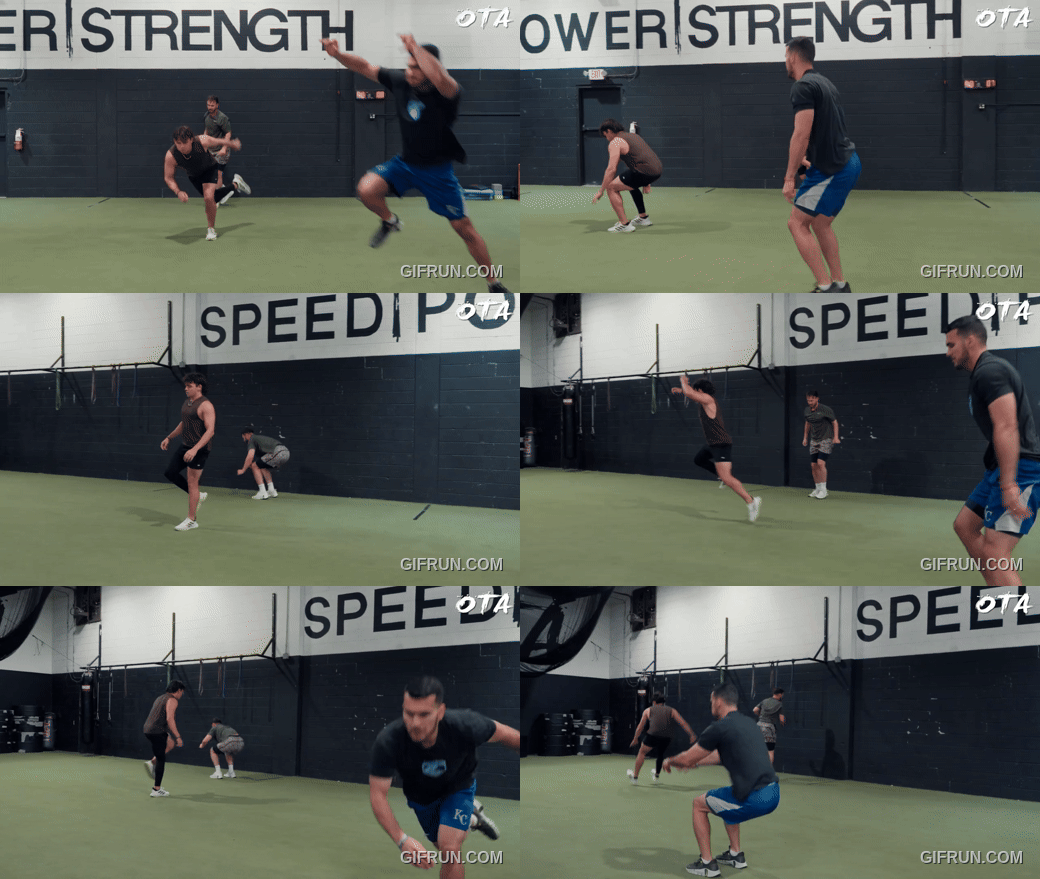
The single-leg lateral broad jump teaches athletes how to produce force off one leg, absorb it on the opposite side, and stabilize dynamically — exactly what happens during hitting, throwing, and defensive movement.
This exercise helps train and improve unilateral force production, frontal plane power and stability, and emphasizes proper hip loading and force projection.
This drill is progress able and simple to increase the intensity for greater stimulus. Start with bodyweight and focus on clean takeoffs and controlled landings. Once technique is solid, you can add med ball loading or band resistance to increase demand without compromising mechanics.
This drill builds the foundation for all advanced lateral power work.
2. Lateral Power Shuffle
The lateral power shuffle trains the ability to apply force laterally while staying athletic and reactive.
Unlike straight lateral bounds, this drill emphasizes continuous movement, full hip extension, and force application while maintaining posture — critical for baseball players who rarely stop moving.
This exercise helps train continuous lateral force application, full lateral hip extension, and improves defensive range and carries over to better lateral quickness.
Athletes should push the ground away aggressively, not just “slide” side to side. The goal is powerful, rhythmic force application that translates directly to in-game shuffles and transitions. This is a simple lateral drill to teach repetitive lateral application of force into the ground.
3. Half-Kneeling Lateral Broad Jump
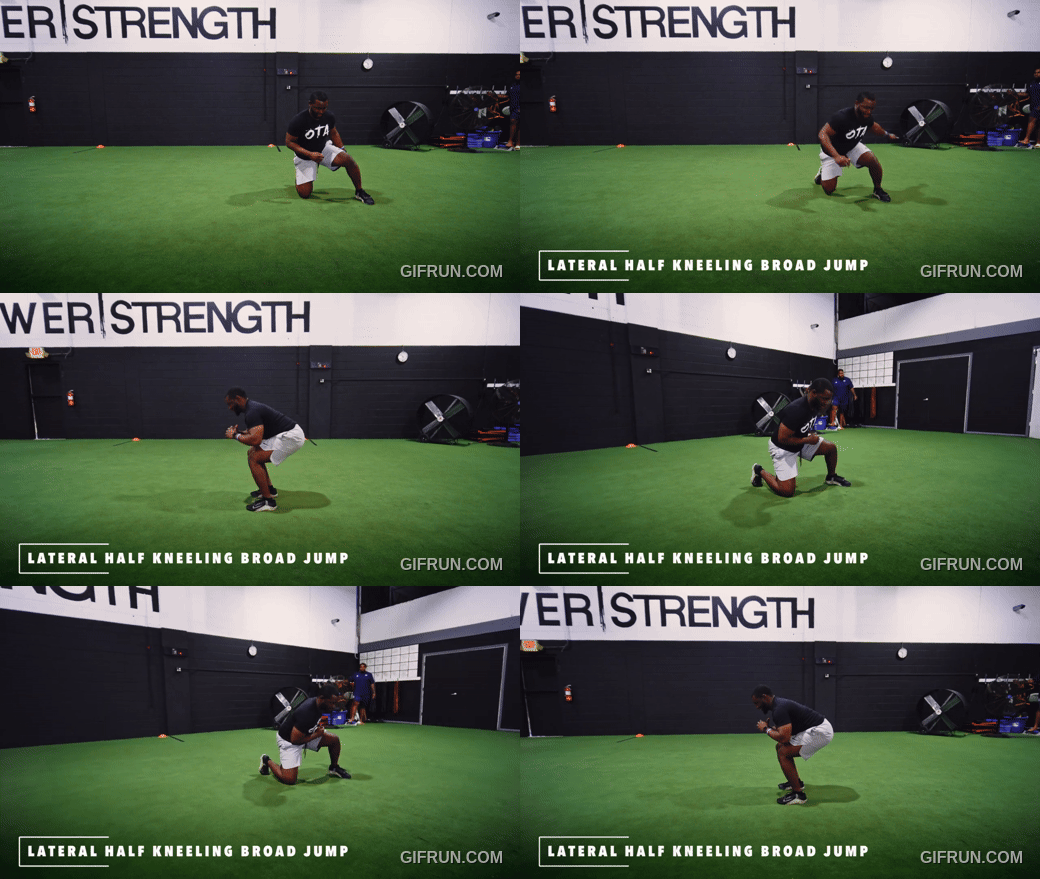
This drill removes momentum and stretch reflex to focus purely on force production through a full range of motion.
Starting from a half-kneeling position forces athletes to generate power from a dead stop, exposing weaknesses in hip strength and lateral drive.
This exercise builds concentric force production, improves force output without elastic assistance or counter movement, and can help improve any asymmetries between each side.
Have athletes explode laterally from the kneeling position into a powerful jump. Keep reps low and quality high. This is a great drill early in a session before fatigue sets in.
If you want to improve raw lateral power for baseball, this drill is a must. It’s a great drill to develop that fast twitch, first step power, training the athlete to go from zero to applying max force quickly.
4. Lateral Sled Drag
The lateral sled drag is one of the best ways to build concentric lateral strength safely and effectively.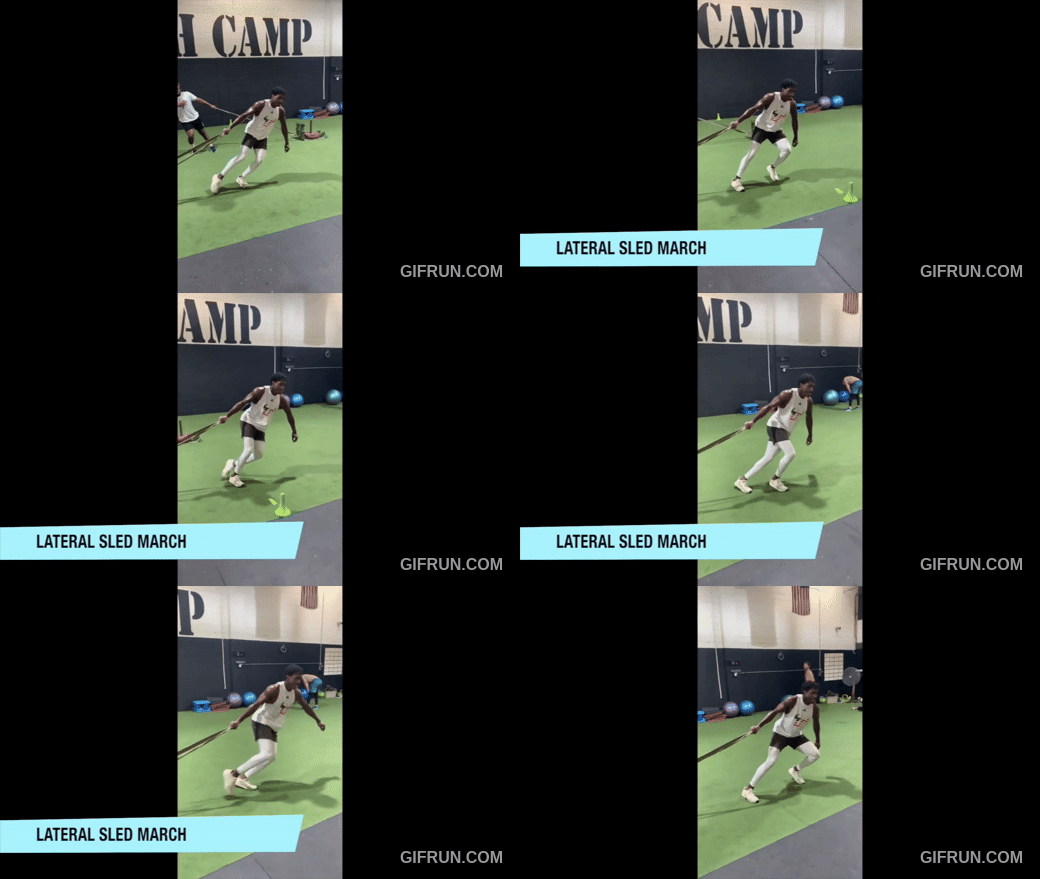
While plyometrics train speed and explosiveness, strength is still the engine. This drill allows athletes to load the lateral pattern without high impact, making it perfect for in-season or higher-volume phases.
This exercise is great for building lateral hip and leg strength, reinforce shin and torse angle for sprinting laterally, and is very low stress on the athlete’s body eccentrically.
Use moderate loads and focus on strong, powerful steps rather than speed. We don’t want short choppy steps. The athletes need to perform with big powerful strides so they are emphasizing applying force into the ground laterally.
This drill pairs extremely well with lateral jumps or shuffles in contrast training.
5. Drop Step or Seated Med Ball Side Toss
This is your ballistic, high-velocity drill for explosive power.
Med ball throws allow athletes to express power at game speed without deceleration constraints. Whether you use a drop step or seated variation, the goal is aggressive lateral force production that transfers into rotation. This is great for sequencing the power from the legs into the rotation, which is a must for baseball.
This exercise trains explosive lateral-to-rotational power, improves force transfer for hitting and throwing, and drives high intent and velocity.
Every rep should be thrown with max effort intent. This is not conditioning — it’s power. Athletes can’t just go through the motions. Make sure they’re taking their time for every rep to make sure they’re performing every throw with maximal intensity.
Final Thoughts: Train What the Game Demands
Developing lateral power for baseball isn’t optional, it’s foundational. The best players aren’t just strong or fast; they can produce and transfer force laterally with precision and efficiency. This carries over to how well they hit, throw, play defense, and run the bases.
These five drills cover the full spectrum that any athlete needs when training a specific modality of movement:
• Unilateral force production
• Dynamic lateral movement
• Concentric strength
• Ballistic power expression
When implemented and trained correctly and progressed intelligently, they lead to faster reactions, harder hits, stronger throws, and better durability over the season.
If you want a structured plan that builds lateral power, rotational strength, speed, and durability — not random drills — start our Baseball Performance Program.
