
My 5 Best Exercises to Help Reduce Hamstring Injury Risk for Athletes
A hamstring injury can take an athlete from performing at a high level to sitting on the sideline in a matter of seconds.
Hamstring strains are especially common in athletes who sprint, accelerate, decelerate, jump, cut, and repeatedly produce high amounts of force. Football, soccer, baseball, basketball, and track athletes all place significant demands on the hamstrings. And the faster and more explosive the athlete becomes, the more force the hamstrings have to handle.
The problem is that many athletes wait until they have a hamstring injury before they start training their hamstrings properly.
That is backwards.
The goal should be to build strong, resilient hamstrings before an athlete gets hurt.
A hamstring injury can occur when the hamstrings are forced to produce or absorb more force than they can currently handle. This commonly happens during high-speed sprinting when the hamstrings are rapidly lengthening while also producing force to control the leg.
That means hamstring injury prevention isn’t simply about stretching more. It’s not just about mechanics. Athletes need to develop the strength and capacity to handle the positions and forces they experience during sport.
Read our article “Are Speed Mechanics Overrated” here!
Let’s get into it.
When Does a Hamstring Injury Happen?
The hamstrings are made up primarily of the biceps femoris, semitendinosus, and semimembranosus. These muscles cross both the hip and knee, which means they play an important role in controlling both joints.
During sprinting, the hamstrings help extend the hip and control the knee while the leg moves rapidly through space.
One of the highest-risk portions of sprinting occurs during late swing. The leg is moving forward at high speed, the knee is extending, and the hamstrings are lengthening while preparing to help produce and control force before ground contact.
This is a major reason why an athlete can feel a hamstring injury during a high-speed sprint even though they weren’t directly hit or tackled.
The hamstrings are working extremely hard under high-speed eccentric conditions.
Athletes can also put themselves at risk when they suddenly increase sprint volume, intensity, or training frequency without having developed the necessary tissue capacity.
A strong athlete isn’t automatically a hamstring injury-proof athlete.
They need to be strong through the ranges of motion and contraction types that their sport demands.

This is where these five exercises come into play.
1. Single-Leg RDLs
The Single-Leg Romanian Deadlift is one of my favorite exercises for developing hamstring strength while also challenging the glutes, hip stability, and single-leg control.
The hamstrings have to control the lowering phase as the athlete hinges at the hip and allows the working leg to move backward.
This creates a loaded stretch through the hamstrings while teaching the athlete to produce force through the hip.
The single-leg component is also important for athletes because sprinting and most athletic movements are performed one leg at a time.
Don’t turn this into a balance exercise.
Use enough resistance to challenge the hamstrings, maintain a strong position, and control the eccentric portion of the movement.
2. Nordic Hamstring Curls
If there is one exercise that belongs in the conversation around hamstring injury prevention, it’s the Nordic Hamstring Curl.
Nordics expose the hamstrings to extremely high eccentric demands. The athlete has to resist knee extension while controlling the body as it moves toward the floor.
This is exactly the type of eccentric strength that athletes need when sprinting and performing high-speed movements.
Quality matters.
Control the lowering phase, maintain a strong hip position, and use assistance when necessary so the athlete can perform the exercise correctly.
For athletes who aren’t accustomed to Nordics, starting with low volume and gradually building tolerance is usually much smarter than immediately destroying the hamstrings with high-volume eccentric work.
A well-programmed Nordic progression can be an excellent tool for improving hamstring capacity and helping reduce hamstring injury risk.
3. Weighted GHD Raises
Weighted GHD Raises are another excellent option for building posterior-chain strength through a large range of motion.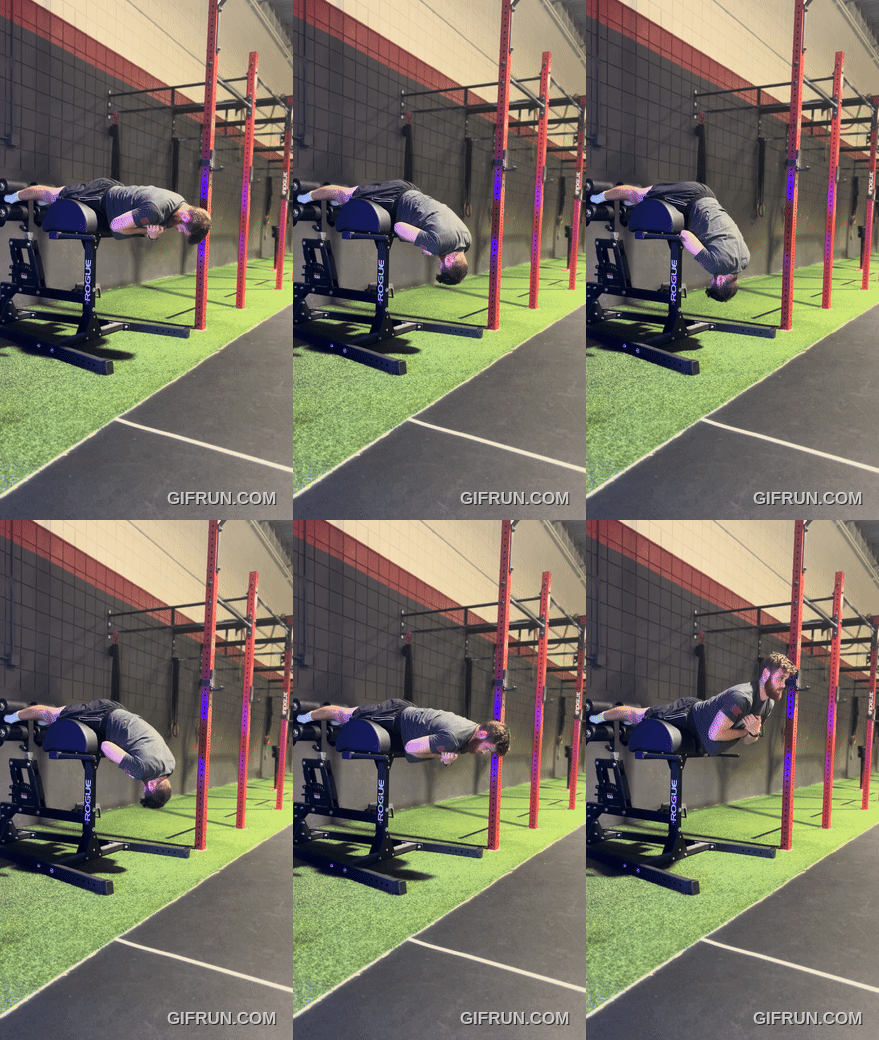
The GHD allows the athlete to train the hamstrings and glutes while controlling the movement through the hip.
Adding external load increases the strength demand and allows stronger athletes to continue progressing instead of being limited to bodyweight work.
The key here is controlling the movement rather than bouncing through the bottom.
The hamstrings need to be capable of producing force while lengthened, and GHD work gives you another way to progressively expose them to that demand.
For advanced athletes, this can be an extremely effective addition to a comprehensive hamstring strength program.
4. Single-Leg Hamstring Curl / Slider
Single-leg hamstring curls or sliding leg curls are a great way to directly train knee-flexion strength while also challenging the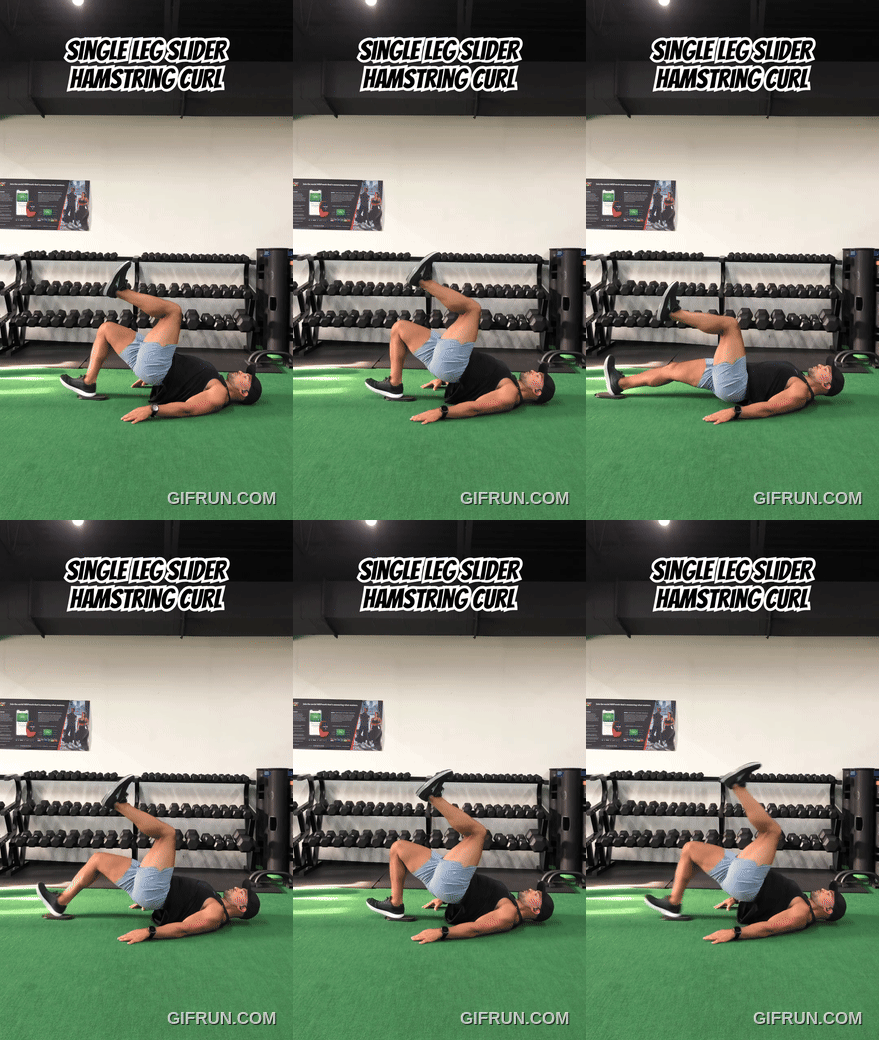 hamstrings to stabilize the pelvis.
This is important because the hamstrings aren’t just hip extensors. They also contribute to knee flexion and help control the lower leg during running.
The single-leg variation makes the exercise more demanding because each side has to produce the required force independently.
You can perform these with a machine, slider, towel on a smooth surface, or other appropriate equipment.
Start with controlled repetitions and progress the resistance or difficulty as the athlete becomes stronger.
This is also an excellent accessory movement when you want to increase hamstring training volume without constantly using maximal loading.
5. Single-Leg Hamstring-Glute Bridge ISO on a Foam Roller or Swiss Ball
This is one of my favorite hamstring-focused exercises.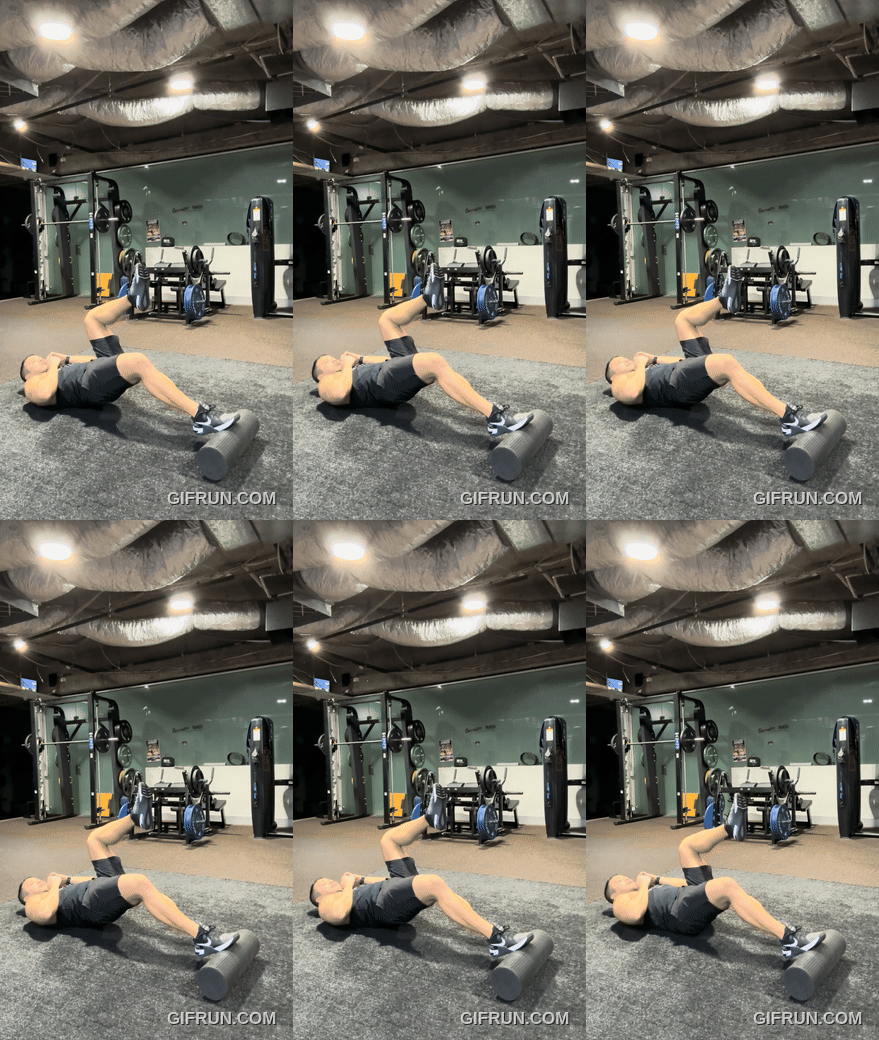
Place the working foot on a foam roller or Swiss ball, elevate the hips into a bridge position, and maintain the position while keeping the hamstring lengthened and under tension.
The unstable surface increases the stabilization demand while the single-leg position forces each hamstring and glute to contribute independently.
This exercise isn’t about moving a huge amount of weight.
It’s about creating and maintaining tension.
Isometric training can be especially useful for teaching an athlete to maintain force production while the hip and knee remain in challenging positions.
For athletes who struggle with hamstring endurance or pelvic control, this can be a great addition to their training.
Don’t Just Train Hamstrings. Train Athletes.
Reducing hamstring injury risk isn’t about finding one magical exercise.
It’s about developing an athlete who can produce and absorb force.
That means building strength in the hamstrings, glutes, and entire lower body while progressively exposing the athlete to sprinting, acceleration, deceleration, jumping, cutting, and high-speed movement.
An athlete who never sprints because they’re afraid of getting a hamstring injury isn’t necessarily becoming more resilient.
They’re often becoming less prepared for the demands of sprinting.
The answer is progressive exposure. Meaning they need to also sprint more often.
Build the strength first. Then teach the athlete to apply that strength through increasingly faster and more explosive movements.
See our previous article on the best hamstring exercises for explosive athletes!
Final Thoughts
A hamstring injury can be one of the most frustrating setbacks an athlete experiences because it can keep them away from the sport they train so hard to play.
But athletes don’t have to simply hope they stay healthy.
They can build the physical qualities that help them handle the demands of their sport.
Single-leg RDLs, Nordic Hamstring Curls, weighted GHD raises, single-leg hamstring curls, and single-leg hamstring-glute bridge isometrics give you five different ways to develop the strength and capacity of the posterior chain.
But strength is only one piece of the puzzle.
The ultimate goal is to take that strength and turn it into athletic performance.
That means developing stronger legs, better force production, better sprint mechanics, and the ability to repeatedly produce and absorb force at high speeds.
That’s exactly what we focus on in the Athletic Speed System.
If you want to get faster, become more explosive, and build the strength and physical qualities needed to perform at higher speeds, check out the Athletic Speed System and start training with a system built specifically for athletes.
Don’t wait until a hamstring injury forces you to take time off.
Build the strength and athleticism to be ready for the demands of your sport.
