
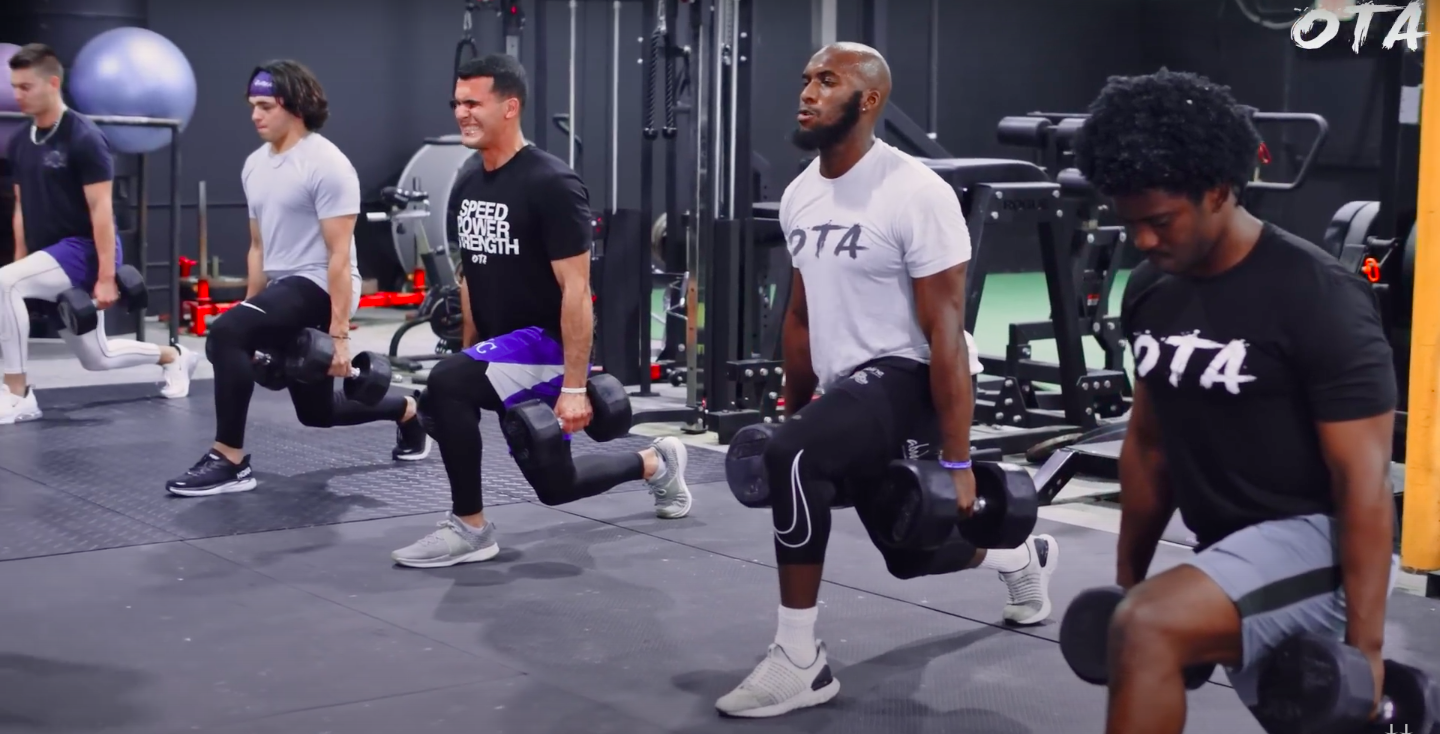
Isometric Training Exercises for Athletes: How This Builds Elite Strength, Joint Resilience, and Game-Day Performance
As a performance coach, my job isn’t just to make athletes stronger — it’s to make them more durable, more explosive, and more reliable when the game is on the line. One of the most misunderstood yet powerful tools we use to do that is isometric training. When most people think of training, they picture barbells moving fast, jumping, sprinting, or grinding through reps. What they don’t think about — and what often separates resilient athletes from constantly injured ones — is the strategic use of isometric training exercises for athletes.
Isometric exercises aren’t new. Elite strength coaches, physical therapists, and high-level athletes have used them for decades. What’s changed is how we now understand their role in tendon health, joint integrity, force production, and correcting imbalances that limit performance. The great thing about isometric training is they can be used any phase of a program all year long. They are that beneficial to athletes.
In this article, I’m going to break down why isometric training matters for athletes, how they directly improve performance, and how we program the three main types of isometrics inside a smart training system. Read our previous article here on the best isometrics for vertical jump.
Why Isometric Training Matters for Athletic Performance
Isometric training is any contraction where the muscle produces force without changing length. No visible movement, but a whole lot happening under the hood.
From an athletic standpoint, this matters because sport is full of positions, stops, and force absorption moments:
- Cutting and decelerating
- Holding ground in contact
- Sticking landings
- Bracing before explosive movement
This is where isometrics training exercises shine.
1. Building Strength at Specific Joint Angles
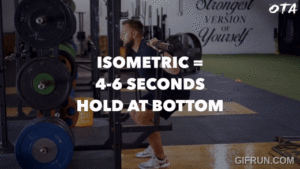 One of the biggest benefits of isometrics is angle-specific strength. Athletes don’t always fail because they’re weak overall — they fail because they’re weak in key positions.
Examples:
- A knee collapsing inward at the bottom of a cut
- Losing posture at the start of a sprint
- Getting folded during contact
Isometrics allow us to load those exact positions safely and aggressively. We can teach athletes to own:
- Deep knee angles
- Split stance positions
- Athletic quarter-squat postures
- Single-leg loading positions
When an athlete can produce and maintain force in these positions, everything else improves.
2. Joint and Tendon Health: The Game Changer
If you coach athletes long enough, you realize strength alone doesn’t keep them healthy — tendon capacity does.
Tendons respond extremely well to isometric loading. Research and real-world coaching experience show that isometrics can:
- Reduce tendon pain
- Improve tendon stiffness and load tolerance
- Increase force transfer from muscle to bone
This is huge for:
- Patellar tendon issues
- Achilles problems
- Elbow and shoulder overuse injuries
That’s why we use isometric training exercises year-round — not just in rehab, but in performance phases to keep athletes durable. This was a great quote I heard from Jake Tuura on "Jacked Athlete Podcast" (definitely check out his channel for great information on tendons and athletic rehab):
"Rest is great for the muscles. Bad for the tendons. Tendons need tension and load to stay strong."
3. Improved Muscle Recruitment and Neural Drive
Isometrics allow athletes to generate high levels of muscle activation without excessive joint stress. When done correctly, they teach the nervous system to recruit more motor units — especially at high effort levels.
This leads to:
- Better force production
- Improved rate of force development
- Stronger contractions when transitioning to dynamic movement
In simple terms: athletes learn how to turn muscles on harder and faster.
4. Correcting Asymmetries and Weak Links
Every athlete has asymmetries. The problem isn’t that they exist — it’s when they go unaddressed.
Isometrics are one of the best tools we have to:
- Load one limb at a time
- Eliminate momentum and compensation
- Expose weak links quickly
Single-leg isometrics, split stance holds, and unilateral joint-angle work allow us to clean up movement patterns without beating the athlete into the ground.
That’s why isometrics training exercises are a staple in our programming for athletes returning from injury or dealing with chronic issues.
The Three Main Types of Isometric Training (And How We Use Them)
Not all isometrics exercises are the same. If you want results, you need to understand the different types, their benefits, and when to use them.
1. Yielding Isometrics
What they are:
Yielding isometrics involve holding a load or position and resisting gravity or external force for time.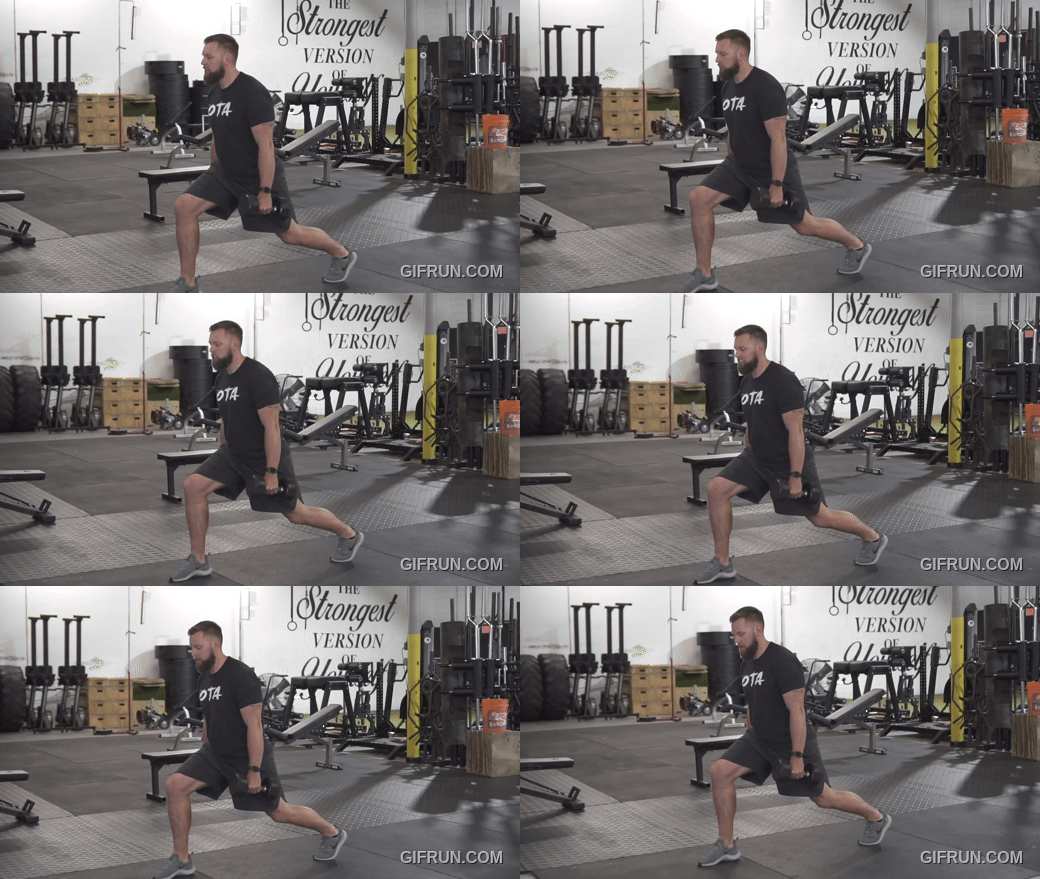
Examples:
- Wall sits
- Split squat holds
- Planks
- Isometric calf holds
- Single-leg RDL holds
Why they matter:
Yielding isometrics build:
- Muscular endurance
- Postural control
- Joint stability
- Tendon tolerance
They’re especially effective for:
- Early return-to-play phases
- Teaching athletes how to “own” positions
- Improving deceleration and landing mechanics
How we program them:
- 2-4 sets of 20-45 second holds or until they reach a total time like 2-3 total minutes
These are often used in warm-ups, accessory blocks, or as finishers when we want quality without fatigue.
Yielding isometrics training exercises are foundational — especially for younger or deconditioned athletes.
2. Overcoming Isometrics
What they are:
Overcoming isometrics involve pushing or pulling against an immovable object as hard as possible.
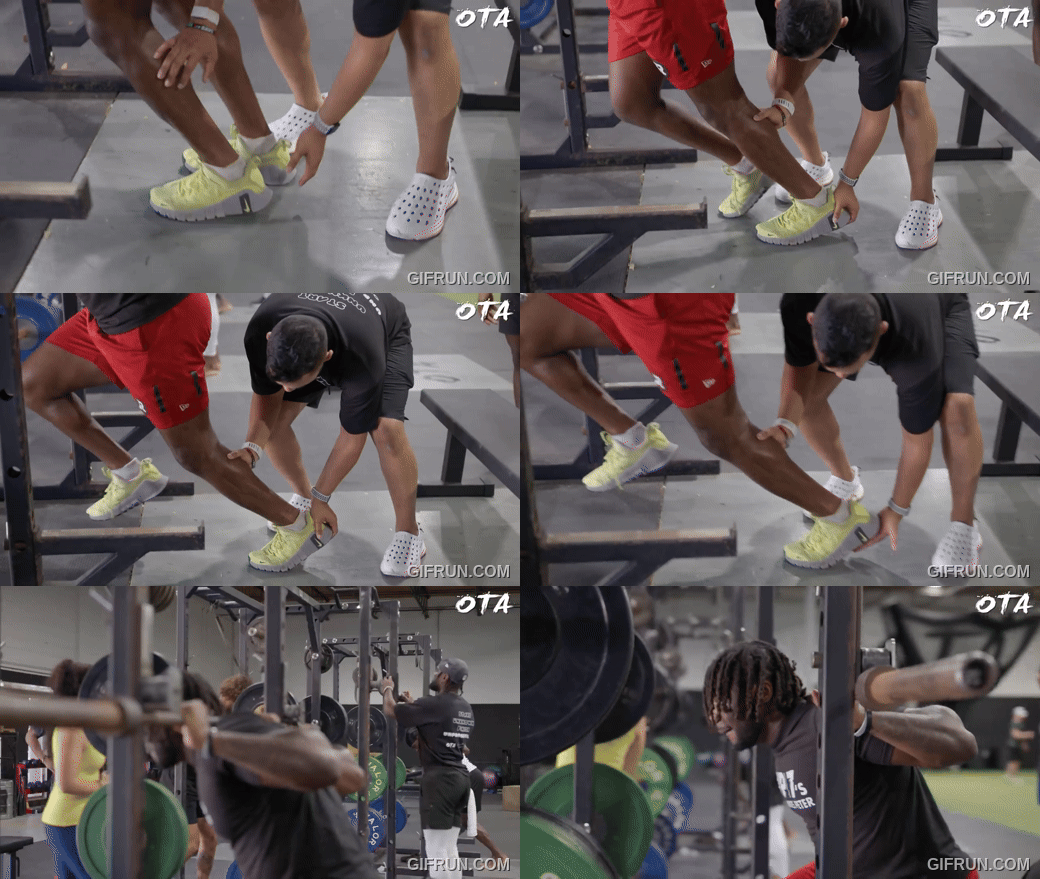
Examples:
- Barbell pinned against safety bars
- Pushing into a rack
- Pulling on an unmovable strap or bar
- Isometric mid-thigh pulls
Why they matter: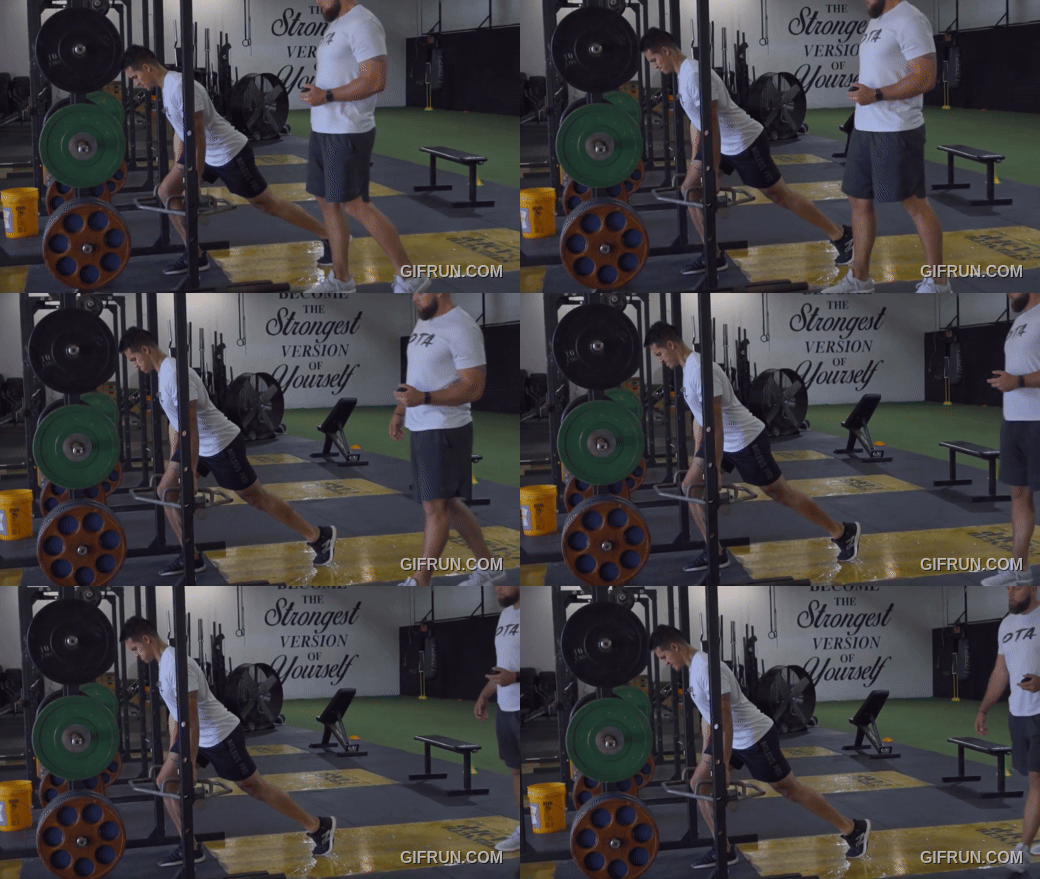
This is where we build maximum force output.
Overcoming isometrics:
- Increase neural drive
- Improve maximal strength
- Enhance explosive performance
- Teach athletes to apply force aggressively
Because there’s no movement, athletes can safely generate near-maximal effort without joint wear and tear.
How we program them:
- 2-4 sets of 5-10 seconds maximal efforts
- Full recovery between reps
These are advanced and best used with experienced athletes. When done right, overcoming isometrics training exercises directly transfer to sprinting, jumping, and contact strength.
3. Quasi-Isometrics (Iso-Dynamics)
What they are:
Quasi-isometrics exercises sit between isometric and dynamic training. The athlete holds a position and performs micro-movements or controlled pulses.
Examples: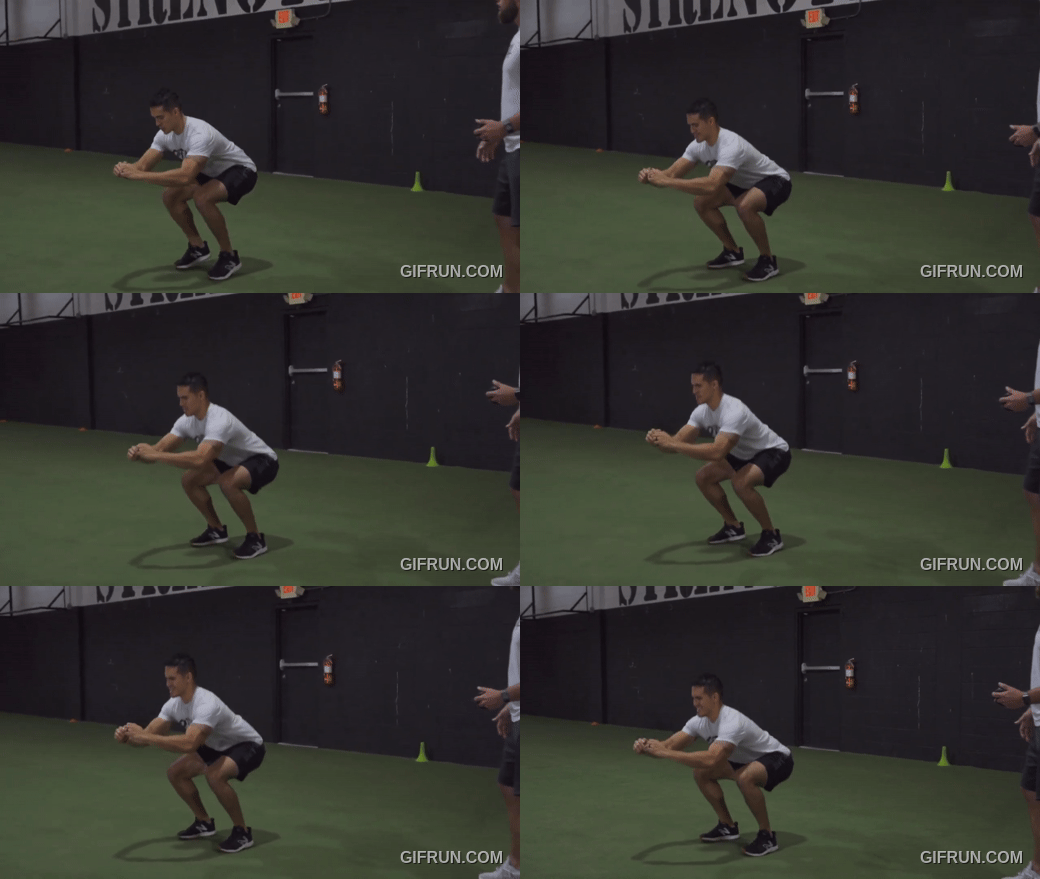
- Tempo squats with long pauses
- Isometric holds with small range pulses
- Slow eccentrics into a static hold
- Pause reps at weak positions
- Oscillatory jumps holding joint positions
Why they matter:
Quasi-isometrics:
- Improve positional strength
- Build time under tension
- Bridge the gap between static and dynamic movement
- Reinforce proper mechanics under fatigue
They’re extremely useful for: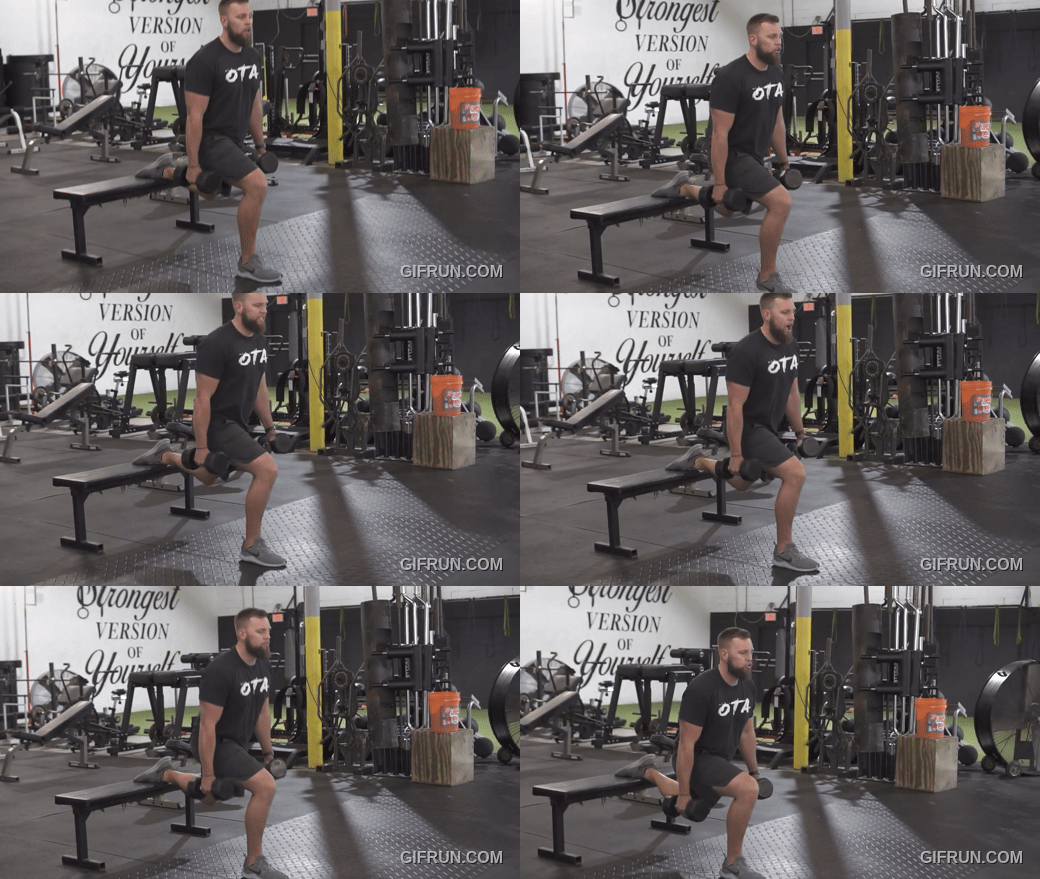
- Teaching technique
- Building resilience in sport-specific ranges
- Preparing athletes for plyometrics and high-speed work
How we program them:
- 3-4 sets of 10 seconds or 8-10 reps
- Emphasis on control and intent
These isometrics training exercises are excellent during accumulation phases or when transitioning athletes back to high-intensity work. Also good low intensity prep before performing higher intensity plyometrics.
How We Use Isometrics Inside a Complete Performance Program
Isometrics are not a replacement for sprinting, jumping, or lifting — they’re a multiplier.
We use them to:
- Prepare joints before high-impact work
- Reinforce positions before heavy lifts
- Improve tissue tolerance during long seasons
- Maintain strength when volume needs to drop (like when the athlete is in-season)
The key is intent and placement. Random holds won’t move the needle. Strategic isometrics training exercises will.
Conclusion: Why Every Athlete Should Be Using Isometrics
If you care about performance, longevity, and availability — you can’t ignore isometrics.
They build:
- Elite strength in key positions
- Healthier joints and tendons
- Better muscle recruitment
- Fewer asymmetries
- More resilient athletes
At Overtime Athletes, we don’t chase trends — we use what works. And isometric training has earned its place in every serious performance program we run. See our previous article on the triphasic training for vertical and how isometrics training fits into the overall program!
Whether you’re rehabbing, building strength, or trying to stay explosive through a long season, isometrics training exercises should be part of the plan.
Strong positions win games. Durable athletes stay on the field. Isometrics help deliver both.

