

General Physical Preparedness: When Athletes Should Train GPP
Every athlete wants to get faster, stronger, more explosive, and more powerful.
But here’s the problem: you can’t build elite performance on a weak foundation.
Before an athlete can handle high-intensity sprinting, heavy lifting, aggressive plyometrics, and advanced power training, they need to be physically prepared to handle the demands of that training.
That’s where general physical preparedness (GPP) comes in.
GPP training is the foundation of athletic development. It’s designed to build the physical qualities an athlete needs before progressing into more specialized and intense training.
And while experienced athletes may spend less time in a GPP phase, GPP never becomes unnecessary. Make sure to check out our last article on general physical preparedness!
What Is General Physical Preparedness?
General physical preparedness is essentially the process of building an athlete’s physical foundation.
Instead of immediately focusing on highly specific performance qualities, GPP training develops broad physical qualities such as:
- Strength
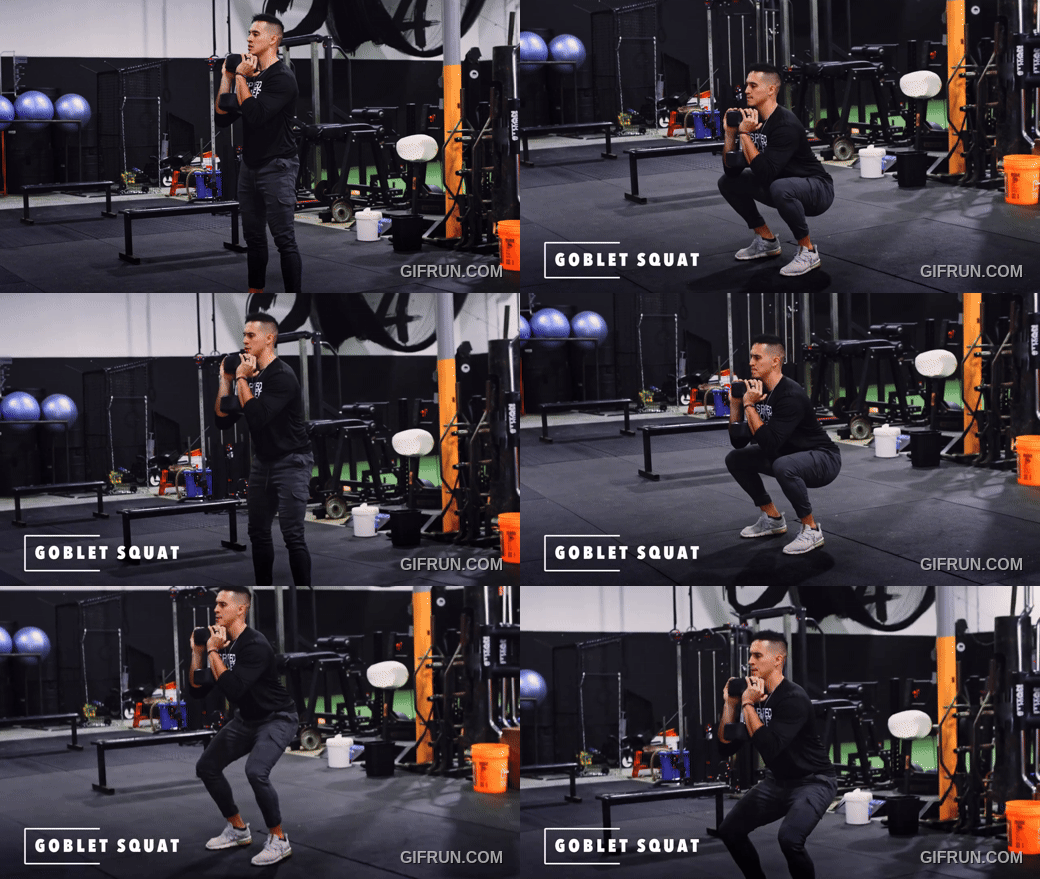

- Muscle mass
- Work capacity
- Muscular endurance
- General conditioning
- Movement quality
- Tissue tolerance
- Training tolerance
Think of it as preparing the body for the work that’s coming next.
You don’t want an athlete going from months of doing very little directly into maximal sprinting, heavy lifting, high-volume jumping, and intense change-of-direction work.
That’s a recipe for getting smoked, and likely potentially getting hurt.
GPP prepares the athlete to train harder later.
And that’s the entire point.
Why Athletes Can’t Skip GPP
One of the biggest mistakes I see in sports performance is athletes trying to jump straight into the “sexy” stuff.
They want max-effort sprints. Heavy squats. Explosive jumps. Advanced plyometrics.
They want to train like a professional athlete.
But if their body isn’t prepared for those demands, they’re skipping steps in the development process.
You can’t build a high-performance athlete without first developing the physical qualities that support high performance.
GPP gives athletes the ability to tolerate training volume and intensity.
It builds muscle and strength while improving work capacity and muscular endurance. It also gives the athlete time to adapt to consistent training.
This becomes especially important when an athlete is entering a new program.
When an athlete first walks through the door, you don’t necessarily know their true training level.
They may tell you they have been training for years—but that doesn’t mean they’ve developed the physical foundation necessary to handle your program.
GPP gives you an opportunity to earn the right to do more advanced training.
How Long Should a GPP Phase Last?
This is where individualization matters.
There isn’t one perfect GPP duration for every athlete.
The athlete’s age, training history, fitness level, and time away from training should determine how long they spend in this phase.
Younger Athletes: 3–4 Months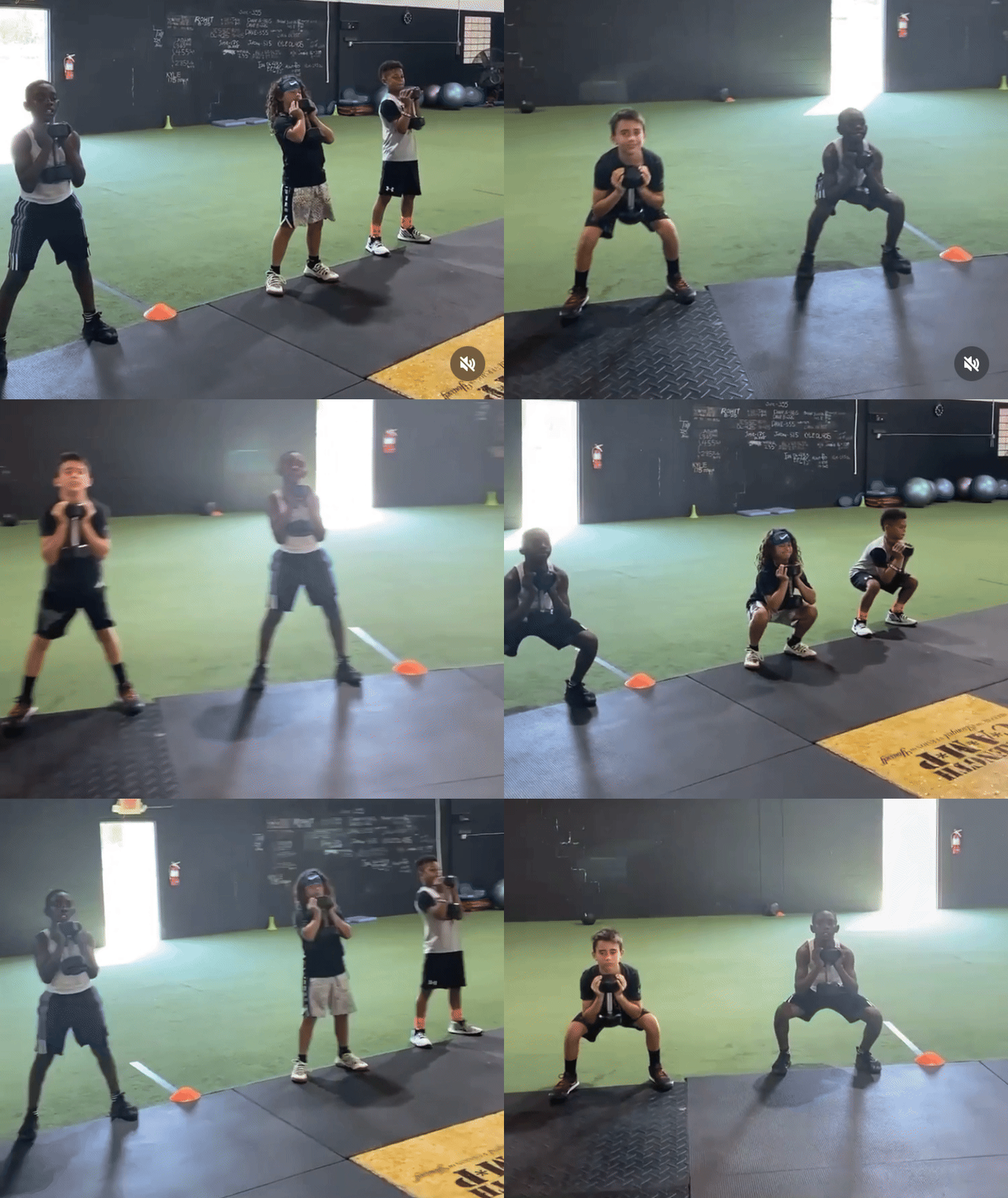

For younger athletes, GPP is essentially where they should live for a significant portion of their development.
A younger athlete may spend 3–4 months focused on general physical preparation.
The goal isn’t to turn them into a highly specialized athlete overnight.
The goal is to build a base level of:
Strength + muscle mass + movement quality + work capacity + muscular endurance.
These qualities give young athletes the foundation they need to progress into more advanced training as they mature.
The better the foundation, the more potential they have later.
High School & College Athletes: Around 1-2 Months
For a high school or college athlete with some training experience, the GPP phase may be significantly shorter.
In some cases, around a month may be enough, depending on the athlete’s fitness and training history.
The goal is to get the athlete adapted to consistent training before increasing intensity.
You don’t necessarily need months of basic preparation if the athlete already has a strong foundation.
But you also shouldn’t assume they’re ready for maximal training simply because they’re a high-level athlete.
Meet the athlete where they are.
Professional Athletes: A Few Weeks

A professional athlete with years of structured training may only need a couple of weeks of GPP, especially if they’ve had some time away from training.
At this level, the athlete already has a tremendous physical foundation.
The goal is simply to rebuild training tolerance, restore work capacity, and prepare the body for the demands of the full program.
As an athlete’s fitness level and training age increase, the amount of GPP they need generally decreases, but the need for GPP never disappears.
When Should Athletes Do General Physical Preparedness?
There are two times when GPP is particularly important.
1. When an Athlete First Joins Your Program
This is one of the biggest reasons to use GPP.
When a new athlete enters your program, you don’t know exactly what their body is prepared to handle.
They may be strong, fast, and have impressive numbers.
But you still need to understand their training tolerance.
GPP provides the perfect bridge into your system.
You can build their foundation, establish training habits, improve work capacity, and gradually expose them to greater training demands.
Don’t start with what you want the athlete to eventually do. Start with what they’re currently prepared to handle.
2. Post-Season Before the Off-Season
The post-season is another perfect time for GPP.
Many athletes finish their season completely beat up and fatigued.
Some athletes have maintained a solid in-season strength program.
Others haven’t done much training at all.
Either way, the athlete is coming out of a long competitive season and needs to transition back into structured training.
This is where GPP shines.
A post-season GPP phase can help athletes rebuild strength, add muscle, restore work capacity, and get back into training shape before the intensity of the off-season increases.
Instead of going from exhausted to max effort, GPP gives the athlete a transition period.
And that transition can make the rest of the off-season dramatically more productive.
Final Thoughts
General physical preparedness isn’t wasted time. It’s preparation for better training.
The goal of GPP isn’t necessarily to make an athlete peak.
It’s to build the physical qualities that allow them to eventually handle the training required to peak.
Younger athletes may spend several months building their foundation. High school and college athletes may need several weeks. Advanced professionals may only need a couple of weeks.
But regardless of the athlete’s level, you never completely outgrow GPP.
The better your foundation, the harder you can train.
The harder you can train, the greater your potential for getting stronger, faster, and more explosive.
If you’re ready to build the muscle, strength, and physical foundation necessary to become a bigger, stronger, more explosive athlete, check out our Athletic Mass program and start building the foundation for your next level of performance.
