

Best Plyometric Routine to Get Faster and Build Explosive Speed
If your goal is to get faster, you need to understand something most athletes overlook: speed is not just about mechanics—it’s about force application.
A lot of athletes spend their time doing ladder drills, cone drills, and trying to “look fast.” But looking fast and being fast are two completely different things. Real speed comes from how much force you can put into the ground and how efficiently you can apply it.
That’s why a properly designed plyometric routine is one of the most important tools for building explosive speed. Something an athlete can consistently do every week to continually train force production that applies to their speed development. This plyometric routine can be used as prep for a max speed session or as a plyometric workout all by itself. What matters is that it’s performed with high intent every time.
Make sure you go back and check out our guide on how athletes need to warm up for linear speed!
Why a Plyometric Routine Is Critical for Speed
When you sprint, your body is either producing horizontal force or vertical force.
Horizontal force is what drives you forward during acceleration. This is how you get off the line and build speed quickly. Vertical force, on the other hand, is what allows you to stay tall, elastic, and efficient at top speed.
If your training only focuses on mechanics drills without developing these forces, you’re limiting your potential.
A high-level plyometric routine trains your body to:
- Produce more force into the ground
- Reduce ground contact time
- Improve elasticity and stiffness
- Transfer power directly into sprinting
This is how you turn strength into actual speed on the field.
The Best Plyometric Routine for Explosive Speed
This plyometric routine is designed to progress from simple reactive drills into high-level sprint transfer movements. Every exercise has a purpose, and every movement carries over directly to acceleration or top-end speed.
1. Linear Pogos 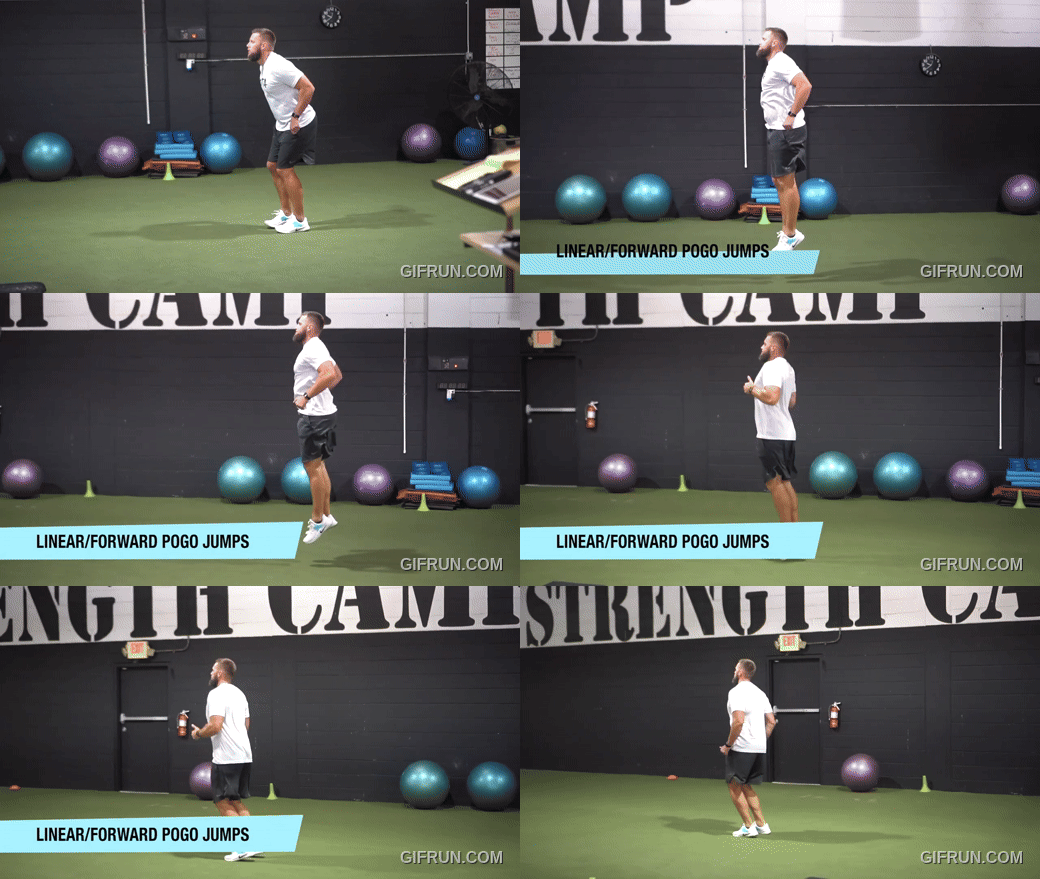

- Quick, reactive jumps on both legs
- Focus on minimal ground contact
- Keep ankles stiff and springy
- Purpose: Builds foundational reactive strength for sprinting
2. Linear Single-Leg Pogos
- Same concept as pogos but one leg at a time
- Focus on fast contacts off the ground
- Minimal knee bend and isolate the foot and ankle
- Purpose: Strengthens single-leg force application critical for sprinting
3. Linear Single-Leg Hops (Vertical Focus)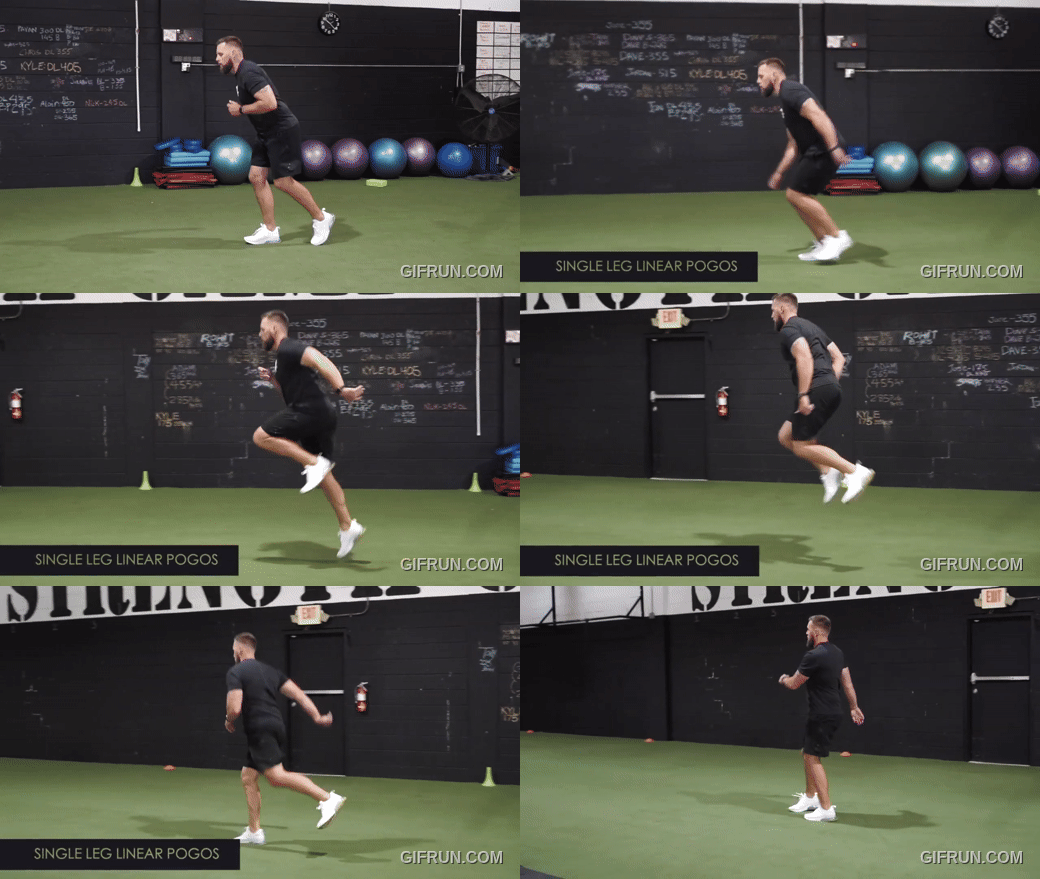

- Jump straight up off one leg
- Fast ground contacts focusing on driving vertically each hop
- Still moving linear, but focus on getting height every rep
- Purpose: Develops vertical force for top speed mechanics
4. Linear Single-Leg Hops (Distance Focus)
- Jump forward explosively from one leg
- Cover as much ground as possible
- Land and quickly get into the next hop
- Purpose: Builds horizontal force and mimics ground contacts from cycling the hip like when sprinting
5. A-Skips

- Drive the knee up, toe up, punch the ground
- Maintain rhythm and posture
- Focus on quick, forceful ground contact
- Purpose: Reinforces sprint mechanics and hip flexion with hip extension while applying force
6. B-Skips

- Extend the leg forward, then snap it down
- Keep posture tall and movements crisp
- Focus on front-side mechanics
- Purpose: Improves stride efficiency and ground strike from the down swing of the leg
7. Power Skips for Height
- Explode upward with maximal effort

 Drive knees high and swing arms aggressively
- Land and quickly drive up on the other leg
- Purpose: Develops vertical power and explosive coordination
8. Power Skips for Distance
-
- Same movement pattern, but drive forward
- Cover maximum ground per skip
- Maintain explosive effort each rep
- Purpose: Enhances horizontal power and full extension through the hips
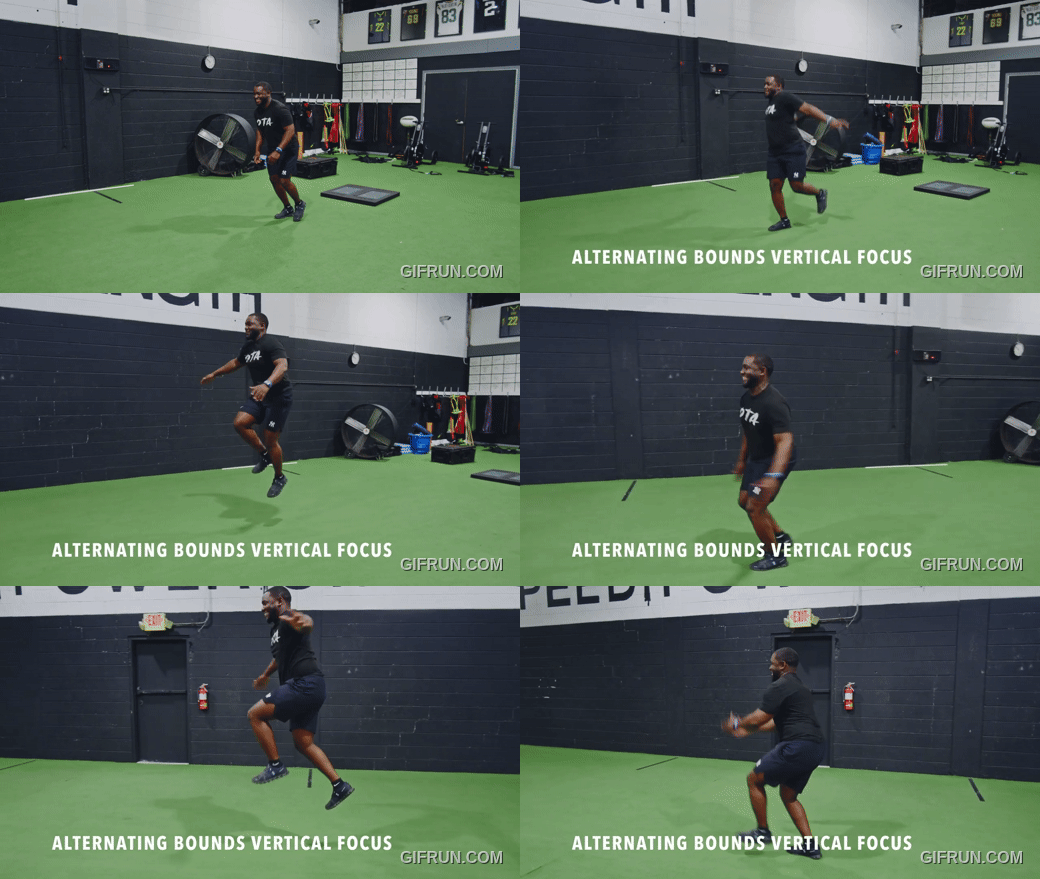
9. Alternating Bounds (Vertical Focus)
- Bound off each leg with emphasis on height
- Stay stiff through landing and push off quickly
- Purpose: Builds vertical elasticity and reactive strength
10. Alternating Bounds (Distance Focus)

- Bound forward aggressively
- Drive through the hips and cover distance
- Maintain consistent rhythm and force
- Purpose: Transfers plyometric power into horizontal sprinting
11. Straight Leg Bounds (Hip Hyperextension)
- Keep legs relatively straight while bounding


- Focus on driving through the hips
- Emphasize stride length and power
- Purpose: Develops hip extension strength critical for top speed
12. Tempo Sprint (80–85% Intensity)
- Sprint at controlled, submax effort
- Focus on opening up your stride
- Maintain relaxed posture and smooth mechanics
- Purpose: Applies all plyometric gains into sprinting performance
How This Plyometric Routine Builds Real Speed
This routine works because it follows a progression.
You start by developing reactive strength, then move into single-leg power, and finally into high-level sprint transfer movements.
Most athletes skip steps. They either jump straight into advanced drills without a foundation, or they stay stuck doing basic movements without progressing.
This plyometric routine bridges that gap.
It teaches your body not just to produce force, but to apply it in the exact way athletes to meet the demands of sprinting.
Common Mistakes That Kill Speed Development
One of the biggest mistakes athletes make is treating plyometrics like conditioning. They rush through reps, get fatigued, and lose quality.
Speed training is about intent and execution. Every rep should be explosive, controlled, and purposeful.
Another mistake is focusing only on vertical or only on horizontal movements. You need both. Acceleration and top speed are different qualities, and your training needs to reflect that.
Finally, too many athletes rely only on mechanics drills. Mechanics matter, but without force production, they don’t translate. Mimicking “perfect” mechanics doesn’t actually mean anything if you aren’t applying the right amount of force efficiently in the right directions.
Final Thoughts
If you want to get faster, you need to train like it.
That means going beyond basic drills and incorporating a structured plyometric routine that develops real power, elasticity, and force application.
When done correctly, this type of training will:
- Improve your acceleration
- Increase your top speed
- Make your stride more powerful and efficient
But none of it works without consistency. You have to commit to the process and stack quality sessions over time.
If you’re serious about becoming a faster and taking your speed to the next level, then you need a complete system—not just random workouts and random sprint sessions.
Our Athletic Speed System is built to help you:
- Develop explosive power
- Improve sprint mechanics
- Apply force more efficiently
- Translate training into real game speed
Tap in and start building real speed today.
