

Ankle Strength for Athletes: Train Your Feet to Get Faster and More Explosive
When athletes want to get faster, they usually think about sprint mechanics, strength training, plyometrics, or improving their hip power.
But there is one area that often gets overlooked.
The foot and ankle.
At Overtime Athletes, ankle strength is something we prioritize with virtually every athlete because speed and explosiveness start from the ground up. Before we ever get into our specific speed work, plyometrics, or agility training, we spend time preparing the lower limbs and developing the feet and ankles.
Why?
Because your feet are the first point of contact with the ground. If you want to produce more force, absorb force, and redirect force quickly, you need a strong and reactive foundation. Be sure to read our other article all about ankle mobility for athletes!

Why Ankle Strength Matters for Speed
Every sprint, jump, cut, and change of direction starts with force being applied into the ground.
The stronger and more capable your feet and ankles are, the better you can handle and transfer that force.
Think about sprinting. When your foot hits the ground, you don’t want your ankle collapsing and wasting energy. You want the lower leg to act like a powerful spring that can absorb force and rapidly return it back into the ground.
That’s where ankle strength and stiffness become extremely important.
Developing ankle strength can help athletes improve their ability to produce force through the ground while also improving the reactive qualities needed for sprinting and jumping.
This is especially important for explosive athletes because speed isn’t just about how much force you can produce.
It’s about how quickly you can produce it.
We Start From the Ground Up
One of the biggest mistakes we see in athletic development is jumping straight into high-level speed or plyometric drills without properly preparing the lower limbs.
That’s why our warm-ups include specific foot and ankle work.
We’ll start with simple exercises like heel walks and toe walks to begin activating and strengthening the muscles around the foot and ankle.
From there, we’ll progress into lower-limb preparation such as:
- Pogo jumps
- Linear pogo jumps
- Lateral pogo jumps
- Single-leg stationary pogo jumps
- Single-leg linear pogo jumps
- Single-leg lateral pogo jumps
- Line hop series
- Single-leg line hop series
These aren’t just random warm-up exercises.
They’re part of the athlete development process.
Before we ask an athlete to sprint at maximum velocity, accelerate, decelerate, or perform aggressive changes of direction, we want the feet and ankles prepared to handle those demands.
Ankle Strength and Injury Prevention
Athletes don’t just need their ankles to produce force.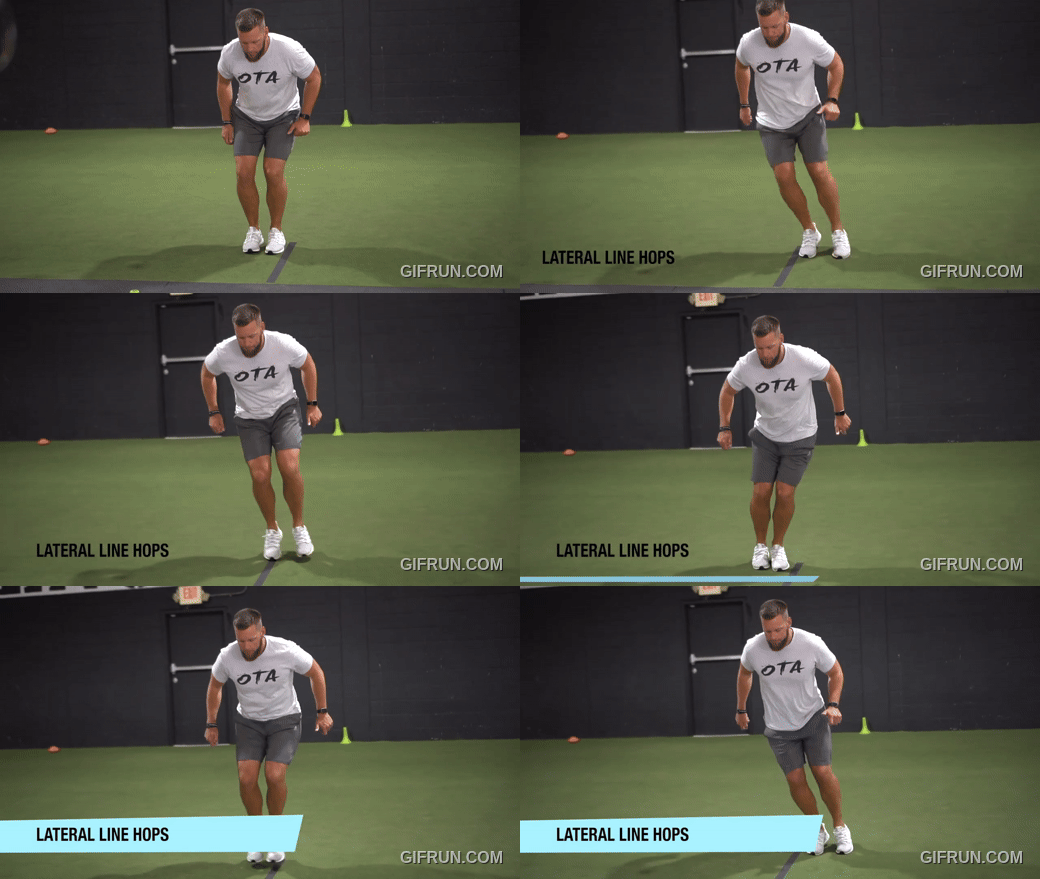
They also need them to absorb force.
Every landing, sprint, jump, and cut places significant demands on the foot and ankle complex. If an athlete doesn’t have adequate ankle strength, control, and reactive ability, they may struggle to properly manage those forces.
Building ankle strength helps develop the capacity of the lower limb to tolerate athletic demands.
It can also help athletes improve balance, stability, proprioception, and control when performing explosive movements.
This doesn’t mean ankle exercises magically prevent every injury. No training method can guarantee that.
But developing stronger, more capable feet and ankles gives athletes a better foundation for handling the demands of sport.
Ankle Strength for Explosiveness
Want to jump higher?
Want to accelerate faster?
Want to become more explosive?
Then don’t ignore your ankles.
Plyometric exercises require the athlete to rapidly transition from absorbing force to producing force. The foot and ankle play a major role in this process.
That’s why we use pogo jumps and various line hop variations so frequently.
These exercises teach athletes to become more reactive while developing ankle strength and lower-limb coordination.
Over time, the goal isn’t simply to make the ankle stronger.
It’s to create an athlete who can apply force quickly, absorb force efficiently, and get off the ground rapidly.
That’s what athleticism is about.
Don’t Skip the “Small” Stuff
The exercises that look simple are often the ones athletes want to skip.
But ankle strength isn’t something you should only train when your ankles hurt.
It should be part of your athletic development before problems ever occur.
At Overtime Athletes, we incorporate foot and ankle preparation into our speed, power, and agility sessions because we believe athletic development should happen from the ground up.
Your feet connect you to the ground.
Your ankles help transfer force.
And your ability to sprint, jump, cut, and explode depends on how well you can use that connection.
Final Thoughts
If you’re serious about getting faster and more explosive, stop overlooking your feet and ankles.
Ankle strength is a foundational piece of athletic performance. Build it consistently, prepare it before training, and progress it alongside your strength, sprint, and plyometric work.
Don’t just train the muscles that look impressive.
Train the foundation that makes athleticism possible.
Ready to take your speed and explosiveness to the next level? Check out our Athletic Speed System and get a complete training system designed to help athletes build speed, power, explosiveness, and athletic performance from the ground up.

