
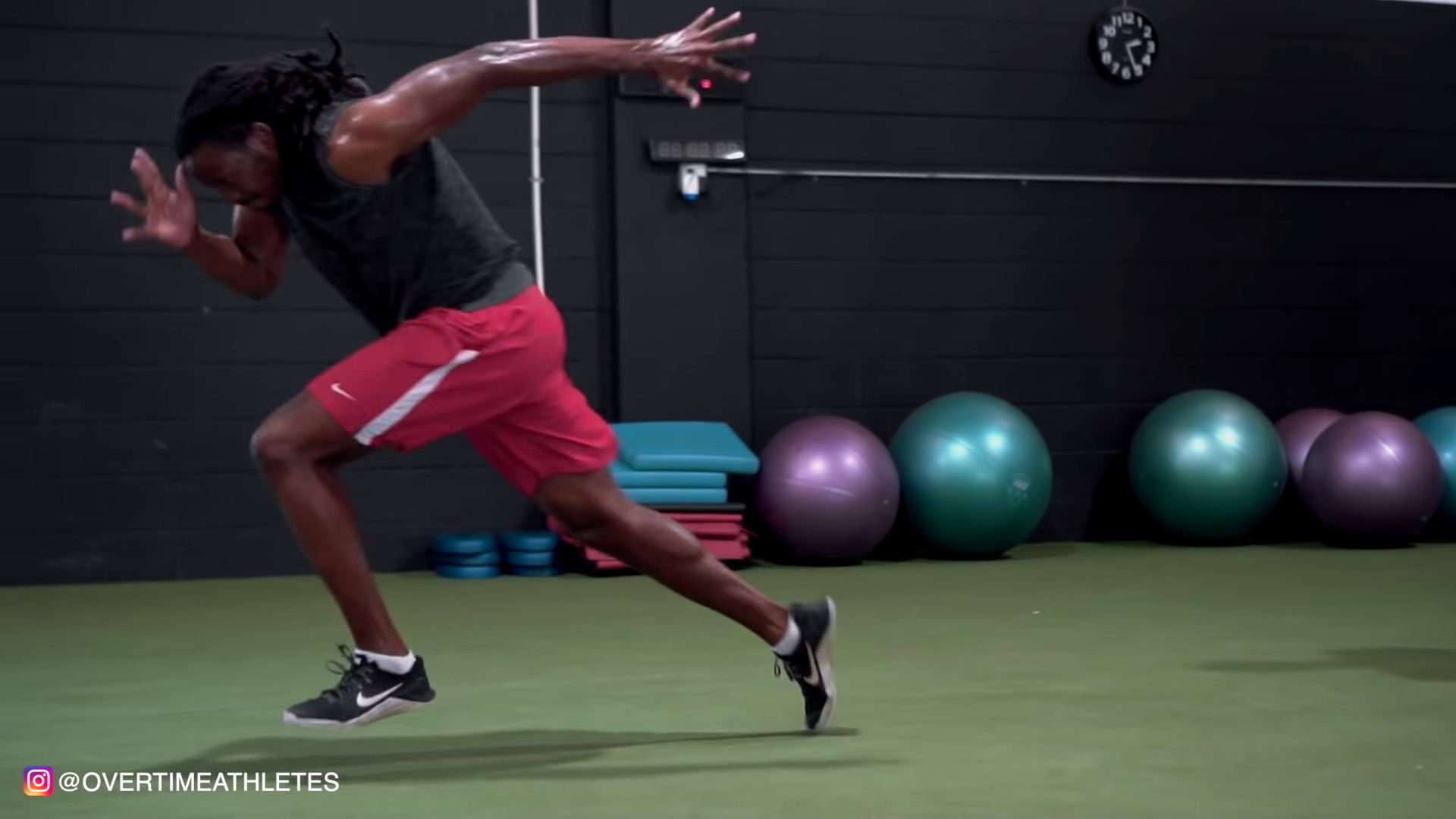

Ankle Mobility for Athletes
If you work with athletes long enough, you start to see patterns.
One of the biggest?
Limited ankle mobility.
I don’t care if it’s middle school, high school, or college athletes — so many of them have stiff ankles and don’t even realize it. Then they wonder why their squat feels jammed up, why they can’t hit depth, why their heels pop up, why they feel slow out of cuts, or why their knees start barking during the season.
Here’s the truth:
If your ankle mobility is limited, it can limit your performance. I delt with it myself. It’s definitely common with most football athletes. Check out one of our previous articles on this Achilles drill for ankle mobility.
Why Ankle Mobility Matters for Athletic Performance
Ankle mobility, specifically dorsiflexion (your knee moving forward over your toes), can directly impact:
- Squat depth and mechanics

- Sprint acceleration
- Change of direction
- Deceleration mechanics
- Jump takeoff and landing
- Knee stress and injury risk
When an athlete lacks ankle mobility, the body compensates. Everything for athletes starts at the feet.
During squats, you’ll see:
- Heels lifting
- Knees collapsing in
- Excessive forward lean
- Early lumbar flexion
During sprinting and cutting:
- Reduced shin angles
- Poor force application
- Slower ground contact transitions
- Increased knee strain
The ankle is your first point of contact with the ground. If it can’t move efficiently, everything up directly up the chain suffers.
My Experience With Limited Ankle Mobility
I struggled with ankle mobility myself.
I had horrible squats and it was almost a direct result of a lack of mobility in my ankles. When I finally committed to improving my ankle mobility consistently, everything changed.
My squat depth improved.
My torso stayed more upright.
I could sit into positions instead of fighting them.
And more importantly, I felt stronger and more stable in the bottom.
It wasn’t flashy or complicated. Simply, it was just consistent work on the right drills and then reinforcing that new range under load.
That’s the key most athletes miss.
Stretching and increasing range of motion is step one.
Teaching your body to produce force through that new range is step two.
If you skip step two, the mobility doesn’t transfer to performance.
3 Simple Drills to Improve Ankle Mobility
These are the exact drills I use myself and have used with some of my athletes. Simple and effective.
1. Kneeling Banded Ankle Stretch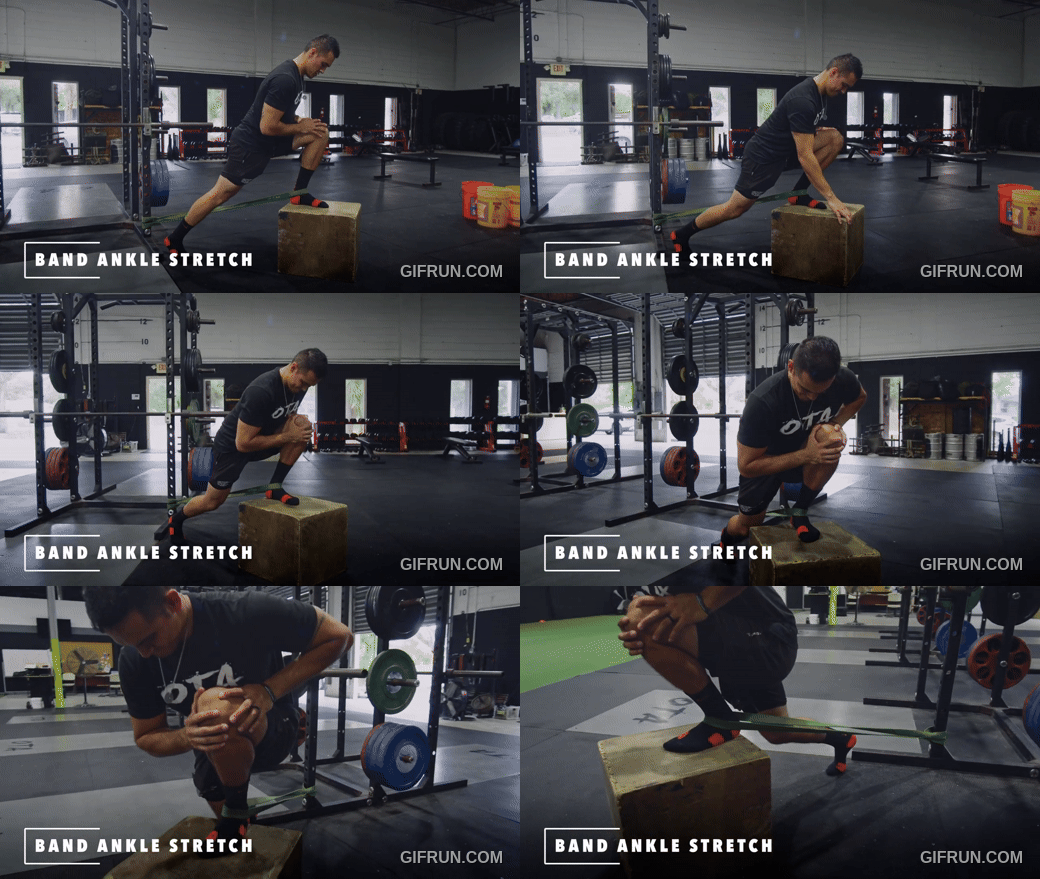

This is my favorite drill to help improve ankle mobility fast.
How It Works:
- The band does most of the work.
- Anchor a thick resistance band low.
- Loop it around the front of your ankle.
- Step forward into a half-kneeling position.
- Drive your knee forward over your toes.
- Keep your heel flat.
The band pulls the talus posteriorly, helping restore proper joint mechanics while you actively move into dorsiflexion. Perform for 2 minutes each side
Slow, controlled reps. Own the position. You can progress by placing a kettlebell or dumbbell on your knee to add more load to the drill.
2. Standing Weighted Single-Leg Calf Stretch

Mobility isn’t just joint-based. Soft tissue matters too.
This drill attacks the calf complex while loading it.
How To Do It:
- Stand on one leg.
- Hold a dumbbell on the same side as the working leg.
- Keep the leg straight.
- Sink back into your heel.
- Keep your toes forward.
You should feel a deep stretch through the gastroc and soleus. Again, perform 2 minutes each side
This is about time under tension. Stay controlled and breathe. If you can’t hold the weight for 2 minutes straight then break it up into sets.
Increasing Range Isn’t Enough
Here’s what athletes miss when they’re working on mobility.
They stretch and improve range but never train their body to use it.
If you add ankle mobility but don’t train strength and force production through that full ROM, it won’t transfer to:
- Sprint speed
- Cutting ability
- Squatting power
Range without strength is unstable.
That’s why the third drill is critical.
3. Heavy Sled Pushes
Heavy sled pushes are one of the most underrated ankle mobility reinforcements in performance training.
Why?
Because they force the athlete to:
- Drive through the balls of the feet
- Move through full ankle dorsiflexion and plantarflexion
- Produce force through the entire range
You’re essentially “locking in” the new ankle mobility under load.

And the best part?
They’re simple and progressive. You just have the athletes load it heavy, keep their shin angles low, and drive aggressively.
Think long, powerful, controlled strides — not choppy steps.
Adding resistance through full ranges of motion under load bridges the gap between mobility and performance.
How Limited Ankle Mobility Affects Athletes
Let’s bring it back to the big picture.
When ankle mobility improves, it helps improve:
- Squats to deeper, cleaner positions
- Better force transfer
- Less knee stress
- Better acceleration angles
- Reduced valgus collapse
So many athletes are stuck because their ankles are stuck.
You can’t out-strength poor mobility forever.
Eventually, the body finds a breaking point.
Final Thoughts
Ankle mobility isn’t sexy.
It doesn’t look impressive on Instagram.
But it might be the difference between:
- Being able to squat 315 to depth or your upper torso dumping forward because you’re unable to squat that low
- Getting into a more efficient stance and angle for acceleration
- Knee pain and healthy joints
If you’re an athlete with stiff ankles, don’t ignore it.
Improve the range.
Train strength through the range.
Then watch your performance change.
Strong feet and mobile ankles are a foundation every serious athlete needs. All your performance starts there.
