

3 Keys to Building Explosive Power for High School Football
High school football season is nearly over, and the offseason is about to begin. For the players who want to play college football, this is where the next phase of development starts. For the players who didn’t get the playing time they wanted, the question is simple: What do I need to do to earn a starting role next season?
The answer isn’t to show up to the weight room occasionally, run a few conditioning drills, and hope things change. If you want to become a more dominant football player, you need a structured plan to get bigger, stronger, and faster.
Football is a physical sport. The players who separate themselves are often the ones who can produce more force, apply that force quickly, and use it against an opponent. That’s why effective football training needs to develop more than muscle. You need strength, explosive power, and speed.

Here are three priorities every high school football player should focus on this offseason.
1. Get Bigger and Stronger
Football is a contact sport. Whether you’re an offensive lineman driving a defender backward, a linebacker taking on a block, or a running back fighting through contact, your ability to produce force matters.
Getting bigger and stronger can give you a significant advantage on the football field. But you need to build useful muscle and strength that support your position and performance.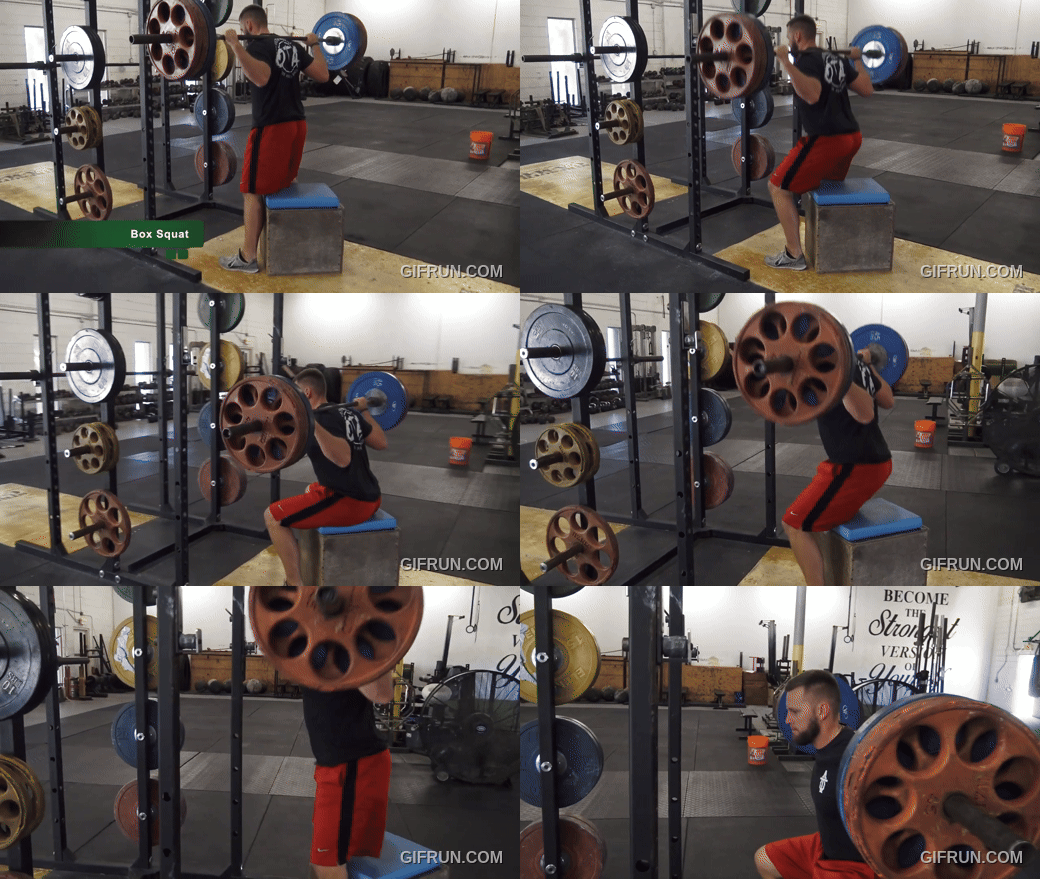
This is where football strength training becomes essential.
Compound movements such as squats, deadlifts, bench presses, rows, and pull-ups help develop the major muscle groups responsible for producing and resisting force. When programmed correctly, these exercises allow athletes to progressively increase their strength and build a more powerful physical foundation.
For high school football players, the offseason is an ideal time to address weaknesses, build muscle, and improve maximal strength without the same weekly demands of a competitive season.
However, simply going to the gym isn’t enough. You need to follow a progressive strength training program that gives you a reason to improve from week to week.
That means selecting the right exercises, training with appropriate intensity, managing your volume, and tracking your progress. Your training should also account for your position, training experience, and individual needs.
A stronger athlete has a greater capacity to produce force. But strength alone doesn’t guarantee that you will be explosive on the field. Read here about upper body supersets for football!
If you spend the entire offseason chasing bigger lifts without developing the ability to apply that strength quickly, you’re leaving performance on the table.
That’s why the next step in your football training is just as important.
2. Jump and Perform Plyometrics With Maximum Effort
You need to turn your strength into explosive power.
Think about a defensive lineman exploding out of his stance, a receiver jumping for a contested ball, or a running back producing a powerful first step through a gap. These actions require the ability to produce substantial force in a short amount of time.
This is where plyometric training comes in.
Plyometrics involve explosive movements such as jumps, bounds, and other drills that challenge your ability to produce force rapidly. When programmed appropriately, they help develop the reactive and explosive qualities that complement your strength training.
Some of the most valuable exercises for football players include:
– Broad jumps: Develop horizontal explosiveness that complements acceleration training.
– Vertical jumps: Train rapid force production through an explosive upward movement.
– Bounds: Challenge single-leg force production, coordination, and horizontal projection.
– Appropriate reactive jumps: Develop the ability to absorb and rapidly reapply force when the athlete has the necessary strength and landing control.
The key is to perform these exercises with maximum intent while maintaining good technique. You aren’t trying to see how exhausted you can become. You’re trying to produce high-quality, explosive efforts.
For example, you might perform three to four sets of three broad jumps, resting long enough between sets to maintain your explosiveness. The exact exercises, intensity, and volume should progress according to your training level.
High school football players should build their landing mechanics and basic strength before progressing to more demanding plyometric variations.
You also need to perform this work consistently throughout your training plan rather than randomly adding jumps whenever you feel like it.
Getting stronger increases your potential to produce force. Training explosively helps you learn to express that force at higher speeds. Read about the best single leg plyometrics for football here!
Both qualities matter if you want to become a more powerful football player.
3. Sprint at Maximum Speed Two to Three Times Per Week
Here’s a mistake I see athletes make: they spend months getting bigger and stronger but barely sprint outside of team practice.
Then they wonder why they aren’t getting faster.
If you want to become a faster football player, you need to sprint fast. Heavy squats, deadlifts, and sled pushes can support athletic development, but they don’t replace high-speed sprinting.
Force is commonly described as mass multiplied by acceleration. In practical terms, you need the ability to apply force to your body and accelerate it effectively. Adding muscle and strength can help, but you also need to develop the speed at which you move.
That’s why sprinting belongs in your offseason football training program.
Aim to include two to three sprint sessions per week when your overall schedule, recovery, and existing football workload allow it. These sessions should be planned carefully so that you’re not constantly sprinting while fatigued.
Your sprint training can include short acceleration sprints over 5–10 yards, longer accelerations, and appropriately progressed maximum-velocity sprinting.
Each has a different purpose.
Short sprints develop acceleration, which is critical when exploding out of a stance or creating separation over the first few steps. Maximum-velocity sprinting develops your ability to reach and maintain high running speeds, which matters when receivers run past defenders or defensive backs close space in the open field.
Use full recovery between high-intensity efforts. Sprinting while exhausted often reduces the quality and speed of your repetitions, defeating the purpose of a maximum-effort session.
If you’re a high school athlete, build your sprint volume progressively and coordinate your work with team practices, lifting sessions, and recovery needs.
The goal isn’t to accumulate the most yards. It’s to perform fast, high-quality repetitions consistently over time.
When you combine sprinting with structured strength and plyometric training, you develop a more complete athletic foundation. Check out our article on still training max speed in-season!
Final Thoughts: Make This Offseason Count
If you want to earn more playing time, become a starter, or put yourself in a better position to play college football, you need to approach the offseason with a plan.
Prioritize three things: get bigger and stronger, develop explosive power through maximal-effort jumping and plyometrics, and sprint consistently to improve your acceleration and speed.
These qualities work together. Strength gives you the foundation to produce force. Plyometrics help develop explosiveness. Sprinting teaches you to apply force at the speeds required on the football field.
But none of this happens overnight. You need consistent training, progressive programming, and a plan that connects your work in the weight room to your performance on the field.
Don’t spend another offseason training without a purpose.
The Overtime Athletes Football Performance System is designed to help football players develop the strength, speed, and explosive power needed to compete at a higher level.
If you’re serious about taking your game to the next level, start building the athlete you want to become before next season arrives.
