
In Season Training for Athletes: How to Transition from Off Season Without Losing Performance
When the season starts, a lot of athletes make the same mistake—they stop training.
Practices increase. Games pile up. Weekends disappear. Before they know it, the weight room becomes an afterthought. Then halfway through the season they’re wondering why they feel slower, weaker, more beat up, and aren’t performing like they were a month ago.
Here’s the truth: The athletes who perform their best during the season are almost always the ones who continue training during the season.
Just look online of the Philadelphia Eagles team going crazy in the weightroom the week of the Super Bowl.
Athletes should still be training in season. The goal just changes.
Let’s break down how to transition from off-season to in season training the right way. Also make sure to go check out our article on in season training guidelines.

Why In Season Training Matters
You didn’t spend months building strength, speed, power, and explosiveness just to lose it once games started.
The purpose of in season training is simple:
Maintain the physical qualities you worked so hard to build while keeping your body healthy enough to perform every week.
Without consistent strength training, athletes begin losing strength and power in as little as a few weeks. Sprint speed decreases. Jump height drops. The body becomes more susceptible to fatigue because practices and games alone don’t provide enough stimulus to maintain maximum force production.
Sports improve skill.
Training improves athleticism.
Those are two completely different things.
Practice teaches you how to become a better football player, basketball player, baseball player, or volleyball player.
Training allows you to become a more explosive, resilient, and physically dominant athlete.
If you stop training, don’t be surprised when your athleticism starts disappearing as the season goes on.
What Athletes and Parents Get Wrong
One of the biggest myths in youth sports is that athletes should stop lifting once competition begins because they’ll be too sore or too tired.
In reality, the opposite usually happens.
When an athlete follows a properly designed in season program, they often feel fresher, move better, recover faster, and reduce their risk of injury.
The problem isn’t training.
The problem is trying to train like it’s still the off season.
Far too many athletes continue chasing personal records, adding unnecessary volume, or crushing themselves with conditioning after multiple practices and games each week. That’s a recipe for burnout.
On the flip side, many athletes eliminate strength training altogether because they assume practice is enough.
Neither approach works.
The best athletes find the middle ground.
They train just enough to maintain the qualities they’ve built while allowing recovery to stay the priority.
Off Season vs. In Season Training
Understanding the purpose behind each phase makes programming much easier.
During the off season, the goal is development.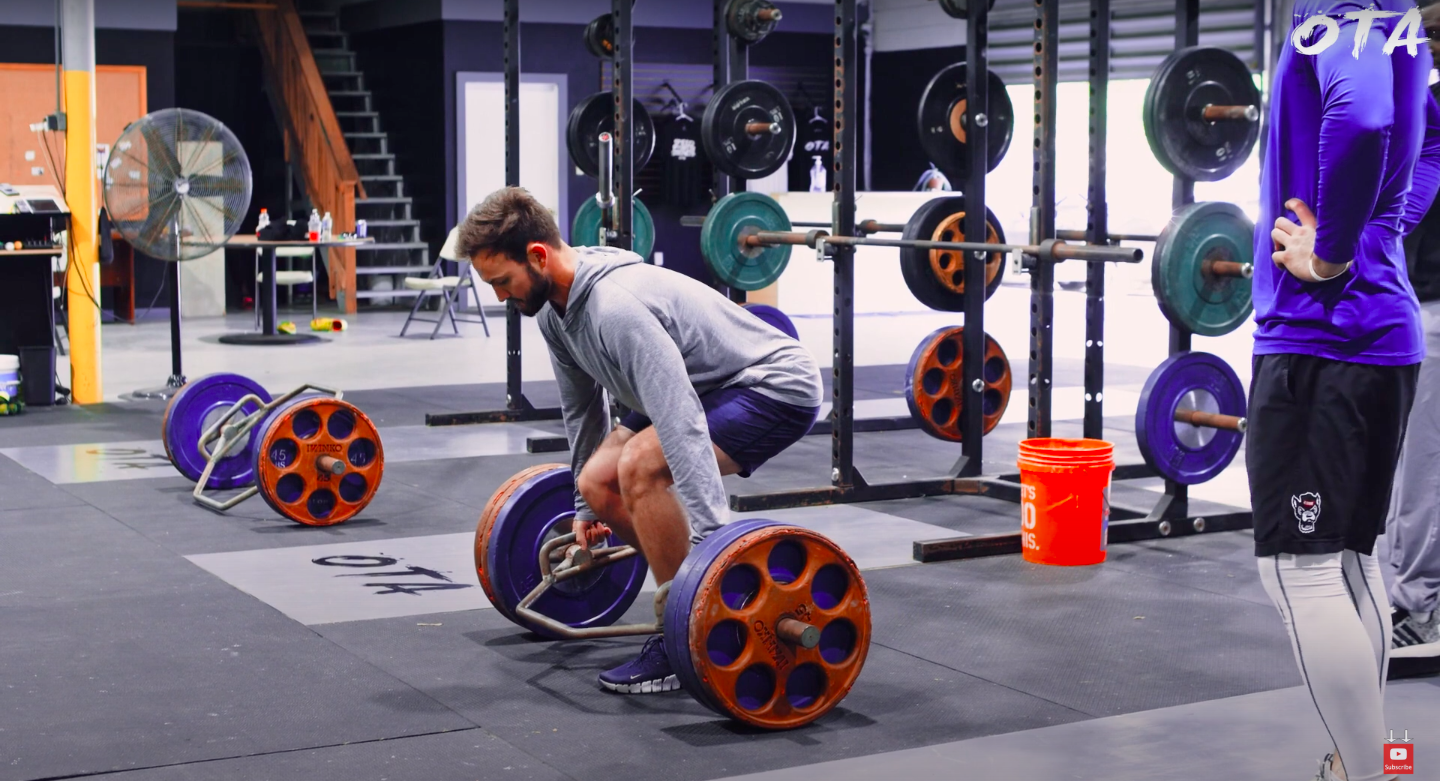
This is where athletes push progressive overload, build muscle, increase maximal strength, improve acceleration, develop top-end speed, enhance jumping ability, and address weaknesses. Work capacity is higher because there are fewer competitions to recover from.
The off season is where athletes build the engine.
During the in season, the goal shifts from building to maintaining.
Volume decreases.
Recovery becomes more important.
Strength sessions become shorter but remain intense enough to preserve force production.
Speed work becomes more strategic.
Every workout should leave the athlete feeling prepared for competition—not exhausted from training.
Think of it this way:
The off season is where you make gains.
The in season is where you protect those gains.
How to Transition from Off Season to In Season
The transition shouldn’t happen overnight, but it should happen immediately once competition begins.
Here are the biggest adjustments athletes should make.
Reduce training volume—not intensity.
You don’t need six hard sets of every exercise anymore. Most athletes can maintain strength with significantly fewer working sets, provided the quality remains high.
Keep lifting heavy.
One of the biggest mistakes athletes make is switching to lightweight, high-rep workouts because it’s “in season.”
Heavy strength work is exactly what helps maintain strength and power throughout the season. The total workload simply needs to be lower.
Prioritize explosive movements.
Continue performing jumps, throws, Olympic lift variations, and sprint work. These movements remind the nervous system how to produce force quickly, helping maintain speed and explosiveness throughout the year.
Manage fatigue around games.
Your hardest training sessions should be scheduled as far away from competition as possible. As game day approaches, training should become lighter, faster, and focused on feeling fresh.
Recovery becomes part of training.
Sleep, hydration, nutrition, mobility work, and stress management matter even more during the season. Recovery isn’t optional—it’s part of the program.
Quality always beats quantity.
You don’t need marathon workouts during the season.
Forty-five to sixty minutes of focused, high-quality training is often all that’s needed to maintain performance while staying healthy.
Final Thoughts
The athletes who continue developing throughout the season aren’t always the most talented.
They’re the ones who train with purpose.
Off-season training builds the foundation.
In season training protects it.
If you stop training once games begin, don’t be surprised if your speed, strength, power, and confidence slowly disappear over the course of the season.
But if you transition your program correctly, you’ll give yourself the best chance to stay explosive, stay healthy, and perform at your highest level when your team needs you most.
If you’re serious about maximizing your athletic potential, check out our sports-specific performance programs. Every program is built with long-term athletic development in mind and includes the option to add in season programming, giving you a seamless transition from off-season development to peak in season performance.
Train with a plan. Compete with confidence.
