

Plyometrics for Speed: Why Faster Athletes Aren’t Built by Sprinting Alone
A lot of athletes think “speed training” means running a bunch of sprints until you’re completely exhausted. Unfortunately, a lot of high school — and even college — programs still train that way.
Conditioning isn’t speed training.
Just because an athlete is tired, sweating, and running repeated gassers doesn’t mean they’re actually developing speed. In fact, many coaches still make the mistake of throwing random sprint drills together without understanding the progressions and qualities that actually create explosive athletes.
Real speed development is more than just sprinting.
If you truly want to get faster, improve your acceleration, increase your top-end speed, and become more explosive on the field or court, then you need more than sprint work alone. You need a system that develops force production, power, and reactive ability together.
That’s where plyometrics come in. Make sure to check out our article on the 15 best single leg plyometrics!

Why Plyometric Exercises Matter for Speed
Plyometric exercises are one of the most important tools in athletic development because they teach the body how to produce force quickly.
That’s what speed really is.
The fastest athletes aren’t just “moving their legs fast.” They’re producing massive amounts of force into the ground in very short amounts of time.
Every sprint step is essentially a plyometric action.
The moment your foot hits the ground during a sprint, your body has milliseconds to absorb force and redirect it back into the ground explosively. The athletes who can do this the fastest and most efficiently are usually the athletes who separate themselves.
This is why plyometrics for speed are so important.
Plyometric training improves:
- Ground reaction time
- Rate of force production
- Elasticity and stiffness
- Reactive strength
- Explosiveness
- Force transfer
- Sprint mechanics carryover
In simple terms, plyometrics help athletes become more explosive and reactive so they can apply more force with every stride.
Plyometrics Develop the Force Behind Speed
One of the biggest misconceptions in sports performance is thinking sprinting alone builds elite speed.
Sprinting is important — absolutely. But sprinting mainly expresses the qualities you already have. If the underlying qualities aren’t improving, eventually speed stops improving too.
That’s why athletes plateau.
You can only sprint with the force capabilities your body currently possesses.
Plyometrics help increase those capabilities.
Exercises like:
- Bounds
- Broad jumps
- Hurdle hops
- Depth jumps
- Lateral jumps
- Single-leg hops
- Skater jumps
- Sprint-assisted plyos
all help teach the body how to create and redirect force more efficiently.
Some plyometric exercises focus more on horizontal force production, which directly carries over to acceleration and sprinting speed. Horizontal plyometrics teach athletes how to project force forward aggressively — exactly what happens during acceleration mechanics.
Others focus more on vertical force production, which helps improve stiffness, elastic power, and top-end speed mechanics. Vertical force production is critical because elite sprinting still requires tremendous vertical force into the ground despite the athlete moving horizontally.
This is why well-designed speed programs include both vertical and horizontal plyometric exercises.
They each improve different qualities of speed.
Ground Contact Time Separates Fast Athletes
Watch elite sprinters or explosive athletes in slow motion and one thing stands out immediately:
They spend very little time on the ground.
That matters because speed is heavily influenced by how quickly an athlete can strike the ground and rebound out of it.
Plyometric exercises train this exact quality.
The body adapts to becoming more reactive and efficient through repeated explosive contacts. Over time, athletes improve their ability to absorb force and instantly redirect it.
This is one reason athletes who properly train plyometrics often improve:
- Sprint speed
- Vertical jump
- Change of direction
- Agility
- First-step explosiveness
without necessarily adding endless sprint volume.
Why Athletes Plateau When They Only Sprint
If all an athlete does is sprint repeatedly, eventually the body adapts and progress slows down.
This happens because speed development isn’t just about practicing sprinting — it’s about improving the physical qualities that create speed.
Think of it like this:
Strength training builds the engine. Plyometrics add the horsepower. Speed is the expressed product of those two combined.
Strength training develops an athlete’s ability to produce force. Plyometrics help the athlete to produce that force rapidly.
The stronger an athlete becomes relative to their bodyweight, the greater potential they have to create powerful movement.
This is why elite athletes prioritize strength development and then plyometrics to turn that into usable power.
Strength + Plyometrics + Speed = Real Athletic Development
The best speed programs don’t isolate one quality.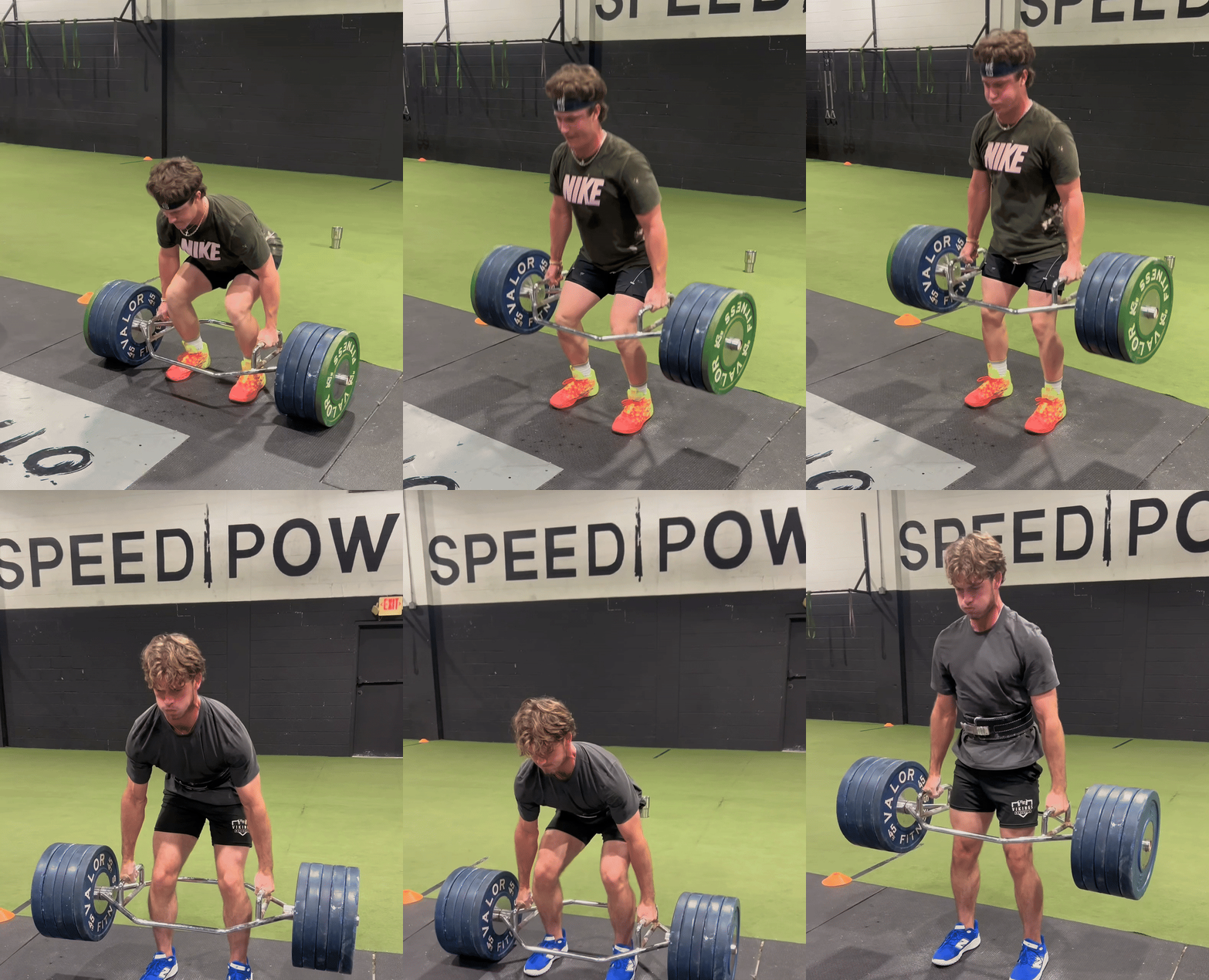
They combine:
- Strength training
- Plyometric training
- Sprint mechanics and speed work
because all three work together in unison.
Strength develops force production.
Plyometrics increase the athlete’s ability to produce that force rapidly and convert it into explosive power.
Speed training teaches the athlete how to express that power at the highest velocity possible.
Each quality builds on the others.
A stronger athlete who can rapidly produce force through plyometrics becomes more explosive during sprinting.
An athlete with better reactive strength and elastic power becomes more efficient at top-end speed.
An athlete with improved force production and sprint mechanics accelerates faster and changes direction more explosively.
That’s how real speed is built.
Not through random conditioning circuits disguised as “speed training.”
Plyometrics Must Be Programmed Correctly
Another mistake many athletes and coaches make is randomly throwing together jump drills without structure.
Plyometric training should follow progressions just like strength training does.
You don’t start with high-intensity depth jumps before an athlete has developed landing mechanics, stiffness, and foundational power.
A properly designed speed program progresses athletes through: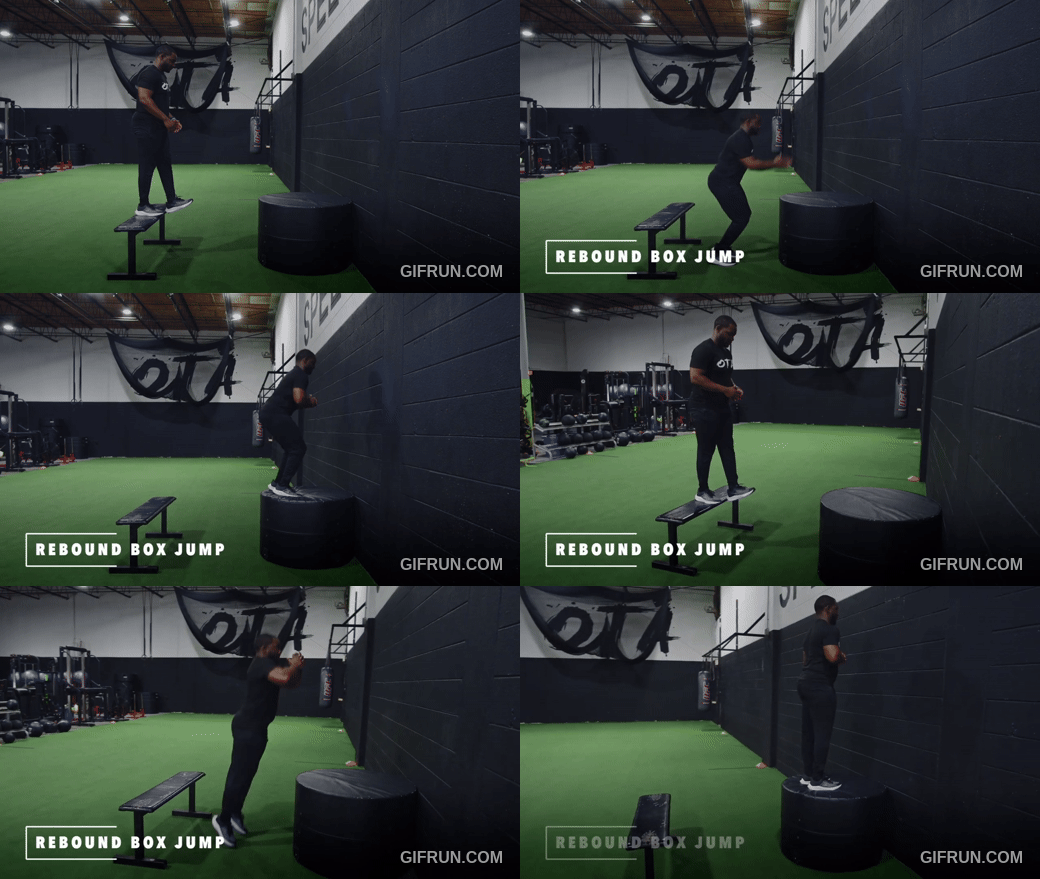
- Landing mechanics
- Low-level elasticity drills
- Extensive plyometrics
- Reactive plyometrics
- High-force explosive plyometrics
- Advanced speed-transfer movements
The goal is developing explosive athletes safely and effectively over time.
That’s how long-term speed development actually works.
Final Thoughts
If you want to become a faster athlete, you need more than random sprints.
You need a complete system that develops:
- Force production
- Explosiveness
- Reactive strength
- Sprint mechanics
- Power output
- Ground reaction ability
Plyometric exercises are one of the most powerful tools for developing those qualities and building real game speed.
Strength training, plyometrics, and sprint work all complement each other. When properly programmed together, they create explosive athletes who move faster, jump higher, and perform better on the field.
If you’re serious about taking your speed to the next level, stop relying on random sprint workouts alone.
Start training with a real system.
Get the Athletic Speed System today and start developing the explosiveness, acceleration, and game speed needed to dominate your sport.
