
Contrast Training for Athletes: When to Use It (And Why Most Coaches Get It Wrong)
If you’ve spent any time around sports performance training, you’ve probably heard coaches talk about contrast training like it’s some magic formula for speed, power, and explosiveness.
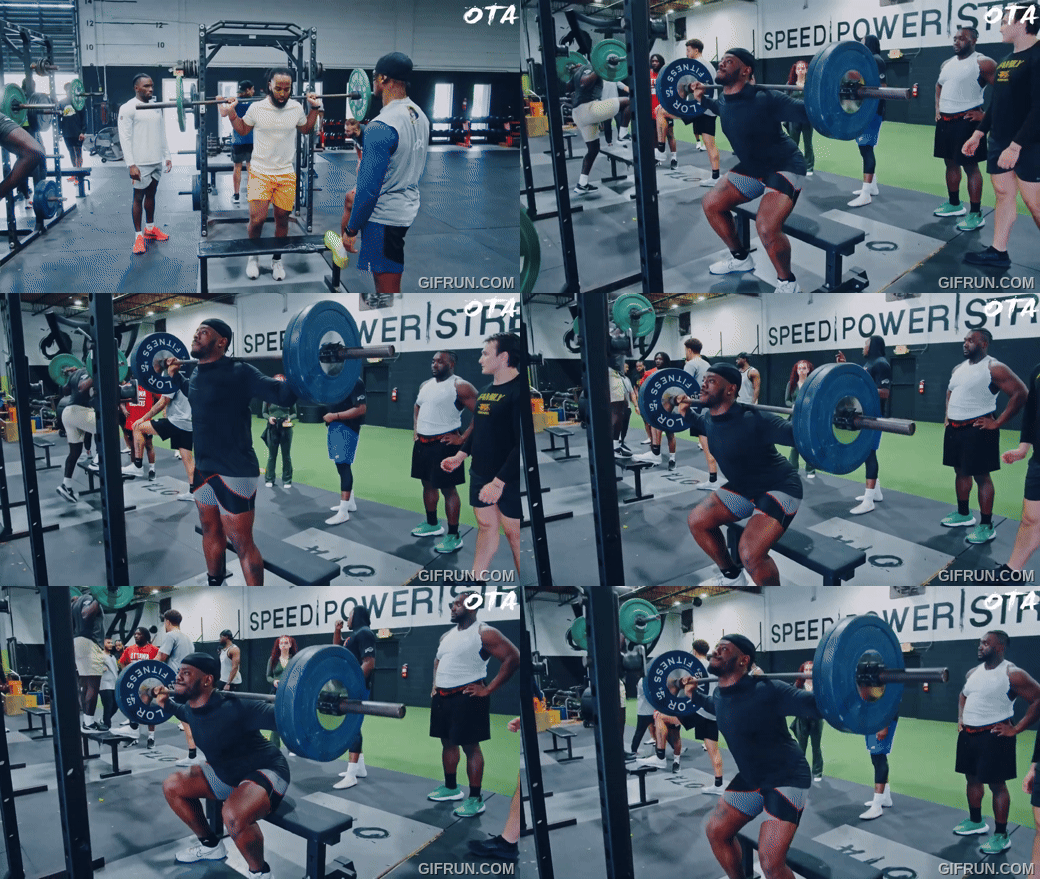
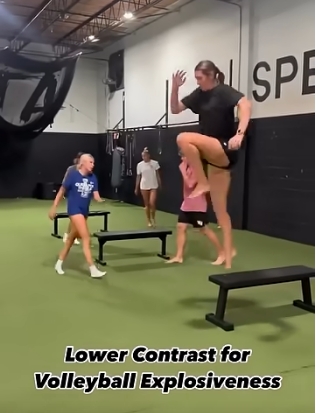
Heavy lift paired with a jump. Strength movement paired with a sprint. Squat into box jumps. Trap bar deadlift into broad jumps.
And yes—when used the right way, contrast training can be one of the best tools to improve athletic performance.
But here’s the truth most coaches either don’t say or don’t know:
Contrast training is not for everybody. And most coaches are programming it at the wrong time, for the wrong athlete, in the wrong way.
That’s where progress gets lost. Before we get into it, check out our previous article on some of our favorite contrast sets for athletes!

What Is Contrast Training?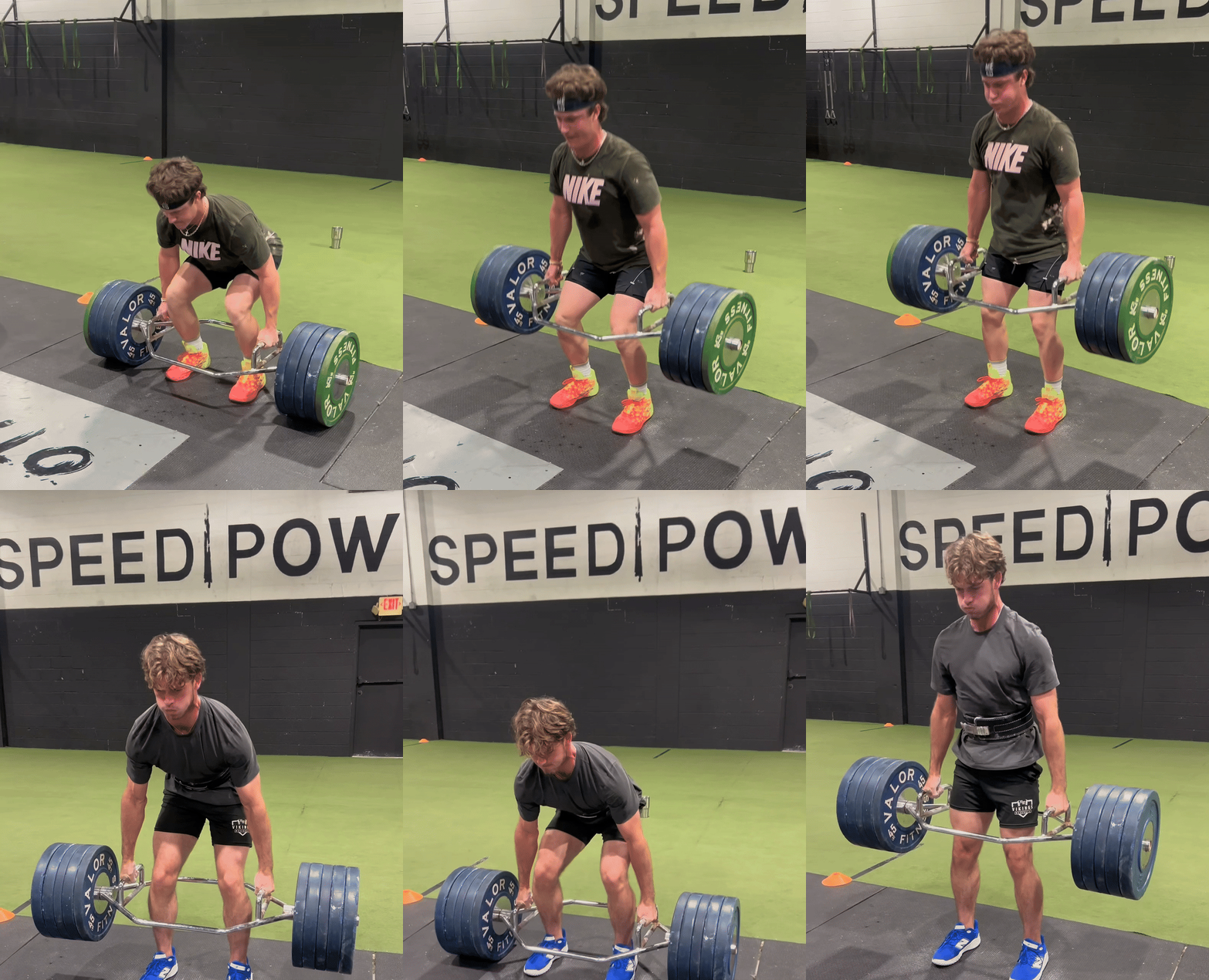

At its core, contrast training is pairing a heavy strength movement with a fast, explosive movement that uses a similar pattern.
Examples:
- Back Squat into a Vertical Jump
- Trap Bar Deadlift into a Broad Jump
- Bench Press into a Med Ball Chest Pass
- Split Squat into a Bound or Sprint Start
The goal is to take advantage of something called post-activation potentiation (PAP).
That means a heavy lift can “wake up” the nervous system, allowing the athlete to produce more force and move faster on the explosive movement that follows.
In simple terms:
Lift heavy, then move fast.
That combination can help athletes develop:
- Explosive power
- Faster force production
- Better jumping ability
- Improved sprint speed
- Stronger transfer from weight room to sport
When done right, contrast training bridges the gap between strength and game speed.
When Contrast Training Should Be Used
This is where many coaches miss badly.
Contrast training is not phase one training.
It is not beginner training.
It is not random Instagram workout content.
Contrast training should be used when an athlete has already built a solid foundation of:
- Relative strength
- Good movement mechanics
- Body control
- Technical lifting skill
- Ability to produce force with max effort efficiently
If an athlete can’t squat correctly, brace correctly, hinge correctly, land correctly, or move explosively with intent…
They are not ready for contrast training.
Best Time to Program Contrast Training
The ideal time to use contrast training is during a peak phase.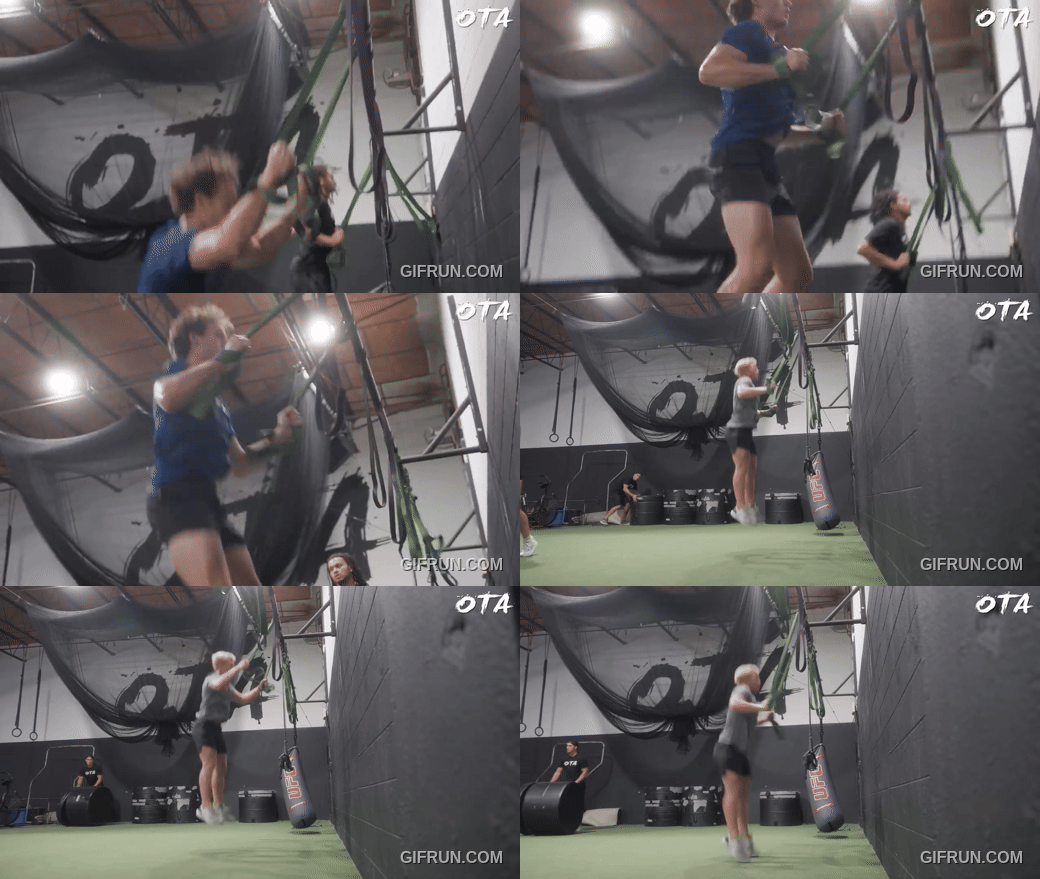
That means:
- Before combines or testing
- Before camp
- Before season
- Before showcases
- During late off-season when shifting to power output
At this stage, the athlete has already built strength. Now we want to convert that strength into usable explosiveness.
We’re no longer chasing max gains in the squat.
We’re chasing higher jumps, faster starts and acceleration, more reactive power, and game readiness.
That’s where contrast training shines.
Why Contrast Training Works
A stronger athlete has a bigger engine.
Contrast training teaches that athlete how to use that engine fast.
Heavy lifts improve force potential. Explosive movements improve how quickly that force gets expressed.
That combination matters because in sports, you rarely have 5 seconds to use your strength.
You need force immediately.
Sprint start. First step. Rebound. Cut. Jump ball. Change of direction.
Contrast training helps athletes become powerful in the timeframes sports actually demand.
Where Most Coaches Get It Wrong
Now let’s talk reality.
A lot of coaches see contrast training online and start throwing it into every workout because it looks advanced.
That’s a mistake.
Mistake #1: Using It With Untrained Athletes
If an athlete is weak, uncoordinated, or lacks movement skill, contrast training becomes sloppy training.
You’ll see:
- Half squats with bad posture
- Knees caving in
- No control under load
- Lazy jumps
- Terrible landings
- Zero intent
That athlete doesn’t need contrast training.
They need the basics and fundamentals:
- Strength development
- Movement and landing mechanics
- Sprint fundamentals
- Progressive overload
You can’t skip level one and jump to advanced methods.
Mistake #2: Programming It Too Often
Another common issue is coaches using contrast training every session, every week, all year.
That kills results and will lead to them plateauing quickly.
Contrast training is a high neural demand method. It requires intensity, freshness, and intent.
If athletes are fried, bored, or going through the motions, it loses value fast.
More isn’t better.
Better is better.
Contrast training should be strategically placed inside a larger program—not used as the entire program.
Mistake #3: No Progression or Plan
Some coaches just pair random lifts and jumps together with no reason.
Random lift followed by random jump every day. And they’ll just say, “this is what athletes do!”
That’s not programming.
That’s exercise roulette.
Real programming asks:
- What quality are we developing?
- Is the athlete ready?
- What phase are we in?
- How does this progress week to week?
- Is performance improving?
Every method needs purpose. Random programming produces random results.
Mistake #4: Half-Effort Reps
Contrast training only works when both parts are done with intent.
If the heavy lift is lazy and the jump is casual, nothing special happens.
You need:
- Quality load selection
- Full focus
- Max effort intent
- Adequate rest
- Sharp execution
This is not conditioning.
This is performance training.
How We Use Contrast Training at Overtime Athletes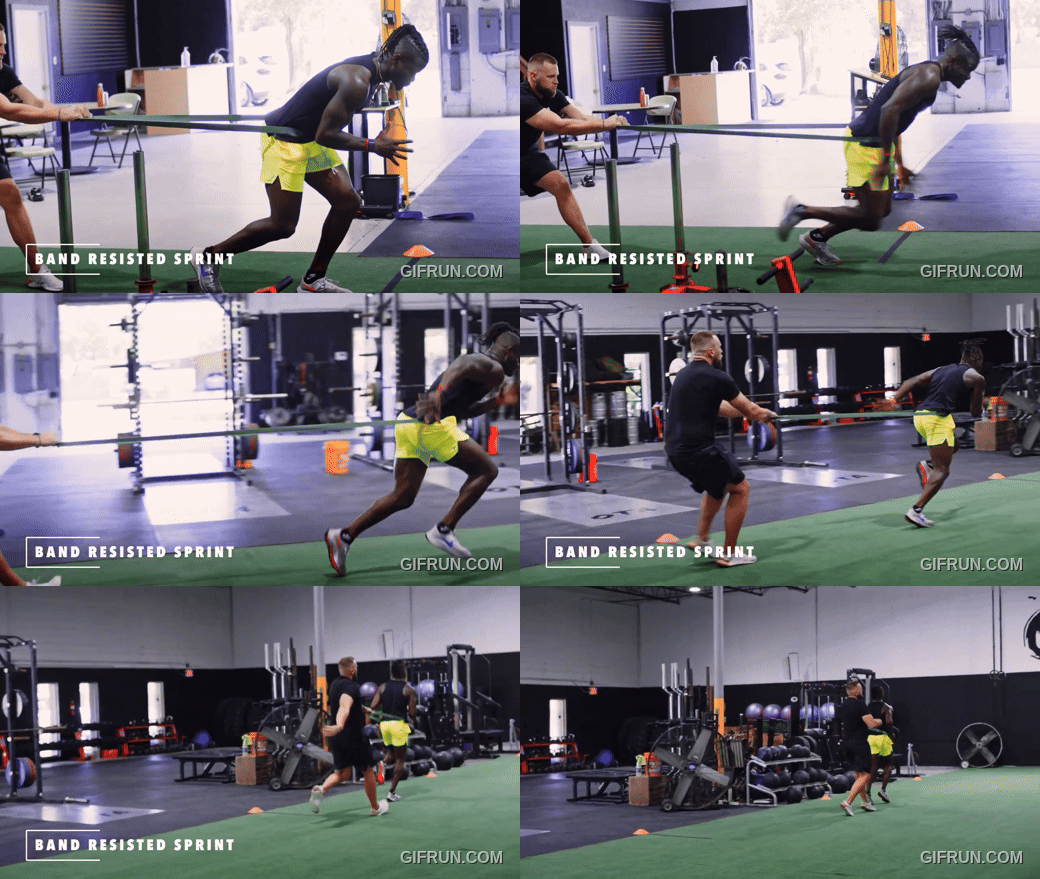

We use contrast training with athletes who have earned the right to do it.
That means they’ve already shown:
- Strength standards
- Good movement patterns
- Consistent effort
- Ability to absorb and reproduce force efficiently
- Readiness for higher outputs
Then we place it in the right phase of training to peak performance.
Volume stays controlled. Intensity stays high. Purpose stays clear.
That’s why it works.
Final Thoughts
Contrast training is a tool—not a shortcut.
Used correctly, it can help athletes become faster, more explosive, and more game ready.
Used incorrectly, it becomes wasted time with flashy supersets and bad mechanics.
The best coaches know this:
Not every athlete needs advanced methods. Every athlete needs the right method at the right time.
That’s real programming.
Want to Learn How We Program for Athletes?
If you’re a coach who wants to stop guessing and start building real systems that create stronger, faster, more explosive athletes, check out our Performance Coach U course.
We break down exactly how we assess, program, progress, and coach athletes the right way, including implementing contrast training correctly, so you can get better results with every athlete you train. Click the image below or book a free call to learn more about the course HERE.
