


Lateral Plyo Progression for Increasing Baseball Exit Velocity
If you want to increase baseball exit velocity, you have to train the way the body actually produces force in a swing. Too many players spend all their time lifting weights or swinging a bat, but they ignore one of the biggest components of hitting power: lateral and rotational force production.
When a hitter drives the ball, the body doesn’t move straight up and down like a squat. Instead, it loads laterally into the back hip, stabilizes that position, and then explodes into rotation. That means athletes must be able to absorb force laterally, control it, and then redirect it into rotational power.
This is where plyometrics come in.
At OTA we use lateral plyometric progressions designed specifically to improve baseball exit velocity by developing lateral force, rotational force, and—just as important—deceleration ability.
A lot of athletes think power is just about producing force. But the truth is, the athletes who hit the ball the hardest are the ones who can decelerate and absorb force before producing it.
That’s exactly what this progression trains.
The progression uses a loaded skater jump with a med ball, moving from the least complex to the most complex variation. As athletes master each stage, they develop better coordination, better force absorption, and ultimately more explosive rotational power.
Let’s break it down. Also make sure to see our previous article that goes more into building lateral power for baseball!
Why Lateral Power Matters for Baseball Exit Velocity
If you look at an elite hitter in slow motion, the swing starts with a lateral load into the back hip.
The athlete shifts weight, stabilizes that position, and then drives forward while rotating through the hips and torso. This creates the energy that transfers through the arms and into the bat.
That sequence relies heavily on three abilities:
• Lateral force production
• Rotational power
• Deceleration and force absorption
If an athlete cannot stabilize and control that lateral movement, they leak power before the swing even starts.
That’s why training lateral plyometrics can have a massive carryover to baseball exit velocity. These drills teach the body how to load, stabilize, and redirect force the same way it happens during a swing.
1. Med Ball Skater Jump for Stability
The first step in the progression is all about stability and control.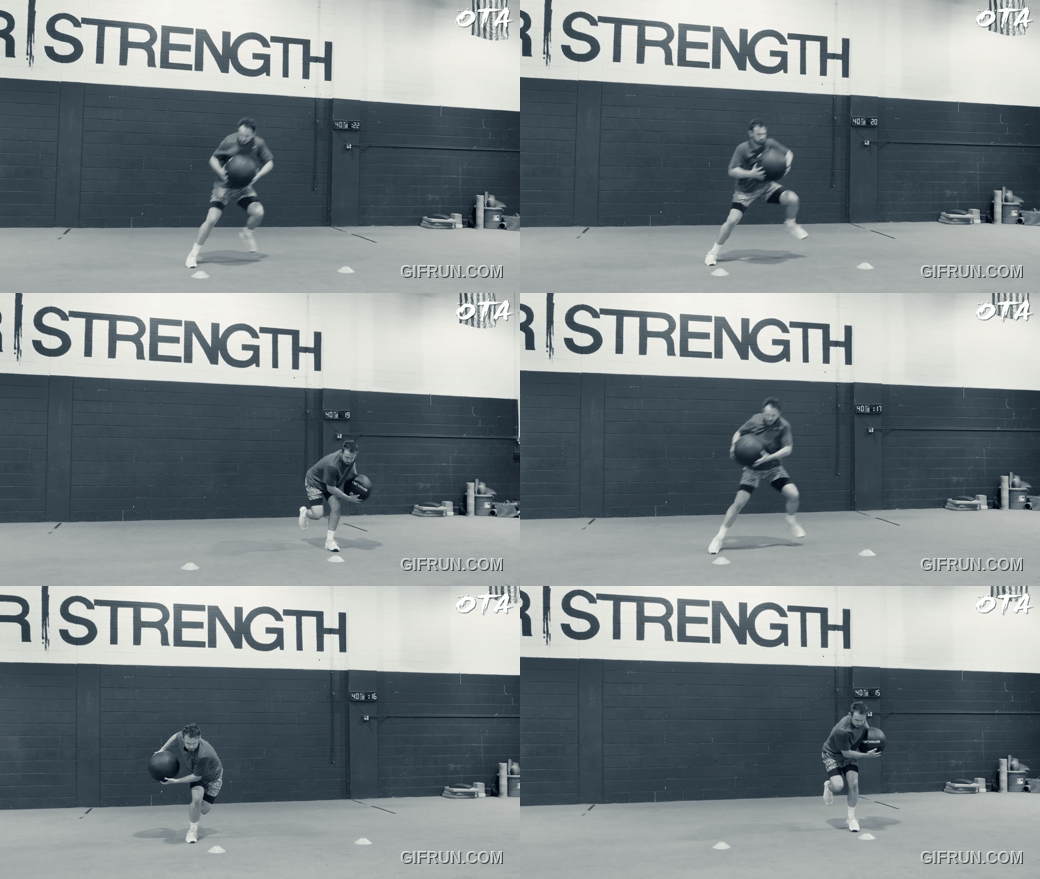
The athlete performs a lateral skater jump while holding a medicine ball. The goal here isn’t speed. The goal is learning how to absorb force and stabilize the landing.
When the athlete lands, they should:
• Control the hip and knee
• Maintain balance
• Keep the torso stable
• Avoid collapsing inward
This teaches the body how to decelerate lateral force, which is the first step in creating explosive power later on.
Without this stability, athletes simply can’t progress safely or effectively.
Think of this phase as building the brakes before building the engine.
2. Med Ball Skater Jump Reactive
Once the athlete can control the landing, we add reactivity.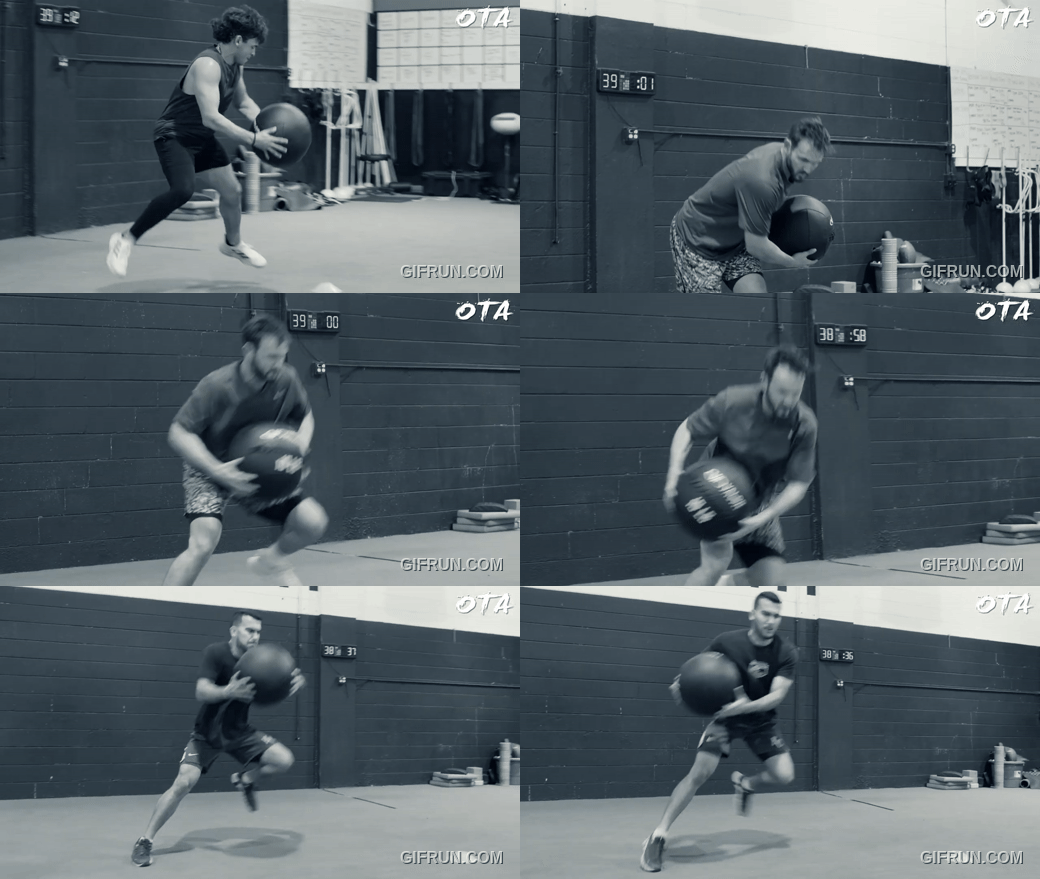
Now instead of sticking the landing, the athlete quickly rebounds into the next skater jump.
This forces the body to absorb force and immediately redirect it, which is exactly what happens during athletic movement.
In baseball, hitters don’t pause when they load their hips. The movement happens fluidly and quickly.
This reactive version trains:
• Faster force absorption
• Elastic power
• Improved coordination
Athletes begin developing the reactive strength needed for explosive movements.
3. Med Ball Reactive Skater Jump to Side Toss
Now we start integrating rotational power.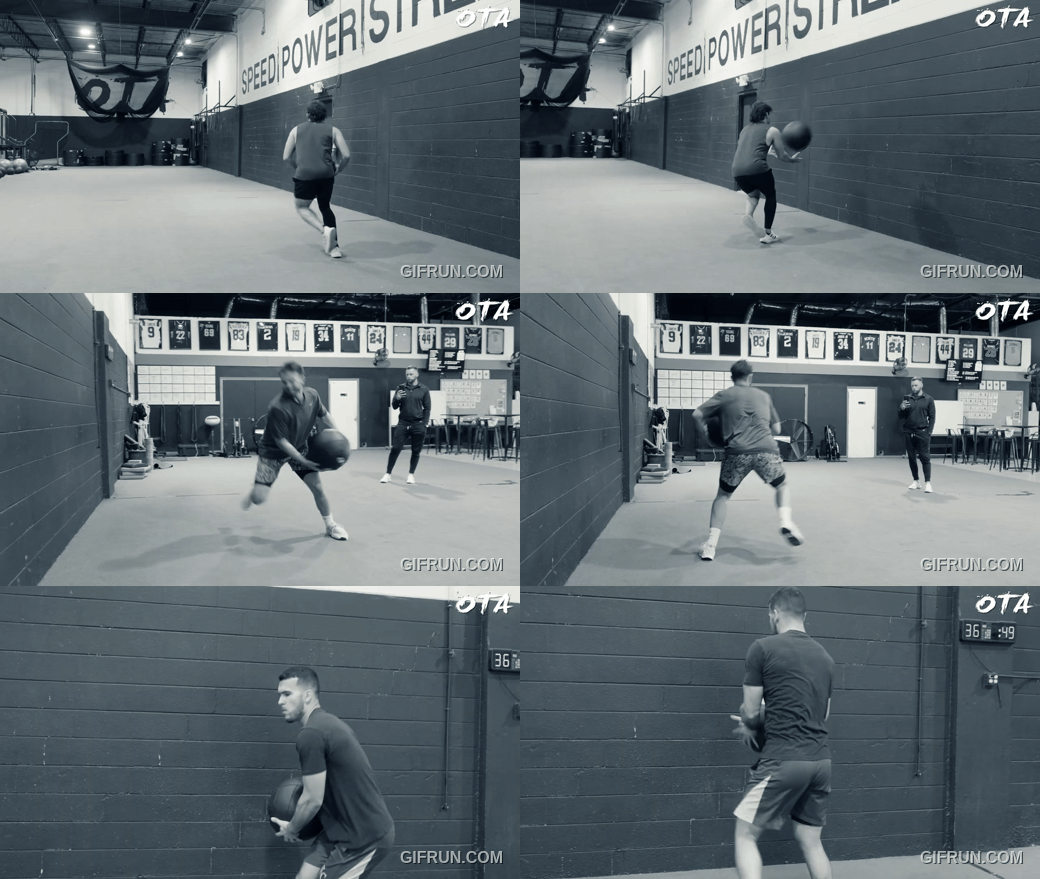
The athlete performs the reactive skater jump and then finishes with a medicine ball side toss.
This is where things really start connecting to baseball exit velocity.
The athlete is now:
- Absorbing lateral force
- Stabilizing the hip
- Redirecting that energy into rotation
That’s exactly what happens in a powerful swing.
The lower body loads laterally, stabilizes, and then rotates explosively. This drill helps athletes learn how to transfer force from the ground through the hips and into rotation.
The med ball toss also provides immediate feedback. If the throw is powerful and smooth, the sequence is working.
4. Reactive Skater Jump Med Ball Catch to Side Toss
This is the most advanced variation in the progression.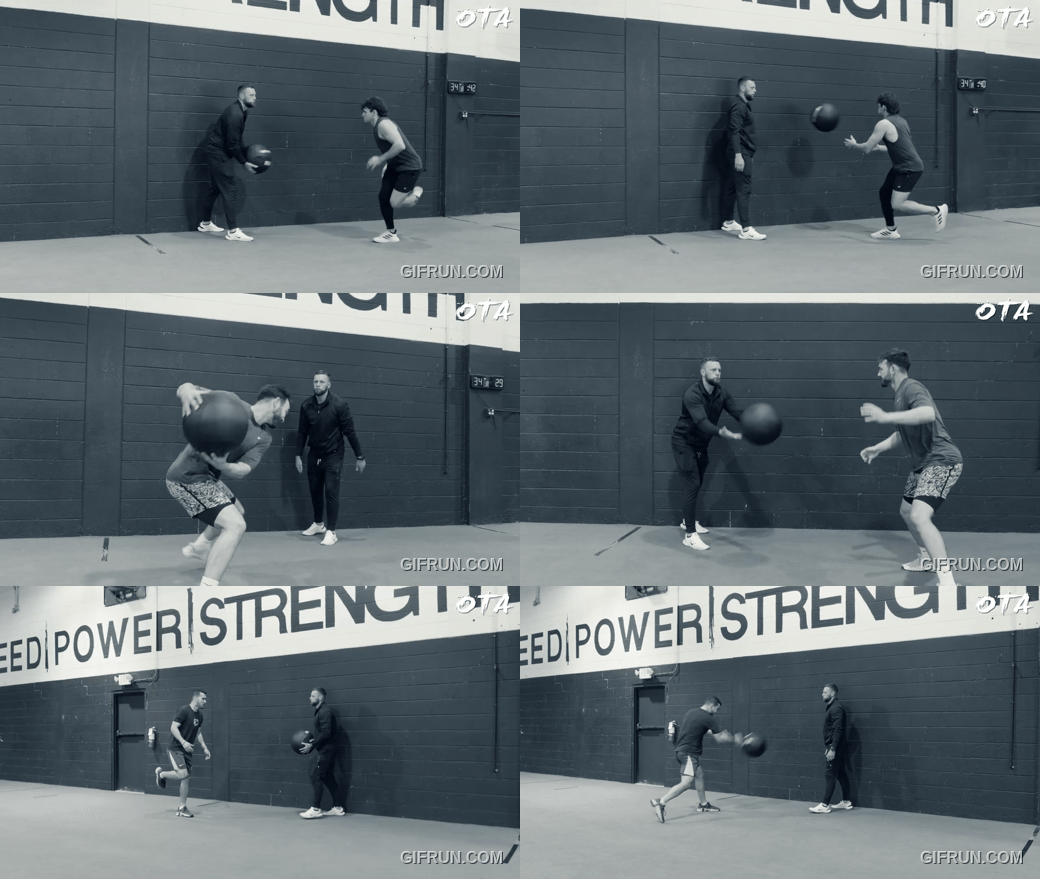
Now the athlete performs a reactive skater jump, catches a med ball, and immediately transitions into a side toss.
This adds another level of coordination and reactive ability.
The athlete must now:
• Absorb lateral force
• Stabilize the landing
• Catch external load
• Redirect that energy into rotational power
This drill challenges the athlete’s ability to control and transfer energy efficiently and even more dynamically, which is critical for maximizing baseball exit velocity.
At this stage, the athlete is training the full sequence of absorb → stabilize → produce → rotate.
This sequence trains the athletes whole foundation for explosive hitting power.
Final Thoughts
One of the biggest mistakes athletes make when training for power is focusing only on force production.
But the reality is this:
Your ability to produce force is often dictated by your ability to decelerate and absorb force first.
If an athlete can’t control lateral movement or stabilize their hips, they lose energy before the swing even begins.
This simple loaded skater jump progression teaches athletes how to absorb, control, and redirect force in a way that directly translates to increasing baseball exit velocity.
By progressing from the least complex to the most complex drills, we ensure athletes are adapting, improving coordination, and performing each movement efficiently.
The result is better lateral power, stronger rotational force, and ultimately translates over to harder contact at the plate.
For baseball players looking to drive the ball farther and increase their baseball exit velocity, this progression is a powerful and effective tool to add to your training.
If you want to increase your exit velocity and drive the ball with more power, check out our Baseball Performance System for a full program to increase all-around baseball performance and become a more dominant player.
