
Total Body Training: Why It’s Superior for Athletic Performance
We’ve always been about results. Over the past few years, we’ve shifted a significant portion of our programming toward total body training, and the results speak for themselves. Our athletes are stronger, faster, and more resilient, and our weekly sessions feel smoother and more productive.
If you’re used to traditional gym splits—upper body one day, lower body the next—you might be surprised at just how effective training the entire body in one session can be. Let’s break down why we’ve made this shift, how we structure our sessions, and why we think now that total body training is the superior approach for athletes.
Be sure to go back and check out our previous article sharing our blueprint for total body training!
Why We Moved Away from Body Part Splits
For years, gyms and programs have preached body part splits: “Monday is chest day, Tuesday is legs, Wednesday is back,” and so on. While this works for bodybuilding, it’s not necessarily the ideal for athletes who need strength, speed, and durability across their entire body. We want athletes to be well balanced.
Our main goal is clear: maximize performance while managing fatigue, conditioning, and recovery. Body part splits left our athletes too sore for practices, skill work, or additional training sessions. Sometimes they’d hit a leg day and be absolutely wrecked the next few days for practice and other sessions. By moving to total body training, we hit every muscle group multiple times per week, but in a smart, balanced way.
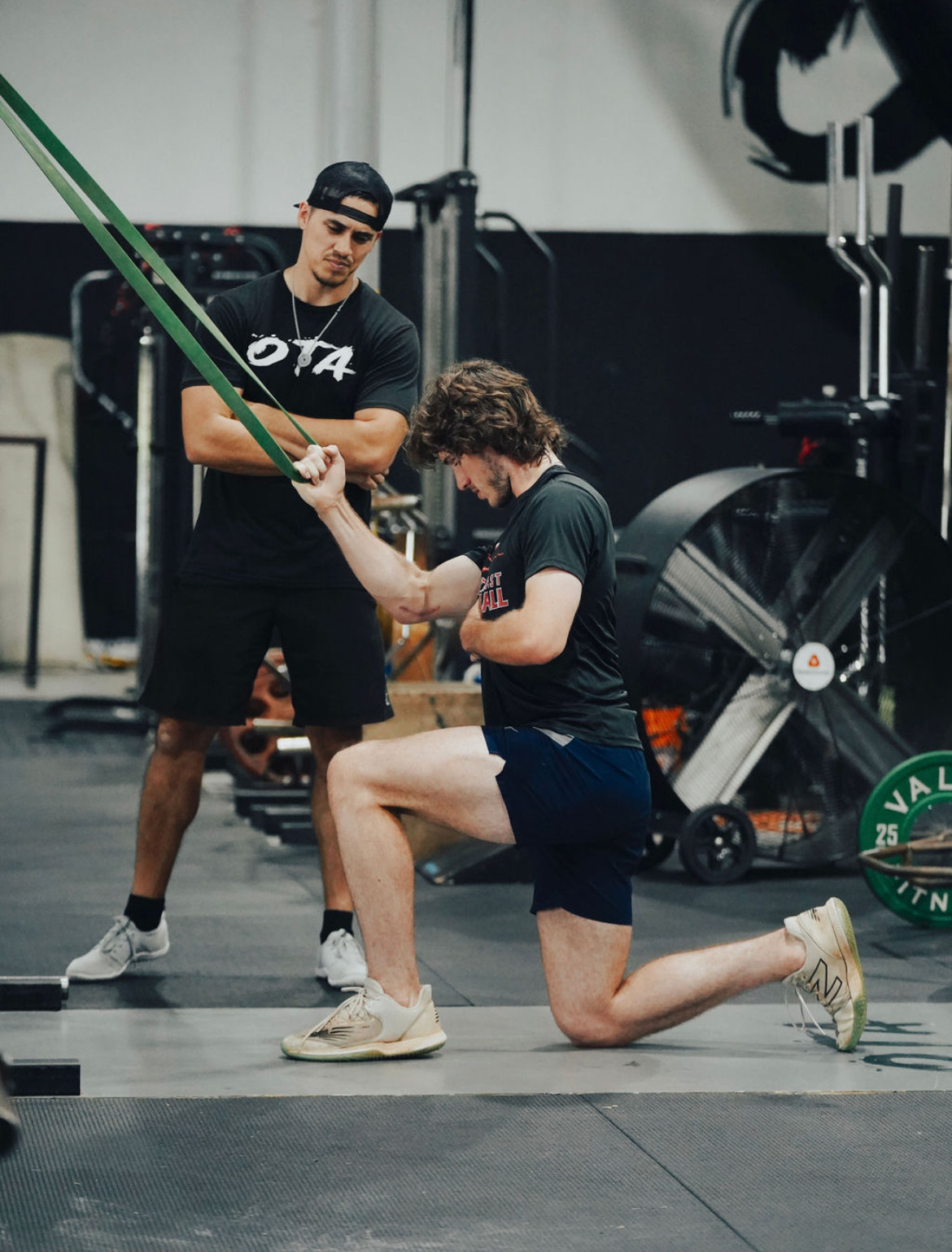
We still anchor every session around a main heavy lift, whether that’s a squat, deadlift, or bench press. Around that lift, we mix in auxiliary exercises that target other muscle groups—think single-leg work, upper body pulls, core stability, and explosive movements. The result? A complete, balanced session that develops strength, power, and resilience without overloading any one muscle group. They train with high intensity still but aren’t left to fatigued for their skill sessions or practices.
3 Benefits of Total Body Training for Athletes
Here’s why we believe total body training is the optimal choice for athletic performance:
1. Managing Load and Fatigue
Athletes don’t have the luxury of being sore for days. Practices, film sessions, conditioning, and competition all demand that our athletes stay fresh and ready. With total body training, we hit a little of everything each session rather than exhausting one body part at a time. Again, athletes aren’t body builders and should not be doing “bro splits”.
This approach allows us to:
- Spread intensity across multiple muscle groups
- Prevent excessive soreness in one area
- Keep athletes performing at a high level in both the weight room and on the field
In short, total body training manages load intelligently. Athletes leave the gym challenged but not broken, which is exactly what you want for consistent progress throughout the week. We don’t want our athletes to leave the gym feeling “destroyed”. That should never be a performance coaches goal.
2. Increase Work Capacity and Conditioning
When you train your entire body in one session, you naturally increase work capacity. Every exercise recruits multiple muscle groups, and the cumulative effect is better conditioning, greater endurance, and higher energy output.
For example, a session that includes a single leg hops, heavy squat, dumbbell bench press, rows, and weighted sit ups is hitting plyometrics, upper body, lower body, and core all at once. Athletes adapt to sustaining higher workloads, which translates directly to sports performance. They move faster, recover better, and maintain energy from the first drill to the last play.
3. More Flexibility Programming In Season vs Off Season
One of the biggest challenges for us at Overtime Athletes is managing multiple athletes across different seasons and different sports. This is a similar challenge for any performance coach that works with young multi-sport athletes. In-season athletes cannot afford to crush a single body part; they need total body training that respects their sport schedule.
If you absolutely wreck a volleyball players legs on Monday and they have practice and then a game that weekend, well there’s never really a chance for their legs to actually recover since they’re jumping and cutting all week long until gameday.
With a total body approach, programming becomes far more flexible:
- Every athlete can follow the same session, but intensity and volume are adjusted based on their season
- Off-season athletes can handle heavier loads and more volume
- In-season athletes maintain strength and mobility without excessive fatigue
This flexibility is critical for maximizing results while keeping athletes healthy and ready to perform. This makes it simpler for the coach while being able to still work with more athletes.
How We Structure Our Total Body Sessions
Every total body training session at Overtime Athletes revolves around one main heavy lift. From there, we strategically add auxiliary movements to target balance, explosiveness, and conditioning. A typical session looks like this:
- Main Lift – Squat, deadlift, or bench variations for absolute strength work
- Secondary Lifts – Upper/lower movements, unilateral work
- Auxiliary & Core Work – Isolation movements, supersets and circuits
This method ensures athletes train every muscle group, build work capacity, and recover faster throughout a training week. No longer are athletes tied to arbitrary splits that don’t match the demands of sport. They leave the gym stronger, faster, and more prepared. The best thing is a doesn’t matter what days they’re able make it, the athletes are still able to work on their full body.
Final Thoughts
The shift to total body training has been a game-changer for our athletes. They are stronger, less sore, more conditioned, and able to hit their practices and competition at peak performance. By focusing on balanced sessions, heavy compound lifts, and strategic auxiliary work, we’re building athletes who are durable, explosive, and ready for the demands of their sport.
To us, shifting to total body programming allows to train our athletes smarter and get more out of them overall each session. Body part splits are outdated and a thing of the past, especially for athletes.
