How to Train Reactive Strength Index (RSI) for Athletes
If you want to build real explosiveness — not just strength that looks good on paper — you need to understand and develop reactive strength index (RSI).
At Overtime Athletes, we are obsessed with transfer. Not just bigger lifts. We care about game speed. First-step acceleration. Violent change of direction. Second jumps. The kind of explosiveness that separates athletes in live competition.
One of the most important qualities behind all of that is reactive strength index (RSI).
If your athlete is strong but slow off the ground, RSI is likely underdeveloped. If they can squat heavy but don’t look elastic sprinting or cutting, RSI is probably the missing link.
Let’s break it down the right way. Also, please check our previous article out on the best plyometrics to increase your vertical!

What Is Reactive Strength Index (RSI)?
RSI measures how quickly an athlete can absorb force and reapply it.
Technically, RSI is calculated by dividing jump height by ground contact time. It is most commonly measured during a drop jump. The athlete steps off a box, hits the ground, and immediately rebounds into a maximal vertical jump. The system measures how long they were on the ground and how high they jumped. The higher the jump and the shorter the contact time, the better the RSI score.
But here’s what that really means in performance terms:
Reactive strength index reflects how explosive an athlete is under extreme time constraints.
Sport does not give you time to load slowly. Sprinting ground contact times are often under 0.25 seconds. Cutting, reacting, rebounding all demand instant force production. You hit the ground and you go.
RSI measures how well you do that.
Why RSI Matters for Athletes
Strength is the ability to produce force.
Power is the ability to produce force quickly.
Reactive strength index measures the ability to produce force quickly when time is limited.
That distinction matters.
An athlete can be strong in the weight room and still struggle to express force rapidly in competition. If they sink too deep when cutting or take too long to transition from landing to jumping, they are losing valuable milliseconds.
Athletes with high reactive strength index:
- Accelerate faster
- Transition quicker between movements
- Change direction more efficiently
- Look elastic and springy
- Win more explosive moments
Athletes with low RSI tend to look heavy. They absorb force but cannot redirect it fast enough. They may jump high with a slow countermovement but struggle with quick, reactive jumps.
If you want true game speed, you must train the stretch-shortening cycle properly. That means teaching the body to absorb force eccentrically and immediately transition into concentric output.
That is where structured plyometric programming comes in.
How We Train RSI
When we program speed and plyometrics each week, we dedicate an entire session specifically to plyos that develop RSI through specific and targeted plyometric programming.
This is not random jumping or a bunch of box jumps.
This is intentional progression built around one goal: faster ground contacts and better force redirection.
We focus on three primary categories of plyometrics, progressing from foundational elasticity to advanced reactive power.
High Volume Pogos and Hop Variations: Building the Foundation
Every athlete in our system performs pogo jumps regularly. These are low-level, low-intensity plyometrics that train foot and ankle stiffness, rhythm, and repeated fast ground contacts.
This is the base of reactive strength development.
If the foot and ankle collapse on contact, force leaks. If the lower leg is stiff and reactive, force transfers efficiently. Pogo jumps teach athletes to stop absorbing force passively and start rebounding off the ground with intent.
Because they are lower intensity, pogos and hop variations can be performed frequently. They develop the elastic qualities needed before progressing to more advanced work.
Without stiffness, there is no high-level RSI.
We build the spring before we ask it to perform more explosively.
Hurdle Jumps: Producing More Force, Faster
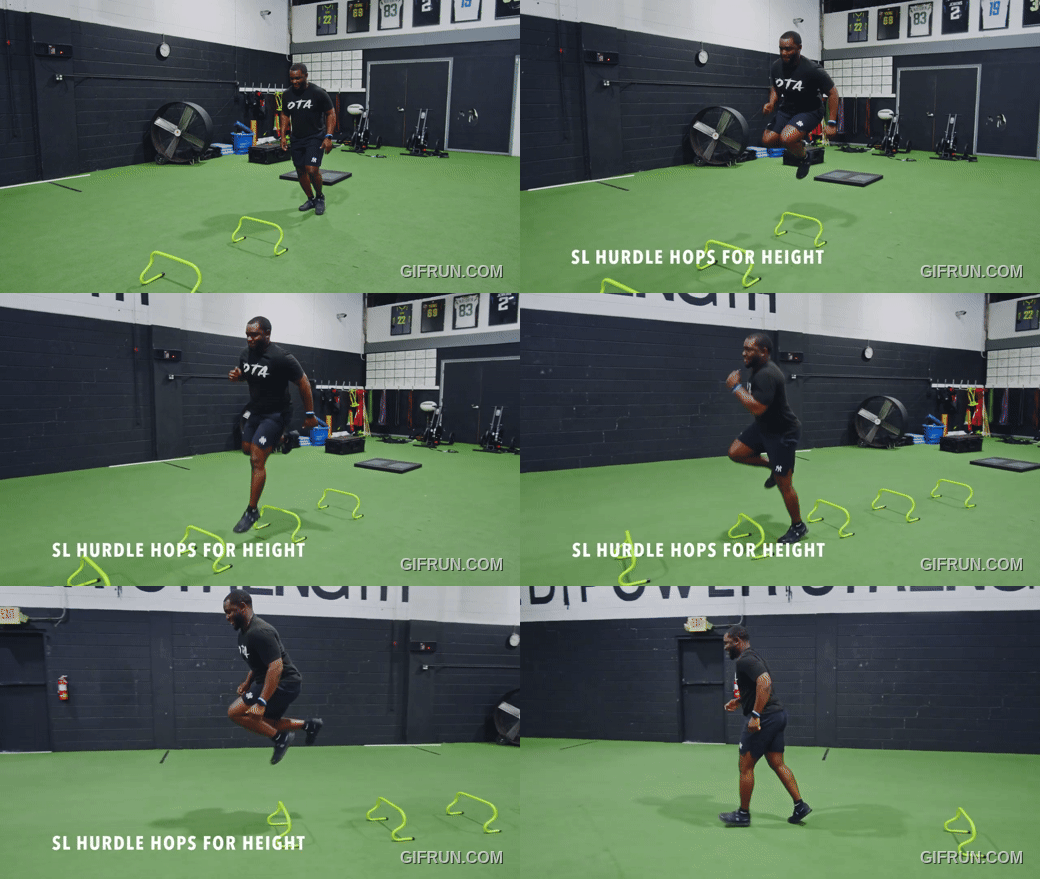
Once foundational stiffness is established, we progress to hurdle jumps. These can be performed over mini hurdles to emphasize quick contacts or over larger hurdles to demand greater force output.
The key principle remains the same: ground contact must stay fast.
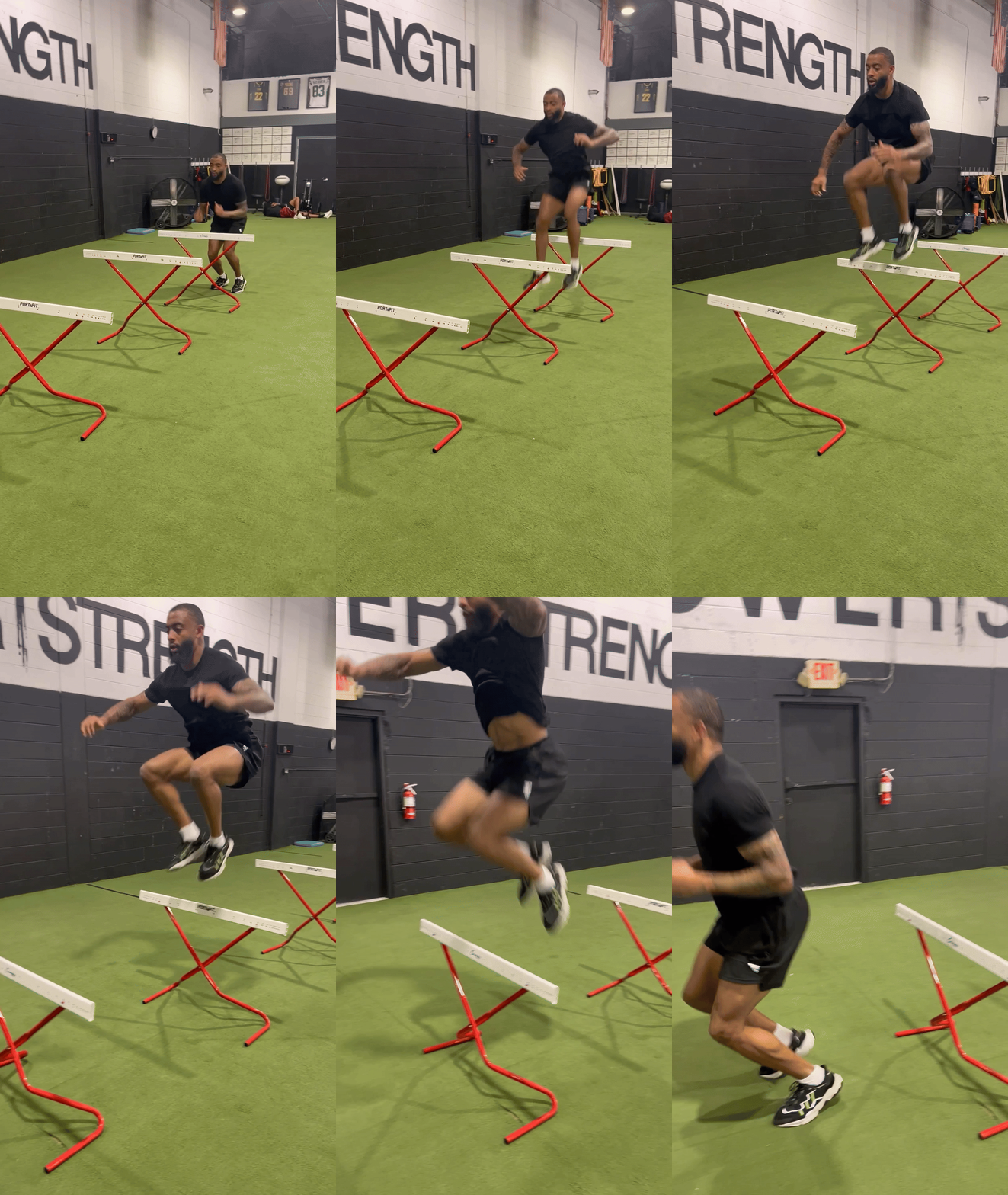
Hurdle jumps train athletes to produce more force in less time. They reinforce aggressive stiffness while increasing concentric power demands. Athletes learn to attack the ground and rebound immediately rather than sinking into each jump.
If contact times become long and sluggish, the drill loses its reactive intent. Reactive strength training is about speed of force production, not simply clearing higher obstacles.
This phase bridges the gap between foundational elasticity and high-speed reactive power.
Drop Jumps and Depth Variations: Advanced RSI Development
Drop jumps are where RSI is directly challenged and measured.
In these drills, the athlete steps off a box, absorbs force upon landing, and immediately explodes into a maximal effort jump. Variations include depth drops to box jumps, depth drops to vertical jumps, and depth drops to broad jumps.
The transition from landing to takeoff must be fast and aggressive.
This trains the athlete’s ability to absorb force eccentrically and redirect it into concentric output without hesitation. It closely mirrors the demands of sprinting and cutting, where force must be redirected instantly.
However, drop jumps are advanced. An athlete must possess sufficient strength and body control to handle the eccentric load. If they collapse into the landing, the drill becomes slow and loses its purpose.
Strength is the prerequisite. Reactive power is the progression.
When programmed correctly, drop jumps are one of the most effective tools for improving RSI.
How RSI Translates to Speed and Explosiveness
As RSI improves, so does game performance.
Acceleration becomes sharper. Athletes reach top speed quicker. Change of direction becomes cleaner and more efficient. Second jumps become dominant. Sprint mechanics improve because ground contact times shorten naturally.
The athlete looks lighter, more elastic, and more explosive.
This is the difference between weight room strong and field or court fast.
Many athletes build bigger engines in the gym but never upgrade their ability to use the ground efficiently. Reactive strength index training upgrades that system. It teaches the body to handle force rapidly and return it explosively.
They essentially become actual athletes.
Final Thoughts: Train for Game Speed
If your goal is real performance, RSI must be trained and developed intentionally.
Build stiffness first with repeated fast contacts. Increase force demands with progressive hurdle work. Layer in advanced drop jumps to train violent eccentric absorption and redirection.
This is why we dedicate an entire weekly session to plyometrics focused on fast ground contacts and elasticity.
Because speed is not just about how much force you produce. It is about how fast you produce it.
Join our Game Speed Agility program and start building real explosive, transferable speed and agility today.