


The Strength Movements Every Runner Should Be Doing
If you’re serious about getting faster, running longer, and staying healthy, you need more than miles.
You need to train and build real strength for running.
 We’ve worked with many long-distance runners, tri athletes, and iron man competitors and we don’t look at runners as fragile endurance machines. We look at them as athletes. And athletes need force production, tendon resilience, and the ability to absorb and reapply force thousands of times without breaking down.
Running is a series of single-leg plyometric jumps. Every stride is force into the ground. The question is simple:
Can your body handle it?
If not, you plateau. Or worse, you get hurt. Runners need strength training same as any other high level competitive sport.
Also check out our previous article on the best lower body warm routine for athletes!
Why Strength for Running Actually Matters
Serious runners understand volume. They understand pacing. They understand splits.
But a lot of runners ignore strength training, and that creates a ceiling on their performance.
Here’s what building real strength for running does:
- Increases force production → You push harder into the ground and move faster.
- Improves running economy → You use less energy at higher speeds.
- Strengthens tendons → Better elastic recoil and durability.
- Reduces injury risk → Stronger tissue handles repetitive stress.
- Improves posture and mechanics → Less breakdown late in races.
- Increased force means increase in stride → You’re gaining more ground per stride.
Your tendons act like springs. The stronger they are, the more elastic energy they can store and release. Weak tendons leak energy. Strong tendons return it.
That carries over to speed, durability, and better overall running performance.
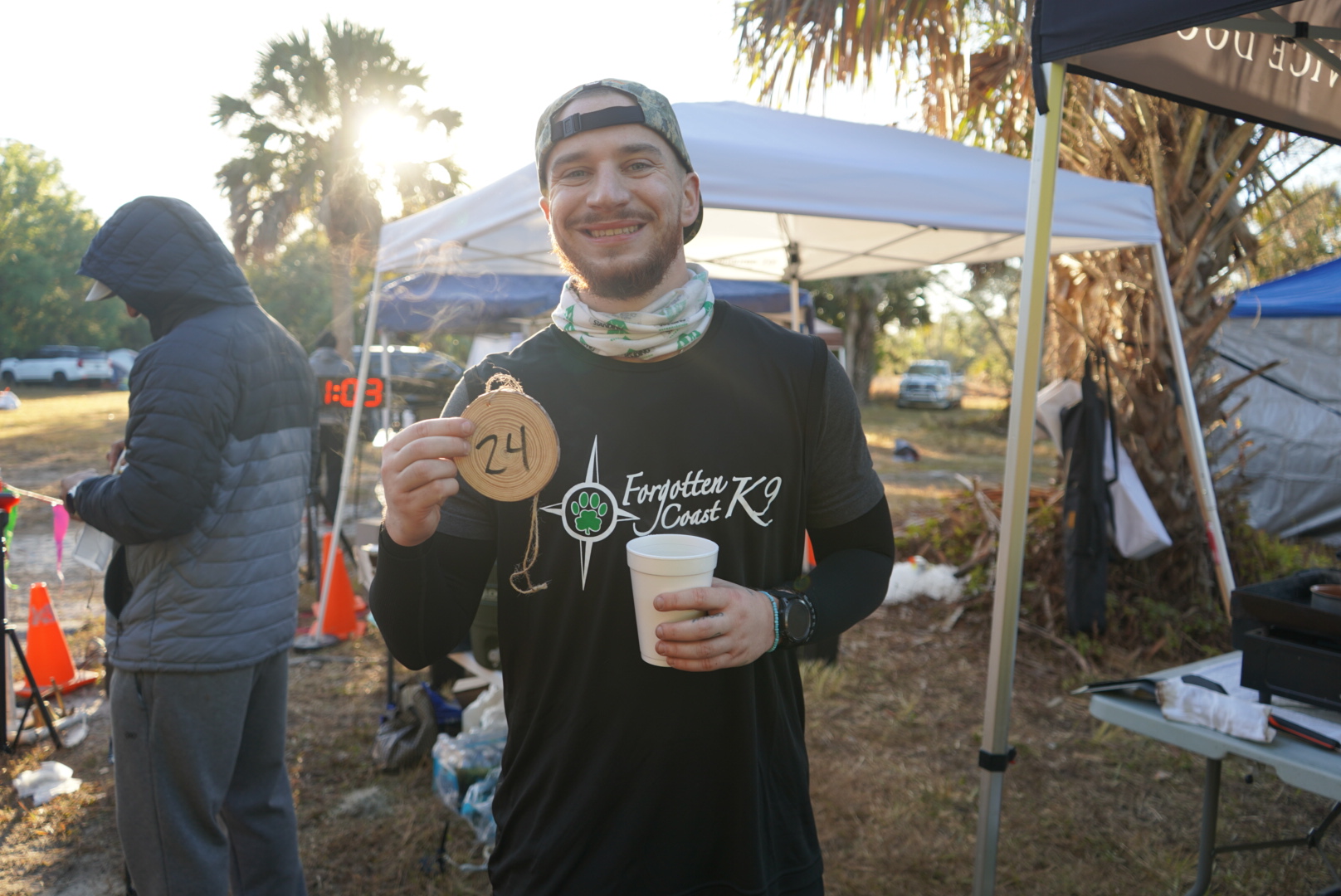
Meet OTA Coach Mike Koprowski
Our coach Mike Koprowski doesn’t just talk about this. He lives it.
Mike recently completed a 100-mile run in under 24 hours, and he’s finished multiple 50+ mile races. Ultra-endurance at that level isn’t just about mileage. It’s about structural strength and force capacity.
These are the five strength movements every runner absolutely should be doing, according to Mike. Also, follow Coach Mike on Instagram!
Heavy Squats (Any Variation)
Heavy squats build the foundational strength of the quads, glutes, and adductors. Your prime movers in running.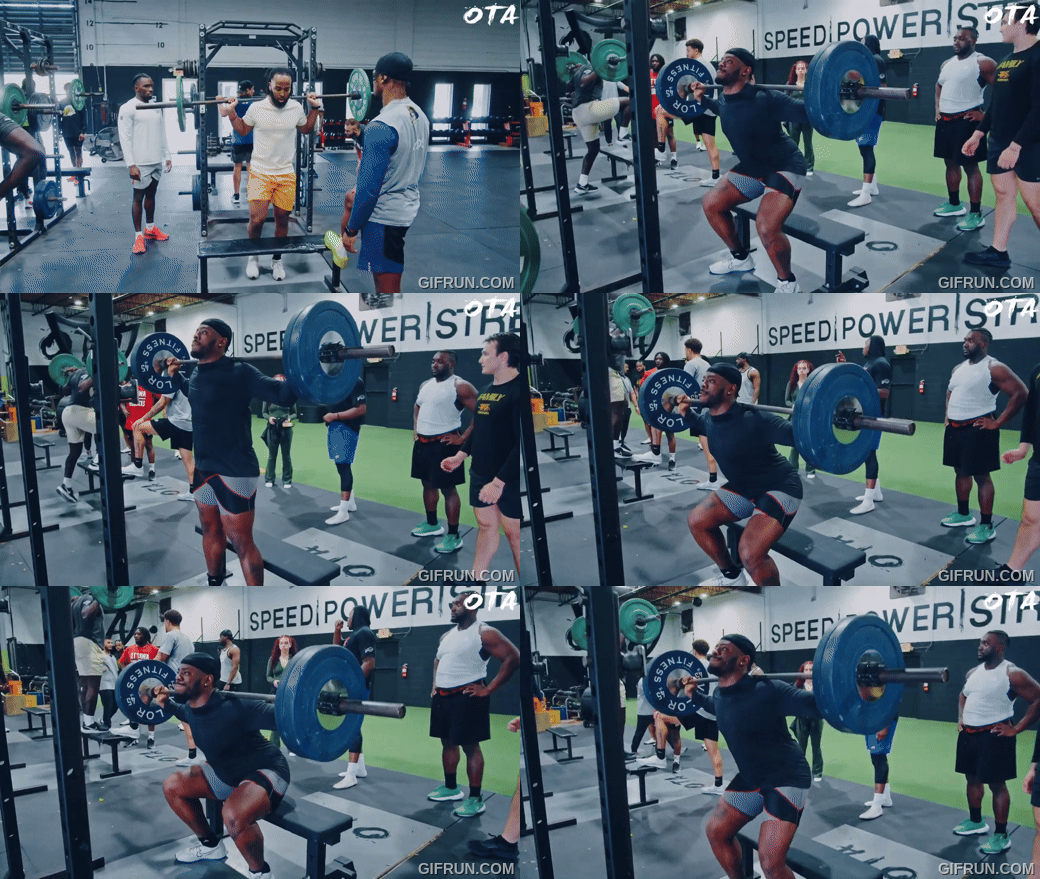
When you squat heavy (relative to your bodyweight), you increase your ability to produce force vertically. That directly translates into greater stride power and better ground contact efficiency.
Benefits for runners:
- Increases maximal force production
- Improves tendon stiffness in the lower body
- Enhances stride power
- Builds durability for high-mileage weeks
- Improves late-race strength
You don’t need to body build. You need to focus on just getting stronger legs.
Single-Leg RDLs

Running is unilateral. If your strength training isn’t, you’re missing the point.
Single-leg RDLs train the posterior chain — glutes, hamstrings, and the deep stabilizers of the hip — while challenging balance and foot control.
Benefits for runners:
- Improves hamstring strength (critical for speed)
- Reduces hamstring and Achilles injury risk
- Enhances hip stability
- Builds control through mid-stance
- Improves force transfer from hip to ground
Weak hips leak energy.
Strong hips create speed more speed and stride efficiency.
Step-Ups
Step-ups are one of the most specific strength exercises for runners.
They train hip extension and knee drive in a pattern that closely resembles running mechanics.
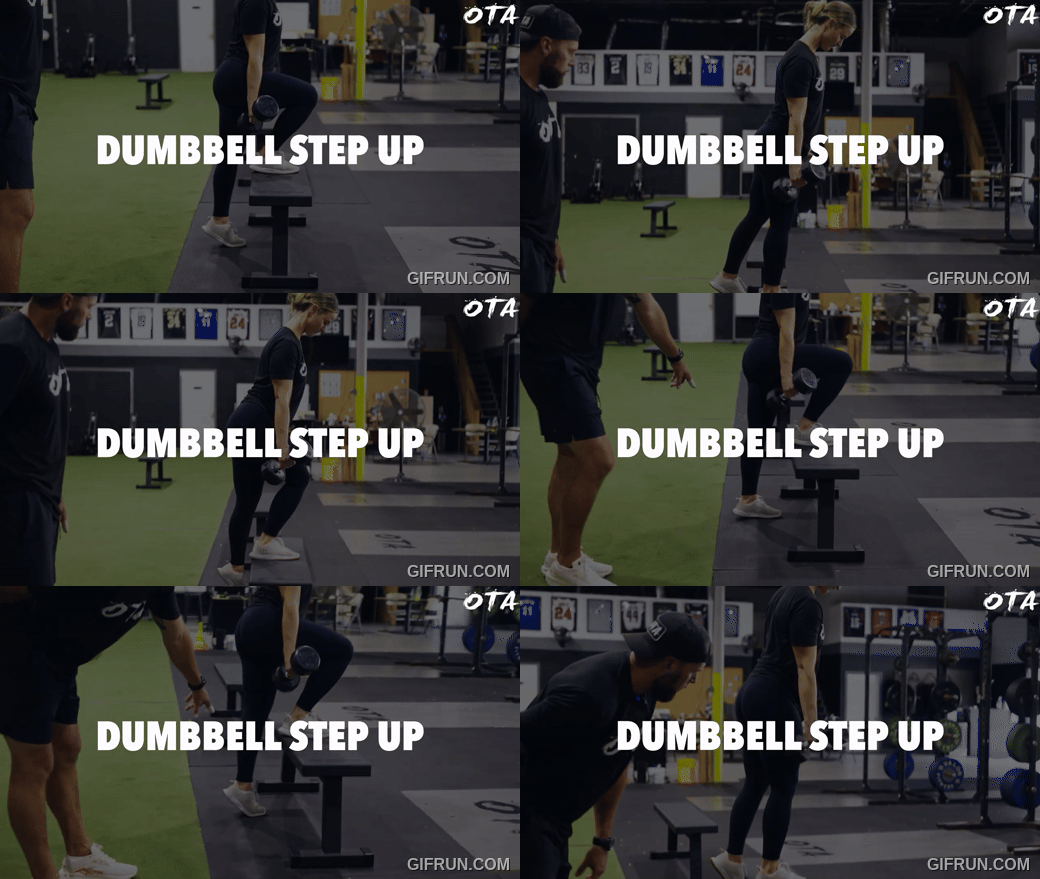
When loaded progressively, step-ups build serious unilateral leg strength.
Benefits for runners:
- Improves knee drive power
- Builds single-leg strength safely
- Enhances uphill performance
- Improves pelvic control
- Strengthens quads for joint protection
If you want stronger strides, train them directly.
Single-Leg Glute Bridges
Glute weakness is one of the biggest hidden limiters in endurance athletes.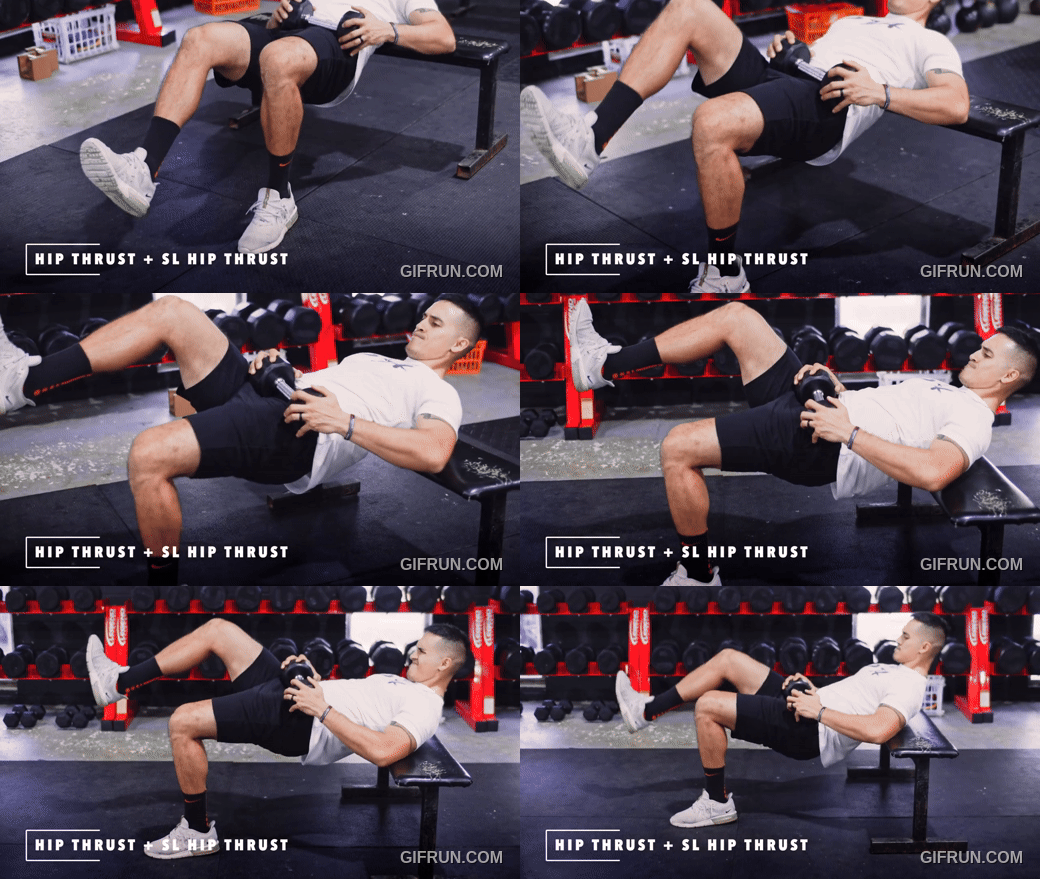
Single-leg glute bridges isolate hip extension strength and reinforce proper glute firing — something many runners lose as mileage increases.
Benefits for runners:
- Improves glute activation
- Reduces low back stress
- Enhances hip extension power
- Improves stride efficiency
- Supports pelvis stability
Strong glutes protect your knees, hips, and back. Also most of your power comes from hip extension, so it needs to be trained and progressed.
Copenhagen Planks / Lifts
Adductor injuries and groin tightness are common in runners — especially as intensity increases.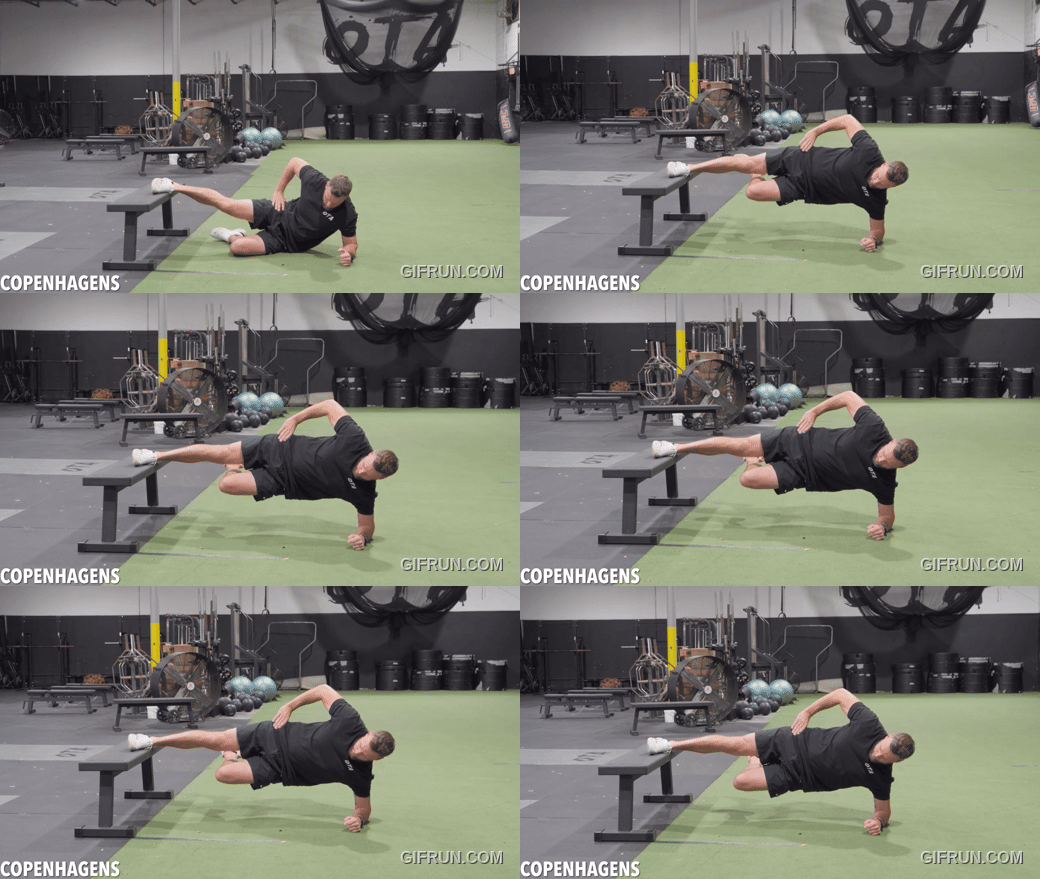
Copenhagen planks build serious inner-thigh and core strength, improving lateral stability and reducing compensation patterns.
Benefits for runners:
- Strengthens adductors (key for hip stability)
- Reduces groin strain risk
- Improves stride alignment
- Enhances pelvic control
If your adductors are weak, your stride collapses inward. Also groin injuries can be debilitating and a serious setback.
Bonus Exercises: Single-Leg Plyometrics & Suitcase Carries
Once strength is built, you must teach the body to use it fast.
Single-leg plyometrics improve stiffness, elasticity, and rate of force development, which is critical for speed and running economy.
Suitcase carries build anti-rotation core strength. Running is controlled rotation. If you can’t stabilize your trunk as you run, you waste energy.
Benefits:
- Improves reactive strength
- Builds tendon resilience
- Enhances foot and ankle stiffness
- Strengthens obliques and deep core
- Improves posture over long distances
Strength without speed transfer is incomplete.
Final Thoughts: Serious Runners Still Lift
If you’re jogging for general health, strength training is helpful.
If you’re serious about performance — it’s non-negotiable.
Building strength for running isn’t about getting bulky. It’s about increasing force capacity, improving tendon integrity, and building a body that can handle the demands of training and racing.
Coach Mike doesn’t run 100 miles under 24 hours on mileage alone. He runs it on structure. On strength. On resilience.
Stronger runners are able to maintain pace later in a race, stay more durable, and don’t break down as the volume continues to increase.
If you want to unlock the next level:
Lift heavy.
Train single-leg.
Build your tendons.
Add plyometrics.
Respect recovery.
Just running more miles isn’t necessarily going to increase your performance by itself.
If you want to not only run faster but run longer and stay more durable, then make sure you are following a strength program and building real strength for running.
