Best Squats for Lower Back Pain: 5 Variations for Athletes
The back squat has earned its reputation as seemingly the “king” of strength exercises — and for good reason.
It builds total-body strength, builds athletes force production through the ground, challenges trunk stability, and transfers to just about every sport you can think of. Because of that, most strength programs require athletes to back squat early, often, and heavy. It’s a staple in high school, college, and pro weight rooms across the country.
But here’s the reality that a lot of programs don’t like to talk about:
Not every athlete tolerates the back squat well — especially when it’s loaded heavy and trained frequently.
And if you’ve coached long enough, you’ve seen it firsthand.
There will always be athletes who struggle with lower back pain when squatting, no matter how much coaching, cueing, or mobility work you throw at them. Sometimes it’s a mobility restriction, faulty mechanics, an asymmetry, imbalance, or prior injury history. Sometimes it’s just the way they’re built.
Whatever the reason — it happens. You can’t avoid it because athletes are individuals and sometimes exercise selection and modification has to cater to the individual variance. No exercise is one size fits all, even the back squat.
Please check out our previous article on the best exercises for building lower body strength and also my previous article sharing my top 3 exercises for vertical power!

The Common (Flawed) Coaching Response
When an athlete reports lower back pain with squats, a lot of coaches immediately go to one of two extremes:
- “Just push through it.”
- “Remove all squats and axial loading completely.”
The second option may turn into weeks (or months) of nothing but corrective exercises, bodyweight movements, and avoidance of anything remotely challenging.
I don’t believe that’s the answer.
In fact, I think it often creates more problems than it solves.
Athletes still need to train strength. They still need to produce force. They still need to learn how to load their body safely and aggressively. Avoiding squatting altogether doesn’t prepare them for sport — or life. At the end of the day, athletes need to get stronger and be physically ready to perform. If they spend their whole program avoiding exercises, they won't be ready.
My Coaching Philosophy on Squatting With Back Pain
I firmly believe that most athletes can still squat — and even squat heavy — while dealing with or recovering from lower back pain, as long as:
- The right squat variation is selected
- The loading strategy matches the athlete
- Corrective work is done alongside, not instead of, real training
This comes from experience as both a coach and as an athlete.
I’ve dealt with multiple low back strains throughout my training career and when playing football. There were plenty of days where conventional back squatting or pulling from the floor just wasn’t an option. But I still found ways to train hard, maintain strength, and even hit max effort work — simply by choosing better squat variations for my body at the time.
Below are my five favorite squat variations for athletes dealing with lower back pain. These aren’t random substitutions — they’re intentional tools that let athletes keep training while reducing unnecessary stress on the lumbar spine.
1. Goblet Squat
Simple. Effective. Severely underrated.
The goblet squat is often dismissed as “too basic,” but that’s usually by people who don’t understand why it works.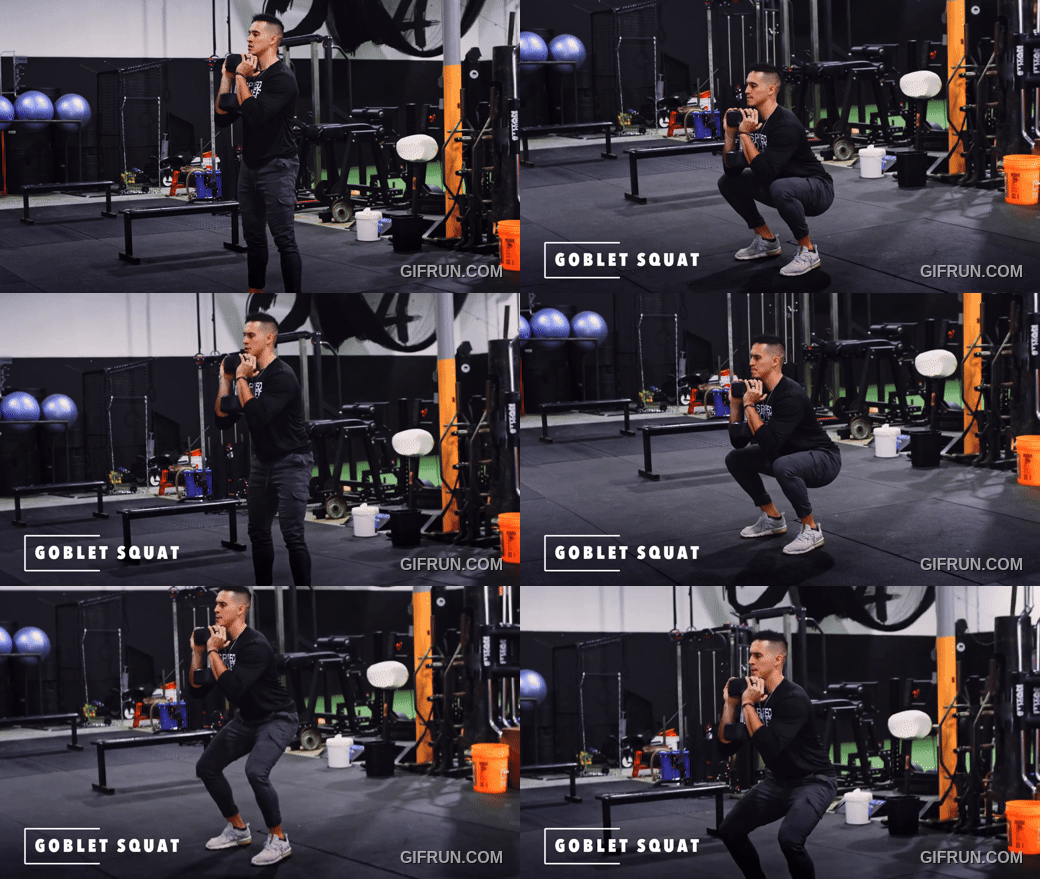
With the load held anteriorly (in front of the body), the goblet squat naturally encourages:
- A more upright torso
- Better core engagement
- Improved hip and ankle mechanics
For athletes with lower back pain, this is huge.
The anterior load acts as a counterbalance, making it easier to sit between the hips instead of folding forward. It’s also self-limiting — if the athlete loses position, the set ends naturally.
From a coaching standpoint, goblet squats are:
- Easy to coach
- Easy to regress or progress
- A great way to reintroduce squatting patterns pain-free
Don’t underestimate how effective heavy goblet squats can be when done correctly — especially for athletes rebuilding confidence in the squat. Sometimes taking it back to the most basic is exactly what an athlete needs.
2. Landmine Squat
Fixed bar path. Big loading potential. Back-friendly.
The landmine squat is one of my favorite variations for athletes who struggle with tolerating traditional barbell squats.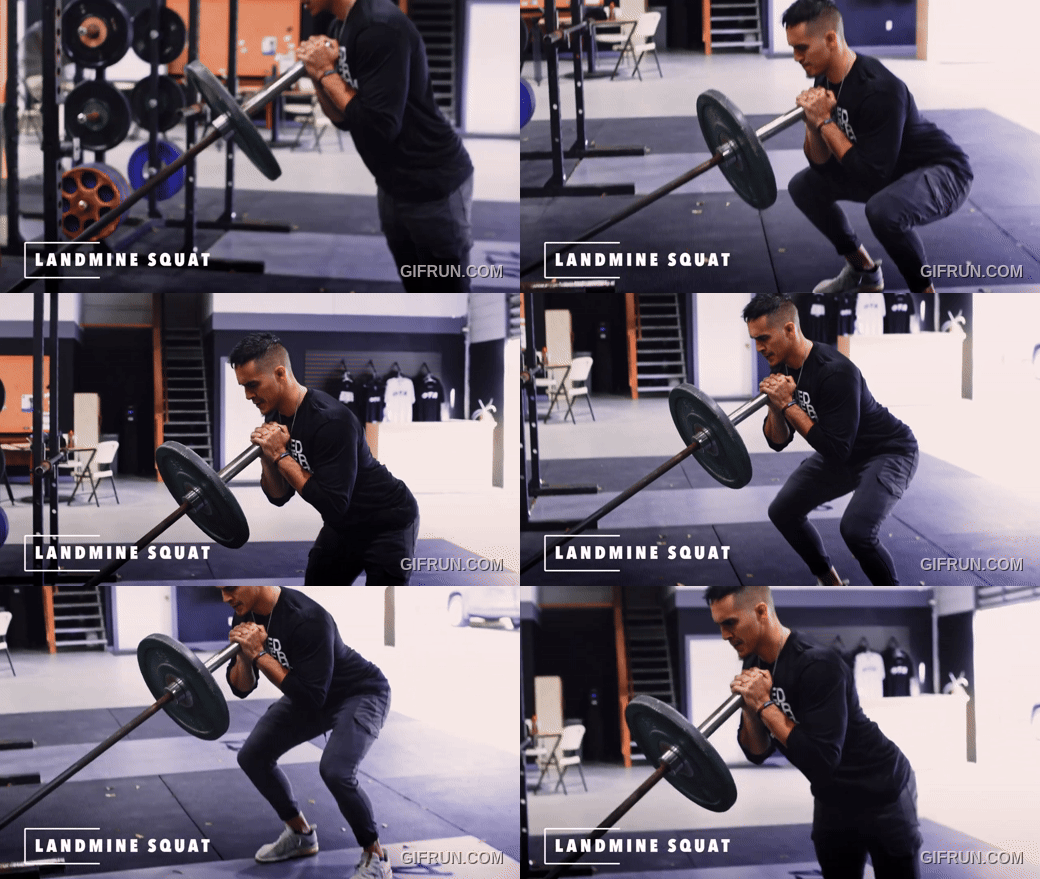
Because the bar is fixed on one end, the landmine:
- Reduces shear forces on the spine
- Encourages a more natural squat pattern
- Allows for heavier loading than goblet squats
- Helps the athlete to focus on control of the movement since they don't have to stabilize
The angled bar path also helps athletes maintain a neutral spine without excessive cueing. It’s especially useful for athletes who struggle to control depth or maintain posture under load.
From a programming perspective, landmine squats are a perfect bridge between:
- Light anterior-loaded squats
- Heavier bilateral barbell squatting
They let athletes train strength aggressively without feeling beat up afterward.
3. Front Squat With Heels Elevated
Upright torso + mobility assist = safer squatting
Front squats already demand a more upright torso than back squats. Add heel elevation, and you further reduce the mobility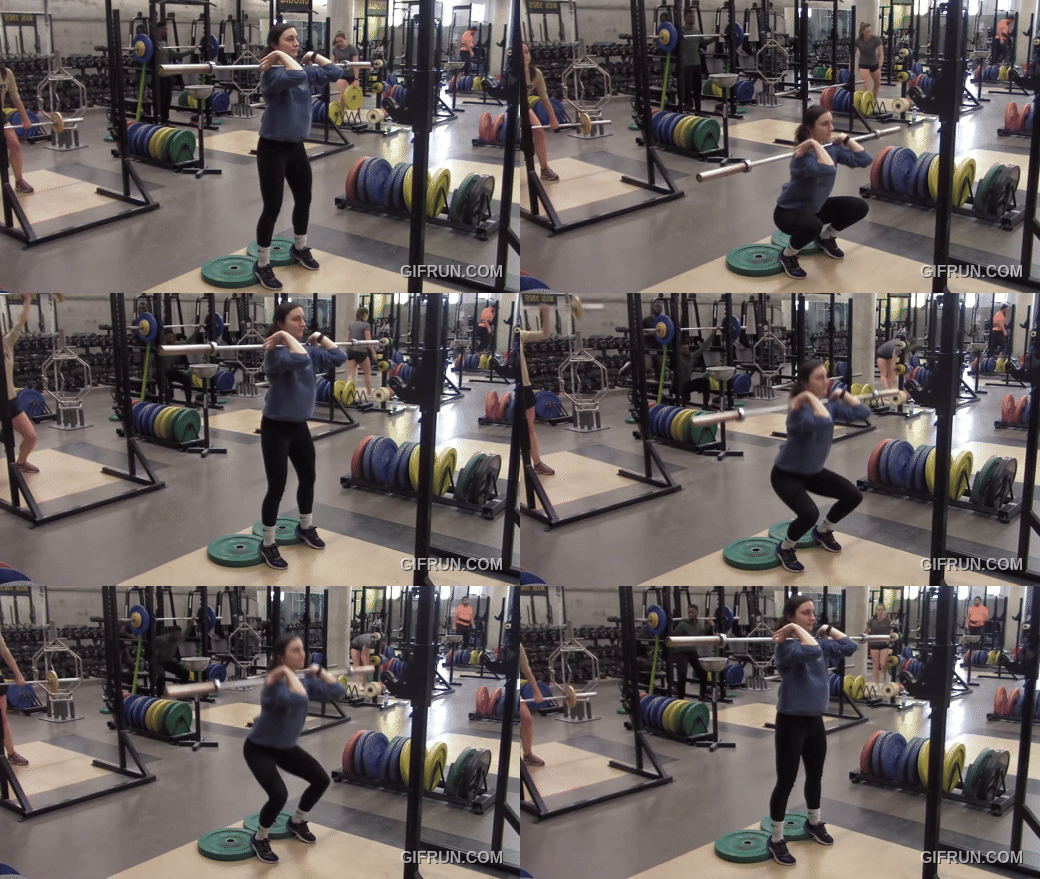 demands at the ankle and hip.
This combination is money for athletes who:
- Have limited ankle dorsiflexion
- Lose posture in the hole
- Feel excessive low back stress in back squats
Elevating the heels allows the athlete to stay stacked — ribcage over pelvis — which dramatically reduces lumbar strain.
Front squats with heels elevated let athletes:
- Train heavy
- Build quad strength
- Reinforce good positions
All while minimizing unnecessary stress on the lower back. Remember the goal is using exercises that allow them to push intensity more in safer positions.
4. Safety Squat Bar Box Squat
Controlled. Upright. Progressive.
The safety squat bar (SSB) is one of the most back-friendly tools you can use — especially for athletes with a history of low back pain when using a regular barbell for back squats.
The cambered design:
- Promotes an upright torso
- Reduces shoulder and upper back stress
- Allows athletes to load without being pulled forward
Pair it with a box, and now you control:
- Depth
- Tempo
- Spinal position
I like setting the box at a height the athlete can own with complete control and minimal low back stress. From there, you can gradually lower the box over time — eventually removing it altogether once the athlete earns it.
This turns the squat into a progression, not a gamble.
5. Zercher Squats
My all-time favorite for athletes with lower back pain.
If I had to pick one squat variation that has saved my training more times than I can count — it’s the Zercher squat.
Holding the bar in the crook of the elbows forces:
- A stiff, braced trunk
- Massive upper back engagement
- An extremely upright squat pattern
Because the load is anterior, the body naturally self-organizes into strong positions. And contrary to what people think, Zerchers can be loaded very heavy.
I’ve performed max effort Zercher squats on days where my lower back felt questionable — and they’ve never aggravated my back further. In many cases, they actually made me feel better afterward.
For athletes dealing with lower back pain, Zerchers allow:
- Deep, controlled squatting
- Heavy loading
- Excellent spinal stability
They’re uncomfortable — but they’re incredibly effective.
Final Thoughts
Lower back pain with squats doesn’t mean an athlete should stop squatting altogether.
It means the back squat may not be the right tool at that moment.
As coaches, our job isn’t to force athletes into one lift — it’s to select the right variation for the job. Athletes can continue training squats, building strength, and progressing while simultaneously addressing mobility, mechanics, and asymmetries.
That said, if an athlete is experiencing severe pain that completely limits movement, or pain that worsens regardless of modification, they should absolutely be referred to a qualified medical professional.
These squat variations are not replacements for medical care — they’re intelligent alternatives that allow athletes to train while recovering or managing lower back issues.
The goal isn’t to avoid hard work.
I want my athletes to train smart, stay strong, and keep moving forward.